Tag: Terrorism

  • Hardeep Singh Nijjar in Terrorism: India’s vs. Canadian Stance

    Hardeep Singh Nijjar in Terrorism: India’s vs. Canadian Stance

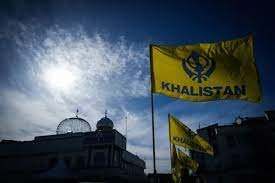
    The case of Hardeep Singh Nijjar has become a source of tension and dispute between Indian intelligence agencies and Canadian authorities. India alleges that Nijjar, formerly associated with the Khalistan Tiger Force (KTF), was involved in a series of heinous crimes in Punjab and continued his activities even after escaping to Canada. However, Canadian intelligence has presented a contrasting narrative, portraying Nijjar as an innocent and religious-minded individual who leads the Guru Nanak Gurudwara in Surrey, Canada.


    According to a dossier compiled by Indian intelligence, Nijjar’s rise to power within the Sikh temple was marked by intimidation tactics against his cousin and the temple’s former president, Raghbir Singh Nijjar. The dossier further claims that Nijjar had ties to notorious terrorists like Gurdeep Singh, also known as Deepa Heranwala, who was responsible for numerous killings in Punjab during the late 1980s and early 1990s.


    Nijjar’s journey to Canada in 1996 under a forged identity as “Ravi Sharma” saw him lead a low-profile life as a truck driver and plumber. However, the dossier alleges that he came into contact with KTF chief Jagtar Singh Tara during a visit to Pakistan in 2012, where he was radicalized and trained in arms and explosives by the Inter-Services Intelligence (ISI).


    The dossier even asserts that Nijjar received training on using a handheld GPS device in 2013 from a US-based individual sent by Tara. By 2015, Nijjar had assumed the role of operations chief for KTF, despite an Interpol Red Corner notice being issued against him in 2014. Surprisingly, he was granted Canadian citizenship despite having his political asylum request rejected twice.


    In his role as KTF operations chief in Canada, Nijjar was allegedly involved in various activities, including funding other Sikh radicals, organizing arms training camps, and training module members for targeted killings and abductions. Several individuals linked to him were arrested, leading to the revelation of his involvement.


    The dossier also highlights that Nijjar was designated as a terrorist by the Indian Home Ministry in July 2020, with a substantial cash reward announced by the National Investigation Agency in July 2022. Despite these developments, Nijjar continued to operate freely in Canada, causing India to push for action by Ottawa to bring him to justice.


    This ongoing controversy between India and Canada surrounding Hardeep Singh Nijjar raises questions about the credibility of the evidence presented and the stance each country is taking. As the dispute continues, the world watches closely to see how it will be resolved and what impact it may have on India-Canada relations.

  • Union Minister Warns India’s Enemies

    Union Minister Warns India’s Enemies

    Amidst heightened tensions between India and Pakistan in the Kashmir border region, Union Minister Rajeev Chandrasekhar has issued a stern warning to India’s adversaries, emphasizing the dire consequences that could result from engaging in war with India. Chandrasekhar’s message underscores the modernization and high-tech capabilities of the Indian Military and serves as a strong deterrent to those seeking to disrupt India’s progress and security.


    In a tweet, Chandrasekhar stated, “India has enemies – These enemies want to stop India’s rise. But they should know this: Indian Military is now a modernized high-tech and lethal machine – make no mistake about it. You will be wise to avoid it.” He went on to add, “This is New India – India will not be intimidated, India will not back down. India has seen war and does not want war, but if you go to war with India, someone else will raise your children.”


    These words carry significant weight, highlighting India’s commitment to peace and stability in the region while also making it abundantly clear that any aggression towards the nation will be met with a powerful and technologically advanced response.


    The recent escalation in tensions between India and Pakistan comes amidst ongoing encounters with terrorists in the region. Four security personnel, including Colonel Manpreet Singh, Commanding Officer of the 19 Rashtriya Rifles, Major Ashish Dhonchak, Deputy Superintendent of Jammu and Kashmir Police Humayun Bhat, and rifleman Ravi Kumar Rana, were martyred in an operation in Anantnag that began on Tuesday. Additionally, three terrorists were killed in Baramulla.


    The Indian Army, in conjunction with the Jammu and Kashmir Police, has resumed operations against terrorists who are “holed up” in the forest area of Gadole in the Kokernag area of Anantnag district. This operation has been ongoing for the fourth consecutive day, with security forces facing the challenging terrain of the region. Drones and helicopters have been deployed to track the terrorists in the forest, highlighting the use of advanced technology in counter-terrorism operations.


    Chandrasekhar’s warning reflects India’s commitment to peace but also its preparedness to defend its sovereignty and security when faced with external threats. The Indian Military’s transformation into a modernized, high-tech, and lethal force underscores the nation’s determination to protect its interests and maintain regional stability.


    As the situation continues to evolve in the Kashmir region, the world watches closely, hoping for a peaceful resolution and the preservation of stability in this sensitive area. Chandrasekhar’s message serves as a reminder that India is prepared to defend itself and its interests if necessary, while also emphasizing the importance of maintaining peace and avoiding conflict in the region.

  • Encounter in Jammu and Kashmir’s Anantnag Enters Fifth Day

    Encounter in Jammu and Kashmir’s Anantnag Enters Fifth Day

    The encounter with terrorists in the Anantnag district of Jammu and Kashmir has entered its fifth day, with a prolonged battle taking place deep inside the forested Gadol area. Despite the continuous efforts of thousands of soldiers, including paracommandos, the terrorists are utilizing the challenging terrain and forest cover to evade capture and extend the encounter.


    In the ongoing operation to neutralize the terrorists, three officers—two from the Army and one from the police—have lost their lives. The officers killed in action have been identified as Colonel Manpreet Singh, Major Ashish Dhonak, and Humayun Bhat. The death toll in the Anantnag encounter has now climbed to four after police discovered the body of one more missing soldier on Friday.


    The security forces have employed various tactics, including the use of high-tech weapons, hundreds of mortar shells, and rockets, to target suspected terrorist hideouts. Sophisticated drones have also been used to drop explosives in the area.


    The encounter began on Wednesday, September 13, and has continued for more than 100 hours. It involves a combined team of security personnel from the Army and the Jammu and Kashmir Police engaging with the terrorists in the Kokernag area of Anantnag district.


    To aid their efforts in locating the terrorists who are holed up in the Kokernag area, the security forces are utilizing quadcopters and drones. Officials have reported that the forces have fired mortar shells on terrain believed to be the hiding place of the terrorists, based on drone surveillance.


    In addition to mortar shells and rockets, the forces have used grenade launchers to target the group of terrorists. Drones have been employed to drop grenades on suspected terrorist hideout locations.


    On Friday, Additional Director General of Police (ADGP) Kashmir Vijay Kumar called on retired police and Army officials to avoid making unnecessary “ambush hypotheses” related to the ongoing gunfight between security personnel and terrorists in the Kokernag area of Anantnag district. The authorities continue to exert concerted efforts to bring the situation under control and eliminate the terrorist threat in the region.

  • Terror Suspects Arrested: Pune Police Foils Plot

    Terror Suspects Arrested: Pune Police Foils Plot

    Officials said on Wednesday that the Pune police have apprehended two individuals wanted by the National Investigation Agency (NIA). This is in connection with a suspected terror-related case in Rajasthan. The two terror suspects, Mohammad Imran Mohammad Yunus Khan (23) and Mohammad Yunus Mohammad Yakub Saki (24), who work as graphic designers and hail from Ratlam in Madhya Pradesh, were presented before a local court, which remanded them to police custody until July 25. The police had previously announced a reward of ₹5 lakh for each of their captures.


    According to police sources, the duo fled Ratlam after learning that they were being investigated in the terror case, which involved some suspected members of the Al-Sufa outfit apprehended by Rajasthan police in the Madhya Pradesh town. They sought refuge in Mumbai and temporarily resided in the Bhendi Bazaar area before moving to Pune’s Kondhwa area. With the assistance of a local resident, the terror suspects managed to secure jobs and earn ₹8,000 each. During this time, they befriended a third person from Jharkhand, who managed to escape when the police captured the two suspects.


    The police stated that the three individuals were allegedly plotting bomb blasts in Jaipur. On Tuesday, a patrolling team in Pune’s Kothrud area apprehended the duo, along with another suspect, while they were attempting to steal a motorcycle. However, one of the suspects managed to flee. The Commissioner of Police, Retesh Kumarr, disclosed that the NIA had been searching for both men in connection with a terror-related case in Rajasthan, and they had been residing in Kondhwa for the past 16 months. A search of their residence led to the seizure of a live cartridge, two holsters, four mobile phones, and a laptop. The police are now investigating if the suspects were in possession of any firearms.


    When questioned about any potential acts of terror planned for Pune, Kumarr stated that the details would be revealed during the investigation. The police are currently working on capturing the third suspect who escaped. Seeking custody for eight days, the police informed the court that the two men are wanted by the NIA in a case registered under the Explosive Substances Act and the Unlawful Activities (Prevention) Act. The prosecution also mentioned that suspicious items such as a live cartridge, a magazine, the cover of a drone camera, “white coloured pills,” and a forged Aadhaar card were found in the suspects’ possession.


    Although the defence counsel argued that further interrogation was unnecessary due to the existing case filed by Pune’s Kothrud police station, the court deemed the police custody necessary, considering the serious charges under the UAPA Act. As a result, the court remanded the suspects in police custody until July 25. The third suspect, who escaped, is reported to be from Jharkhand.

  • Five Suspected Terrorists Arrested in Bengaluru, Foiled Terror Plot

    Five Suspected Terrorists Arrested in Bengaluru, Foiled Terror Plot

    In a significant breakthrough, the Central Crime Branch (CCB) of Bengaluru arrested five suspected terrorists today. They were foiling an alleged plot to carry out a terror attack in the capital city of Karnataka. The police are intensifying their efforts to apprehend another suspect, Junaid, believed to be residing in Bengaluru’s RT Nagar area. However, Junaid is suspected to have fled abroad and is purportedly the mastermind behind the supply of arms and explosives to the five individuals who have been taken into custody.


    The five detainees, identified as Suhail, Omar, Zahid, Mudasir, and Faisal, all natives of Bengaluru and aged between 25 and 35, have a previous criminal history. They had previously been arrested in 2017 and served 18 months in jail in connection with a murder case before being released in 2019. Despite their past incarceration, it appears that they remained involved in activities that drew the attention of the authorities again.


    During the investigation, the CCB made a significant discovery by seizing explosive materials from the possession of the suspects. Moreover, the police also found them carrying guns and daggers, raising concerns about the potential scale and impact of the planned attack.


    What further raised alarm bells was the revelation that the suspects had been in contact with T Nazeer, a known terror accused currently serving time in Bengaluru Central Jail (Parapanna Agrahara). The suspects reportedly confessed during their questioning that they were radicalized by Nazeer, highlighting the influence he had on shaping their extremist ideologies and actions.


    The arrest of these individuals and the ongoing search for the mastermind, Junaid, underscore the vigilant efforts by law enforcement agencies to combat terrorism and maintain public safety. The incident serves as a stark reminder of the ever-present threat of terror activities and the need for continued vigilance and cooperation between intelligence agencies and the public.


    As the investigation unfolds, authorities are likely to delve deeper into the network of individuals involved, tracking their links and connections to disrupt any potential future attacks. The successful operation by the CCB has undoubtedly prevented a potential tragedy, underscoring the crucial role played by law enforcement in safeguarding communities against acts of suspected terrorists.