Tag: Voting

  • Russian Election 2024: Putin’s Grip Tightens Amid Controversy

    Russian Election 2024: Putin’s Grip Tightens Amid Controversy

    The upcoming Russian election slated for this week is poised to solidify President Vladimir Putin’s grip on power until at least 2030. As the political landscape stands, any opposition figures capable of challenging Putin’s authority have been either imprisoned or exiled abroad. Additionally, independent media outlets critical of Putin’s policies have faced censorship and blockades, further consolidating the Kremlin’s control over the electoral process in the country of 146 million.


    Despite these challenges, the Russian election is expected to draw significant attention from both domestic and international observers, providing insights into the trajectory of the major nuclear power, especially amidst its ongoing full-scale invasion of Ukraine.


    Here’s what you need to know about the upcoming election, including details on voting procedures, the candidates on the ballot, and concerns regarding the election’s fairness and transparency.


    Who Can Vote in the Russian Election?

    Any Russian citizen above the age of 18, not serving a criminal conviction in prison, is eligible to vote in the Russian election. The Central Election Commission has reported a total of 112.3 million eligible voters within Russia and Russian-occupied parts of Ukraine, along with an additional 1.9 million eligible voters residing abroad.


    How Will Voting Unfold?

    Voting across Russia will occur over three days, a departure from the traditional single-day voting process. This extended duration was first introduced during the 2020 constitutional referendum orchestrated by Putin, allowing voters more flexibility in participating. Notably, this election will also witness the introduction of online voting, available in 27 Russian regions and Crimea, annexed from Ukraine in 2014.


    Despite criticisms and objections from Kyiv and Western countries, voting will take place in the annexed regions of Donetsk, Luhansk, Zaporizhzhia, and Kherson. Early voting has already commenced in some regions and will progressively roll out in others over the designated voting period.


    Who Is on the Ballot?
    The prominent candidate in the election is President Vladimir Putin, running as an independent candidate seeking his fifth term in office. Putin, in power since 2000, orchestrated constitutional changes in 2020 that reset his term limits, enabling him to potentially extend his tenure until 2030.


    Other candidates representing Kremlin-friendly parties include Nikolai Kharitonov of the Communist Party, Leonid Slutsky of the Liberal Democratic Party, and Vladislav Davankov of the New People Party. However, historical data suggests that these candidates are unlikely to pose a significant challenge to Putin, with the 2018 presidential election showcasing Putin’s dominance with over 76% of the vote.


    Concerns Regarding Fairness and Transparency

    Observers and opposition groups have expressed skepticism regarding the fairness and transparency of the Russian election. Criticisms have been directed towards the extension of the voting period and the introduction of online voting, which are perceived to hinder election transparency.


    Instances of electoral malpractice, including forced voting and ballot-box stuffing, have been reported in past elections, raising concerns about the integrity of the electoral process. The 2018 presidential election was deemed lacking in genuine competition by the Organization for Security and Co-operation in Europe (OSCE), citing continued pressure on critical voices.


    The Election’s Significance and Challenges

    Political analysts view the upcoming election as a pivotal moment, serving as a referendum on Putin’s leadership and the ongoing war in Ukraine. However, with limited alternatives to Putin on the ballot and a fractured opposition, the election presents challenges in fostering genuine political change.


    The recent death of prominent opposition figure Alexei Navalny, coupled with the imprisonment and exile of other opposition leaders, underscores the Kremlin’s efforts to suppress dissent and maintain control over the political narrative.

    The Russian election of 2024 carries significant implications for the country’s political future and its relations with the international community. Despite concerns surrounding the fairness and transparency of the electoral process, the outcome will likely reinforce President Putin’s authority and influence for the foreseeable future. As the world watches closely, the election will undoubtedly shape Russia’s trajectory in the years to come, both domestically and on the global stage.

  • Santosh Bangar’s Remarks Spark Outrage

    Santosh Bangar’s Remarks Spark Outrage

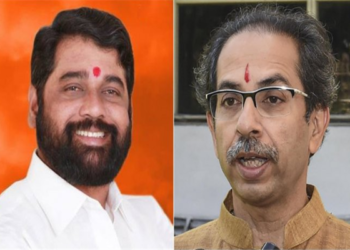
    Kalamnuri MLA Santosh Bangar, a member of the Eknath Shinde-led Shiv Sena, has sparked controversy with his recent remarks directed at school children. In a viral video, Bangar can be heard instructing the children not to eat for two days if their parents do not vote for him in the upcoming elections. The incident occurred despite directives from the Election Commission prohibiting the involvement of children in election-related activities.


    Speaking to students at a Zilla Parishad school in Hingoli district, Bangar, addressing children below the age of 10, urged them to convey to their parents that they would only eat if their vote was cast in his favor. The Shiv Sena MLA’s remarks have drawn criticism from opposition parties, including the Congress and the Sharad Pawar-led NCP, who have called for stringent action against Bangar.


    NCP-SP spokesperson Clyde Crasto condemned Bangar’s actions, labeling him a repeat offender and accusing him of evading consequences due to his alliance with the BJP. Crasto emphasized the need for the Election Commission to impartially address Bangar’s violation of its directives.


    Similarly, Congress leader Vijay Wadettiwar questioned the state education minister’s response to Bangar’s remarks, highlighting the inappropriate nature of the comments made to school children.


    This incident is not the first time Bangar has courted controversy with his unconventional statements. In a previous instance, he made headlines by stating that he would hang himself if Narendra Modi did not return as Prime Minister after the 2024 Lok Sabha elections. Bangar’s history of provocative remarks includes an incident last year where he was booked by the Kalamnuri police for allegedly wielding a sword during a festive rally. In 2022, a video capturing Bangar slapping a catering manager of a midday meal program for laborers also went viral, further fueling public outrage.


    Bangar’s repeated involvement in contentious incidents underscores the need for accountability and responsible conduct among elected officials. The outcry from opposition parties and calls for disciplinary action highlight the seriousness of Bangar’s actions and the imperative for swift and impartial resolution by relevant authorities.

  • Voting Underway for Karanpur Assembly Seat in Rajasthan

    Voting Underway for Karanpur Assembly Seat in Rajasthan

    Voting commenced at 7 am on Friday for the Karanpur Assembly seat in Rajasthan’s Sriganganagar district. Surendra Pal Singh TT, the BJP nominee, has already been sworn in as a minister in the newly-formed state cabinet, as confirmed by District Collector Anshdeep. The polling will continue until 6 pm. The election and voting, initially scheduled earlier, was postponed following the unfortunate demise of Congress candidate Gurmeet Singh Koonar.


    Twelve candidates are competing for the Assembly seat, with Rupinder Singh, the son of late Gurmeet Singh Koonar, contesting on the Congress ticket. Surendra Pal Singh TT, a former state minister, was included in the cabinet led by Chief Minister Bhajanlal Sharma on December 30. This move faced opposition from the Congress, claiming a violation of the Model Code of Conduct.


    Former Chief Minister Ashok Gehlot criticized Surendra Pal Singh TT’s swearing-in, considering it a clear violation and an attempt to influence voting in the constituency. According to regulations, non-legislators can be appointed as ministers, but they must win elections within six months.


    The election results for the Karanpur Assembly seat are slated to be declared on January 8, as confirmed by the district collector. In the constituency, a total of 249 polling stations have been set up to cater to 2.4 lakh voters, including 1,25,850 men, 1,14,966 women, and 10 transgender individuals. Additionally, there are 180 service voters.


    The polling for 199 out of the 200 Assembly seats in Rajasthan occurred on November 25 last year. In the results announced on December 8, the BJP emerged victorious with 115 seats, surpassing the Congress, which secured 69 seats. The election in Karanpur was deferred due to the unfortunate demise of Congress candidate Gurmeet Singh Koonar.


    Surendra Pal Singh TT’s inclusion in the newly-formed cabinet led to opposition from the Congress, led by Chief Minister Bhajanlal Sharma, on December 30. The Congress, particularly former Chief Minister Ashok Gehlot, criticized the move, considering it a violation of the Model Code of Conduct. According to the regulations, non-legislators can be appointed as ministers, but they must win elections within six months.


    The election results for the Karanpur Assembly seat are scheduled to be declared on January 8, with 249 polling stations set up in the constituency. This includes 2.4 lakh voters, comprising 1,25,850 men, 1,14,966 women, and 10 transgender individuals. Additionally, there are 180 service voters.


    In the broader context, the polling for 199 out of the 200 Assembly seats in Rajasthan took place on November 25 last year. The BJP secured victory with 115 seats, while the Congress managed to secure 69 seats. The election in Karanpur was deferred due to the unfortunate demise of Congress candidate Gurmeet Singh Koonar.