Tag: Vishva Hindu Parishad

  • Calcutta HC Directs WB Government to Review Lioness Naming

    Calcutta HC Directs WB Government to Review Lioness Naming

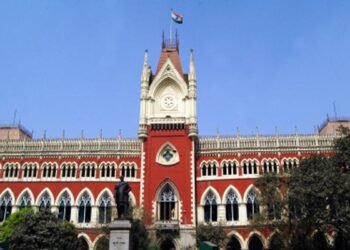
    The Calcutta High Court’s recent directive to the West Bengal government regarding the naming of a lioness at Siliguri’s Safari Park has sparked significant debate and controversy. The court’s decision came in response to a plea filed by the Vishva Hindu Parishad (VHP), a prominent Hindu organization, questioning the appropriateness of naming the lioness ‘Sita.’


    The matter was brought before a single bench of Justice Saugata Bhattacharya, who expressed concerns about the confusion surrounding the naming of the lioness. Justice Bhattacharya emphasized the importance of obtaining clarity on the issue and scheduled further hearings to address the matter thoroughly.


    During the proceedings, Justice Bhattacharya made references to Hindu religious beliefs, particularly the symbolism of lions in Hindu mythology. Lions are commonly associated with the goddess Durga, often depicted with a lion at her feet. The judge highlighted the significance of lions in Hindu culture, stating, “We worship lions during Durga Puja. It depends on the mental orientation of the person, Can we imagine Durga without a lion?”


    The VHP’s plea argued that naming the lioness ‘Sita’ was blasphemous and disrespectful to Hindu sentiments. The organization contended that the name ‘Sita’ holds profound religious significance as the wife of Lord Rama, a central figure in Hindu mythology. Additionally, the VHP raised objections to another lion named ‘Akbar’ in the North Bengal Wildlife Animals Park, claiming that the coexistence of ‘Sita’ and ‘Akbar’ was inappropriate.


    Lakshman Bansal, the West Bengal secretary of the VHP, emphasized the broader implications of the naming issue, stating that it amounted to blasphemy and undermined the religious beliefs of Hindus nationwide. Bansal stressed that ‘Sita’ and ‘Akbar’ should not be allowed to coexist, citing the reverence and respect accorded to the characters in Hindu mythology.


    The controversy surrounding the naming of the lioness has stirred public sentiment and raised questions about the intersection of religious beliefs and administrative decisions. It has also highlighted the importance of cultural sensitivity and respect for diverse religious traditions in public institutions and spaces.


    In response to the court’s directive, officials at the wildlife park have provided relevant documents and assured compliance with the court’s decision. The outcome of the case remains uncertain, pending further hearings and deliberations by the court.


    The incident underscores the complexities involved in navigating religious sensitivities and cultural diversity in a pluralistic society like India. It underscores the need for careful consideration and consultation in matters that have the potential to impact religious sentiments and communal harmony.


    The naming of animals in public spaces has often been a contentious issue, with conflicting perspectives on how to balance cultural and religious sensitivities with administrative decisions. While some argue for greater inclusivity and representation of diverse cultural narratives, others emphasize the need to uphold traditional beliefs and values.


    Moving forward, the Calcutta High Court’s intervention provides an opportunity for constructive dialogue and resolution. It offers a platform for stakeholders to express their concerns, engage in meaningful discourse, and work towards a consensus that respects the sentiments of all communities involved.


    Ultimately, the outcome of the case will not only determine the fate of the lioness’s name but also serve as a reflection of the broader dynamics shaping religious and cultural discourse in contemporary India. It is a reminder of the importance of fostering mutual respect, understanding, and tolerance in a diverse and pluralistic society.

  • Sudarshan News Editor Arrested Over Inflammatory Posts

    Sudarshan News Editor Arrested Over Inflammatory Posts

    In a development that has ignited discussions about media freedom, Sudarshan News editor Mukesh Kumar was apprehended by the police for purportedly making inflammatory posts on social media concerning communal violence in Nuh and adjacent districts of Haryana. The violence, resulting in six fatalities, transpired after a Vishva Hindu Parishad procession was attacked on July 31.


    News Editor Kumar’s arrest stems from a post on X (formerly Twitter) where he asserted that a foreign media entity had been exerting pressure on the Gurugram Police Commissioner to take action against Hindus in relation to the communal riots. The TV channel, Sudarshan News, denounced his arrest, initially claiming that Kumar had been abducted by unidentified individuals.


    The channel’s statement read that Mukesh Kumar had journeyed to Mewat to provide support to struggling Hindu activists. In a shocking turn of events, he was reportedly abducted by a group of well-built individuals from his car in Sector 17, Gurugram. Sudarshan News criticized the Gurugram Police for their delay in releasing information about the arrest, asserting that the delay took seven hours.


    Sudarshan News voiced its stance on the arrest, deeming it “totally illegal and wrong.” The channel reaffirmed its support for Mukesh Kumar and characterized his apprehension as an assault on media freedom. The hashtag #ReleaseMukeshKumar gained traction as part of their online protest against the arrest.


    In response, the Gurugram Police contradicted Kumar’s claims, labeling them as baseless, false, and misleading. An FIR has been lodged against the journalist under relevant sections of the IT Act at the Cyber Crime unit of the East Police Station. Assistant Commissioner of Police (Crime) Varun Dahiya reported that Kumar was arrested and subsequently underwent a medical examination at a hospital.


    Kumar’s social media post on August 8, in which he implicated foreign media pressure on local authorities, stirred controversy and attracted legal action. The post raised concerns about external influence impacting local law enforcement decisions.


    The incident has sparked a broader conversation about the balance between media freedom and responsible journalism. Sudarshan News’ robust stance on Kumar’s arrest reflects the channel’s commitment to safeguarding the freedom of the press in the face of potential restrictions. As the case unfolds, questions about the boundaries of media expression, the role of social media, and the responsibilities of journalists remain at the forefront of public discourse.

  • Haryana: Blames VHP Yatra Organisers for Communal Violence

    Haryana: Blames VHP Yatra Organisers for Communal Violence

    Deputy Chief Minister Dushyant Chautala of Haryana addressed the recent communal violence in the state’s Nuh district and placed blame on the organisers of the Vishva Hindu Parishad (VHP) Shobha Yatra. He expressed concern that the yatra organisers did not provide complete information to the district administration, which he believes led to the unfortunate incident. Chautala asserted that strict action would be taken against those responsible for the violence, regardless of their political affiliations. He also urged the public to maintain peace, emphasizing that such incidents of communal violence had never occurred in the history of the state.


    Chautala emphasized that adequate security arrangements were in place to maintain peace in the region, which, according to him, had remained peaceful for the past 12 hours without any reported acts of violence. However, the situation escalated when violent confrontations erupted in Nuh following an alleged attack on the VHP Shobha Yatra with stones. The incident was reportedly triggered by the alleged presence of Monu Manesar, who is accused of involvement in cow vigilantism and lynching.

    Monu Manesar himself pointed fingers at Maman Khan as being responsible for the clashes in Nuh. He asserted that he had “nothing to do with Nasi Junaid,” as reported by AajTak. However, Chautala made it clear that regardless of the individuals involved, strict actions would be taken against anyone responsible for instigating communal violence, regardless of their political affiliations.


    Meanwhile, Randeep Singh Surjewala, a senior leader of the Congress party, criticized the BJP-JJP government in the state for its inability to uphold law and order. In light of this failure, Surjewala called for both Chief Minister Manohar Lal Khattar and Deputy CM Dushyant Chautala to step down from their positions. He expressed deep concern and sadness over the reports of violence and destruction emerging from the Nuh-Mewat region, as reported by PTI.


    The incident has sparked a heated debate over the role of the VHP Shobha Yatra Organisers and the need for better communication and coordination with the authorities to prevent such violence. As investigations continue, the state government is under pressure to take appropriate measures to maintain peace and ensure the safety of its citizens. The situation has also brought attention to the larger issue of communal tensions in the region and the importance of addressing them effectively to prevent future conflicts.

  • Communal Clashes Erupt in Haryana’s Nuh District

    Communal Clashes Erupt in Haryana’s Nuh District

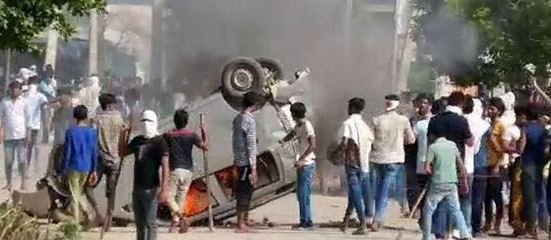
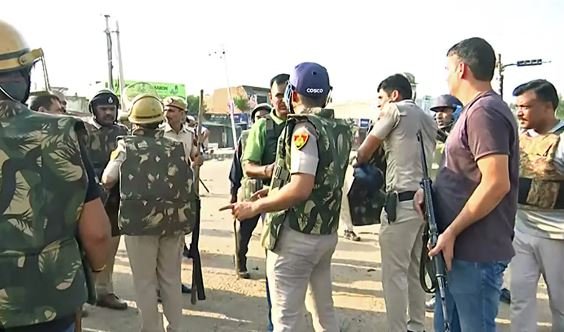
    In a tragic incident that unfolded in Haryana’s Nuh district, violence erupted when mobs attacked a Vishva Hindu Parishad (VHP) procession, leading to the deaths of two home guards and injuries to over 15 people, including policemen. The disturbing scene also witnessed the setting ablaze of cars and a shop by a group of young men who barricaded the road for hours. As the situation escalated into communal clashes, authorities were swift to take action. To prevent the spread of tensions, mobile internet services in Nuh district have been temporarily suspended until August 2.


    Responding to the crisis, Haryana’s Home Minister Anil Vij stated that additional forces were deployed from neighboring districts, with efforts being made to send reinforcements via helicopter as well. The priority was to maintain peace and protect civilians caught in the crossfire.


    During the turmoil, over 2,500 individuals, including women and children, were safely evacuated by the police from the Shiva temple in Nuh. This group comprised both devotees and those seeking refuge at the temple during the confrontations.


    In the aftermath of the communal clashes, as a precautionary measure, educational institutions in Gurugram, Faridabad, and Palwal districts were ordered to remain closed on Tuesday. The violence was triggered shortly after the VHP procession began. Around 2 pm, more than 200 people marched from Edward Chowk in Nuh town, only to be met with a barrage of stones from a larger crowd. Initially, the Hindu side retreated, but tensions escalated when they retaliated.


    Reports have emerged suggesting that an objectionable video posted on social media by a Bajrang Dal activist in Ballabhgarh might have been the catalyst for the clashes. Additionally, concerns were raised over the supposed participation of Monu Manesar, a cow vigilante previously booked for the murder of two Muslim men. Monu Manesar had received warnings on Twitter urging him not to attend the procession, which he heeded, as advised by the VHP to avoid further tensions. The situation remains tense, and authorities are working diligently to restore calm and diffuse the ongoing crisis.