Tag: US

  • US Encourages Relationship Between India and Pakistan

    US Encourages Relationship Between India and Pakistan

    In recent diplomatic exchanges, the United States has expressed its desire for a productive and peaceful relationship between India and Pakistan. This stance comes amidst Prime Minister Narendra Modi’s congratulatory message to the newly-elected Pakistan Prime Minister Shehbaz Sharif on assuming office for his second term. State Department spokesperson Matthew Miller reiterated the US’s commitment to fostering positive ties between the two South Asian neighbors while acknowledging that the pace, scope, and character of any dialogue should be determined by India and Pakistan themselves.


    The congratulatory message from Prime Minister Modi to Prime Minister Sharif marks a diplomatic gesture that is significant given the historical tensions between the two countries. Sharif’s assumption of office comes after a somewhat contentious election process, with allegations of vote rigging casting a shadow over the democratic transition in Pakistan. Despite these challenges, Prime Minister Modi’s message signals a willingness to engage constructively with Pakistan, setting the tone for potential future dialogue.


    However, experts in Pakistan caution against expecting immediate improvements in Indo-Pak relations, citing longstanding differences over issues like Kashmir. The conflict over Kashmir has been a central point of contention between India and Pakistan since their independence from British colonial rule in 1947. Despite occasional periods of engagement, the relationship has often been characterized by hostility and sporadic outbreaks of violence.


    One of the most significant recent escalations occurred in 2019 when India unilaterally revoked Article 370 of its Constitution, stripping the special status of Jammu and Kashmir and bifurcating the region into two Union Territories. This move was met with strong condemnation from Pakistan, which views Kashmir as a disputed territory and has consistently advocated for the rights of Kashmiri Muslims.


    Against this backdrop, the US’s endorsement of dialogue between India and Pakistan carries weight, given its role as a key global player and strategic partner to both countries. The US has long sought to facilitate peace and stability in South Asia, recognizing the potential for regional prosperity if tensions between India and Pakistan can be eased.


    While the path to reconciliation is undoubtedly challenging, diplomatic gestures such as Prime Minister Modi’s message to Prime Minister Sharif offer glimmers of hope for progress. The willingness of leaders on both sides to engage in dialogue and explore avenues for cooperation is essential for building trust and addressing long-standing grievances.


    However, it is essential to recognize that the pace and nature of any dialogue must be determined by India and Pakistan themselves. External actors like the US can play a supportive role by facilitating communication and encouraging confidence-building measures. Still, ultimately, the resolution of contentious issues like Kashmir requires political will and compromise from both parties.


    In the meantime, efforts to de-escalate tensions and promote people-to-people exchanges can contribute to building bridges between India and Pakistan. Cultural initiatives, trade agreements, and humanitarian exchanges can foster mutual understanding and create opportunities for cooperation in areas of common interest.


    As the world watches developments in South Asia, there is cautious optimism that sustained diplomatic efforts and constructive engagement between India and Pakistan could lead to a more stable and prosperous region. While challenges remain, the commitment of leaders and the support of the international community offer hope for a brighter future for the people of India and Pakistan.

  • US and British Military Conduct Airstrikes Targeting Houthi Sites

    US and British Military Conduct Airstrikes Targeting Houthi Sites

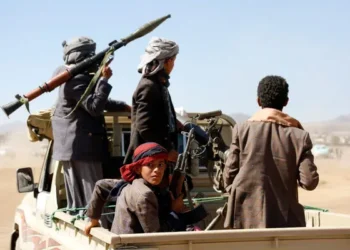
    In a significant escalation of military action, US and British military forces conducted airstrikes targeting over a dozen Houthi sites in Yemen on Saturday. This latest operation is part of ongoing efforts to counter the Iran-backed Houthi militia, which has been implicated in attacks on shipping in the region. The airstrikes come in response to the Houthis’ continued aggression, which has disrupted global trade and raised shipping rates in the strategically vital waterways.


    According to reports from Reuters, the United States has been consistently carrying out airstrikes against the Houthis, who hold sway over Yemen’s most densely populated areas. The group has justified its attacks on shipping by claiming solidarity with Palestinians amid Israel’s actions in Gaza. However, these strikes have so far failed to halt the Houthis’ attacks, prompting further military action from the US and its allies.


    The joint statement issued by countries involved in the airstrikes, including Australia, Bahrain, Canada, Denmark, the Netherlands, and New Zealand, stated that the military action targeted 18 Houthi sites across eight locations in Yemen. The targets included underground weapons and missile storage facilities, air defense systems, radars, and a helicopter. The goal of the strikes, according to US Defense Secretary Lloyd Austin, was “to further disrupt and degrade the capabilities of the Iranian-backed Houthi militia.”


    Austin emphasized that the strikes were intended to send a clear message to the Houthis that they would face consequences if they continued their illegal attacks. These attacks not only harm Middle Eastern economies but also cause environmental damage and disrupt the delivery of humanitarian aid to Yemen and other countries. The international coalition’s actions aim to protect commercial shipping and ensure the safety of maritime traffic in the region.


    However, the Houthis have condemned the airstrikes, labeling them as a “miserable attempt” to prevent Yemen from providing support operations to the Palestinian people in Gaza. Al Masirah TV, the primary television news channel affiliated with the Houthi movement, reported that a series of strikes were conducted in the capital city of Sanaa by US and UK forces. The renewed raids have intensified tensions in the region, with the Houthis vowing to retaliate against what they perceive as foreign aggression.


    The recent escalation in military activity comes after the Houthis claimed responsibility for attacking a cargo ship owned by the UK and launching a drone strike on a US destroyer. Additionally, they targeted Israel’s port and resort city of Eilat with ballistic missiles and drones. These actions have caused disruptions to the crucial Suez Canal route, which handles approximately 12% of global maritime traffic, forcing ships to take longer and more costly routes around the African continent.


    While no ships have been sunk, and no crew members have lost their lives during the Houthi campaign on those sites, concerns remain regarding the environmental impact of the attacks. The UK-registered Rubymar cargo vessel, targeted on February 18, was carrying over 41,000 tons of fertilizer when it was struck. There are fears that the cargo could spill into the Red Sea, leading to an environmental catastrophe.


    In response to the escalating crisis, the European Union has launched a naval mission to the Red Sea to restore and safeguard freedom of navigation. Additionally, the United States has initiated Operation Prosperity Guardian, aimed at safeguarding commercial traffic from attacks by the Houthis. As tensions continue to escalate in the region, the international community faces the challenge of balancing security concerns with the need to protect vital maritime trade routes.

  • US and UK Launch Joint Strikes Against Houthis in Yemen

    US and UK Launch Joint Strikes Against Houthis in Yemen

    In response to the repeated Red Sea attacks by Iran-backed Houthis, the United States and Britain conducted air strikes, hitting 36 Houthi targets across 13 locations in Yemen. The strikes come after a drone attack in Jordan killed three U.S. soldiers, prompting retaliatory action against Iran-linked targets in Iraq and Syria. This marks the third joint effort by British and American forces targeting the Houthis, with the objective of disrupting their capabilities and preventing further attacks on international and commercial shipping in the Red Sea.


    The air strikes, which aimed to disrupt and degrade the Houthi militia’s capabilities, targeted deeply buried weapons storage facilities, missile systems and launchers, air defense systems, and radars. U.S. Defence Secretary Lloyd Austin emphasized that the action was in response to the Houthis’ reckless and destabilizing attacks, asserting that the strikes were intended to deter future aggression.


    The Houthi military spokesman, Yahya Saree, confirmed that the capital Sanaa and other rebel-held areas were targeted with a total of 48 air strikes. Despite the attacks, Saree asserted the Houthis’ unwavering support for the Palestinian people in the Gaza Strip, emphasizing that the strikes would not deter them from their stance. He warned that the latest strikes would prompt a response and punishment.


    Britain’s defence ministry reported that Royal Air Force Typhoon warplanes participated in the strikes, hitting targets that included two ground control stations used to operate attack and reconnaissance drones. The coordinated efforts by the U.S. and the UK underscore their commitment to curbing Houthi aggression and maintaining security in the region.


    The U.S. Central Command (CENTCOM) revealed that its forces carried out a strike against a Houthi anti-ship missile that was preparing to launch against ships in the Red Sea. This action aimed to prevent potential threats to maritime traffic in the strategic waterway.


    The Houthis’ attacks have not only drawn the attention of the U.S. and the UK but have also led to disruptions in global trade. The Houthis, expressing solidarity with Palestinians in Gaza, have escalated tensions in the Red Sea, prompting international responses to safeguard shipping lanes and maintain regional stability.


    The ongoing conflict in Yemen, with Houthi rebels backed by Iran, has created a complex geopolitical scenario. The recent air strikes signal the international community’s resolve to address the threat posed by the Houthis and protect vital maritime routes. As tensions persist, the situation remains fluid, with the potential for further escalations and responses in the region. The global community will closely monitor developments in Yemen to assess the impact on regional stability and security.

  • Third Indian Student Found Dead in the US in a Week

    Third Indian Student Found Dead in the US in a Week

    In a distressing series of events, another Indian student has been found dead in Cincinnati, marking the third such incident in the United States within a week. The cause of death is currently unknown, and investigations are underway to ascertain the circumstances surrounding this tragic event.


    The recent string of unfortunate incidents began with the disappearance and subsequent confirmation of the death of Neel Acharya, a student pursuing a double major at Purdue University in Indiana. The university expressed profound sorrow for his passing, and the exact cause of death remains undisclosed.


    Shortly after Neel Acharya’s demise, the shocking murder of 25-year-old Vivek Saini came to light. Saini, who had recently earned an MBA degree in the US, was brutally attacked with a hammer by a homeless drug addict in Lithonia city, Georgia.


    The gruesome incident was captured on camera, showing the assailant, Julian Faulkner, mercilessly striking Vivek Saini nearly 50 times on the head with a hammer. The horrifying act took place despite Saini’s kindness towards Faulkner, providing him with food, water, and even a jacket for warmth.


    The Consulate General of India in Atlanta condemned the attack in the strongest terms and expressed deep anguish over the terrifying incident. They confirmed being in touch with Saini’s family, providing consular assistance to repatriate his mortal remains to India.


    The recent discovery of another Indian student’s dead in Cincinnati adds to the concerns surrounding the safety and well-being of Indian students in the United States. The causes of these tragic incidents are yet to be determined, and authorities are actively investigating to shed light on the circumstances leading to these untimely deaths.


    The Consulate General of India continues to monitor the situation and remains committed to providing support to the affected families. As the investigations unfold, the Indian community expresses its condolences and concern for the safety of students studying abroad.

  • Indian Student Brutally Murdered in US: Consulate Condemns

    Indian Student Brutally Murdered in US: Consulate Condemns

    The Indian Consulate in Atlanta has expressed deep anguish and strong condemnation over the violent attack that resulted in the tragic death of Indian student Vivek Saini in the United States. The Consulate released a statement on X (formerly Twitter), condemning the “terrifying, brutal, & heinous incident” and confirming that it is in contact with the family.


    “We are deeply anguished by the terrifying, brutal, & heinous incident that led to the death of 🇮🇳 National/student Mr Vivek Saini & condemns the attack in the strongest terms. It is understood that the US authorities have arrested the accused & are investigating the case,” the Consulate posted.


    Vivek Saini, a 25-year-old Indian student who recently earned an MBA degree in the US, met a tragic end in Lithonia, Georgia. He was killed by a homeless person named Julian Faulkner, whom he had been helping for a couple of days. The assailant, described as a drug addict, launched a brutal attack on Saini, leading to his untimely death.


    The attack, captured on video, showed Faulkner striking Vivek Saini around 50 times with a hammer. Saini had reportedly been kind to the attacker, providing him with food, drink, and a jacket. The horrifying incident occurred on January 16, when Saini was hit on his way home after warning Faulkner to leave or he would call the police. Upon police arrival, Faulkner was found standing near Saini’s lifeless body.


    The Consulate in Atlanta promptly took action, reaching out to Vivek Saini’s family immediately after the incident. It provided all consular assistance to facilitate the repatriation of the victim’s mortal remains back to India. The Consulate continues to stay in touch with the grieving family during this difficult time.


    The video of the brutal attack has circulated on social media, although the exact timing of the incident remains unclear. It is reported that the police swiftly made arrests after reviewing the video footage. Vivek Saini’s family in Haryana, India, is devastated by the loss of their son. The victim, a top student who recently completed his MBA, had come to the US two years ago with aspirations for a bright future and a good job.


    Vivek Saini’s parents, Gurjeet Singh and Lalita Saini, are too distraught to discuss the details of the tragic incident. The family’s grief is compounded by the shocking brutality of the attack and the loss of a promising young life. Saini’s parents, like many others in similar circumstances, are grappling with the incomprehensible pain of losing a loved one to senseless violence.


    The incident highlights the vulnerabilities faced by individuals, even those who extend kindness to those in need. The Consulate’s condemnation of the attack underscores the importance of ensuring the safety and well-being of Indian nationals abroad. As investigations into the case proceed, the Consulate’s support to the family remains crucial in navigating the aftermath of this devastating event.


    The tragic death of Vivek Saini serves as a somber reminder of the challenges faced by students and immigrants abroad and the need for vigilance and community support. The Consulate’s efforts to provide assistance and express condolences contribute to the ongoing dialogue on ensuring the safety and security of Indian nationals in foreign countries. The incident also prompts reflection on the broader issues related to homelessness, mental health, and violence, urging communities to work collectively towards creating safer environments for everyone.

  • India-US Relations Proven Resilient Across Presidential Changes

    India-US Relations Proven Resilient Across Presidential Changes

    External Affairs Minister S Jaishankar conveyed a vote of confidence in the enduring strength of India-US relations, emphasizing their resilience across different political administrations. Speaking at the Carnegie Global Technology Summit on Monday, Jaishankar noted the unique aspect of the US having experienced five distinct presidents—Clinton, Bush, Obama, Trump, and Biden—yet the relationship has continued to prosper.


    “The interesting thing about the US is that you’ve had five completely different presidents: think Clinton, Bush, Obama, Trump, and Biden. Now, if a relationship can actually prosper with five very different Presidents, I would say to you that the data clearly indicates a certain stability and that there is enough investment on both sides and structural soundness to the relationship,” Jaishankar stated.


    From the Indian perspective, Jaishankar asserted that India-US relations are, at present, resilient against political fluctuations. This statement follows a challenging period for the bilateral relationship, marked by US officials indicting a 52-year-old Indian national for an alleged conspiracy to assassinate Gurpatwant Singh Pannun, a pro-Khalistan figure and US citizen. While the incident strained ties, both governments addressed the matter at the highest levels, with New Delhi initiating an inquiry into the allegations.


    Jonathan Finer, America’s Principal Deputy National Security Adviser, echoed Jaishankar’s sentiments during the same event. Acknowledging the complex history and occasional differences between the two nations, Finer emphasized the importance of recognizing shared connections that outweigh divergences.


    “The United States and India have a complicated history. We have not always been wholly aligned. We have not always found it easy to work together as economic partners. We have not always found it easy to be on the same side of issues geopolitically,” said Finer.


    Despite recognizing existing challenges and acknowledging that perfect alignment is unlikely, Finer highlighted the collaborative efforts of successive Indian and American governments to manage differences constructively. He emphasized the ability of both countries to work through challenging issues and find common ground, even in the face of historical, cultural, and geopolitical disparities.


    The affirmations by Jaishankar and Finer underscore the enduring nature of India-US relations, with both leaders expressing optimism about the strength of the partnership. The ability to navigate differences and sustain cooperation reflects the commitment to fostering a robust and mutually beneficial relationship.

  • India Strengthens Economic Ties- Indo-Pacific Framework

    India Strengthens Economic Ties- Indo-Pacific Framework

    In a significant development, India has taken a proactive step towards strengthening its economic ties by signing an agreement with the US and 12 other members of the Indo-Pacific Economic Framework for Prosperity (IPEF). The announcement, made by the commerce ministry, underscores India’s commitment to reducing its dependence on China and addressing the risks posed by supply chain shocks.


    The agreement, formally inked by India’s Union Minister for Commerce and Industry, Piyush Goyal, and US Trade Secretary Gina Raimondo in San Francisco, aims not only to decrease dependency on China but also to enhance supply chain resilience. This move is seen as a collective effort by IPEF member nations to prepare for future challenges related to supply chain disruptions.


    Expressing the significance of this collaboration, Minister Goyal took to X (formerly Twitter) to announce, “India joins the US and 12 other IPEF partners to ink the IPEF supply chain resilience agreement that will fortify and strengthen global supply chains and foster adaptability, stability, and sustainability.”


    The agreement holds several potential benefits for member nations. It opens avenues for the shifting of production centers in critical sectors, a crucial step in reducing reliance on a single source. Additionally, it aims to mitigate the risk of economic disruptions arising from supply chain shocks. The focus is on fostering adaptability, stability, and sustainability in global supply chains.


    The commerce ministry highlighted other advantages of the pact, including supply-chain diversification, mobilization of investments, deeper integration of India into global value chains, support to Micro, Small, and Medium Enterprises (MSMEs), and the creation of a seamless regional trade ecosystem facilitating the flow of Indian products.


    During the IPEF meet, Minister Goyal engaged in discussions with Gina Raimondo, as well as trade ministers from Malaysia (Tengku Zafrul Aziz) and Indonesia (Airlangga Hartarto). The meetings focused on bilateral collaboration on trade, commerce, and investment, enhanced business engagements, WTO matters, and other mutual interests.


    The IPEF, launched in Tokyo on May 23, 2022, comprises nations such as Australia, Brunei Darussalam, Fiji, Indonesia, Japan, the Republic of Korea, Malaysia, New Zealand, the Philippines, Singapore, Thailand, and Vietnam. This collaborative framework signifies a collective effort to bolster economic ties in the Indo-Pacific region, emphasizing resilience, diversification, and increased cooperation. Stay updated on the progress of this strategic initiative shaping India’s economic landscape.

  • Israel’s Airstrikes on Gaza Approach US Bombing Campaign

    Israel’s Airstrikes on Gaza Approach US Bombing Campaign

    Israel’s ongoing conflict with the Palestinian military group Hamas in the Gaza Strip has captured global attention due to the intensity of the violence. One striking aspect of this conflict is the number of airstrikes carried out by Israel in a relatively short period. When we compare these numbers to historical data, it’s evident that the Israeli Air Force (IAF) has dropped nearly as many bombs on Gaza in just six days as the United States (US) did in a year-long bombing campaign in Afghanistan in 2019.


    The Israeli Air Force announced that it had “dropped about 6,000 bombs against Hamas targets” by October 12, a mere week into the war. To put this into perspective, this figure was only around a thousand bombs less than what the US had dropped on Afghanistan in the entire year of 2019.


    According to data from the US Air Forces Central Command (CFACC), the US released a total of 7,423 weapons on Afghanistan in 2019, a record-breaking figure. This surpassed the 7,362 weapons dropped in 2018, highlighting the intensification of the conflict.


    Additionally, the data reports revealed that the US deployed 4,729 weapons in Iraq and Syria during the same year. These statistics included the numbers of sorties (flights) and munitions expended by aircraft under CFACC control.


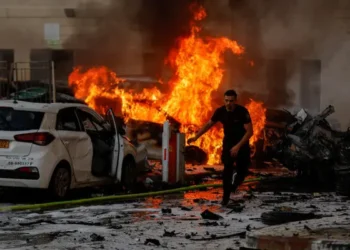
    As the Israel-Hamas war approached the one-month mark, Israeli forces continued with relentless airstrikes targeting Palestinian militants in Gaza. Israel’s military has been relentless, with an army spokesperson stating that they had already hit over 12,000 targets.


    The Israel-Hamas conflict began in October when Israeli authorities declared war against Hamas, responding to surprise attacks launched by the Palestinian military group on parts of Israel. The consequences of this war have been devastating. According to data from the Hamas-run health ministry, the death toll in Gaza has approached 10,000. The ongoing violence has not only taken a heavy toll on Palestinian lives but has also drawn substantial international attention.


    Prime Minister Benjamin Netanyahu remains determined to destroy the Palestinian military group Hamas. Despite growing international calls for a ceasefire, he has pledged no letup in the Israeli offensive.


    The Israeli military operation in Gaza has escalated. Ground forces have flooded the northern half of the Gaza Strip and tightened their encirclement of Gaza City. This is happening while hundreds of thousands of civilians remain in Gaza City, despite Israeli evacuation orders. The situation is increasingly dire, with the conflict showing no signs of abating.


    It is crucial to recognize the severe humanitarian consequences of this ongoing conflict. The loss of innocent lives and the displacement of civilians are deeply distressing, and the world continues to watch with concern. It remains to be seen when and how this conflict will reach a resolution, but international efforts are ongoing to broker a ceasefire and alleviate the suffering in the region.


    The Israeli airstrikes on Gaza and their scale, when compared to significant historical conflicts such as the US bombing campaign in Afghanistan, provide a stark reminder of the human toll and destruction associated with such conflicts. The situation underscores the urgent need for diplomatic efforts to reach a peaceful resolution in the region and prevent further loss of life.

  • Mounting Threats to Global Gas Supply and Rising Fuel Prices

    Mounting Threats to Global Gas Supply and Rising Fuel Prices

    Mounting threats to gas supply are sending shockwaves through global fuel markets, particularly in Europe and Asia, as fear grips the industry just ahead of the first signs of winter. A combination of factors, including the Israel-Hamas conflict, potential strikes at key export facilities, infrastructure vulnerabilities, and geopolitical tensions, has led to a surge in natural gas prices. In contrast, the United States, with its robust domestic production, has seen relatively muted price swings.


    Europe, in particular, is feeling the strain as it enters its second winter without the dependable pipeline gas flows from Russia. The continent’s benchmark futures have continued to rally, with prices increasing by as much as 15% in a single day. While the gas market is in a better position compared to the previous year, with high inventories and reduced industrial demand, it remains vulnerable, especially in the face of a cold winter.


    The fragile balance of global gas supply and demand is exemplified by Europe’s increasing reliance on liquefied natural gas (LNG) following disruptions caused by Russia’s invasion of Ukraine. With limited spare capacity, any events hinting at a supply risk can lead to price spikes. Recent incidents, such as potential strikes at LNG export plants in Australia, a pipeline leak between Finland and Estonia, and the Israel-Hamas conflict disrupting offshore gas supplies to Egypt, have all contributed to a more than 40% increase in European gas prices in a short span of time.


    The involvement of more financial players in the European gas futures market, attracted by its extreme volatility, has further exacerbated the situation, as derivatives traders rush to purchase contracts in anticipation of further price increases.


    Several factors are expected to help stabilize gas prices, including high inventories in Europe, forecasts for a warm winter, and slow demand recovery in China. Europe is also expanding its floating LNG import terminals. Additionally, the region’s appetite for fuel is proving advantageous for gas exporters aiming to secure a share of the market that was traditionally dominated by Russian giant Gazprom.


    The United States has been a leading global LNG exporter, outpacing countries like Australia, Qatar, and Russia. With increasing demand for long-term contracts, the US is expanding its LNG production and becoming a significant supplier to Europe. Threats to European gas infrastructure may further drive global importers to secure supply from the US and other sources.


    Regarding Russian supply, there is ongoing scrutiny of gas flows via pipelines across Ukraine to Europe and LNG deliveries. Some politicians have suggested restrictions on LNG imports from Russia, but finding alternative supply sources remains a challenge, at least for now.


    The gas market is facing mounting threats, with geopolitical tensions and supply vulnerabilities causing sharp price increases in regions like Europe and Asia. While several factors may mitigate these price surges, the global gas industry remains on edge, with fears of supply disruptions overpowering the reality of high inventories and weakened demand. Europe’s energy landscape is complex, and ensuring supply security in the face of geopolitical challenges is becoming increasingly critical.

  • India, US, UAE, and Saudi Arabia to Build Strategic Links

    India, US, UAE, and Saudi Arabia to Build Strategic Links

    India, the United States, the United Arab Emirates (UAE), and Saudi Arabia are preparing to announce a groundbreaking agreement that will establish strategic shipping and railway links connecting Europe, the Middle East, and India. This ambitious project is part of the Partnership for Global Infrastructure Investment and aligns with President Joe Biden’s Middle East strategy.


    The initiative seeks to create an economic corridor that will link Middle Eastern countries through a network of rail links, ultimately connecting them to India via shipping lanes. The European Union is also expected to play a role in this transformative project.


    US Deputy National Security Adviser Jon Finer emphasized the project’s value proposition, focusing on the flow of commerce, energy, and digital communication, all of which are expected to boost prosperity in the participating regions. This initiative is being seen as an “affirmative, positive agenda and vision for global infrastructure” that will address the needs of underserved countries and regions.


    The project aims to enhance connectivity, reduce conflict, and offer an alternative to China’s ambitious Belt and Road Initiative. It is designed to promote commerce, energy trade, digital connectivity, and high standards in a transparent, non-coercive, and sustainable manner.


    The groundwork for this initiative was laid during a meeting of top national security officials from India, the US, the UAE, and Saudi Arabia in Saudi Arabia in May. The forthcoming announcement is expected to be made by President Joe Biden and Indian Prime Minister Narendra Modi.


    While Israel is not currently part of the project, it may join if its normalization process with Saudi Arabia progresses successfully. The initiative has its origins in discussions within the I2U2 forum, comprising India, Israel, the United States, and the UAE.


    US Deputy NSA Jon Finer stressed that the United States does not view this initiative as a competition with China’s Belt and Road Initiative. Instead, it offers a distinct value proposition based on high standards, transparency, sustainability, and a non-coercive approach. The project is expected to appeal to countries seeking alternative infrastructure solutions.


    The project is seen as a significant step toward enhancing regional and global connectivity, fostering economic growth, and promoting stability in the Middle East and beyond. It underscores the commitment of participating nations to building a more secure and prosperous interconnected region.

  • North Korea Launches New Nuclear Attack Submarine

    North Korea Launches New Nuclear Attack Submarine

    In a move aimed at countering the growing influence of the United States and its Asian allies, North Korea has officially launched its new nuclear attack submarine, christened ‘Hero Kim Kun Ok.’ This submarine represents a significant step in North Korea’s ongoing efforts to develop a nuclear-armed navy capable of safeguarding its interests in the region.


    The primary purpose of the Hero Kim Kun Ok submarine is to serve as a platform for launching tactical nuclear weapons from underwater. However, specific details regarding the submarine’s missile capacity, including the number of missiles it can carry and fire, have not been disclosed.


    North Korean President Kim Jong Un expressed his satisfaction with the successful launch of the new submarine. He sees this development as a crucial strategic move to counter the advanced naval capabilities of the United States and its Asian allies, according to reports from the North Korean official news agency, KCNA.


    Tensions between North Korea and the United States have been mounting, especially in the maritime domain. Recently, the United States docked a nuclear-capable ballistic missile submarine in South Korea, marking the first time such an event had occurred since the 1980s. This move by the United States further escalated the geopolitical complexity of the region.


    In addition to the Hero Kim Kun Ok, North Korea is reportedly working on the development of a nuclear-propelled submarine, a significant technological advancement. The country is also planning to remodel its existing submarines and surface vessels to enhance their capabilities in handling nuclear weapons.


    North Korea’s pursuit of a nuclear-armed navy underscores its determination to assert itself on the global stage and strengthen its security posture. The development of advanced naval assets aligns with North Korea’s broader strategic objectives, which include safeguarding its sovereignty and countering perceived threats from external powers.


    As this development unfolds, it adds a new layer of complexity to the already intricate geopolitical landscape of East Asia. The actions and intentions of North Korea are closely monitored by regional and global powers, and any advancements in its military capabilities have implications for regional security and stability.


    The launch of the Hero Kim Kun Ok nuclear attack submarine is a reminder of the ongoing challenges in the region and the need for diplomatic efforts to address security concerns and promote peaceful dialogue among nations.