Tag: Two-State Solution

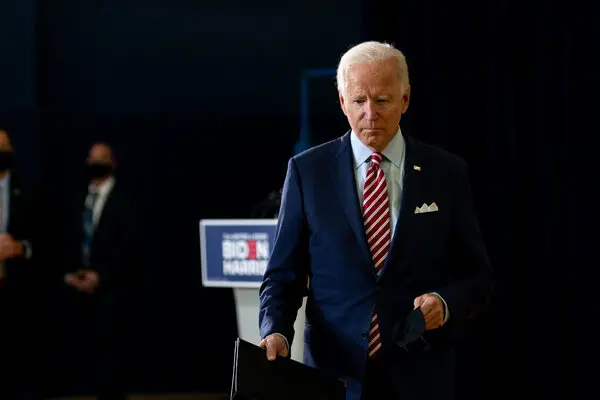
  • Settlement Expansion: Biden Administration Condemns Israel

    Settlement Expansion: Biden Administration Condemns Israel

    The Biden administration delivered a significant policy shift on Friday, rebuking Israel’s expansion of settlements in the West Bank and asserting that such actions violate international law. U.S. Secretary of State Antony Blinken, speaking during a news conference in Buenos Aires, expressed disappointment over Israel’s announcement of plans to construct more than 3,300 new homes in settlements within the Israeli-occupied West Bank. Blinken emphasized that these actions are inconsistent with international law and reiterated the administration’s firm opposition to settlement expansion, which it views as detrimental to Israel’s security rather than enhancing it. This stance marks a departure from the Trump administration’s position, which had previously stated that settlements did not contravene international law.


    The decision by Israel to proceed with the construction of new settlements came in the wake of a deadly attack near the Maale Adumim settlement, where three Palestinian gunmen opened fire on passing cars, resulting in the death of one Israeli and injuries to five others. Following this incident, Israel’s finance minister, Bezalel Smotrich, a prominent figure on the far-right, disclosed that Prime Minister Benjamin Netanyahu and Defense Minister Yoav Gallant were involved in the discussions regarding the settlement expansion. The plan includes the approval processes for the construction of 300 new homes in the Kedar settlement, 2,350 in Maale Adumim, and advancing the construction of nearly 700 homes in Efrat.


    Smotrich justified the decision by linking it to the security concerns stemming from the attack, asserting that any harm inflicted on Israel would result in an escalation of settlement construction and an expansion of Israeli control over the region. While the move was applauded by some within Israel’s political spectrum, it drew condemnation from the Biden administration and elicited concern from advocates of a two-state solution to the Israeli-Palestinian conflict.


    The White House, through its national security spokesperson John Kirby, reiterated its longstanding position on the issue, emphasizing the commitment to a two-state solution and denouncing the inconsistency of settlements with international law. Kirby addressed questions regarding the timing of the policy change, stating that the administration deemed it necessary to reaffirm its stance given the current context and to underscore the imperative of adhering to international legal norms.


    The Biden administration’s rebuke of Israel’s settlement expansion underscores the complexities surrounding the Israeli-Palestinian conflict and highlights the divergent approaches taken by successive U.S. administrations. While Israel views the settlements as integral to its security and national identity, the international community, including the United States under the Biden administration, considers them illegal under international law and a significant impediment to achieving a lasting peace agreement between Israel and the Palestinians.


    The issue of settlements has long been a contentious and divisive issue, with Israel asserting its right to build and expand communities in the West Bank and East Jerusalem, territories captured during the 1967 Six-Day War. The Palestinians, backed by much of the international community, argue that the settlements undermine the prospects for a viable Palestinian state and violate the Fourth Geneva Convention, which prohibits the transfer of civilian populations into occupied territory.


    The Biden administration’s stance on settlements reflects a broader commitment to promoting stability and security in the Middle East while seeking to advance the prospects for a negotiated settlement to the Israeli-Palestinian conflict. By reaffirming the illegality of settlements and expressing disappointment over Israel’s expansion plans, the administration aims to signal its commitment to upholding international law and fostering conditions conducive to a peaceful resolution of the conflict.

  • Israeli Cabinet Rejects Palestinian Statehood Proposal

    Israeli Cabinet Rejects Palestinian Statehood Proposal

    The tension between the United States and Israel has escalated further, with the Israeli cabinet unanimously approving a declaration strongly opposing any plan for Palestinian statehood, according to a report by the Times of Israel.


    This move comes in response to reports suggesting that the US, along with several Arab partners, is working on a comprehensive peace deal between Israel and the Palestinians, which includes a “firm timeline” for the establishment of a Palestinian state.


    The Israeli cabinet decision emphasizes Israel’s rejection of any international dictates regarding a permanent settlement with the Palestinians. It asserts that any potential settlement must be achieved through direct negotiations between the parties, without preconditions.


    Furthermore, the statement from the Israeli cabinet expresses opposition to unilateral recognition of a Palestinian state, labeling it as a significant reward for terrorism and a hindrance to future peace negotiations.


    In response to Israel’s stance, a spokesperson from the US State Department reiterated the US’s commitment to the two-state solution and its opposition to policies that undermine it. The spokesperson emphasized the importance of creating a Palestinian state as a means to achieve lasting peace and security for both Israelis and Palestinians.


    The Israeli cabinet’s position echoes sentiments expressed by Israeli Prime Minister Benjamin Netanyahu following reports about the proposed peace deal. Netanyahu, responding to a Washington Post report on the matter, emphasized Israel’s rejection of any agreement that endangers its security or undermines its interests.


    While the timing for announcing the peace plan reportedly hinges on reaching a ceasefire between Israel and Hamas in Gaza, members of Netanyahu’s Likud party and right-wing ministers within his coalition have publicly criticized the proposal. However, the statement issued by the Israeli cabinet received approval from centrist members of the government, including ministers Benny Gantz and Gadi Eisenkot.


    The ongoing conflict was sparked by a Hamas terror attack on October 7, characterized by thousands of terrorists breaching the border, resulting in numerous casualties and the capture of hostages. The proposed peace plan reportedly includes concessions that Israel has previously refused, such as the evacuation of West Bank settlements and the establishment of a Palestinian capital in East Jerusalem.


    Despite calls for normalization from Saudi officials, both the US and Israel have stressed the necessity of a ceasefire in Gaza as a prerequisite for any peace deal. They emphasize the importance of creating a clear pathway toward a Palestinian state.


    In the past, Netanyahu has expressed opposition to the creation of a Palestinian state, citing security concerns and the risk posed by extremist groups like Hamas. He has argued that the recent violence underscores the dangers of granting autonomy to Palestinian territories, particularly in close proximity to Israeli population centers.


    Netanyahu has faced pressure from world leaders to avoid a ground operation in Rafah, a Hamas stronghold on the Gaza-Egypt border. However, he has emphasized the need to prioritize Israel’s security and combat the threat posed by Hamas, regardless of external pressure.


    The situation remains complex, with significant challenges to overcome before a lasting peace agreement can be reached. Both Israel and the US remain committed to pursuing diplomatic solutions, but the path forward is fraught with obstacles and uncertainties.


    As tensions persist and violence continues, the need for constructive dialogue and meaningful negotiations becomes increasingly urgent. The international community must continue to support efforts aimed at achieving a just and lasting resolution to the Israeli-Palestinian conflict, one that ensures security, prosperity, and dignity for all parties involved.

  • Ruchira Condemns Civilian Losses in Israel-Hamas Conflict

    Ruchira Condemns Civilian Losses in Israel-Hamas Conflict

    India’s Permanent Representative to the United Nations, Ruchira Kamboj, emphatically denounced the loss of civilian lives in the ongoing conflict between Israel and Hamas, asserting that the resulting humanitarian crisis is unequivocally unacceptable. Addressing a meeting of the United Nations General Assembly (UNGA) to discuss the situation in West Asia, Kamboj highlighted India’s sustained efforts to normalize the region’s ongoing turmoil and extend humanitarian aid to Gaza.


    “The ongoing conflict between Israel and Hamas has led to a large-scale loss of civilian lives, especially women and children, and has resulted in an alarming humanitarian crisis. This is clearly unacceptable, and we have strongly condemned the deaths of civilians. At the same time, we are aware that the immediate trigger was the terror attacks in Israel on October 7, which were shocking and deserve our unequivocal condemnation. India has a zero-tolerance approach to terrorism,” stated Kamboj.


    India’s involvement in the resolution of the Israel-Hamas conflict has been proactive, with diplomatic efforts at various multilateral forums. Ruchira Kamboj emphasized that the Indian leadership maintains constant communication with leaders in the region, including those of Israel and Palestine. This dialogue extends to participation in multilateral forums such as the G20, the BRICS, and the Global South Summit in November 2023. India has consistently reiterated its principled stance on the Israel-Palestine issue, advocating for continued humanitarian aid for the affected population.


    “In this regard, we hope that Security Council Resolution 2720 would aid in enhancing humanitarian assistance,” added India’s permanent envoy to the UN. She emphasized India’s commitment to providing humanitarian aid, revealing that the country has contributed 70 tonnes of humanitarian assistance, including 16.5 tonnes of medicine and medical supplies, to the people of Palestine. India also provided USD 5 million, including USD 2.5 million at the end of December 2023, to the United Nations Relief and Works Agency for Palestine refugees in the Near East, supporting core programs such as education, healthcare, relief, and social services for Palestinian refugees.


    Reiterating the two-state solution, Kamboj stressed that a peaceful resolution of the conflict through dialogue and diplomacy remains the only viable path forward. She emphasized that India’s message throughout the conflict has been consistent—calling for the prevention of escalation, ensuring the continued delivery of humanitarian aid, and working toward an early restoration of peace and stability.


    “The message that India has conveyed since the start of this conflict is clear and consistent. It is important to prevent escalation, ensure the continued delivery of humanitarian aid, and work towards an early restoration of peace and stability. A peaceful resolution of the conflict through dialogue and diplomacy is the only way forward,” Kamboj asserted.


    By reaffirming India’s firm commitment to achieving a just, peaceful, and lasting solution to the Israel-Palestine issue, Kamboj reiterated that only a two-state solution, achieved through direct and meaningful negotiations between both sides on final status issues, will deliver an enduring peace that the people of Israel and Palestine desire and deserve.


    In light of the alarming humanitarian crisis, Ruchira Kamboj urged the parties involved to de-escalate tensions, eschew violence, and collaborate to create conditions conducive to the early resumption of direct peace negotiations. The Indian envoy’s comprehensive statement at the UN reflects India’s active engagement in addressing global crises, advocating for peace, and promoting diplomatic solutions to complex geopolitical challenges.

  • Joint Statement by Nine Arab Nations Condemning Attack

    Joint Statement by Nine Arab Nations Condemning Attack

    In the midst of the Israel-Hamas conflict, nine Arab nations came together on October 26 to issue a joint statement that condemns the targeting of civilians and violations of international law in Gaza. These Arab countries include Bahrain, Egypt, Jordan, Kuwait, Morocco, Oman, Qatar, Saudi Arabia, and the UAE.


    The foreign ministers of these nations expressed their concerns regarding the situation, particularly emphasizing the need for a peaceful resolution to the ongoing conflict. They acknowledged Israel’s right to self-defense, especially in the aftermath of a significant attack by Hamas militants on October 7. However, they firmly stated that this right to self-defense should not be used to justify the neglect of Palestinian rights.


    The ministers’ statement makes it clear that the right to self-defense should not be a pretext for blatant violations of international law and international humanitarian principles. Furthermore, the deliberate disregard for the legitimate rights of the Palestinian people is strongly criticized.


    One of the central issues that the Arab countries addressed is the targeting of civilians in Gaza. Deliberate acts that result in civilian casualties are condemned as a clear violation of international norms. They also expressed their condemnation of actions like forced displacement and collective punishment in Gaza.


    Additionally, the ministers underscored the fact that the prolonged conflict and the lack of a political solution to the Israeli-Palestinian crisis have led to recurring acts of violence and continued suffering for both Palestinian and Israeli populations. The protracted conflict has far-reaching implications, not only for the immediate region but also for the global community.


    One of the key points emphasized in the joint statement is the need for a two-state solution. The Arab nations have called for the establishment of an independent, sovereign, contiguous, and viable Palestinian state, which would be based on the pre-June 4, 1967, borders. They assert that East Jerusalem should serve as its capital.


    These pre-June 4, 1967, borders refer to the territories held by Israel and the neighboring Arab states before the Six-Day War. These territories include the West Bank and East Jerusalem, which were captured by Israel during the war. The Arab nations stress the importance of defining these borders as a part of any sustainable solution.


    The joint statement represents the united stance of these Arab countries in addressing the Israel-Hamas conflict. It reflects their concern for the well-being of both Palestinian and Israeli populations and their commitment to finding a peaceful resolution to this long-standing crisis.


    In a related development, Iran’s Foreign Minister, Hossein Amirabdollahian, warned during a United Nations General Assembly meeting that if Israel’s military actions in Gaza persist, the United States may not be immune to the consequences. Amirabdollahian explicitly stated that while Iran does not welcome an expansion of the conflict in the region, continued violence and what he referred to as “genocide in Gaza” could have broader implications. This underscores the gravity of the situation and the need for international efforts to bring about a peaceful resolution to the Israel-Hamas conflict.


    The statement by the Arab nations and Iran’s warning reflect the ongoing international concern about the situation in the region. The call for a two-state solution and the condemnation of civilian targeting and violations of international law highlight the urgent need for a comprehensive and sustainable resolution to the Israel-Hamas conflict.

  • President Biden’s Call for Peace Amid Israel-Hamas Conflict

    President Biden’s Call for Peace Amid Israel-Hamas Conflict

    US President Joe Biden has made a strong call for peace amid the Israel-Hamas conflict, emphasizing the need for safety, dignity, and peace for both Israelis and Palestinians. He underscored that a two-state solution is the key to resolving the long-standing conflict.


    Taking to the social media platform X, President Biden conveyed his message, stating, “Even though it’s incredibly challenging, we must not abandon the pursuit of peace. We must continue to work towards a two-state solution.” He also expressed the importance of Israel and Ukraine’s success for national security, drawing from history to highlight the consequences of inaction against terrorists and dictators.


    On October 20, President Biden suggested that the recent attack by Hamas on Israel may have been influenced by concerns about Israel’s normalization of relations with Saudi Arabia. He made this observation during a campaign fundraiser, indicating that his planned meeting with Saudi officials might have triggered the Hamas assault on Israel, which occurred on October 7.


    The President noted that the Saudi government had been moving toward recognizing Israel, and this development might have been a factor motivating Hamas to act. In September, Israeli Prime Minister Benjamin Netanyahu, during a meeting with President Biden on the sidelines of the UN General Assembly, expressed optimism about the potential for a historic peace agreement between Israel and Saudi Arabia.


    The effort to normalize relations was initiated in September at the Group of 20 summit held in India, with discussions centered on a shipping corridor collaboration. Saudi Arabia had been advocating for the protection of Palestinian rights as part of a comprehensive agreement with Israel. The success of such an agreement could potentially lead to increased recognition of Israel by other Arab and Muslim-majority nations. Historically, many Muslim-majority countries have opposed Israel since its creation in a region where Palestinians have long resided.


    Secretary of State Antony Blinken also suggested that the leadership of Hamas may have been driven by a desire to obstruct diplomatic relations between Israel and Saudi Arabia.


    Pope Francis has also joined in appealing for peace and expressed deep concern about the dire situation in Gaza. He has called for efforts to prevent a humanitarian catastrophe.


    President Biden has consistently expressed strong support for Israel following the attack by Hamas on October 7. The Israeli military’s response has amplified the humanitarian crisis in Gaza, posing a significant threat to the escalation of the conflict. Casualties on both sides have been substantial, with over 1,400 Israelis and 4,137 Palestinians killed. Additionally, following the initial attack, Hamas took more than 200 individuals as hostages.