Tag: Trinamool Congress

  • CBI Arrests Three in Connection with Attack on ED Team

    CBI Arrests Three in Connection with Attack on ED Team

    The Central Bureau of Investigation (CBI) has made significant strides in its investigation into the January 5 attack on an Enforcement Directorate (ED) team at Sandeshkhali in West Bengal, with the arrest of three individuals, including the brother of suspended Trinamool Congress (TMC) leader Shajahan Sheikh. Sheikh Alomgir, Mafujar Molla, and Sirajul Molla are set to appear before a local court on Sunday in connection with their alleged involvement in the attack.


    The arrest of these individuals comes after the CBI took over three First Information Reports (FIRs) registered by the West Bengal Police, following directives from the Calcutta High Court. Utilizing technical evidence collected during their investigation, the agency made the arrests, bringing the total number of individuals apprehended in connection with the case to 14.


    According to officials, the CBI suspects that those arrested were part of the attack on ED officials and allegedly incited a crowd to target the team during their raid on Sheikh’s premises in Sandeshkhali. The attack occurred as the ED team was conducting a search related to an alleged ration distribution scam, leading to a violent confrontation with a mob of around 1,000 people.


    Sheikh’s arrest on February 29 marked the culmination of a 55-day period during which he remained on the run following violent protests and allegations of sexual atrocities and land grab. His disappearance came after the ED team was attacked, prompting the state CID to take over the investigation into the allegations against him. Subsequently, Sheikh was handed over to the CBI following an order from the Calcutta High Court.


    On March 10, the court granted the CBI custody of Sheikh for four days, a period that was later extended by an additional eight days until March 22. The CBI is now spearheading the investigation into the incidents of January 5, as well as other related cases, including the alleged ration distribution scam.


    The developments surrounding the arrest of Sheikh’s brother and two others underscore the CBI’s commitment to uncovering the truth and bringing those responsible for the attack to justice. With ongoing investigations and legal proceedings, the case continues to unfold, shedding light on the complexities of law enforcement and criminal justice in the region.


    As the investigation progresses, the focus remains on upholding the rule of law and ensuring accountability for those involved in criminal activities. The CBI’s efforts serve as a reminder of the crucial role that law enforcement agencies play in safeguarding the interests of the public and maintaining the integrity of the justice system.


    The arrest of three individuals in connection with the attack on the ED team at Sandeshkhali reflects the determination of the CBI to pursue justice and uphold the rule of law. With ongoing investigations, the agency remains steadfast in its commitment to uncovering the truth and holding accountable those responsible for the violence and criminal acts perpetrated on that fateful day in January.

  • West Bengal CM Mamata Banerjee Suffers Injury in Accident

    West Bengal CM Mamata Banerjee Suffers Injury in Accident

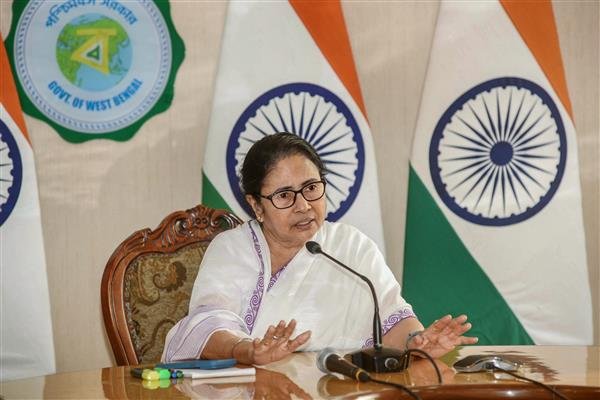
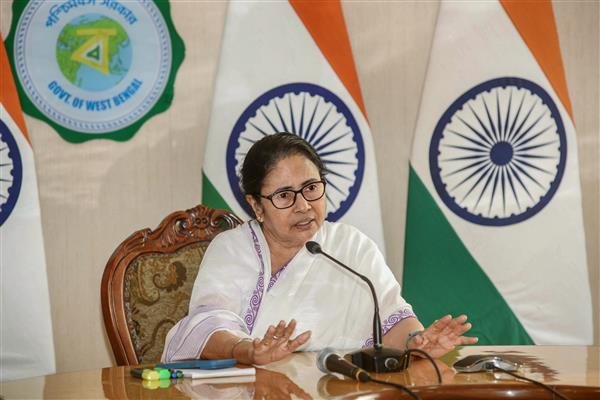
    West Bengal Chief Minister Mamata Banerjee’s recent accident has sparked concerns and well-wishes from across the political spectrum. The Trinamool Congress (TMC) revealed that Banerjee sustained “major injuries” in the accident, which occurred at her residence in Kalighat, South Kolkata. The 69-year-old leader was admitted to the Woodburn Ward of the state-run SSKM Hospital, where she received medical attention for injuries to her forehead that required stitches.


    Images shared by the TMC on social media showed Banerjee lying in a hospital bed with a visible cut on her forehead and blood on her face. According to her family, Banerjee fell inside her home shortly after returning from a public event.


    “We wish for the speedy recovery of the chief minister,” said West Bengal State Bharatiya Janata Party (BJP) President Sukanta Majumdar, echoing sentiments expressed by others across the political spectrum, including TMC national general secretary Abhishek Banerjee and State Congress president Adhir Ranjan Chowdhury.


    The accident has drawn attention to Banerjee’s vocal opposition to the Citizenship Amendment Act (CAA), which she has described as a “gimmick” and vowed not to implement in West Bengal. Banerjee has been outspoken in her criticism of the CAA, warning residents against applying for citizenship under the act and cautioning that it could lead to their categorization as “illegal migrants” and the loss of their rights. She has also linked the CAA to the National Register of Citizens (NRC), further heightening tensions surrounding the controversial legislation.


    Union Home Minister Amit Shah has countered Banerjee’s stance on the CAA, accusing her of misunderstanding the difference between refugees and infiltrators. Shah has called on Banerjee to reconsider her opposition to the CAA, emphasizing that the legislation aims to provide refuge to persecuted minorities from neighboring countries, particularly Bengali Hindus from Bangladesh. He has urged Banerjee to clarify which specific clause of the CAA threatens the citizenship rights of individuals and accused her of exploiting communal divisions for political gain.


    Banerjee’s accident has occurred against the backdrop of heightened political tensions in West Bengal, where the ruling TMC and the BJP have been engaged in a fierce electoral battle. The incident has elicited expressions of concern and solidarity from political rivals, highlighting the importance of unity and civility in times of crisis.


    As Banerjee recovers from her injuries, the incident serves as a reminder of the need for political leaders to prioritize dialogue and cooperation over confrontation. Regardless of ideological differences, the well-being of public officials should be a shared concern, underscoring the value of compassion and empathy in the political arena.

  • SC Upholds CBI Probe in Sandeshkhali Attack Case

    SC Upholds CBI Probe in Sandeshkhali Attack Case

    The Supreme Court’s decision to uphold the Calcutta High Court’s order for a Central Bureau of Investigation (CBI) probe into the attack on Enforcement Directorate (ED) officials marks a significant development in the Sandeshkhali case, shedding light on the complex legal and political dynamics at play in West Bengal.


    The incident in question took place when ED officials were conducting searches at premises linked to suspended Trinamool Congress (TMC) leader Shahjahan Sheikh in Sandeshkhali, West Bengal. The attack on the officials raised serious concerns about law and order in the state, prompting the Calcutta High Court to intervene and order a CBI probe into the matter.


    During the hearing on a plea filed by the West Bengal government challenging the High Court’s order, the Supreme Court questioned the state government about the delay in arresting Shahjahan Sheikh. Senior advocate Abhishek Manu Singhvi, representing the West Bengal government, explained to the court that there was initially a stay on the investigation, but once the court clarified its position, the state police promptly arrested the accused. Singhvi also mentioned that seven individuals had been arrested earlier in connection with the incident.


    The apex court bench’s decision to expunge the Calcutta High Court’s observation against the West Bengal government and state police regarding the transfer of the probe to the CBI indicates a nuanced approach to the case. While upholding the CBI probe, the court has taken into account the complexities of the legal proceedings and the actions taken by the state authorities.


    In a parallel development, a CBI team visited Bongaon in North 24 Parganas district to further its investigation into the attack on the ED team. This investigative step underscores the CBI’s commitment to unraveling the truth behind the incident and holding the perpetrators accountable.


    The arrest of Shankar Adhya, the former chairman of Bongaon Municipality and TMC leader, on January 5 following the ED searches adds another layer of complexity to the case. The mob’s attempt to prevent the ED team from taking Adhya into custody underscores the volatile nature of the situation and the challenges faced by law enforcement authorities.


    The CBI team’s visit to Adhya’s house, accompanied by forensic sciences personnel, highlights the meticulous approach adopted by the agency in gathering evidence and conducting a thorough investigation. The use of 3D scanners to map Adhya’s home and surrounding areas demonstrates the adoption of advanced technology to reconstruct the sequence of events and ascertain the facts accurately.


    Additionally, the CBI’s request for CCTV footage from Adhya’s house on January 5 indicates the agency’s focus on gathering corroborative evidence to strengthen its case. By leveraging technological tools and forensic expertise, the CBI aims to build a robust investigation that stands up to scrutiny in court.


    The arrest of Shahjahan Sheikh on February 29 after 55 days on the run further underscores the significance of the ongoing investigation. The violent protests and allegations of sexual atrocities and land grabbing surrounding Sheikh’s arrest highlight the broader socio-political implications of the case.


    The Supreme Court’s decision to uphold the CBI probe into the Sandeshkhali attack case reflects a commitment to upholding the rule of law and ensuring justice prevails. As the investigation unfolds, it will be crucial to maintain transparency and accountability to address the underlying issues and restore public trust in the justice system.

  • ED Attaches ₹10.29 Crore of Trinamool Congress

    ED Attaches ₹10.29 Crore of Trinamool Congress

    The Enforcement Directorate (ED) made headlines on Monday as it announced the attachment of ₹10.29 crore belonging to the Trinamool Congress (TMC) party. This action came as part of an investigation into alleged money laundering activities involving the Alchemist Group and other entities.


    According to the ED, the attached amount, in the form of a demand draft, was tendered by the TMC during the investigation. The probe focused on allegations that approximately ₹10.29 crore was utilized by the Alchemist Group, led by Kanwar Deep Singh, a former member of the Rajya Sabha, to make payments to aviation companies on behalf of the TMC during the campaigning for the 2014 Lok Sabha elections.


    The enforcement agency asserted that the aircraft funded through these transactions were utilized by prominent Trinamool Congress figures, including West Bengal Chief Minister Mamata Banerjee, party MLA and former railway minister Mukul Roy, actor Moon Moon Sen, and Member of Parliament Nusrat Jahan, among others, during the election campaign.


    The ED’s investigation revealed that Alchemist Airways Pvt Ltd disbursed ₹10.29 crore to various aviation or helicopter companies to provide aviation services for the TMC’s star campaigners during the 2014 Lok Sabha elections.


    This development underscores the broader issue of alleged financial irregularities and money laundering activities in the political landscape of India. The ED’s action brings into focus the nexus between political parties and corporate entities, raising questions about transparency, accountability, and ethical conduct in political financing.


    Furthermore, the ED’s probe is part of a larger crackdown on financial crimes and illicit activities under the Prevention of Money Laundering Act (PMLA). The agency’s investigation is based on multiple FIRs registered by the Central Bureau of Investigation (CBI) and the Kolkata Police against various individuals and group companies associated with the Alchemist Group.


    The ED’s findings suggest that the Alchemist Group engaged in fraudulent activities, including the illegal mobilization of funds from investors through promises of high returns and lucrative investment opportunities. However, instead of fulfilling its commitments, the group allegedly siphoned off or diverted the funds to its various subsidiary companies.


    The arrest of Kanwar Deep Singh in January 2021 further underscores the seriousness of the allegations against the Alchemist Group and its associates. Singh, a former TMC Rajya Sabha MP, was apprehended by the ED as part of its ongoing investigation into the financial irregularities and fraudulent practices perpetrated by the group.


    The ED’s actions serve as a reminder of the imperative to combat financial crimes, uphold the rule of law, and safeguard the interests of investors and the general public. It highlights the need for stringent regulatory oversight, effective enforcement mechanisms, and accountability measures to prevent money laundering, fraud, and other illicit financial activities.


    Moreover, the ED’s probe into the alleged involvement of political parties in money laundering activities underscores the importance of transparency and integrity in political funding. It underscores the significance of robust regulatory frameworks and ethical standards to ensure the integrity of democratic processes and institutions.


    The ED’s attachment of ₹10.29 crore belonging to the Trinamool Congress in connection with the Alchemist Group money laundering case underscores the need for greater vigilance and accountability in political financing and financial transactions. It emphasizes the importance of comprehensive measures to combat financial crimes and uphold the rule of law, integrity, and transparency in India’s political and economic landscape.

  • Trinamool Congress Fields Mahua Moitra Again

    Trinamool Congress Fields Mahua Moitra Again

    Trinamool Congress’ decision to field Mahua Moitra again for the upcoming Lok Sabha elections from Krishnanagar in Bengal is not just a political move; it’s a statement of defiance against the Bharatiya Janata Party (BJP). Moitra, who was expelled from the Lok Sabha three months ago, has been reinstated as a candidate by Mamata Banerjee’s party, sending a clear message that her political career is far from over.


    The decision to field Moitra despite the alleged cash-for-questions issue is significant, considering the initial hesitance shown by the Trinamool Congress. However, after the matter escalated and Moitra faced expulsion from the Lok Sabha following a hearing by an Ethics committee, the party threw its full support behind her. Mamata Banerjee herself expressed shock at Moitra’s treatment, labeling it as a “murder of democracy.”


    Moitra’s expulsion from the Lok Sabha came after she was not allowed to present her side of the story or defend herself against the allegations leveled against her. This led to widespread condemnation from within the Trinamool Congress and the broader opposition bloc. Banerjee praised the unity shown by the INDIA alliance in supporting Moitra and vowed to continue the fight against the BJP.


    The decision to re-nominate Moitra for the Krishnanagar seat is indicative of the Trinamool Congress’ unwavering support for her despite the controversy surrounding her expulsion. By fielding her again, the party is not only standing by one of its prominent leaders but also sending a clear message to its opponents that it will not back down in the face of adversity.


    The timing of Moitra’s re-nomination is also significant, coming at a time when political tensions are high in Bengal ahead of the upcoming elections. The Trinamool Congress has named candidates for all 42 Lok Sabha seats in Bengal, underscoring its determination to contest the elections independently, without any alliance partners.


    The breakdown in seat-sharing talks with the Congress further highlights the Trinamool Congress’ resolve to assert its dominance in Bengal politics. Mamata Banerjee’s decision to suspend her party’s membership from the INDIA alliance and go it alone in the elections demonstrates her confidence in the Trinamool’s ability to secure a victory on its own.


    Moitra’s re-nomination is likely to galvanize Trinamool supporters and strengthen the party’s position in Krishnanagar. Despite facing challenges and allegations, Moitra remains a popular figure within the party and among voters in her constituency. Her candidature is expected to energize the party’s campaign and mobilize support at the grassroots level.


    Moreover, Moitra’s reinstatement sends a strong message to the BJP, which has been making concerted efforts to expand its footprint in Bengal. By re-nominating Moitra, the Trinamool Congress is signaling that it will not be intimidated by the BJP’s tactics or attempts to discredit its leaders.


    The decision to field Moitra again also reflects the Trinamool Congress’ commitment to upholding democratic principles and fighting against injustice. Moitra’s expulsion from the Lok Sabha was widely seen as an act of political vendetta, aimed at silencing dissenting voices and undermining the opposition.


    In re-nominating Moitra, the Trinamool Congress is reaffirming its commitment to protecting the rights of its members and standing up against authoritarianism. By standing by Moitra, the party is sending a clear message that it will not be cowed down by attempts to suppress dissent or curtail freedom of expression.


    Overall, Moitra’s re-nomination is a strategic move by the Trinamool Congress to bolster its electoral prospects in Bengal and send a defiant message to its opponents. By standing by one of its prominent leaders, the party is demonstrating its resilience and determination to fight for the values it holds dear. As the elections approach, all eyes will be on Krishnanagar to see how Moitra and the Trinamool Congress fare in what promises to be a closely contested battle.

  • TMC Drops Nusrat Jahan, Fields Nurul Islam

    TMC Drops Nusrat Jahan, Fields Nurul Islam

    The Trinamool Congress (TMC) made significant announcements regarding its candidates for the upcoming Lok Sabha elections in West Bengal. Among the notable decisions was the dropping of MP Nusrat Jahan from contesting the Basirhat Lok Sabha seat, a move that garnered attention amid the Sandeshkhali row. Instead, the party has fielded Nurul Islam as the candidate for the Basirhat seat.


    Mamata Banerjee-led TMC revealed its list of 42 candidates from West Bengal, comprising several high-profile names. Notable inclusions are former cricketer Yousuf Pathan, who will contest from the Baharampur seat, and Shatrughan Sinha, who will represent the party in Asansol. Additionally, Kirti Azad has been fielded from Durgapur, among others.


    The decision to drop Nusrat Jahan and field Nurul Islam reflects the party’s strategic considerations amidst ongoing controversies. Nusrat Jahan’s exclusion comes in the wake of the Sandeshkhali row, suggesting a response to internal and external pressures within the party.


    The TMC’s decision to nominate candidates for all 42 seats in West Bengal puts an end to speculation regarding seat-sharing pacts with other parties, particularly the Congress. Despite not forming an alliance with the Congress, the TMC maintains its affiliation with the grand old party in the INDIA bloc.


    Abhishek Banerjee, the nephew of West Bengal Chief Minister Mamata Banerjee, made the official announcement of the TMC candidates in Kolkata. The move demonstrates the party’s assertiveness and autonomy in decision-making, signaling a departure from potential collaborative arrangements with other political entities.


    The announcement of candidates by the TMC prompted reactions from various quarters, including Congress MP Jairam Ramesh. Ramesh emphasized the importance of mutual negotiations and collective decision-making in seat-sharing talks. He expressed the Congress’s willingness to strengthen the INDIA alliance in West Bengal while advocating for a respectful and collaborative approach to seat allocation.


    The decision-making process within the TMC reflects the party’s strategy to consolidate its position and assert its dominance in West Bengal politics. By nominating candidates for all 42 seats, the TMC aims to project strength and unity, sending a message of readiness to contest the upcoming elections independently.


    The exclusion of Nusrat Jahan and the nomination of Nurul Islam underscore the party’s focus on addressing internal rifts and external challenges effectively. It also highlights the TMC’s commitment to adapting to changing political dynamics and responding to emerging controversies proactively.


    While the TMC’s decision may have disappointed some quarters, particularly those hoping for a seat-sharing pact with the Congress, it reaffirms the party’s resolve to chart its own course and pursue its political agenda independently.


    As the Lok Sabha elections draw nearer, the TMC’s candidate list sets the stage for a fiercely contested electoral battle in West Bengal. With high-profile candidates and strategic maneuvering, the TMC aims to retain its stronghold in the state and secure a significant victory in the upcoming polls.


    Overall, the TMC’s announcement of candidates for all 42 Lok Sabha seats in West Bengal reflects its assertive approach, strategic calculations, and readiness to navigate the complex political landscape of the state.

  • ED Issues Second Summons to TMC Leader Mahua Moitra

    ED Issues Second Summons to TMC Leader Mahua Moitra

    The Enforcement Directorate (ED) has issued a second summons to Trinamool Congress (TMC) leader Mahua Moitra, directing her to join the probe on March 11 in connection with irregularities in a foreign exchange contravention case. This development comes after Moitra failed to appear before investigators on February 19, prompting the issuance of fresh summons.


    Moitra has been instructed to appear at the agency’s headquarters in Delhi and bring along certain documents related to foreign investments. The ED’s investigation into the case is being conducted under the provisions of the Foreign Exchange Management Act (FEMA), 1999, and the agency seeks to record Moitra’s statement regarding the matter.


    Notably, the Central Bureau of Investigation (CBI) is also probing Moitra in a preliminary inquiry based on a reference from the Lokpal. The ED’s case is believed to be linked to the reference from the CBI, suggesting a connection between the two investigations.


    Moitra has been embroiled in controversy following allegations made by Bharatiya Janata Party MP Nishikant Dubey, who accused her of targeting the Adani Group and Prime Minister Narendra Modi in the Lok Sabha at the behest of businessman Darshan Hiranandani in exchange for gifts. Dubey further alleged that Moitra compromised national security for monetary gains.


    In response to these allegations, Moitra has vehemently denied any wrongdoing and claimed that she is being targeted for raising questions about the deals of the Adani Group. She was expelled as a Lok Sabha member on December 8 after the ethics panel found her guilty in the ‘cash-for-query’ case.


    Moitra has criticized the lack of official documentation regarding the investigations against her, stating that neither the Lokpal nor the CBI has provided any official information. She has emphasized the need for transparency and accountability in the investigative process.


    Despite the ongoing investigations and allegations, Moitra remains steadfast in her denial of any misconduct and continues to assert her innocence. The developments surrounding her case highlight the intersection of politics, business interests, and regulatory scrutiny in India’s governance landscape.

  • Tensions Rise Over Hindu Prayers in Gyanvapi Mosque

    Tensions Rise Over Hindu Prayers in Gyanvapi Mosque

    A wave of tension grips the Gyanvapi Mosque premises as Trinamool Congress (TMC) leader Siddiqullah Chowdhury issues a stern warning to Hindu worshippers to vacate immediately. Speaking at a Jamiat Ulema-e-Hind rally in Kolkata, Chowdhury’s remarks escalate the ongoing dispute over Hindu prayers being conducted in the southern cellar of the mosque.


    Chowdhury’s statement, as reported by India Today, includes a warning directed at Uttar Pradesh Chief Minister Yogi Adityanath, indicating that if Adityanath were to visit West Bengal, he would be prevented from leaving. The TMC leader’s call for the evacuation of Hindu worshippers is met with heightened tensions amid allegations of religious encroachment.


    Expressing his dismay, Chowdhury questions the legitimacy of Hindu prayers within the mosque’s confines. “Why are they coming to worship in our mosques? We don’t go to any temple for prayer,” he asserts, emphasizing the sanctity of the Gyanvapi Mosque, which has stood for over 800 years. He vehemently opposes any attempts to convert the mosque into a temple, rallying against what he perceives as an infringement on religious freedom.


    The controversy surrounding the Gyanvapi Mosque exacerbates as the Muslim side alleges collusion between the state government and Hindu parties involved in the case. Senior Advocate SFA Naqvi, representing the Muslim side, raises concerns during the hearing at the Allahabad High Court regarding the presence of the advocate general. Naqvi questions the advocate general’s role, insinuating potential ties between the plaintiff and the state.


    In response, Justice Rohit Ranjan Agarwal asserts that the advocate general was merely providing assistance, yet the presence of the state government in the proceedings remains contentious. The Allahabad High Court adjourns the hearing to February 12 amidst mounting tensions and accusations surrounding the legal proceedings.


    The underlying dispute revolves around a plea challenging the Varanasi district court’s decision permitting Hindu prayers in the southern cellar of the Gyanvapi Mosque. The district court’s ruling granted access for Hindu worshippers to conduct prayers before the idols within the mosque premises, sparking outrage and division within the community.


    As the legal battle unfolds, religious sensitivities and political affiliations converge, fueling unrest and apprehension. The Gyanvapi Mosque dispute serves as a poignant reminder of the delicate balance between religious freedoms and communal harmony, underscoring the need for judicious resolution and dialogue amidst polarizing circumstances.

  • Cracks in INDIA Bloc Ahead of Elections

    Cracks in INDIA Bloc Ahead of Elections

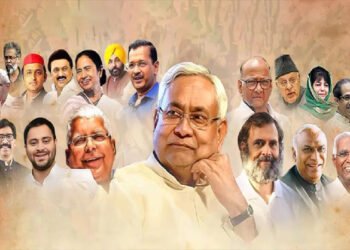
    The much-anticipated INDIA Bloc, a coalition of opposition parties gearing up for the Lok Sabha elections, is showing signs of internal strain as key members distance themselves from joint efforts. The recent decisions by the Aam Aadmi Party (AAP) in Punjab, Trinamool Congress in West Bengal, and now the Janata Dal (United) led by Bihar Chief Minister Nitish Kumar, indicate challenges to the unity of the opposition alliance.


    Today, it was revealed that Nitish Kumar has opted not to join Congress leader Rahul Gandhi’s Bharat Jodo Nyay march when it enters Bihar on January 30. This decision by the Bihar Chief Minister, who played a pivotal role in forming the INDIA Bloc, hints at internal discord within the coalition. The JD(U), an ally of Lalu Yadav’s Rashtriya Janata Dal (RJD) in the Bihar government, appears to be sending a subtle message that not all is well within the opposition alliance.


    The decision not to march with Rahul Gandhi is noteworthy, considering Nitish Kumar’s role as one of the architects of the INDIA Bloc. The internal strife within the alliance is further fueled by allegations that Nitish Kumar took a swipe at RJD chief Lalu Yadav over “dynastic politics.” However, JD(U) leader KC Tyagi clarified that Nitish Kumar’s statement was merely emphasizing the aversion to dynastic succession in politics, as highlighted by socialist leader Karpoori Thakur.


    The INDIA Bloc, aimed at creating a united front against the ruling party, seems to be grappling with internal challenges, with key members expressing reservations or opting out of joint initiatives. This development follows the Trinamool Congress’s decision in West Bengal to go solo in the elections, with allegations that the alliance breakdown was influenced by the Bengal Congress chief Adhir Ranjan Chowdhury’s alleged collaboration with the BJP.


    The Aam Aadmi Party in Punjab has also declined to form an alliance with the Congress, signaling confidence in winning all 13 seats independently. The INDIA Bloc’s internal troubles raise questions about its cohesion and effectiveness in presenting a unified front in the upcoming Lok Sabha elections. As opposition parties navigate alliance dynamics, the political landscape leading to the elections appears to be witnessing shifts and challenges that could impact the broader opposition strategy.

  • Bengal Congress President Adhir Ranjan Chowdhury Opposes

    Bengal Congress President Adhir Ranjan Chowdhury Opposes

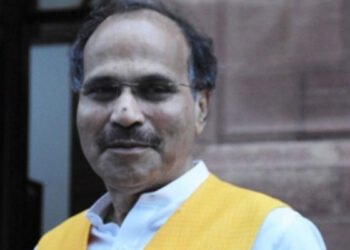
    Bengal Congress President Adhir Ranjan Chowdhury has once again voiced his opposition to an alliance with the Trinamool Congress in the state, sparking internal divisions within the party. While senior Congress leaders believe in the advantages of collaborating with the Trinamool to consolidate anti-BJP votes, a faction, including Adhir Ranjan Chowdhury, advocates for a tie-up with the Left, despite their zero representation in the state assembly following the 2021 elections.


    Chowdhury denied knowledge of anyone “begging” for an alliance with the Trinamool, stating, “Who was begging we don’t know. We are not beggars.” He emphasized that the Congress can independently contest elections without relying on the Trinamool’s support.


    Accusing Trinamool chief Mamata Banerjee of hindering the alliance, Adhir Ranjan Chowdhury asserted, “If there is no alliance, who will be most happy today in Hindustan? If there is no alliance, PM Modi will be most happy. What Mamata Banerjee is doing is serving Modiji.”


    Last week, Chowdhury had already accused Mamata Banerjee of obstructing the alliance in Bengal, suggesting that she fears facing challenges if the alliance materializes. Despite the ongoing tensions, he reiterated that the Congress has the capability to fight elections independently in Bengal.


    The Trinamool, on the other hand, is growing impatient with the Congress’s reluctance to engage in seat-sharing talks, having ignored the given deadline. Mamata Banerjee has clarified that her party is not interested in conceding six seats to the Congress in Bengal. It is reported that the Congress is considering contesting in at least six seats, including Malda, Murshidabad, and the Raiganj seat.


    “INDIA alliance will be present in entire India, and in Bengal, the Trinamool Congress will fight. In Bengal, it is only the Trinamool Congress that can teach the BJP a lesson. It can show the entire country the path to victory, not any other party,” Mamata Banerjee declared.


    The internal strife within the Bengal Congress has led to a clear difference in stance between the state and Delhi Congress. While leaders like Sonia Gandhi and Rahul Gandhi in Delhi are eager to cooperate with the Trinamool Congress for a robust INDIA alliance, the state Congress in Bengal, according to Trinamool spokesperson Kunal Ghosh, is acting as BJP agents.


    “There is a clear difference between Bengal Congress’s stand and Delhi Congress stand. In Delhi Congress, Soniaji, Rahulji, they are eager to take cooperation from Trinamool Congress to make a solid INDIA alliance. But in Bengal, the state Congress, they are playing a role of BJP agents because in 2021, it was Trinamool which fought the battle and defeated BJP,” Ghosh remarked.


    As the rift intensifies, West Bengal witnesses an all-out war within the Congress, with conflicting opinions on whether to ally with the Trinamool or pursue other political strategies in the upcoming elections.

  • Mamata Banerjee Amused by Sri Lankan President’s Question

    Mamata Banerjee Amused by Sri Lankan President’s Question

    During a chance meeting at Dubai Airport, West Bengal Chief Minister Mamata Banerjee had a light-hearted exchange with Sri Lanka’s President, Ranil Wickremesinghe. President Wickremesinghe asked her if she would be leading the opposition INDIA bloc, to which Banerjee responded with a touch of humor, saying, “If people support us, we can be in a position (of power) tomorrow.”


    Banerjee, who is the Supremo of the Trinamool Congress (TMC), is currently on a tour to Dubai and Spain. Over two dozen opposition parties in India have formed the Indian National Developmental Inclusive Alliance (INDIA) to unite against the BJP-led National Democratic Alliance in the 2024 Lok Sabha polls.


    The coordination committee of INDIA recently held its first meeting at the residence of NCP supremo Sharad Pawar in Delhi, indicating their determination to present a united front in the upcoming elections.


    In a post on social media, Banerjee shared the encounter with President Wickremesinghe, stating that he saw her at the Dubai International Airport Lounge and invited her for a discussion. She further extended an invitation to President Wickremesinghe to attend the Bengal Global Business Summit 2023 in Kolkata, scheduled for November 21-22.


    Banerjee also revealed that President Wickremesinghe has invited her to visit Sri Lanka, suggesting that the interaction at the airport had deeper implications.


    Banerjee’s tour to Dubai and Spain is primarily focused on attending business summits and attracting investments to West Bengal. She highlighted the importance of these visits, stating that it had been five years since West Bengal officials had gone abroad. Spain was featured as the theme country in this year’s International Kolkata Book Fair, and Banerjee sees opportunities for collaboration in manufacturing and other industries.


    Regarding her overseas trips, Banerjee explained to reporters at the airport that foreign delegates often visit India, but Indian officials don’t reciprocate these visits frequently. Therefore, her trip aims to bridge that gap and participate in business conferences.


    Banerjee’s visit to Dubai and Spain underscores her efforts to promote investment and development in West Bengal while also showcasing the potential for collaboration with international partners.