Tag: Treatment

  • King Charles III Receives Overwhelming Support

    King Charles III Receives Overwhelming Support

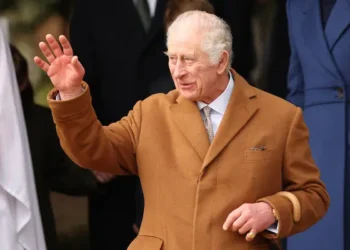
    King Charles III, the reigning monarch, recently revealed his battle with cancer, prompting an outpouring of support from people across the United Kingdom. In his first public appearance since stepping away from public duties to focus on his treatment, the king held his weekly audience with Prime Minister Rishi Sunak. Despite his absence from public engagements, King Charles expressed his determination to continue performing his state duties.


    During the meeting, which took place at Buckingham Palace, King Charles appeared in good spirits, wearing a navy blue suit and tie. In a video released by the palace, he shared a light-hearted moment with Prime Minister Sunak, jokingly attributing his appearance to the use of mirrors. Sunak, in turn, offered words of encouragement, expressing the nation’s support for the monarch during this challenging time.


    “It’s all done by mirrors,” Charles chuckled, displaying his characteristic sense of humor.


    “We’re all behind you,” Sunak reassured him. “The country is behind you.”


    In response, King Charles expressed his gratitude for the overwhelming support he had received since his cancer diagnosis. He revealed that the messages and cards he had received had deeply moved him, often bringing him to tears. Despite facing a personal health challenge, the monarch remained touched by the outpouring of kindness from the public.


    This meeting marked the first time King Charles had been filmed carrying out official duties since late last year. Typically, the monarch reduces his public schedule during the Christmas and New Year holidays. However, this year, his absence was followed by the announcement of his cancer diagnosis earlier in the month, prompting concerns among the public.


    Buckingham Palace had announced the king’s diagnosis less than three weeks after he had undergone treatment for an enlarged prostate. While palace officials did not disclose the specific type of cancer, they clarified that it was not prostate cancer, indicating a separate health issue.


    Despite facing health challenges, King Charles expressed gratitude for the positive impact his diagnosis had on cancer charities in the United Kingdom. The announcement had spurred increased support and awareness for these organizations, highlighting the importance of ongoing research and support for individuals affected by cancer.


    Throughout his reign, King Charles III has been dedicated to fulfilling his duties as the head of state. Even amid personal health concerns, he remains committed to serving the nation to the best of his ability. His resilience and determination in the face of adversity serve as an inspiration to many, garnering widespread admiration and respect from the public.


    As King Charles continues his treatment and recovery journey, the nation stands united in offering him unwavering support and encouragement. His courage and strength in confronting his health challenges exemplify the qualities of leadership and resilience, further solidifying his place in the hearts of the people.


    King Charles III’s recent battle with cancer has elicited an outpouring of support and solidarity from people across the United Kingdom. Despite facing personal health challenges, the monarch remains committed to fulfilling his state duties and serving his nation with dedication and integrity. His resilience and courage serve as a beacon of hope and inspiration during this challenging time.

  • New Study Provides Clues to Understanding Long COVID

    New Study Provides Clues to Understanding Long COVID

    The quest to unravel the mysteries of long COVID is yielding promising clues, thanks to a new study conducted by researchers from the Icahn School of Medicine at Mount Sinai and Yale School of Medicine. Published in Nature, the study identifies crucial differences in certain biomarkers among individuals suffering from long COVID. While this research is a significant step forward, finding a definitive cure for the condition remains a complex challenge.


    In the United States, a substantial number of people continue to grapple with lingering symptoms associated with COVID. Recent reports from the Centers for Disease Control and Prevention (CDC) reveal that in 2022, approximately 18 million adults reported experiencing COVID, with around 8.8 million currently affected by it. Among children, about 1 million have been impacted, with approximately 360,000 still battling ongoing cases.


    The symptoms of long COVID vary widely among individuals, encompassing issues such as brain fog, extreme fatigue, shortness of breath, and a rapid pulse. The susceptibility to long COVID is influenced by a multitude of factors, including medical history, previous vaccinations, prior infections, and genetic factors.


    Long COVID is a complex condition that defies simple explanations, and currently, medical professionals must rely on symptom observation rather than concrete biomarkers for diagnosis.


    David Putrino, associated with Mount Sinai Health System, acknowledges the challenge of seeking a single biomarker or treatment for long COVID. Instead, researchers aim to develop a comprehensive toolkit to assist physicians in diagnosing and treating the condition effectively.


    The recent study conducted a detailed comparison between individuals with long COVID and those who are healthy (comprising those who never had COVID and those who recovered from it). Notably, the study excluded individuals who had been hospitalized with COVID to ensure that any lingering symptoms were not attributed to explainable factors such as lung damage from intubation.


    Among the notable findings, the study revealed that many individuals with long COVID exhibited significantly lower levels of cortisol, a hormone that regulates alertness. This hormonal imbalance could explain the extreme fatigue experienced by some long COVID sufferers. Researchers are now working to uncover the underlying causes of this hormone imbalance, which could ultimately lead to treatment strategies.


    The study also highlighted differences in immune responses among individuals with long COVID, including signs of B-cell activation and T-cell exhaustion. These findings suggest that the immune system remains in a state of prolonged activation, potentially due to the ongoing presence of the virus. Clinical trials are underway to investigate whether extended courses of antiviral treatments, such as Pfizer’s Paxlovid, can help eliminate the lingering virus and alleviate symptoms.


    Another significant discovery was the reactivation of latent viruses, such as the Epstein Barr virus, in some individuals with long COVID. This phenomenon may be attributed to an exhausted immune system, which struggles to keep latent viruses in check.


    While these findings do not represent a straightforward diagnostic test for long COVID, they provide valuable insights for both patients and doctors. Physicians can conduct hormone panel tests to identify dysregulation and assess evidence of latent virus reactivation.


    David Putrino suggests that more data will emerge in the future, and this research approach could serve as a model for investigating other enigmatic long-haul conditions, including chronic fatigue syndrome (ME/CFS) and long-term Lyme disease.


    Moreover, this research offers concrete biological evidence supporting the existence, which can help individuals with the condition combat skepticism and reinforce the validity of their experiences. This progress is a crucial step forward for the millions of people whose lives have been disrupted by chronic long COVID symptoms, ultimately bringing us closer to finding effective treatments and, hopefully, a cure.