Tag: Temperature

  • IMD: Light to Moderate Rainfall for Central and East India

    IMD: Light to Moderate Rainfall for Central and East India

    The India Meteorological Department (IMD) recently issued a weather forecast predicting light to moderate rainfall over Central India and East India for the next five days. According to the latest bulletin released by the IMD, the forecast covers the period from February 10th to February 15th, 2024.


    In its bulletin, the IMD stated that Central India is likely to experience light to moderate rainfall activity from the 10th to the 13th of February. Similarly, East India is expected to witness such rainfall from the 13th to the 15th of February. This prediction suggests a period of wet weather for these regions, which could have implications for agricultural activities, water resources, and overall weather patterns.


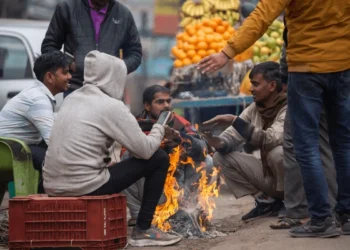
    The weather office also observed cold waves in isolated pockets of Punjab and Himachal Pradesh, indicating a dip in temperatures in these regions. Cold waves can have significant impacts on daily life, including increased energy consumption for heating, potential disruptions to transportation, and health concerns, especially for vulnerable populations.


    The IMD’s forecast also outlined specific predictions for different parts of the country:

    Rainfall Forecasts:

    • Light isolated rainfall/snowfall is expected over Arunachal Pradesh and Sub-Himalayan West Bengal & Sikkim on February 9th, 2024.
    • Under the influence of a likely formation of trough/cyclonic circulation over central parts of the country, isolated to scattered light rainfall activity is likely over various regions during specific periods. These include East Madhya Pradesh, Vidarbha, and Chhattisgarh from the 10th to the 14th of February, Madhya Maharashtra and Marathwada on the 10th and 11th, Odisha on the 11th and 12th, Uttar Pradesh, Bihar, and Jharkhand from the 12th to the 15th, and Gangetic West Bengal from the 13th to the 15th.
    • An isolated light thunderstorm accompanied by lightning is predicted over East Madhya Pradesh, Vidarbha, and Chhattisgarh from the 10th to the 12th of February.
    • Light isolated rainfall is forecast over Coastal Andhra Pradesh on the 9th, Tamil Nadu on the 12th and 13th, Telangana on the 10th and 11th, and Kerala on the 14th and 15th of February.


    Minimum Temperature and Cold Wave Forecasts:

    • Minimum temperatures are expected to range from 5-10°C over most parts of Punjab, Haryana-Chandigarh-Delhi, plains of Uttarakhand, Rajasthan, Uttar Pradesh, Bihar, Jharkhand, north Chhattisgarh, and Madhya Pradesh, which are below normal over the region.
    • No significant change in minimum temperatures is likely over many parts of Northwest, Central, and East India during the next two days, with a subsequent rise by 2-3°C thereafter.
    • Cold wave conditions are anticipated in isolated pockets over Himachal Pradesh, Punjab, Madhya Pradesh, Bihar, and Sub-Himalayan West Bengal & Sikkim on February 9th, and over north Rajasthan & Gangetic West Bengal on the 9th and 10th of February.


    These forecasts provide valuable information for various sectors, including agriculture, transportation, and disaster management, enabling stakeholders to prepare and mitigate potential risks associated with weather-related events. It is essential for individuals and authorities in the affected regions to stay updated with the latest weather forecasts and advisories issued by the IMD to ensure effective planning and response measures.

  • Delhi Orange Alert Issued for Dense Fog

    Delhi Orange Alert Issued for Dense Fog

    The national capital, Delhi, experienced a minimum temperature of 8.5 degrees Celsius on Saturday, slightly above the seasonal average, according to the India Meteorological Department (IMD). However, an “orange alert” for dense fog was issued for Delhi and its neighboring regions on the same day, indicating challenging weather conditions.


    The IMD has predicted dense fog conditions, hence the orange alert for January 22 and January 23, affecting visibility and leading to potential disruptions in transportation. While no dense fog was reported during the night at the Indira Gandhi International Airport (IGI), visibility in various regions was significantly reduced.


    Ambala in Haryana reported visibility of 200 meters, Hissar 500 meters, Delhi’s Safdarjung 500 meters, and Palam 1100 meters, highlighting the impact of dense fog on different areas.


    The challenging weather conditions led to the delay of approximately 11 trains heading to Delhi from various parts of the country. Trains such as Khajuraho-Kurushetra Express, Ambedkarnagar-Katra, and Vasco-Nizamuddin Express, among others, experienced delays.


    Passengers at Delhi’s Indira Gandhi International Airport faced disruptions as well, with some flights delayed and a few even canceled due to the dense fog conditions. Travelers were seen waiting for their scheduled flights as airport authorities dealt with the challenges posed by reduced visibility.


    The IMD’s forecast suggests that dense fog conditions are likely to persist in the National Capital on January 22 and 23, affecting daily activities and transportation. It is crucial for residents and travelers to stay informed about weather updates and advisories during this period.


    The temperature in Delhi is expected to hover between 6 degrees and a maximum of 20 degrees until January 25, according to the IMD. These conditions, combined with dense fog, can impact daily life and travel plans, emphasizing the need for caution and preparedness.


    The low visibility and challenging weather conditions on Friday affected various regions, including parts of Punjab, West Rajasthan, Haryana, Delhi, Tripura, Uttarakhand, East Uttar Pradesh, Bihar, Jharkhand, Odisha, and East Rajasthan. The IMD recorded visibility as low as 50 meters in isolated regions, further highlighting the severity of the fog-related challenges.


    As a result of the dense fog, as many as 22 Delhi-bound trains experienced delays. Train services, including Khajaurao-Kurukshetra Express, Puri-New Delhi Purushottam Express, Hyderabad-New Delhi Express, Rani Kamlapati-New Delhi Bhopal Express, and Kamakhya-Delhi Junction, were delayed by around 6-6.30 hours.


    The impact of dense fog on transportation is a common challenge during the winter months in northern parts of India. Fog-related disruptions often lead to delays and cancellations of flights and trains, affecting the travel plans of thousands of people. Passengers are advised to check for updates, follow safety protocols, and plan their journeys accordingly during periods of dense fog.


    Delhi’s recent experience of dense fog, coupled with a slightly higher minimum temperature, underscores the need for residents and travelers to stay informed about weather conditions and potential disruptions. The “orange alert” issued by the IMD signals the importance of taking precautions and being prepared for challenging weather scenarios in the coming days.