Tag: syria

  • US Airstrikes Hit Over 85 Locations Tied to Iran

    US Airstrikes Hit Over 85 Locations Tied to Iran

    In a significant development, the United States has conducted airstrikes targeting more than 85 locations associated with Iran’s Revolutionary Guard (IRGC) in both Iraq and Syria. The strikes come as a response to an earlier attack on US troops, and they mark a shift in the Biden administration’s approach in the Middle East.


    Background and Rationale for Airstrikes:

    The decision to launch these airstrikes followed a series of warnings from President Joe Biden and other top US leaders. They explicitly stated that any harm to US troops would be met with a robust and sustained response, emphasizing a “tiered response” strategy. The targeted locations were identified as facilities utilized by the IRGC and affiliated militia groups to launch attacks against US forces.


    In an official statement following the airstrikes, President Biden clarified the US stance, saying, “The United States does not seek conflict in the Middle East or elsewhere in the world. But let all those who might seek to do us harm know this: If you harm an American, we will respond.” He further emphasized that the response would not be a one-time event but an ongoing strategy unfolding over time.


    Nature and Scope of the Strikes:

    The US Central Command (CENTCOM) provided details about the targets of the airstrikes. The facilities struck included command and control operations centers, intelligence centers, rocket and missile sites, unmanned aerial vehicle storages, as well as logistics and munition supply chain facilities. These locations were identified as being crucial to militia groups and their IRGC sponsors, which had facilitated attacks against US and Coalition forces.


    The airstrikes were not confined to a single operation but rather part of a broader response aimed at degrading the capabilities of the entities responsible for the attacks on US troops. The tiered approach signals a strategic and calculated effort to ensure a sustained impact and deter future hostilities.


    Iran’s Response and Regional Reactions:

    Unsurprisingly, Iran condemned the airstrikes, with its foreign ministry spokesperson, Nasser Kanaani, calling them “another adventurous and strategic mistake by the United States that will result only in increased tension and instability.” Iran has consistently denied any involvement in attacks against US forces and maintains that such actions will escalate regional tensions.


    In response to the strikes in Iraq, the Iraqi government summoned the US charge d’affaires in Baghdad to deliver a formal protest. This move reflects the delicate geopolitical dynamics in the region and the challenges faced by nations trying to balance relations with both the US and Iran.


    Meanwhile, reports from the Houthi-run Yemeni News Agency (Saba) suggest that the US and Britain conducted 14 raids in Yemen, specifically in the governorates of Taiz and Hodeidah. This adds another layer to the complex web of regional conflicts and raises questions about the broader implications of the US airstrikes.


    Implications and Challenges:

    The airstrikes represent a significant development in the evolving dynamics of the Middle East. While the Biden administration’s approach is distinct from its predecessor, the decision to carry out such strikes indicates a continued commitment to protecting US interests in the region. The tiered response strategy underscores a desire to send a clear message while avoiding an all-out conflict.


    However, these actions also raise concerns about the potential for increased tensions and instability. The Iranian response suggests a likelihood of heightened animosity, and the situation remains volatile, with the risk of further disruptions. The geopolitical landscape in the Middle East is intricate, with various actors pursuing their own interests, adding complexity to the efforts to achieve stability.


    The Iraqi government’s formal protest highlights the challenge of navigating relations with the US and Iran, both influential players in the region. Balancing these relationships while addressing domestic concerns poses a delicate task for Iraqi authorities.


    The airstrikes in Yemen further complicate the regional picture. The involvement of the US and Britain in Yemen adds a layer to the ongoing conflict, drawing attention to the broader ramifications of military interventions in the region.


    The US airstrikes in locations of Iraq and Syria have injected a new element of tension into an already complex and volatile region. The tiered response strategy signifies a nuanced approach, but the potential for further escalation remains. The Biden administration faces the challenge of calibrating its actions to protect US interests without triggering a broader conflict.


    The coming days will be crucial in determining the reactions of all involved parties. The international community will closely monitor developments, seeking insights into the trajectory of US engagement in the Middle East under the current administration.


    The situation underscores the intricate nature of regional geopolitics and the challenges of navigating through longstanding conflicts. Achieving stability and resolving tensions require diplomatic efforts, international cooperation, and a careful balancing act. As events continue to unfold, the world watches to see how the United States, Iran, and other regional players navigate the delicate path ahead.

  • Iran Launch Missile Strikes on Targets in Syria and Iraqi Kurdistan

    Iran Launch Missile Strikes on Targets in Syria and Iraqi Kurdistan

    Iran’s Revolutionary Guards launched missile attacks on multiple “terrorist” targets in Syria and the autonomous Kurdistan region of Iraq, according to reports from the official IRNA news agency, as quoted by AFP.


    The attacks, reported on Tuesday, targeted what the IRGC referred to as a “spy headquarters” and a “gathering of anti-Iranian terrorist groups” in Arbil, the capital of Iraqi Kurdistan. The Kurdistan security council reported four people killed and six others wounded in the attack. The Kurdistan Democratic Party identified one of the casualties as prominent businessman Peshraw Dizayee.


    In addition to the strikes in Iraq, the IRGC hit targets in Syria with ballistic missiles. The Sepah News service reported that the targets included the “gathering places of commanders and main elements related to recent terrorist operations, particularly the Islamic State group.” The missile strike on Syria was described as a response to recent attacks by terrorist groups that resulted in the deaths of Iranians in the southern cities of Kerman and Rask, as per AFP reports.


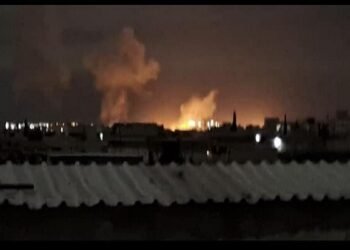
    Explosions were reported in Aleppo and its countryside, with the Syrian Observatory for Human Rights war monitor stating that “at least 4 missiles that came from the direction of the Mediterranean Sea” fell in the region.


    The background to these missile attacks includes a suicide bombing incident on January 3, where attackers targeted crowds near the tomb of the revered IRGC general Qasem Soleimani in Kerman, resulting in approximately 90 casualties. ISIS claimed responsibility for this attack.


    In December, an attack on a police station in Rask led to the deaths of at least 11 Iranian police officers. The jihadist group Jaish al-Adl, blacklisted by Iran as a “terrorist” group, claimed responsibility for this attack.


    Tensions in the region have escalated due to the ongoing conflict between Israel and the Palestinian militant group Hamas, drawing in Iran-backed armed groups in Lebanon, Iraq, Syria, and Yemen.


    Notably, in March 2022, the IRGC carried out missile attacks in Arbil, claiming to target a “strategic centre” belonging to its arch-foe, Israel. Additionally, on December 25, Iran reported that an Israeli strike killed the senior Guards commander Razi Moussavi.


    The recent missile attacks underscore the complex and volatile dynamics in the region, with Iran responding forcefully to perceived threats from terrorist organizations and external actors. The situation remains fluid, and further developments are closely monitored.

  • Syrian Air Defenses Activate After Israeli Alleged Airstrikes

    Syrian Air Defenses Activate After Israeli Alleged Airstrikes

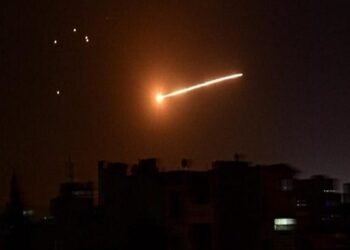
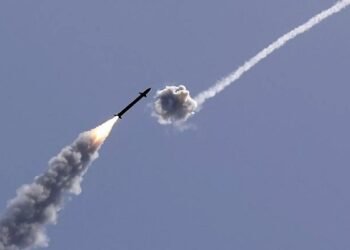
    Syria found itself on high alert as its air defenses were activated on Thursday in response to what it alleges were Israeli airstrikes that caused damage to airports in the capital city of Damascus and the northern city of Aleppo. The attacks resulted in grounding flights as the runways at both airports were affected, rendering them temporarily out of service. Syrian state media cited military sources in attributing the missile strikes to Israeli forces, further escalating the ongoing Israel-Palestine war.


    According to unnamed military officials who spoke to Syrian state media, these strikes were described as “simultaneous” and had caused damage to the landing strips at both airports. The timing of the alleged attack is notable, as it occurred less than a day before Iranian Foreign Minister Hossein Amirabdollahian’s scheduled visit to Syria. Israel has thus far declined to comment on these allegations, but it’s important to note that Israel has carried out strikes for several years against what it describes as “Iran-linked targets” in Syria, including the two airports.


    Local sources cited in reports described the airstrikes as a “desperate attempt” by Israel to “divert attention” away from its ongoing conflict with Hamas in Gaza. Others have speculated that it might be an attempt to disrupt Iranian supply lines to Syria, as Iran has been a key ally of the Syrian government in the ongoing Syrian civil war.


    Just a few days earlier, Israeli troops fired artillery and mortar shells into Syria after rockets from southern Syria targeted Israeli positions across the border, escalating tensions in the region.


    Meanwhile, Iran has called on Islamic and Arab countries to form a united front against Israel. Tehran’s call for unity comes following a surprise attack by Hamas extremists over the weekend, targeting Israeli territory. While Israel has celebrated its defense against these attacks as a “success,” it has also insisted that it was not involved in the matter.


    Iranian President Ebrahim Raisi engaged in a phone call with his Syrian counterpart, Bashar al-Assad, during which he emphasized the need for cooperation against Israel. Raisi urged, “All the Islamic and Arab countries… must reach serious convergence and cooperation on the path of stopping the crimes of the Zionist regime against the oppressed Palestinian nation.” The call took place on Wednesday, highlighting the urgency of addressing the Israel-Palestine situation and the need for regional unity.


    The geopolitical landscape in the Middle East remains complex and volatile, with multiple conflicts and interests at play. Syria, which has been grappling with a protracted civil war, finds itself once again caught in the crossfire, with Israeli airstrikes further exacerbating the challenges faced by its government and people. As tensions continue to rise in the region, international efforts to de-escalate conflicts and promote diplomacy are more crucial than ever.


    The situation underscores the broader instability in the region and the interconnectedness of various conflicts. It also highlights the complexity of addressing the long-standing Israel-Palestine issue, which has far-reaching implications for neighboring countries and the entire Middle East. The call for unity among Islamic and Arab nations, as urged by Iran, reflects the shared concerns and grievances of many in the region and the need for a coordinated response to address the ongoing challenges.

  • The ongoing conflict in Syria, A Devastating Crisis

    The ongoing conflict in Syria, A Devastating Crisis

    Syria has been in a state of civil war since 2011. The conflict began as a peaceful protest against the Syrian government, but it quickly escalated into a violent uprising. The Syrian government responded to the protests with brutal force, which led to the formation of armed opposition groups.


    The conflict has attracted the involvement of foreign powers, including Russia, Iran, and the United States. The government is primarily supported by Russia and Iran, while the opposition is largely backed by the US.


    The conflict has resulted in the displacement of millions of people, the destruction of infrastructure, and a humanitarian crisis. The UN estimates that over 13 million Syrians require humanitarian assistance, including 6.7 million internally displaced people.


    The conflict has also led to the emergence of extremist groups such as ISIS, which has carried out attacks both in Syria and abroad.


    The conflict remains ongoing, with the government in control of much of the country, but pockets of opposition forces continue to resist. The UN has been working to broker a peace agreement, but so far, no lasting solution has been found.


    The situation in Syria remains dire, with millions of people suffering from the effects of the conflict. The need for a peaceful resolution to the crisis remains urgent.


    The conflict has also had a significant impact on the Syrian economy, with the country experiencing a sharp decline in GDP and rising levels of poverty. The destruction of infrastructure, including hospitals and schools, has also had a devastating impact on the Syrian people.


    The conflict has also led to a refugee crisis, with millions of Syrians fleeing the country in search of safety. Many have sought refuge in neighboring countries such as Turkey, Lebanon, and Jordan, while others have attempted to make the dangerous journey to Europe.


    The international community has been providing humanitarian assistance to the Syrian people, but the scale of the crisis has made it difficult to meet the needs of all those affected. The UN has been calling for increased funding to support humanitarian efforts in Syria, but so far, funding remains insufficient.


    The conflict in Syria is a complex and multifaceted crisis, with no easy solution. The UN has been working to broker a peace agreement, but so far, no lasting solution has been found. The need for a peaceful resolution to the crisis remains urgent, as the Syrian people continue to suffer the devastating consequences of the conflict.