Tag: Sharad Pawar

  • Tragic Death Sparks Tensions on Punjab-Haryana Border

    Tragic Death Sparks Tensions on Punjab-Haryana Border

    The resumption of protests on the Punjab-Haryana border took a tragic turn as a 21-year-old farmer, identified as Subhkaran Singh, succumbed to a head injury, reigniting tensions in the region. Opposition parties, notably the Aam Aadmi Party (AAP) and Congress, have launched scathing criticisms against the Central government, accusing it of neglecting the demands of the farmers. Meanwhile, the BJP-ruled Haryana government extended the ban on mobile internet and bulk SMS services in seven districts until February 23 in response to the ongoing protests. Despite the escalating tensions, Union Minister Anurag Thakur reiterated the government’s willingness to engage in discussions with the farmers, recognizing them as the nation’s ‘Annadatas’.


    Farmer leader Sarwan Singh Pandher announced the suspension of the ‘Delhi Chalo’ march for two days, indicating a temporary halt in the protest activities. The decision comes as farmer unions deliberate on the next course of action, with further updates expected by Friday evening.


    Farmer leaders condemned the alleged use of force by Central and Haryana security personnel against protesters at the Shambhu and Khanauri borders. Reports surfaced of security personnel entering the protest camp in Punjab territory and deploying tear gas shells, resulting in injuries to nearly 100 farmers.


    Last week, the farmers temporarily halted their protest and engaged in discussions near the Shambhu border. However, talks with government ministers failed to yield significant progress, prompting the farmers to resume their march on Wednesday.


    Central to the farmers’ demands is the enactment of legislation guaranteeing minimum prices for 23 crops, aimed at stabilizing their income. Additionally, they seek the fulfillment of promises made by the government, including loan waivers and withdrawal of legal cases stemming from previous protests.


    Information and Broadcasting Minister Anurag Thakur reiterated the government’s commitment to doubling farmers’ income, citing measures such as doubling the Minimum Support Price (MSP) and increasing procurement. Thakur highlighted the significant investments made by the government in agricultural procurement over the past decade.


    The Haryana government extended the suspension of mobile internet and bulk SMS services in seven districts, including Ambala, Kurukshetra, and Hisar, until Friday, citing concerns over security and public safety.


    Clashes between protesting farmers and Haryana police at the Data Singh-Khanauri border resulted in injuries to at least 12 police personnel, according to reports from the Haryana administration.


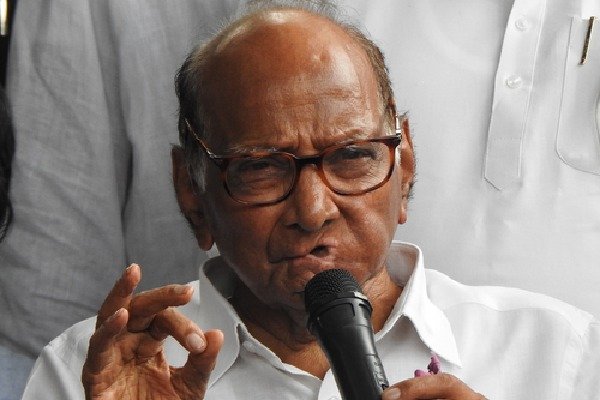
    NCP founder Sharad Pawar criticized the government’s handling of farmer issues, highlighting the disparity between Prime Minister Narendra Modi’s assurances and the realities faced by farmers, including growing debt and suicides.


    Uttar Pradesh Chief Minister Yogi Adityanath ordered the formation of a committee to address the concerns of farmers protesting against local authorities in Gautam Buddh Nagar, emphasizing the government’s commitment to resolving grievances through dialogue and mediation.


    The developments surrounding the farmers’ protests underscore the deep-rooted challenges facing agricultural communities and the urgent need for comprehensive reforms to address their grievances and ensure their well-being.


    As tensions persist and protests continue, the plight of farmers remains a pressing issue, demanding attention and concerted efforts from all stakeholders to achieve meaningful resolutions and address systemic concerns within the agricultural sector.

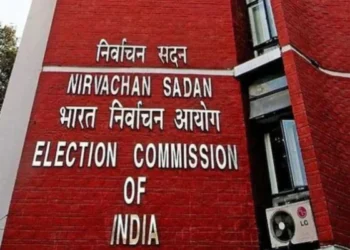
  • Dispute: Election Commission Allots Nationalist Congress Party

    Dispute: Election Commission Allots Nationalist Congress Party

    The Election Commission (EC) has made a decisive move in the ongoing factional dispute within the Nationalist Congress Party (NCP) by allotting the name “Nationalist Congress Party – Sharadchandra Pawar” to the faction led by former union minister Sharad Pawar. This decision follows the ruling by the poll body that Ajit Pawar’s faction is the legitimate NCP, as reported by news agency PTI.


    The EC’s decision came shortly after the submission of three potential names and symbols by the Sharad Pawar faction for their political group. Among the suggested names were “Nationalist Congress Party-Sharadchandra Pawar,” “Nationalist Congress Party—Sharadrao Pawar,” and “Nationalist Congress Party-Sharad Pawar,” along with the proposed election symbol of a “banyan tree.”


    As a one-time option for the forthcoming election to six seats in the Rajya Sabha in Maharashtra, the commission acceded to the first preference suggested by the Sharad Pawar faction.


    In response to the EC’s verdict, the Ajit Pawar faction welcomed the decision, emphasizing the priority given to the majority. Conversely, the Sharad Pawar camp criticized the ruling, labeling it as a “murder of democracy.”


    Supriya Sule, Sharad Pawar’s daughter and Baramati MP, expressed the party’s intention to challenge the verdict in the Supreme Court, citing concerns over the fairness of the decision-making process. She drew parallels with similar situations faced by other political parties and highlighted the determination to pursue legal recourse.


    Jitendra Ahwad, a leader from the Sharad Pawar camp, condemned the EC’s ruling, attributing the outcome to political maneuvering orchestrated by Ajit Pawar. Despite the setback, he expressed confidence in Sharad Pawar’s leadership and resilience, affirming their intent to seek redress through legal channels.


    Meanwhile, the Ajit Pawar faction has filed a caveat application in the Supreme Court to preempt any legal challenge from the Sharad Pawar faction. This move underscores the ongoing legal battle and underscores the high stakes involved in the dispute over the NCP’s identity and leadership.


    The factional strife within the NCP underscores broader tensions within the political landscape, reflecting power struggles and differing visions within the party. As the legal battle unfolds, the Supreme Court’s intervention may provide clarity and resolution to the contentious issue, shaping the future trajectory of the NCP and its leadership.

  • Ajit Pawar Targets Uncle Sharad Pawar Again

    Ajit Pawar Targets Uncle Sharad Pawar Again

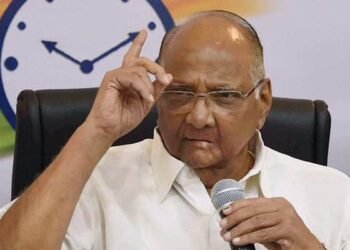
    Maharashtra Deputy Chief Minister Ajit Pawar has reiterated his dissatisfaction with his uncle, Sharad Pawar, over the latter’s decision not to step down from the leadership of the Nationalist Congress Party (NCP) last year. In a veiled reference to Sharad Pawar, Ajit Pawar remarked today that “some people” refuse to retire even after reaching a certain age.


    “People should stop after reaching a certain age. This tradition has been going on for years,” commented Ajit Pawar. “But there are some people who are not ready to listen. They are adamant about their views. People take retirement after 60, some at the age of 65, some at 70, and some at 80. But even after turning 80, this person is not ready to retire,” he added.


    Expressing his frustration, Ajit Pawar questioned the ongoing situation, emphasizing the need for focus on work. He urged for transparency, stating, “What is going on? We are here to work. If we are wrong somewhere, let us know. We have so much potential. I have been the Deputy Chief Minister of the state many times. We have made many schemes successful.”


    The rift within the NCP became evident in May last year when Sharad Pawar unexpectedly announced his intention to retire due to differences within the party. He recommended the formation of a committee to decide on the election of the President’s post. However, this decision was later retracted amid protests and challenges from party workers.


    Despite Sharad Pawar’s efforts to maintain unity, the party faced a setback in July when Ajit Pawar and his loyal MLAs joined the BJP-Shiv Sena alliance government in Maharashtra. Subsequently, Ajit Pawar staked claim to the NCP’s name and poll symbol, a move currently under challenge in the Election Commission by Sharad Pawar.


    In December last year, Sharad Pawar addressed the issue of age-related comments and criticisms, stating, “I have a complaint with you people. You people often comment on my age that I am 84 years old, I am 83 years old, what have you people seen in me till now? I have not become old. I still have so much strength in me. I can straighten some people out.”


    The ongoing discord within the NCP leadership remains a significant challenge for the party, with Ajit Pawar’s recent comments highlighting the persisting tensions. The public exchange of statements reflects the internal struggles and differing perspectives within the party, raising questions about its future trajectory.


    As the political dynamics continue to unfold in Maharashtra, the NCP faces the task of navigating internal conflicts and maintaining a unified front. The rift between Ajit Pawar and Sharad Pawar adds complexity to the party’s dynamics, and the public airing of grievances only underscores the challenges in achieving consensus and cohesion within the NCP leadership. The coming months may provide further insights into the resolution of these internal differences and their impact on the party’s political standing in the state.

  • Sharad Pawar Backs Kejriwal, Accuses Centre of Misusing Power

    Sharad Pawar Backs Kejriwal, Accuses Centre of Misusing Power

    Nationalist Congress Party (NCP) leader Sharad Pawar has extended his support to Delhi Chief Minister Arvind Kejriwal, alleging that the central government is leveraging its power to intimidate leaders with dissenting political views. Pawar, addressing a gathering of party workers, underscored the similarity in the Enforcement Directorate (ED) summonses sent to Jharkhand Chief Minister Hemant Soren, expressing apprehensions that Soren might also face arrest in the future.


    Pawar pointed out that Arvind Kejriwal, serving as the Chief Minister of the national capital, received ED notices, and members of the Aam Aadmi Party (AAP) were previously incarcerated. He went on to claim that orchestrated measures were underway to facilitate Kejriwal’s arrest. Pawar, referring to the political landscape of the last decade, asserted that voters had chosen Kejriwal due to his clean image, emphasizing the irony of such a leader facing legal troubles.


    The NCP president raised concerns about the potential arrest of Kejriwal, stating, “It will not be surprising if he is arrested.” Pawar contended that these actions suggest a deliberate effort to discourage leaders with dissenting political views through the misuse of power.


    Arvind Kejriwal, who also serves as the national convener of the AAP, recently opted not to comply with three ED summonses related to a money laundering case associated with an alleged liquor scam. The said liquor scam was connected to the excise policy of 2021-22, which was subsequently annulled by Kejriwal’s government last year. The decision to revoke the policy was made following a recommendation by Delhi Lieutenant Governor VK Saxena for a CBI investigation into “lapses and irregularities” in its execution.


    The ED’s summonses to Kejriwal have sparked questions regarding the political implications and alleged misuse of investigative agencies for political gains. Pawar’s expression of solidarity with Kejriwal underscores broader concerns within the political arena about the instrumentalization of power to target leaders who espouse differing political perspectives.


    As Kejriwal navigates the legal scrutiny, the ongoing narrative surrounding the ED summonses continues to draw attention, with leaders from various political spectrums offering their perspectives on the matter. Pawar’s stance mirrors a prevailing sentiment in certain political circles that the central government is deploying investigative agencies strategically to target opposition leaders. This has led to heightened concerns about the overall health of democratic institutions in the country.


    In the larger context, the use of investigative agencies to pursue political objectives has been a recurring theme, raising questions about the autonomy and impartiality of these institutions. Critics argue that such actions could undermine the democratic fabric of the country, eroding public trust in the fairness and independence of law enforcement agencies.


    The political dynamics surrounding Kejriwal’s situation also highlight the challenges faced by leaders critical of the central government’s policies. The ED summonses, seen by some as a tool to exert pressure on opposition figures, contribute to an atmosphere of political tension and scrutiny.


    Pawar’s decision to speak out against the perceived misuse of power and offer support to Kejriwal aligns with a broader discourse on preserving the democratic values and institutions that form the cornerstone of India’s political landscape. As legal proceedings unfold, the political ramifications of such cases will likely continue to reverberate, shaping the narrative around the intersection of politics, governance, and the rule of law.

  • Sharad Pawar Asserts BJP’s Diminished Political Fortunes

    Sharad Pawar Asserts BJP’s Diminished Political Fortunes

    Nationalist Congress Party (NCP) founder Sharad Pawar expressed a belief that the political scenario in the country is not conducive to the Bharatiya Janata Party (BJP) as the nation approaches the Lok Sabha polls. Speaking at an NCP conclave in Shirdi, Maharashtra, Pawar dismissed the BJP’s claim of securing over 400 seats, highlighting the party’s absence in several states.


    Addressing NCP workers, the former Union minister asserted that after assuming power in 2014, the BJP made numerous announcements and assurances but failed to implement them, leading to disillusionment among the people.


    “People have now started realizing this,” Pawar remarked, emphasizing the evolving public sentiment.


    According to Pawar, the current political situation does not favor the BJP, a sentiment echoed by the NCP, which is part of the national-level opposition INDIA alliance.


    Pawar took a dig at BJP leaders’ ambitious target of winning over 400 Lok Sabha seats out of a total of 543, highlighting that the party is currently not in power in several states across the country. States such as Kerala, Tamil Nadu, Andhra Pradesh, Telangana, Delhi, Punjab, West Bengal, Bihar, and Jharkhand are mentioned as regions where the BJP is not in a position of authority.


    The veteran politician criticized Prime Minister Narendra Modi, citing unfulfilled promises related to doubling farmers’ income by 2022, providing ‘pucca’ houses to those without homes in urban areas, and the ambitious target of achieving a $5 trillion economy by 2024-25. Pawar commented that India’s economy is not even close to 50 percent of that target, emphasizing that the Prime Minister’s guarantees often go unfulfilled.


    Pawar also addressed the concerns of the younger generation, noting their unease due to rising unemployment. He referenced the December 13 Parliament security breach and criticized the suspension of opposition members who sought to understand the motivations behind the incident and demanded statements from the Prime Minister and Home Minister.


    The NCP founder highlighted the unaffordability of fuel prices for common citizens, pointing to the economic challenges faced by the populace.


    In his address, Pawar painted a picture of a political landscape where the BJP’s dominance is diminishing, and the promises made during their tenure have fallen short of expectations. As part of the opposition INDIA alliance, the NCP is positioning itself to capitalize on the perceived disenchantment with the ruling party.


    As the Lok Sabha polls approach, Sharad Pawar’s comments reflect the ongoing political dynamics, where issues such as economic concerns, unfulfilled promises, and challenges faced by the younger generation are becoming focal points in the discourse. The political landscape seems to be evolving, and opposition parties are actively engaging in shaping the narrative ahead of the upcoming elections.

  • Political Controversy Surrounding Sharad Pawar’s Achievements

    Political Controversy Surrounding Sharad Pawar’s Achievements

    In the realm of Indian politics, the tussle between leaders and parties is a common sight. Recently, the spotlight turned towards the Nationalist Congress Party (NCP) leader, Sharad Pawar, as Prime Minister Narendra Modi criticized his contributions to the country. Shiv Sena leader Sanjay Raut, in response, questioned why the BJP government had honored Pawar with the Padma Vibhushan. This ongoing political feud has sparked a debate over Pawar’s legacy and the value of his achievements.


    Sanjay Raut, a prominent figure in Maharashtra’s political landscape, took a dig at Prime Minister Modi for his remarks regarding Sharad Pawar. Raut questioned the government’s decision to bestow the Padma Vibhushan on Pawar and defended his contributions. He highlighted Pawar’s decade-long tenure as the Agriculture Minister, emphasizing that he wasn’t just a minister but an expert in the field. Pawar’s name is synonymous with the agricultural revolution, a fact that many acknowledge. Raut also pointed out that Pawar’s philanthropic efforts extended beyond politics; his NGO played a crucial role in helping people. The message here is clear: Pawar’s accomplishments cannot be understated.


    The heart of the matter lies in Prime Minister Modi’s recent comments, where he indirectly criticized Pawar’s politics, suggesting that certain individuals from Maharashtra had exploited the farming community by engaging in political opportunism. Without naming Pawar, Modi challenged his contributions to the welfare of farmers. In response, Raut accused the Prime Minister of diverting attention from more pressing issues during his visit to Maharashtra.


    Raut noted that Modi failed to address critical issues like farmer suicides, the Maratha reservation problem, and the fast of Manoj Jarange Patil. Instead, Modi aimed to defame the leader of the state, according to Raut. The leader of Shiv Sena went a step further and criticized Maharashtra’s Deputy Chief Minister, Ajit Pawar, suggesting that he should have disassociated himself from the stage while Modi was making these critical remarks about Sharad Pawar.


    Raut expressed his concerns about the way the Prime Minister’s comments were delivered, stating that it didn’t befit someone in his position. He questioned the consistency of Modi’s statements, highlighting how Modi had previously praised Sharad Pawar’s contributions to the farming community. However, with elections looming, Raut believed Modi’s stance had shifted, leading to these critical remarks.


    Former state minister Anil Deshmukh joined the chorus of voices criticizing the Prime Minister’s remarks. He contended that Ajit Pawar should have either left the stage in protest or informed Modi to correct his statements against Sharad Pawar. Deshmukh stressed that Modi had praised Sharad Pawar in the past for his invaluable contributions to the farming sector and called for a revision of the Prime Minister’s recent comments.


    The political tension between Prime Minister Narendra Modi and NCP leader Sharad Pawar has ignited a significant debate over Pawar’s achievements and his legacy in Indian politics. Sanjay Raut and other leaders defend Pawar’s contributions, while criticizing the Prime Minister’s changing stance and remarks, especially as election season approaches. The dispute highlights the intricacies and nuances of Indian politics and the importance of recognizing a leader’s achievements while navigating the dynamic landscape of electoral politics.

    Follow Us:  X (Twitter) | Google News | LinkedIn | Pinterest | Facebook | Sharechat | Kooapp | YouTube

  • Israel-Hamas Conflict Sparks Debate: Sharad Pawar

    Israel-Hamas Conflict Sparks Debate: Sharad Pawar

    India’s stance on the Israel-Hamas conflict has sparked controversy and dissent in the country’s political landscape, with many voices in the opposition expressing support for the Palestinian cause. The Nationalist Congress Party (NCP) chief, Sharad Pawar, criticized Prime Minister Narendra Modi for what he perceived as India “standing with Israel” and called attention to India’s historical support for Palestine. These remarks have triggered a heated response from Union Minister Piyush Goyal, who urged the former Defense Minister and Chief Minister to prioritize the nation’s interests.


    In a tweet, Goyal expressed his concerns, stating, “It is very disturbing when a senior leader like Sharad Pawar ji makes preposterous statements on India’s stand on a terror attack in Israel. The menace of terrorism has to be condemned in all forms, in any part of the world. It is a pity that a person who has been India’s Defense Minister as well as a Chief Minister many times has such a casual view on issues relating to terror.”


    Goyal also pointed out that Sharad Pawar had been a part of the government during instances like the Batla House encounter and terror attacks on Indian soil, insinuating that the leader had not taken a strong stance against terrorism during those periods.


    Sharad Pawar’s initial criticism, delivered to a gathering of NCP workers in Mumbai, revolved around India’s historical position on the Israel-Palestine issue. He asserted that previous Indian Prime Ministers, including Jawaharlal Nehru, Indira Gandhi, Rajiv Gandhi, and Atal Bihari Vajpayee, had consistently stood with the Palestinian people. Pawar argued that the entire land originally belonged to Palestine, and Israel had encroached upon it. He emphasized that India had always supported the people who originally owned the land and their rights.


    However, in response to Goyal’s criticism, NCP leaders, including Jayant Patil, defended Pawar’s statements and suggested that the External Affairs Ministry’s statements on Palestine should be considered. Patil argued that a comprehensive understanding of the government’s stance on the issue could be obtained by examining these official statements.


    The controversy surrounding India’s position on the Israel-Hamas conflict highlights the complexity of international relations and the challenges involved in balancing national interests, historical positions, and the need to address acts of terrorism. It also underscores the diversity of opinions within the Indian political landscape when it comes to sensitive international issues. As the situation continues to evolve, India’s stance on the Israel-Hamas conflict will likely remain a subject of debate and discussion within the country’s political circles.

  • NCP Factional Dispute: Supriya Sule Questions Praful Patel’s Claims

    NCP Factional Dispute: Supriya Sule Questions Praful Patel’s Claims

    Tensions within the Nationalist Congress Party (NCP) have flared as senior leader Praful Patel claimed that the Election Commission of India (ECI) would provide its decision on the party’s name and symbol by September 30. However, his statement has sparked controversy, with party MP Supriya Sule, aligned with the Sharad Pawar faction, questioning the source of Patel’s information.


    Supriya Sule expressed her concerns, stating, “I have full faith in the EC, but I started feeling uneasy since Praful Patel started giving all the dates… EC is an independent authority then who is giving dates to Praful Patel?”


    Praful Patel responded to the queries surrounding his statement, clarifying that he had merely speculated about the possible date. “Since they (Sharad Pawar led NCP) have been asked to file their submissions by September 8, I speculated that the hearings would be completed within a couple of weeks and the verdict would be out by September 30. It was mere speculation, nothing else,” Patel stated, as reported by The Times of India.


    Meanwhile, Patel emphasized that key appointments made prior to June 30 were not in accordance with the Nationalist Congress Party’s constitution. He argued that the Election Commission should decide which faction represents the party based on electoral majority.


    The NCP experienced a split on July 2 when Ajit Pawar and eight MLAs joined the Eknath Shinde government. Since then, both the Ajit Pawar faction and the group led by party founder Sharad Pawar have asserted their legitimacy as the true representatives of the party, each claiming to have the majority of MLAs.


    Praful Patel elaborated on this issue, stating, “We have 43 MLAs in Maharashtra supporting us as well as six out of nine MLCs. While we believe in the principle of majority, it should be noted that the party can function only within the parameters of its own constitution. We never had our internal elections as per the constitution of the party, so all the appointments prior to June 30 are unconstitutional.”


    He continued, “Therefore, the only test based on which the Election Commission (of India) can decide (to whom the party, name, symbol belongs) is by the number of elected representatives.”


    The ongoing dispute within the NCP highlights the complexity of party factionalism and the intricacies of determining party legitimacy. As the Election Commission of India evaluates the competing claims, it remains to be seen which faction will ultimately secure the party name and symbol, crucial elements in the world of Indian politics. The feud also underscores the importance of adherence to a party’s constitution and the need for internal democratic processes in political organizations.

  • Sharad Pawar: ‘Leader’ Remark, Attributes it to Supriya Sule

    Sharad Pawar: ‘Leader’ Remark, Attributes it to Supriya Sule

    Nationalist Congress Party (NCP) patron Sharad Pawar has clarified his recent statement about Ajit Pawar being the leader of the party. He stated that he had not actually expressed any such views and that it was Supriya Sule, his daughter, who made that remark. This U-turn comes after media coverage and speculation about a potential split within the party.


    Sharad Pawar addressed the situation by saying, “I am not saying that Ajit Pawar is our leader. Supriya Sule had said that. They are like siblings and there is no need to look for a political meaning behind this. I did not say that Ajit Pawar is our leader.”


    He further emphasized that the media had misconstrued the situation and attributed a statement to him that was actually made by Supriya Sule. He reiterated that Ajit Pawar’s recent actions have distanced him from the party’s leadership role.


    Ajit Pawar and eight other NCP MLAs had previously joined the Shiv Sena-BJP government in Maharashtra, causing upheaval within the party. Ajit Pawar became the Deputy Chief Minister alongside BJP’s Devendra Fadnavis. However, there have been rumors and speculations that Ajit Pawar might be considering a return to the NCP.


    The situation has prompted Sharad Pawar to clarify the party’s stance on the matter. He denied any split within the NCP and explained that a split typically involves a significant group breaking away from the party at the national level, which has not occurred.


    In recent developments, some of the leaders who joined Ajit Pawar’s faction and shifted to the Shiv Sena-BJP government are reportedly under investigation by the Enforcement Directorate (ED). Sharad Pawar pointed out that this investigation has prompted some individuals to change their allegiance, stating, “Some of them did not want to face investigation.”


    Supriya Sule, daughter of Sharad Pawar, has also asserted that there is no split within the NCP. She clarified that while a group of nine MLAs and two MPs took a different path, the party leadership under Sharad Pawar remains intact.


    The ongoing political developments and meetings have generated considerable interest and speculation, with rumors circulating about Ajit Pawar’s potential return to the NCP. However, as of now, the party leadership is working to maintain unity and clarity in its stance, while also addressing the investigations involving certain members of the party.

  • Sharad Pawar Addresses ‘Secret’ Meeting with Nephew Ajit

    Sharad Pawar Addresses ‘Secret’ Meeting with Nephew Ajit

    Nationalist Congress Party (NCP) chief Sharad Pawar has finally spoken out about the much-discussed “secret” meeting he had with his nephew, Ajit Pawar. This meeting gained significant attention as it occurred against the backdrop of Ajit Pawar’s decision to split from the NCP and join the Shiv Sena-BJP government led by Eknath Shinde. Addressing the media in a press conference, Sharad Pawar clarified that the meeting was, in fact, a family gathering.


    The meeting took place on August 12 at the residence of businessman Atul Chordiya in the Koregaon Park area. This event sparked widespread speculations, with many wondering about the possible implications of the meeting for the political landscape, especially amid rumors that Sharad Pawar might be offered a position in the Union Cabinet within the BJP-led National Democratic Alliance (NDA).


    Sharad Pawar addressed the situation by stating, “It was a family meeting with Ajit Pawar. I did not go to the media talking about the meeting.” This statement provides clarity while putting to rest the swirl of rumors that had surrounded the gathering.


    Supriya Sule, Sharad Pawar’s daughter, also weighed in on the matter. She mentioned that the Pawar and Chordiya families have had a longstanding association, dating back to before the birth of her uncle, Ajit Pawar. The families’ connection traces back to the time when Atul Chordiya’s father and Sharad Pawar were college peers. This context, she emphasized, makes it less surprising for both families to meet.


    In addition to discussing the family meeting, Sharad Pawar took the opportunity to address the situation in Manipur while critiquing Prime Minister Narendra Modi’s approach. He expressed concerns about the state’s predicament and stated that he had hoped the Prime Minister would visit the northeast to build confidence among the people there. However, he lamented that such a move did not seem to be a priority for the Prime Minister.


    Sharad Pawar also turned his focus to the political landscape, remarking on the role of the Bharatiya Janata Party (BJP) and its allies in maintaining unity within society. He criticized them for allegedly creating divisions among people despite their responsibility to foster unity.


    In sum, Sharad Pawar’s addressing of the “secret” meeting and his comments on the political situation underscore the complex dynamics at play within his party and the broader political context, all while dispelling some of the speculations that had arisen.

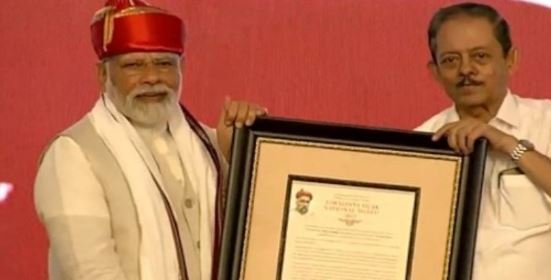
  • PM Modi Conferred Lokmanya Tilak National Award in Pune

    PM Modi Conferred Lokmanya Tilak National Award in Pune

    Prime Minister Narendra Modi was honored with the prestigious Lokmanya Tilak National Award during a ceremony in Pune. The event witnessed the presence of distinguished political figures, including Ajit Pawar, Eknath Shinde, Devendra Fadnavis, and NCP chief Sharad Pawar, who shared the stage with PM Modi. During the ceremony, an emotional moment was captured between PM Modi and Sharad Pawar.


    In his address, PM Modi expressed his gratitude, calling it a memorable moment. He acknowledged the profound impact of Lokmanya Tilak award contributions to India’s freedom struggle and paid homage to all freedom fighters. The Prime Minister also praised the rich history of Maharashtra, highlighting the significance of Chhatrapati Shivaji Maharaj and Jyotirba Phule in shaping the nation.


    PM Modi announced that he would donate the prize money from the award to the Namami Gange project, showcasing his dedication to environmental conservation and the welfare of the country’s people. He dedicated the award to the 140 crore citizens of India.


    However, Pawar’s presence at the ceremony sparked controversy within the Maha Vikas Aghadi (MVA) government. The Shiv Sena (UBT) criticized Pawar’s decision to attend, suggesting that he could have used the opportunity to protest against the political engineering that led to a split in the NCP. The editorial in ‘Saamana’ highlighted the expectations from a senior leader like Sharad Pawar and suggested that staying away from the event could have garnered appreciation for his leadership and courage.


    The editorial further emphasized the ongoing fight against “dictatorship” and the formation of the INDIA alliance comprising 26 opposition parties, with Pawar being considered the “leading general” of the alliance.