Tag: Security Forces

  • Attack on Gwadar Port Authority: BLA Militants Neutralised

    Attack on Gwadar Port Authority: BLA Militants Neutralised

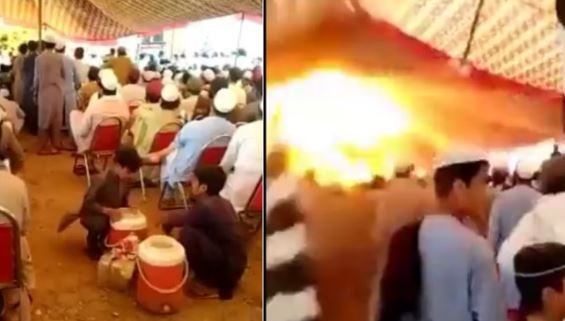
    Multiple blasts and gunfire have been reported from the China-operated Gwadar Port Authority Complex, located in the province of Balochistan, according to Dawn. The Majeed Brigade of the proscribed Balochistan Liberation Army (BLA) has claimed responsibility for the attack. According to reports, eight BLA militants have been killed in the encounter.


    “Eight terrorists tried to attack the Gwadar Port Authority complex today. All of them have been neutralised by security forces,” Chief Minister of Balochistan Sarfraz Bugti said in a post on social media platform X.


    Makran Commissioner Saeed Ahmed Umrani told Dawn that multiple blasts and gunfire were reported in Gwadar Port Authority Complex. The report also mentioned that armed attackers ‘forcibly’ entered the Gwadar Port Authority Complex and opened fire.


    The China-operated Gwadar Port in Pakistan is situated on the shores of the Arabian Sea. According to Pakistani news channel ARY News, 8 BLA terrorists have been killed as they attempted to unleash a fatal attack on Gwadar Port Authority Complex.


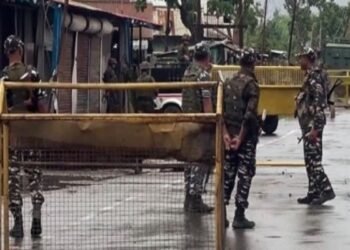
    Following the attack and reported firing on the China-operated port, a large contingent of police and security forces reached the scene while the intense firing was ongoing.


    China has raised concerns about security in Pakistan after Chinese citizens have been killed in previous attacks. Pakistan is a flagship destination for President Xi Jinping’s signature Belt and Road Initiative. Pakistan witnessed an uptick in terror activities in the past year, especially in Balochistan after the banned militant group Tehreek-i-Taliban Pakistan ended its ceasefire with the government in November 2022, Dawn reported.


    In November, 14 Pakistan Army soldiers were killed after militants attacked two vehicles of security forces in Gwadar. The military vehicles came under attack while moving from Pasni to Ormara in the coastal district. According to a security report issued by the Centre for Research and Security Studies last month, Pakistan experienced 97 militant attacks in February, resulting in 87 fatalities and 118 injuries.


    The report highlighted a significant escalation in violence in Balochistan, juxtaposed with a decline in tribal districts and mainland Khyber Pakhtunkhwa. Security forces foiled an attack on the Gwadar Port Authority complex and killed eight attackers, The Express Tribune reported, citing sources.


    The attack on the Gwadar Port Authority Complex is a stark reminder of the persistent security challenges facing Pakistan, particularly in the province of Balochistan. Located in a strategically important region, Gwadar Port is a crucial component of China’s Belt and Road Initiative, making it a prime target for militant groups seeking to destabilize the area.


    The Balochistan Liberation Army (BLA), a proscribed militant organization, has claimed responsibility for the attack, highlighting the ongoing insurgency in the region. This incident underscores the need for enhanced security measures to protect vital infrastructure and ensure the safety of both local residents and foreign investors.


    The swift response of security forces in neutralizing the attackers reflects their commitment to maintaining peace and stability in the area. However, it also serves as a reminder of the persistent threat posed by militant groups operating in the region.


    The attack comes amid escalating tensions in Pakistan, with a surge in militant activities and violent incidents reported in recent months. The government must remain vigilant and take proactive steps to counter the growing threat of terrorism, both within Balochistan and across the country.


    Furthermore, the attack highlights the broader security implications of China’s ambitious Belt and Road Initiative, which aims to connect Asia, Africa, and Europe through a network of infrastructure projects. As a key partner in this initiative, Pakistan plays a crucial role in facilitating trade and investment between East and West. However, persistent security challenges pose a significant obstacle to realizing the full potential of this partnership.


    The attack on the Gwadar Port Authority Complex underscores the need for sustained efforts to address security threats in Balochistan and ensure the safety of critical infrastructure projects. It also highlights the broader security implications of China’s Belt and Road Initiative, emphasizing the importance of collaboration between Pakistan and its international partners to counter the threat of terrorism and promote regional stability.

  • Terror Attack Kills Four Policemen on Election Duty

    Terror Attack Kills Four Policemen on Election Duty

    At least four policemen lost their lives and six others sustained injuries in a tragic terror attack in the Kulachi area of Dera Ismail Khan district in Pakistan’s Khyber Pakhtunkhwa region. The incident occurred while the policemen were on duty for election security, highlighting the persistent security challenges faced by Pakistan during electoral processes.


    The attack, which involved unidentified gunmen setting off a bomb and subsequently opening fire at the security vehicle, took place in the jurisdiction of the Kalachi police station. The targeted vehicle was deployed specifically for the security of the Graha Aslam polling station. The injured individuals were promptly transported to nearby hospitals for urgent medical treatment, while the bodies of the deceased were also evacuated from the scene.


    While no group or individual has claimed responsibility for the attack at the time of reporting, the area has a history of being a stronghold for the banned Tehreek-e-Taliban Pakistan (TTP). The TTP has been responsible for numerous attacks on security forces and civilians in the region in recent years, underscoring the persistent threat of terrorism in Pakistan’s northwest frontier.


    This devastating incident comes on the heels of twin terror attacks in Balochistan province, where at least 30 people were killed. In one of the terror attack, gunmen targeted a security forces vehicle in Tank, resulting in the death of one individual. Additionally, grenade attacks were reported in various parts of Balochistan on the same day, although no casualties were reported, according to Saeed Ahmed Umrani, the commissioner of the Makran division.


    The escalating violence and insecurity have cast a shadow over the ongoing general elections in Pakistan. While polling has proceeded in most regions, reports indicate that voting has been disrupted in certain areas, including Lahore, where a polling booth remained inactive halfway through the polling period. Moreover, the suspension of mobile services across the country due to the deteriorating security situation has raised concerns about the smooth conduct of the electoral process.


    Addressing these challenges, Pakistan’s Chief Election Commissioner, Sikandar Sultan Raja, sought to reassure the public by emphasizing that the Election Management System is not dependent on the internet and will continue to function effectively despite the disruption in communication services. With millions of registered voters eligible to cast their ballots, ensuring the integrity and security of the electoral process remains a top priority for the authorities.


    The recent spate of attacks underscores the grave security threats facing Pakistan, particularly in regions plagued by militancy and insurgency. Despite concerted efforts by security forces to combat terrorism, insurgents continue to carry out brazen attacks aimed at destabilizing the country and undermining its democratic institutions.


    In response to such acts of violence, the Pakistani government has reiterated its commitment to maintaining law and order and ensuring the safety of its citizens. Prime Minister Imran Khan condemned the attacks and vowed to take decisive action against the perpetrators, calling for national unity and resilience in the face of adversity.


    The international community has also condemned the terrorist attacks and expressed solidarity with Pakistan in its fight against terrorism. The United Nations, the United States, and other countries have offered their condolences to the victims’ families and reiterated their support for Pakistan’s efforts to combat terrorism and extremism.


    As Pakistan grapples with the aftermath of these tragic incidents, there is a pressing need for enhanced security measures and greater cooperation among stakeholders to effectively counter the threat of terrorism. Strengthening intelligence gathering, improving border security, and addressing root causes of extremism are crucial steps in achieving long-term stability and peace in the region.


    In the midst of these challenges, Pakistan’s resilience and determination to uphold democratic principles and safeguard the rights of its citizens remain unwavering. The country’s resolve to confront terror attack and extremism will continue to be tested, but with steadfast commitment and concerted action, Pakistan can overcome these challenges and emerge stronger than ever before.

  • Meitei and Kuki Communities Demand Action Amid Violence

    Meitei and Kuki Communities Demand Action Amid Violence

    The persistent ethnic clashes between the Meitei and Kuki communities in Manipur have intensified, resulting in over 200 fatalities since May 2023. Recent escalations have led to demands from both groups for immediate action from the BJP-led government in the state. This article delves into the ongoing conflict, the demands put forth by the Coordinating Committee on Manipur Integrity (COCOMI) and the Indigenous Tribal Leaders Forum (ITLF), and the background of the ethnic violence.


    Current Situation and Escalating Violence:

    Since January 16, Manipur has witnessed a surge in violence, with seven individuals, including two policemen, losing their lives and several others sustaining injuries across various districts. The clashes, rooted in ethnic tensions, have raised concerns about the safety of civilians and security forces.


    COCOMI’s Demands and Warning:

    On January 19, COCOMI, a coalition of Meitei groups, issued a warning to Chief Minister N Biren Singh, demanding decisive action against those responsible for the recent casualties. COCOMI coordinator Jeetendra Ningomba expressed particular concerns about attacks allegedly orchestrated by Chin-Kuki terrorists smuggling weapons from Myanmar. The delegation urged the government to address the situation and warned of potential agitation if no substantial action was taken.


    ITLF’s Accusations and Warning:

    Simultaneously, the Indigenous Tribal Leaders Forum (ITLF), representing the Kuki community, accused the state government of favoring Meiteis and issued a stern warning. They asserted that their demands had been ignored and expressed discontent with what they perceived as one-sided governance. The ITLF warned that the government would be held responsible for any adverse incidents in Kuki-Zo areas if their concerns were not addressed.


    Background of Ethnic Violence:

    The roots of the ethnic violence in Manipur trace back to May 2023, with clashes between the Meitei majority in Imphal Valley and the Kuki-Zo communities predominant in the hill districts. The conflict has resulted in at least 207 lives lost and approximately 50,000 individuals displaced. The recent surge in violence follows an attack on security forces in Moreh and the subsequent arrest of two Kuki individuals linked to the killing of a police officer last year.


    Fresh Violence and Security Measures:

    Recent incidents include the killing of five civilians and injuries to three BSF personnel in violence spanning several districts on January 17 and 18. An earlier attack on police personnel in Tengnoupal resulted in seven fatalities and nine injuries over two days. State security adviser Kuldeep Singh assured that joint operations were underway to control the situation in Moreh, expressing optimism about bringing the violence under control within a day or two.


    The escalating ethnic clashes in Manipur underscore the urgent need for effective intervention to address the deep-seated tensions between the Meitei and Kuki communities. COCOMI’s demands and ITLF’s accusations highlight the complexities of governance in a diverse state. As the government grapples with the challenges posed by ethnic violence, the safety of civilians and security forces remains a top priority. The situation calls for a comprehensive approach to foster dialogue, address grievances, and ensure a peaceful coexistence that reflects the diverse cultural fabric of Manipur.

  • Militant Attack in Manipur: Two Policemen Killed

    Militant Attack in Manipur: Two Policemen Killed

    The northeastern state of Manipur witnessed a gruesome incident as two policemen lost their lives in a deadly ambush by militants in Moreh town. The attack took place near the iconic Ima Kondong Lairembi Devi temple, highlighting the persistent security challenges in the region.


    Ambush Details:

    The ambush unfolded when militants fired a rocket-propelled grenade (RPG) at a temporary police unit and commando posts near the temple. The targeted attack resulted in the tragic deaths of two police personnel, identified as Wangkhem Somorjit (32) and Takhellambam Saileshwore. The assailants showed no mercy, leaving the security forces and local authorities grappling with the aftermath.


    Identified Victims:

    Wangkhem Somorjit (32): Hailing from Lamshang in Imphal West district, Somorjit succumbed to injuries sustained during the attack. The militants struck near Ima Kondong Lairembi Devi temple in the morning, fatally hitting Somorjit.


    Takhellambam Saileshwore: Another victim of the ambush, Saileshwore, lost his life in the evening during a subsequent militant attack in Moreh. The escalation of violence underscores the challenges faced by security forces and policemen in maintaining order and combating insurgency.


    Injured Personnel:

    The attack also left two other personnel injured – Constable N Bheem (35) and ASI Sidharth Thokchom (35). Both injured individuals were airlifted from Moreh and admitted to RIMS in Imphal for necessary medical treatment.


    Joint Action Committee’s Demand for Justice:

    The Joint Action Committee (JAC), representing the local community, voiced its strong demand for justice. In a collective stance, the committee declared that the bodies of the deceased personnel would not be accepted by their respective families until the culprits responsible for the attack are identified, apprehended, and brought to justice.


    Protests and Mourning:

    Following the deadly ambush, women protesters, dressed in traditional mourning outfits, took to the streets to express their grief and demand justice. They blocked the road to Imphal airport, disrupting vehicular movement. The visual protests underscore the emotional toll and anger within the community.


    Meira Paibis Rally for Increased Security:

    Meira Paibis, a prominent women’s group, organized a rally demanding the reinforcement of state forces in Moreh. The group marched towards the Chief Minister’s bungalow to convey their concerns but was halted by the police. The rallying cry emphasizes the urgent need for enhanced security measures to curb escalating violence.


    Allegations from Kuki Community:

    In a noteworthy development, some groups from the Kuki community have alleged the involvement of cadres from banned outfits like the United National Liberation Front (UNLF) and Arambai Tenggol. These groups claim that these cadres are operating alongside Manipur state police commandoes, raising concerns about collaboration and potential repercussions on the tribal community.


    Ongoing Tensions in Moreh:

    Moreh has been experiencing frequent exchanges of fire between security forces and militants in recent days. The latest ambush comes merely 48 hours after the arrest of two suspects involved in the killing of Moreh Sub-Divisional Police Officer (SDPO). The incidents highlight the persistent security challenges and tensions prevailing in the region.


    The deadly ambush in Manipur serves as a stark reminder of the complex security landscape in India’s northeastern states. As investigations unfold and tensions persist, authorities face the daunting task of maintaining order and ensuring the safety of residents and policemen in the troubled region.

  • Second Day of Gunfight on Manipur-Myanmar Border

    Second Day of Gunfight on Manipur-Myanmar Border

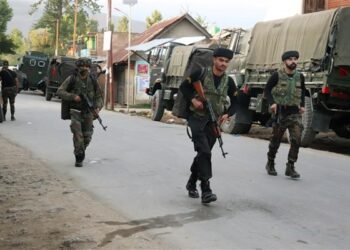
    The exchange of gunfire between security personnel and militants continued for a second day on Tuesday near Manipur’s border town, Moreh. The town, situated near the Myanmar border, has been on high alert following a series of attacks on Manipur police commandos and gunfight.


    The gunfight erupted late on Sunday, creating panic among the villages in the region. Firing incidents were reported at various locations, including Ward 7 and Moreh Bazar, with militants using bombs to target security forces, according to officials.


    No casualties have been reported on either side, although militants reportedly used mortar shells during the attack on security forces, as per officials. The ongoing gunfight has led to concerns among villagers, prompting some to leave their homes for safety.


    K Minlun Touthang, chairman of unit 8 (New Moreh), Hill Tribal Council (HTC) of Moreh, reported that firing occurred at three places in New Moreh, Lhangkichoi, and Zion Veng. He mentioned that militants posed as security forces and fired at Kuki villages, resulting in around 200 villagers leaving their homes.


    Kaikholal Haokip, spokesperson of the Kuki Inpi Tengnoupal, an umbrella group for Kukis, accused Manipur police commandos of bias and involvement in the killing of Kuki-Zo tribals. Village volunteers targeted commando posts in Moreh as a response. Haokip highlighted the infiltration of Meitei militant groups posing as commandos or security forces, attacking Kuki villages.


    Protests erupted in Moreh and Kangpokpi where Kuki women demanded the withdrawal of Manipur police commandos from their villages. The region has been tense since the beginning of the year, witnessing attacks on security personnel, including four Manipur police commandos and three BSF personnel injured in an attack on January 2.


    Expressing concern over the situation, Chief Minister N Biren Singh suggested the involvement of foreign mercenaries from Myanmar in the attacks on Moreh. He remarked that there were “high chances” of external elements being behind the incidents.


    The ongoing unrest in Moreh underscores the challenges faced by security forces in maintaining peace and order in border regions, with heightened tensions requiring careful handling to prevent further escalation. The situation remains dynamic, with authorities closely monitoring developments in the region.

  • Shift in Manipur Violence: CM Highlights Changing Dynamics

    Shift in Manipur Violence: CM Highlights Changing Dynamics

    The violence in Manipur has undergone a transformation, with Chief Minister N Biren Singh revealing a shift from clashes between communities to confrontations between security forces and insurgents. In an interview, Singh commented on the recent intense gunfights between security forces and insurgents in Moreh, a crucial trading town on the India-Myanmar border.


    Over the past eight months, Manipur experienced periods of relative calm interspersed with incidents of violence. Singh clarified that the recent conflicts during the new year were primarily between state security forces and militants, marking a change in the conflict’s dimension.


    Amidst the unrest, the Kuki tribes have urged the central government to remove state police from Moreh, alleging attacks on Kuki civilians. The Manipur Police, however, deny these allegations, attributing attacks on state police commandos to hill-based insurgents.


    Singh called for the cessation of the Free-Movement Regime (FMR) along the India-Myanmar border, advocating for border fencing and a structured travel system with proper documentation. He emphasized the importance of implementing checks and balances to manage cross-border movement effectively.


    Expressing suspicion about the involvement of foreign mercenaries in Manipur’s violence, Singh outlined the government’s efforts to restore normalcy. Under the guidance of Home Minister Amit Shah, discussions are ongoing through proper channels. Singh assured that total normalcy would be reinstated soon, with the government planning to provide ₹1 lakh each to displaced individuals within ten days to cover immediate expenses.


    Blaming past governments for the current crisis, Singh pointed out the lack of attention given to Manipur’s issues during the merger in 1947-49. He highlighted the significance of well-established fencing and a pass system to control influx, emphasizing that earlier administrations left Manipur to address its challenges independently. Singh credited Prime Minister Narendra Modi and Home Minister Amit Shah for bringing development and security to the region, contrasting their approach with the perceived inaction of previous governments.

  • 10 Local Recruits Join Militancy in Jammu & Kashmir in 2023

    10 Local Recruits Join Militancy in Jammu & Kashmir in 2023

    In a significant development, the Jammu and Kashmir Police reported that only ten local recruits have joined terrorist ranks in the region this year. Out of these, six have already been killed, while the remaining four have the opportunity to either surrender or meet the same fate. This marks the lowest number of locals joining militancy in Jammu and Kashmir since 1990 when Pakistan-backed militancy began in the region.


    Last year, 110 Kashmiri youths joined terrorist groups, with most of them being killed during encounters with security forces.


    Dilbag Singh, the Director General of Jammu and Kashmir Police, expressed satisfaction with this positive trend, highlighting that the youth of Kashmir has become more aware of the tricks and conspiracies of extremist elements. He wished that even these ten individuals had not chosen the path of militancy and emphasized the importance of youth in Jammu and Kashmir siding with peace.


    Out of the ten local recruits, six have already been neutralized. The police chief urged the four remaining suspects who are armed and active to surrender, emphasizing that the doors for their “ghar wapsi” (return home) are open.


    The significant decrease in the recruitment of local individuals into terrorist ranks represents a major achievement in the fight against militancy in Jammu and Kashmir over the past three decades. The decline in local recruitment is seen as a positive outcome of the crackdown against separatists and their support structures that began after the revocation of Article 370 in 2019.


    While the region witnessed a decrease in the total number of terrorists and reduced civilian and security force casualties in 2013, the situation changed after 2014, with a rising trend of local recruitment into terrorist groups. However, the stringent security measures, crackdown on separatists, and targeted elimination of terrorist commanders inside Pakistan have dealt a severe blow to the capacity of terrorist organizations to recruit and arm local youth in the Kashmir Valley. This decline in local recruitment is a significant step toward restoring peace and stability in the region.

  • Shehla Rashid Expresses Gratitude Amid Israel-Hamas Conflict

    Shehla Rashid Expresses Gratitude Amid Israel-Hamas Conflict

    In the midst of the Israel-Hamas conflict, Shehla Rashid, an Indian human rights activist and alumnus of NIT and JNU, has expressed her profound gratitude towards the Indian Army and the country’s security forces for their unwavering commitment to ensuring the safety of Indian citizens.


    Rashid’s sentiments were shared in response to a social media post by Layla Maghribi, a British Arab journalist and writer who has worked with international media outlets like Reuters and CNN International. Maghribi, who currently resides in the UK after years in the Middle East, had voiced her distress regarding the ongoing conflict and its impact on individuals and communities.


    In her post, Rashid conveyed, “Looking at the events in the Middle East, today I realize how lucky we are as Indians.” She further emphasized the immense sacrifices made by the Indian Army and security forces for the safety and security of Indian citizens.


    In another post, Rashid acknowledged the contributions of various dignitaries in achieving peace in Kashmir. She attributed the credit to figures such as Prime Minister Narendra Modi, Home Minister of India Amit Shah, Lieutenant Governor of Jammu & Kashmir Manoj Sinha, Additional Directorate General of Public Information of the Indian Army, and Chinar Corps of the Indian Army.


    Rashid emphasized the significance of security in the pursuit of peace, asserting that peace is unattainable without the essential underpinning of security. She also extended her gratitude to the Central Reserve Police Force and the Jammu and Kashmir Police.


    The Israel-Hamas conflict, which began when hundreds of Hamas militants attacked Israel on October 7, has resulted in extensive violence and destruction. Gunmen, some on motorcycles, breached barriers around Gaza and launched assaults on nearby communities, including homes, military bases, and even a large outdoor dance party. In response, Israeli jets and artillery bombarded the Gaza Strip for days, leading to a significant death toll and widespread suffering.


    As the conflict continues to unfold, Rashid’s expression of gratitude towards the Indian Army and security forces serves as a reminder of the importance of peace, security, and the sacrifices made by those who work tirelessly to ensure the safety of their fellow citizens.

  • Protests Erupt in Imphal Over Meitei Student Killings

    Protests Erupt in Imphal Over Meitei Student Killings

    Protests against the Meitei students’ killing incident, who had gone missing in July, once again rocked Imphal on Friday evening. At around 11 pm, protestors allegedly tried to attack the residence of BJP MLA L Susindro.


    Several videos circulated on social media platforms, showing a heavy presence of security forces attempting to disperse the protestors and maintain the law and order situation in the area, as reported by HT.


    However, there is no information available on whether the BJP MLA was present at his residence at the time of the attack yesterday. It is pertinent to note that Susindro was also targeted in June when a mob torched a private godown belonging to him.


    Imphal Valley has been witnessing protests since Tuesday after photos of two Meitei students who were killed here surfaced on the internet. In the images, one shows the two students’ lifeless bodies, while the other shows them sitting in fear with two armed men in the background.


    Following this, mobile internet services were suspended for five days in Manipur. The curbs will remain effective in the state till 7.45 pm on 1 October 2023. A CBI team led by Special Director Ajay Bhatnagar also reached Imphal to investigate the alleged kidnapping and killing of two students.


    Hill areas of Manipur were again placed under the Armed Forces (Special Powers) Act or AFSPA, which has been extended for six months, except for 19 police stations falling under the Imphal valley and an area that shares its boundary with neighboring Assam.


    Meanwhile, Chief Minister N Biren Singh on Saturday said the culprits will definitely be caught. “Everything will be fine soon.”


    Manipur has been witnessing violence since May 3, following protests by the Kuki and Meitei communities against the High Court’s order asking the state government to consider the inclusion of the Meitei community in the category of Scheduled Tribes (ST).


    So far, more than 170 people have lost their lives in the ethnic clashes in Manipur. The situation in Imphal remains tense as protests escalate following the killing of Meitei students. Security forces are deployed, and a CBI investigation is underway. Ethnic tensions continue in Manipur, resulting in a significant loss of life. Chief Minister N Biren Singh reassures the public that the culprits will be brought to justice.

  • Encounter in Jammu and Kashmir’s Anantnag Enters Fifth Day

    Encounter in Jammu and Kashmir’s Anantnag Enters Fifth Day

    The encounter with terrorists in the Anantnag district of Jammu and Kashmir has entered its fifth day, with a prolonged battle taking place deep inside the forested Gadol area. Despite the continuous efforts of thousands of soldiers, including paracommandos, the terrorists are utilizing the challenging terrain and forest cover to evade capture and extend the encounter.


    In the ongoing operation to neutralize the terrorists, three officers—two from the Army and one from the police—have lost their lives. The officers killed in action have been identified as Colonel Manpreet Singh, Major Ashish Dhonak, and Humayun Bhat. The death toll in the Anantnag encounter has now climbed to four after police discovered the body of one more missing soldier on Friday.


    The security forces have employed various tactics, including the use of high-tech weapons, hundreds of mortar shells, and rockets, to target suspected terrorist hideouts. Sophisticated drones have also been used to drop explosives in the area.


    The encounter began on Wednesday, September 13, and has continued for more than 100 hours. It involves a combined team of security personnel from the Army and the Jammu and Kashmir Police engaging with the terrorists in the Kokernag area of Anantnag district.


    To aid their efforts in locating the terrorists who are holed up in the Kokernag area, the security forces are utilizing quadcopters and drones. Officials have reported that the forces have fired mortar shells on terrain believed to be the hiding place of the terrorists, based on drone surveillance.


    In addition to mortar shells and rockets, the forces have used grenade launchers to target the group of terrorists. Drones have been employed to drop grenades on suspected terrorist hideout locations.


    On Friday, Additional Director General of Police (ADGP) Kashmir Vijay Kumar called on retired police and Army officials to avoid making unnecessary “ambush hypotheses” related to the ongoing gunfight between security personnel and terrorists in the Kokernag area of Anantnag district. The authorities continue to exert concerted efforts to bring the situation under control and eliminate the terrorist threat in the region.

  • Violence in Manipur’s Pallel Claims Third Life

    Violence in Manipur’s Pallel Claims Third Life

    The state of Manipur remains embroiled in violence, with the recent death in the ongoing clashes in Pallel, Tengnoupal district, adding to the toll. The unfortunate incident has brought the death count due to the Pallel violence to three on a fateful Saturday.


    The victim, a 37-year-old man, succumbed to his injuries overnight while undergoing treatment at the Regional Institute of Medical Sciences (RIMS) in Imphal, according to officials cited by PTI. He had sustained a critical bullet wound to his head during the crossfire between security forces and armed miscreants.


    The situation in Pallel escalated when hundreds of individuals from the majority community attempted to storm tribal villages, resulting in two deaths and injuring around fifty others, including Indian Army personnel.


    The conflict intensified further when a gunfight erupted between security forces and armed individuals at Molnoi village, near Pallel. The armed miscreants were reportedly attempting to incite violence and arson in the village.


    As news of the gunfight spread, large groups of Meitei community members, accompanied by Meira Paibis and Arambai Tenggol militiamen dressed in commando uniforms, gathered near the conflict zone. Their intention was to march towards Pallel, and they attempted to breach security checkpoints.


    Security forces personnel intervened to prevent further escalation of the situation. Their primary goal is to restore peace and stability to Pallel, which had been experiencing heightened tensions for several days.


    The situation took a turn for the worse when some armed individuals, disguised in police uniforms, opened fire on the mob. This resulted in gunshot injuries to an Army major, who was subsequently evacuated to a military hospital in Leimakhong by helicopter. Three other police personnel were also injured in the incident.


    Initial reports indicate that security forces used minimum force to disperse the mob. Teargas shelling was deployed, leading to injuries to approximately 45 women during the encounter. Tragically, one person lost their life in the Friday morning gunfight, and a 48-year-old man was fatally caught in the crossfire.


    The situation in Pallel remains volatile, with tensions running high and security forces striving to maintain peace and stability in the region. The ongoing violence underscores the need for immediate attention and efforts to resolve the underlying issues contributing to the unrest.