Tag: S Jaishankar

  • GSF Trendsetters in Transboundary Education in a World of Global Workspaces: Dr Jaishankar

    GSF Trendsetters in Transboundary Education in a World of Global Workspaces: Dr Jaishankar

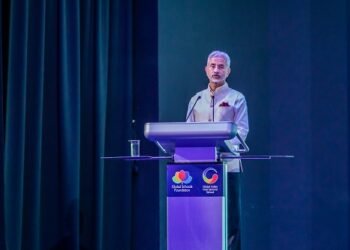
    India’s External Affairs Minister Dr. S Jaishankar said he supported the idea of transboundary Education in view of the changing realities of global workspaces, and extolled the Global Schools Foundation as trendsetters in new-age education, during a 3-hour interaction with the Indian diaspora in Singapore earlier this week.


    “I am impressed by the contribution (GSF) is making. What you have done already, has in many ways set a trend (in education),” Dr. Jaishankar said about GSF in response to a question on the role education can play for the advancement of children globally. Addressing an audience of 1,300 people at the Quantum Arena of Global Village Campus in Singapore, he expressed support to Indian educational institutions making their mark around the world. “I think you have reached 45,000 students, and (this is) not just in Singapore,” he said referring to GSF schools’ reach in 11 countries from Europe to East Asia.


    In India, Global Schools Foundation runs 5 international schools which have 26 campuses across the country. GSF’s Global Indian International School has pioneered CBSE education outside India in countries like Japan, Malaysia and Singapore, for more than two decades, with emphasis on a multicultural environment for better learning outcomes. Its framework offers skills-based education in a multicultural environment with an aim to nurture students into global citizens.


    GIIS focuses on imparting 21st century skills that help students acquire credentials to be a global citizen. “You can think of yourself in a way as a pioneer of this trend, but it actually signifies something much bigger, which is the idea of the world as a global workplace, because in many ways, there will be demands for talents and skills in different parts of the world,” Dr. Jaishankar said.


    Dr. Jaishankar was speaking at an interaction with the Indian diaspora on March 24. He was in Singapore for a 3-day visit from Mar 23-25, 2024, as part of his book tour following the release of his latest book ‘Why Bharat Matters’. In a vibrant Q&A session with an audience comprising industry leaders, businessmen, community members and students of GSF schools, Dr Jaishankar spoke at length on topics ranging from India-Singapore relations, to the political landscapes of the world, and diaspora contributions to the nation.


    The event was attended by business professionals, students, educationists and members of the Indian community in Singapore. It began with a ‘Ganesh Vandana’ – the auspicious Indian way of commencing any event by invoking the Elephant God Ganesha – performed by students of GIIS.


    A 20-minute documentary on Indian freedom fighter Netaji Subhash Chandra Bose and his connection with Singapore was also shown during the occasion, in collaboration with the local Tagore Society. “India has marked a significant milestone in its history by honouring one of its greatest freedom fighters, Netaji Bose, with the unveiling of his statue at Kartavya Path in the capital,” Dr. Jaishankar observed. “Netaji remains a beacon of inspiration for our nation, guiding us through our journey of progress and development,” he said. “As we celebrate Indias rise on the global stage, it is essential to pay homage to the struggles that paved the way for our success.”


    Students of Global Indian International School and One World International School asked questions on a range of topics including multiculturalism and sustainability, as well as work-life balance. This is Dr Jaishankar’s third visit to the Global Schools Foundation. Earlier, he had visited the Global Indian International School for a Leadership Lecture Series, and has interacted with the students of GIIS Kuala Lumpur Campus at the Pravasi Bharatiya Divas event at Marina Bay Sands Singapore.


    The idea of transboundary education has been explored by GSF through many collaborative activities as well as footprints in the education sector around the world. One of the biggest contribution is the Global Student Exchange


    About Global Schools Foundation

    GSF, a Singapore-based not-for-profit foundation has a network of 64 campuses across 11 countries, including Japan, South Korea, Singapore, Cambodia, United Arab Emirates, United Kingdom and Malaysia, where 45,000 students from 70 nationalities study. GSF schools rank high in IB results, with over 100 students scoring World Topper (45/45) and Near Perfect Scores (44/45) in the IB Diploma exams.


    Over 900 of its students have achieved A* and A in at least 7 or more subjects in the Cambridge IGCSE exams. GSF student was ranked No 1 in the world (outside India) in the CBSE Grade 12 exam. For achieving the highest school average in Grade 10 exam in 2020, CBSE ranked GSF Japan school No 1 outside India and ranked 9th amongst 25,000 CBSE schools in India and the world. GSF schools are a recipient of over 500 education excellence awards from international quality organisations and UK-Based World Book of Records Recognises GSF Schools as Worlds Most Awarded Network of Schools. GSF schools in India include Global Indian International School, One World International School, Witty Group of schools, Glendale International School and Vikaasa Group of schools.

  • Jaishankar Defends Citizenship Amendment Act Amid Criticism

    Jaishankar Defends Citizenship Amendment Act Amid Criticism

    External Affairs Minister S Jaishankar has firmly defended the Citizenship Amendment Act (CAA) against criticism from the United States, asserting that the remarks made lacked a proper understanding of the historical background of the law. Speaking at the India Today Conclave, Jaishankar emphasized that the CAA was introduced to address the challenges stemming from the partition and noted that the global response seemed to overlook the historical context.


    Jaishankar’s remarks came in response to comments made by the US Ambassador to India, Eric Garcetti, who underscored the importance of principles such as religious freedom and equality in a democracy. However, Jaishankar reiterated that he, too, had principles, including an obligation to people who were let down during the partition. He emphasized that the CAA aimed to provide relief to those affected by the partition and highlighted examples from across the world where similar measures had been adopted to fast-track citizenship for specific ethnic minorities.


    One such example cited by Jaishankar was the Jackson-Vanik amendment, which suspended most-favored-nation status to certain countries, including the Soviet Union, based on restrictions on emigration. The Lautenberg Amendment, introduced in 1990, facilitated refugee status for specific groups, such as Jews and certain Christian minorities, from countries like the former Soviet Union, Laos, Cambodia, and Vietnam. Additionally, the Specter Amendment expanded the scope to include Iranian religious minorities facing discrimination.


    Jaishankar’s defense of the CAA is not new, as he has previously argued its merits during international forums. In February 2020, during a meeting of EU foreign ministers in Brussels, he compared the CAA rules to immigration and refugee resettlement policies in Europe, highlighting the use of national or cultural criteria by many EU countries.


    The CAA, enacted by the Central government in December 2019, aims to provide citizenship to undocumented non-Muslim migrants from Pakistan, Bangladesh, and Afghanistan who arrived in India before December 31, 2014. Under the CAA, individuals belonging to six specific religious minorities – Hindu, Sikh, Buddhist, Jain, Parsi, and Christian – who have faced religious persecution in these countries are eligible for citizenship.


    Despite criticism from some quarters, the Indian government has defended the CAA as a humanitarian measure aimed at addressing the plight of persecuted minorities in neighboring countries. Jaishankar’s assertion at the India Today Conclave underscores the government’s commitment to upholding the principles of equality and justice while addressing the challenges posed by illegal migration and religious persecution.


    It is important to note that the CAA has been a subject of debate and discussion both domestically and internationally, with some expressing concerns about its potential impact on India’s secular fabric and its implications for religious minorities within the country. However, the government has maintained that the CAA is consistent with India’s long-standing tradition of providing refuge to persecuted communities and upholding the principles of religious freedom and equality.


    Jaishankar’s defense of the CAA reflects the government’s steadfast commitment to its implementation and its willingness to engage with critics to address their concerns. As the debate over the CAA continues, it remains to be seen how the government navigates the domestic and international discourse surrounding this contentious issue.

  • Amitabh Bachchan Applauds S Jaishankar’s Response

    Amitabh Bachchan Applauds S Jaishankar’s Response

    In the realm of international relations, every statement, gesture, and action carries weight, especially when it involves a country as influential as India. Recently, External Affairs Minister (EAM) S Jaishankar found himself at the center of attention when he responded to a remark characterizing India as a ‘bully’ in the sub-continent and the Indian Ocean region. His response, which garnered praise from Bollywood legend Amitabh Bachchan, shed light on India’s approach to diplomacy and its role as a regional leader.


    During a book launch event on Saturday, Jaishankar addressed the perception of India as a ‘bully’ by highlighting India’s substantial aid contributions to its neighbors during times of need. He emphasized that ‘big bullies’ do not provide assistance to their neighbors, be it in the form of financial aid or other essential support. His remarks underscored India’s commitment to regional stability and cooperation, challenging the notion of India as a hegemonic power.


    Amitabh Bachchan, known for his discerning commentary on social and political issues, took to X (formerly Twitter) to express his admiration for Jaishankar’s response. Sharing a video of Jaishankar’s remarks, Bachchan commended the EAM with a simple yet impactful “WAH .. !!! well said Sir ..” His endorsement added further visibility to Jaishankar’s message, resonating with a wide audience across social media platforms.


    Jaishankar’s defense of India’s actions and his call for a nuanced understanding of India’s role in the region comes at a critical juncture. With geopolitical tensions on the rise and perceptions of India’s influence evolving, his words carry significant weight. By highlighting India’s efforts to support its neighbors and promote regional stability, Jaishankar aimed to challenge stereotypes and misconceptions about India’s foreign policy objectives.


    The EAM’s remarks also come amidst developments in India-Maldives relations. Reports emerged that Maldives President Mohamed Muizzu announced plans for the withdrawal of Indian military personnel from the country after May 10. This decision, perceived as a departure from the traditional India-Maldives partnership, raised concerns about the future of bilateral ties.


    Muizzu’s announcement sparked speculation about the trajectory of India-Maldives relations and the implications for regional security. His pledge to remove Indian troops, coupled with his close ties to China, signaled a potential shift in the geopolitical landscape of the Indian Ocean region. The move prompted calls for diplomatic engagement and dialogue to address the underlying issues and prevent further escalation.


    In response to the developments in the Maldives, Jaishankar reaffirmed his commitment to resolving the situation through diplomacy. He acknowledged the complexities of international relations and the occasional misunderstandings that arise between nations. Stressing the importance of diplomacy and dialogue, Jaishankar expressed confidence in finding a peaceful resolution to the dispute.


    The situation in the Maldives underscores the challenges inherent in India’s regional diplomacy. As a major power in the Indian Ocean region, India plays a crucial role in maintaining stability and security. Its relationships with neighboring countries, including the Maldives, require careful navigation to balance strategic interests and regional dynamics.


    Jaishankar’s proactive approach to diplomacy reflects India’s commitment to upholding its interests while promoting peace and cooperation in the region. His response to the ‘bully’ remark and his handling of the Maldives situation demonstrate India’s diplomatic agility and strategic foresight. In a rapidly changing geopolitical environment, India’s leadership must navigate complex challenges while upholding its core values and principles.


    As India continues to assert its influence on the global stage, the role of diplomacy becomes increasingly vital. By engaging with its neighbors and the international community with tact and diplomacy, India can advance its interests while contributing to regional stability and prosperity. Jaishankar’s leadership exemplifies India’s diplomatic prowess and its commitment to fostering positive relationships in an interconnected world.

  • External Affairs Minister Advocates South Korea’s Participation

    External Affairs Minister Advocates South Korea’s Participation

    India’s External Affairs Minister, S. Jaishankar, embarked on a two-day visit to South Korea, where he emphasized the importance of South Korea’s participation in India-led initiatives aimed at addressing key global challenges. During his visit, Jaishankar chaired a joint commission meeting with his South Korean counterpart and engaged in discussions to enhance bilateral cooperation in various fields.


    One of the significant aspects of Jaishankar’s visit was his pitch for South Korea’s involvement in India-led initiatives such as the International Solar Alliance (ISA), the Coalition for Disaster Resilient Infrastructure (CDRI), and the Indo-Pacific Oceans Initiative. These initiatives, spearheaded by India, focus on addressing pressing global issues ranging from renewable energy and climate change to maritime security and disaster resilience.


    In his address at the Korean National Diplomatic Academy, Jaishankar highlighted the importance of maritime security, particularly in the context of South Korea’s role as an important trading nation. He emphasized India’s efforts in hosting the Fusion Centre, a collaborative platform resulting from White Shipping agreements with various partners. The Fusion Centre facilitates the sharing of maritime domain awareness to enhance maritime security across the Indian Ocean region.


    Jaishankar also underscored the significance of South Korea’s participation in initiatives like the Indo-Pacific Oceans Initiative, which encompasses a wide range of ocean-related issues such as ecology, environment, transportation, and science and technology. He emphasized that South Korea’s involvement in such initiatives would be a valuable addition, contributing to the collective efforts towards sustainable ocean governance and cooperation in the Indo-Pacific region.


    Additionally, Jaishankar advocated for cooperation through the International Solar Alliance (ISA) and the Coalition for Disaster Resilient Infrastructure (CDRI), both of which are led by India. These initiatives aim to promote renewable energy adoption and build resilience against natural disasters, aligning with the broader goals of sustainable development and climate action.


    In the realm of trade and economic relations, Jaishankar called for greater collaboration on supply chain security and urged for expediting the review of the India-Korea Comprehensive Economic Partnership Agreement (CEPA), signed in 2009. Addressing concerns about the trade imbalance between India and South Korea, Jaishankar emphasized the need for balanced and mutually beneficial trade relations.


    During his visit, External Minister Jaishankar held meetings with key Korean officials, including Prime Minister Han Duck-Soo, Trade Minister Ahn Dukgeun, and Director of National Security Chang Ho-jin. These interactions provided an opportunity to discuss bilateral issues, explore areas of cooperation, and strengthen the strategic partnership between India and South Korea.


    Overall, Jaishankar’s visit to South Korea underscores the importance of diplomatic engagement and collaboration in addressing shared challenges and advancing mutual interests. By advocating for South Korea’s participation in India-led initiatives and enhancing bilateral cooperation across various sectors, both countries aim to deepen their strategic partnership and contribute to regional and global stability and prosperity.

  • Insights from S Jaishankar’s Raisina Dialogue Address

    Insights from S Jaishankar’s Raisina Dialogue Address

    In his recent address at the Raisina Dialogue 2024, India’s External Affairs Minister, S Jaishankar, delivered a compelling message highlighting the crucial role of India on the global stage. He emphasized the need for individuals, both within India and abroad, to understand the significance of India’s trajectory in the coming decade and century. Jaishankar’s address was not only about geopolitics but also served as an invitation for people to grasp the importance of India’s rise in shaping their own lives.


    Central to his message was the idea encapsulated in his book, “Why Bharat Matters.” Jaishankar underscored the importance of comprehending why India, referred to as Bharat, holds such significance in the contemporary world. He emphasized that globalization, while offering immense promise, also brings forth challenges and vulnerabilities. The COVID-19 pandemic and the conflict in Ukraine served as poignant examples of how global events have direct and tangible impacts on individual lives, regardless of geographical boundaries.


    Jaishankar’s personal experiences further elucidated the relevance of foreign policy in everyday life. As he traversed different regions of India, he witnessed firsthand how global events resonated with ordinary citizens. The pandemic, initially perceived as a distant issue, swiftly infiltrated homes and disrupted livelihoods. Similarly, the conflict in Ukraine led to energy hikes, price increases, and food shortages, demonstrating the interconnectedness of the world and the far-reaching consequences of foreign policy decisions.


    Addressing the broader audience beyond the realm of foreign policy experts, Jaishankar emphasized the need for individuals to recognize the importance of foreign policy in shaping their lives. He stressed that understanding foreign policy is not solely the concern of policymakers but has implications for everyone. Through his book, “Why Bharat Matters,” Jaishankar aimed to bridge the gap between foreign policy and the general populace, elucidating how global dynamics directly impact individuals’ daily existence.


    Jaishankar’s subsequent mention of his second book during the Dialogue, “The India Way,” further highlighted the evolution of India’s approach on the global stage. While “Why Bharat Matters” delves into the significance of India’s trajectory, “The India Way” explores India’s unique ethos and approach to global affairs. By using the term “Bharat” instead of “India,” Jaishankar aimed to capture the transformative changes occurring within Indian society, politics, and mindset.


    Moreover, Jaishankar underscored that India’s current thought processes are deeply rooted in its culture, traditions, and heritage. This authentic approach, he argued, forms the bedrock of India’s engagement with the world, distinguishing it from conventional geopolitical strategies. By embracing its cultural heritage, India seeks to forge meaningful partnerships and contribute positively to global affairs.


    S Jaishankar’s address at the Raisina Dialogue 2024 provided valuable insights into India’s global significance and the evolving nature of its foreign policy. Through his books and speeches, Jaishankar encourages individuals to recognize the interconnectedness of global events and underscores the pivotal role of India in shaping the future trajectory of the world. As India continues to assert its position on the global stage, understanding its trajectory becomes increasingly essential for individuals worldwide.

  • S Jaishankar Discusses India’s Diplomatic Standpoints

    S Jaishankar Discusses India’s Diplomatic Standpoints

    In a recent interview with German economic daily Handelsblatt, India’s External Affairs Minister, S Jaishankar, shed light on various aspects of India’s diplomatic stance, particularly in light of recent global developments. Here’s a breakdown of the key points discussed:


    1. Shifting Dynamics in Arms Trade:
    Jaishankar highlighted a significant shift in the dynamics of arms trade over the past decade. He noted that many Western countries used to prefer supplying arms to Pakistan rather than India. However, this trend has changed, with India diversifying its arms procurement from suppliers like the USA, Russia, France, and Israel. This shift underscores India’s growing importance in the global arms market and its evolving role as a major defense player.


    2. Stable Ties with Russia:
    Despite recent geopolitical tensions stemming from Russia’s invasion of Ukraine and subsequent sanctions by Western nations, Jaishankar reaffirmed India’s “stable and friendly ties” with Russia. He emphasized that Moscow has never harmed India’s interests and that the bilateral relationship is built on a foundation of trust and mutual respect. India’s continued purchases of Russian crude oil, despite Western sanctions, reflect the depth of this relationship and India’s pragmatic approach to energy security.


    3. Energy Procurement Challenges:
    Jaishankar addressed the challenges India faced in procuring energy resources, particularly in the wake of the conflict between Russia and Ukraine. With Europe shifting its energy procurement to the Middle East, India was left grappling with potential supply shortages and increased costs. In response, India opted to continue purchasing Russian crude oil, leveraging its longstanding relationship with Moscow and securing favorable terms to meet its energy needs. This decision underscores India’s strategic priorities and its ability to navigate complex geopolitical realities to safeguard its energy security.


    4. Diplomatic Autonomy:
    India’s foreign policy decisions, including its stance on Russia and energy procurement, underscore its commitment to maintaining diplomatic autonomy and pursuing its national interests. Jaishankar emphasized that India cannot be expected to align its views on Russia or China with those of Europe or the West entirely. He highlighted the need for mutual understanding and respect for differing perspectives in international relations, emphasizing that each country operates within its own geopolitical context and strategic imperatives.


    5. Critique of Global Economic Model:
    Jaishankar criticized the existing global economic model, describing it as unstable and unfair. He pointed out the over-concentration of production in a limited number of countries, leading to economic imbalances and hollowing out of economies in other regions. This critique reflects India’s push for a more equitable and inclusive global economic order, where all nations have the opportunity to thrive and benefit from international trade and cooperation.


    Jaishankar’s interview provides valuable insights into India’s diplomatic priorities and strategic considerations in the face of evolving global challenges. It underscores India’s commitment to maintaining stable and mutually beneficial relationships with key partners like Russia, while also asserting its autonomy and pursuing its national interests on the world stage. As India continues to navigate a rapidly changing geopolitical landscape, its diplomatic engagements and foreign policy decisions will play a crucial role in shaping its future trajectory on the global stage.

  • External Affairs Minister Stresses Strengthening Ties

    External Affairs Minister Stresses Strengthening Ties

    India’s External Affairs Minister, S Jaishankar, recently addressed concerns about China’s increasing influence in South Asia during an interaction with students at the Indian Institute of Management Mumbai. He acknowledged that China is a major global player and emphasized the need for India to focus on enhancing its diplomatic ties with neighboring countries in the face of Beijing’s expanding footprint in the region.


    Jaishankar stated, “Why should we expect otherwise? But the answer to that is not to complain about what China is doing. The answer is, okay, you are doing it. Let me do better than that.” This reflects India’s commitment to proactive diplomacy and the determination to strengthen its engagement with other South Asian nations.


    China has been actively working to bolster its ties with countries in the region, including Bangladesh, the Maldives, and Pakistan. As Beijing expands its economic and strategic influence, India recognizes the importance of responding effectively without succumbing to fear or apprehension. Jaishankar’s remarks underscore the importance of diplomatic agility and the imperative for India to assert itself in the evolving geopolitical landscape.


    While acknowledging China’s status as a major economy, Jaishankar urged India not to be intimidated by Beijing’s tactics. Instead, he emphasized the need for India to focus on giving its best and making concerted efforts to enhance diplomatic relations with its neighbors. The minister’s pragmatic approach suggests that India is prepared to navigate the complexities of geopolitical competition while staying committed to its diplomatic objectives.


    In addition to addressing concerns about China’s influence, Jaishankar highlighted the significance of India’s role in assisting neighboring countries during challenging situations. He cited the example of the Indian Navy’s deployment of warships in the Red Sea region to address attacks on merchant navy vessels. India’s proactive response reflects its commitment to ensuring stability in the region and protecting shared maritime interests.


    Jaishankar stated, “India’s greater capability, our interest, and our reputation today warrant that we help out in difficult situations.” This assertion aligns with India’s evolving role as a responsible regional actor, ready to contribute to the security and well-being of neighboring nations. It also emphasizes the importance of building trust and goodwill through collaborative efforts.


    The Indian Navy’s recent actions in responding to distress calls and rescuing crew members from vessels attacked by pirates demonstrate India’s commitment to maritime security. Last week, the Navy contained a fire onboard MV Marlin Luanda, a commercial container oil tanker in the Gulf of Aden. The prompt response to distress calls showcases India’s proactive approach in safeguarding maritime routes and ensuring the safety of seafarers.


    Moreover, on Monday, the Indian warship INS Sumitra rescued 19 Pakistani crew members of a fishing vessel after their Iranian-flagged fishing vessel was attacked by pirates off the east coast of Somalia. This humanitarian gesture underscores India’s commitment to regional stability and its readiness to collaborate with neighboring countries, even in challenging circumstances.


    India’s External Affairs Minister Jaishankar also drew parallels between India’s assistance to neighboring countries during crises and the ancient Indian principle of “Vasudhaiva Kutumbakam” (the world is one family). He mentioned India’s quick response to provide aid to Turkey after a devastating earthquake and the support extended to various nations during the COVID-19 pandemic, including the supply of vaccines and sending medical personnel.


    India’s External Affairs Minister, S Jaishankar, has addressed concerns about China’s influence in South Asia with a pragmatic and proactive approach. He emphasizes the importance of focusing on diplomatic efforts, assuring that India will respond effectively to evolving geopolitical dynamics. Additionally, India’s commitment to assisting neighboring countries in times of need, as demonstrated by the actions of the Indian Navy, reflects a responsible and engaged regional posture.

  • S Jaishankar Meets Iranian Counterpart in Tehran

    S Jaishankar Meets Iranian Counterpart in Tehran

    India’s External Affairs Minister, Dr. S Jaishankar, visited Tehran for a crucial meeting with his Iranian counterpart, Hossein Amirabdollahian, as part of ongoing high-level exchanges between the two nations. The meeting aimed to further develop bilateral relations and discuss regional and international developments. This diplomatic engagement holds significance in the context of the evolving geopolitical landscape in the region.


    Bilateral Relations:

    During the meeting, both ministers emphasized the importance of strengthening bilateral ties between India and Iran. The discussions covered various aspects of cooperation, including economic, political, and strategic collaboration. Both nations have a history of friendly relations, and this meeting reaffirmed their commitment to enhancing cooperation for mutual benefits.


    Chabahar Port Development:

    One of the key highlights of the discussions was the development of the strategically vital Chabahar port. Minister Jaishankar met with Iran’s Minister of Roads and Urban Development, Mehrdad Bazrpash, to explore avenues for establishing a long-term cooperation framework regarding Chabahar. The Chabahar port, located in Iran’s Sistan-Balochistan province, holds immense significance for India’s connectivity initiatives in the region.


    The Chabahar port project, being developed by India and Iran, aims to boost trade and connectivity between the two nations. India has a keen interest in leveraging Chabahar to enhance regional trade, particularly for its connectivity to Afghanistan. The ministers engaged in detailed and productive discussions on the way forward for Chabahar, showcasing the commitment of both countries to making this project a success.


    International North-South Transport Corridor (INSTC):

    The discussions also covered the International North-South Transport Corridor (INSTC), a multi-modal transport project spanning over 7,200 kilometers. INSTC facilitates the movement of freight among India, Iran, Afghanistan, Armenia, Azerbaijan, Russia, Central Asia, and Europe. Minister Jaishankar exchanged views on INSTC with Minister Bazrpash, highlighting the importance of this corridor in enhancing regional connectivity and trade.


    The INSTC project aligns with India’s vision of promoting efficient and cost-effective transport routes. It opens up opportunities for seamless movement of goods, contributing to economic growth in the participating countries. Both ministers expressed their commitment to advancing cooperation within the framework of INSTC.


    Regional and International Developments:

    In addition to bilateral matters, the ministers reviewed regional and international developments. The geopolitical situation in the surrounding regions, including the ongoing conflict in the Red Sea involving Houthi militants, was likely discussed. Minister Jaishankar’s visit comes at a time when global concerns are rising over maritime security, and his discussions with Iranian counterparts may have included assessments of the situation.


    India’s Concerns and Preparedness:

    The recent airstrikes in the Red Sea targeting Houthi positions have raised concerns globally. India, closely monitoring the developments, has taken proactive measures to enhance maritime security operations. The Indian Navy has deployed frontline ships and surveillance aircraft to safeguard critical sea lanes, including the North and Central Arabian Sea. Minister Jaishankar’s engagement in Tehran is crucial in ensuring coordination and understanding between India and Iran on regional security issues.


    Conclusion:

    The meeting between India’s External Affairs Minister S Jaishankar and his Iranian counterpart Hossein Amirabdollahian in Tehran marks a significant step in strengthening bilateral ties. The discussions on Chabahar port development, INSTC, and regional security demonstrate the shared commitment of India and Iran to fostering cooperation across various domains. As both nations navigate the evolving geopolitical landscape, such diplomatic engagements play a crucial role in addressing common challenges and advancing mutual interests.

  • Jaishankar Comments on Diplomatic Row with Maldives

    Jaishankar Comments on Diplomatic Row with Maldives

    India’s External Affairs Minister, S Jaishankar, addressed the ongoing diplomatic row between India and Maldives, stating that “politics is politics” and acknowledging that it is not guaranteed that every country will always support or agree with India. Speaking at the Manthan: Townhall meeting in Nagpur, Maharashtra, Jaishankar highlighted the importance of building a strong connect with people in different countries to maintain positive sentiments even in the face of political fluctuations.


    Jaishankar emphasized that despite political ups and downs, the focus has been on establishing a strong connect with societies so that people generally have positive feelings towards India. He mentioned the efforts made in the last decade to achieve success in building these relationships. The Minister stressed that India is actively engaged in infrastructure development in various countries, involving initiatives such as road construction, electricity transmission, fuel supply, trade access, investments, and tourism.


    “We are involved today in building roads, electricity transmission, supplying fuel, providing trade access, making investments, and having people holiday in other countries,” Jaishankar said, highlighting the diverse aspects of India’s engagement with other nations. He noted that these activities are integral to developing relationships, and even when things do not go smoothly, reasoning and dialogue play a crucial role in bringing them back to a positive trajectory.


    The diplomatic tension between India and Maldives escalated when three Maldivian ministers made derogatory remarks against Indian Prime Minister Narendra Modi on social media. While the Maldivian government distanced itself from the comments, the incident strained the long-standing relationship between the two countries. Maldivian President Mohamed Muizzu, seen as a pro-China leader, formally requested India to withdraw its military personnel from the country, setting a deadline of March 15 for the withdrawal.


    India’s response to the diplomatic situation with Maldives underscores the complexities of maintaining relationships in the realm of international politics. Jaishankar’s remarks highlight the multifaceted approach India takes, emphasizing the importance of people-to-people connections, infrastructure development, and engagement across various sectors to foster positive relations with other nations.

  • India-China Border Dispute – Jaishankar Asserts Firm Resolution

    India-China Border Dispute – Jaishankar Asserts Firm Resolution

    The persistent border dispute between India and China will remain a significant factor affecting relations between the two nations on multiple fronts, including trade and economics, clarified External Affairs Minister S Jaishankar on Saturday. Addressing a meeting, Jaishankar emphasized that normal relations between India and China are unlikely unless a firm solution is reached on the border issue, and the forces stationed there face each other.


    “I have explained to my Chinese counterpart that unless you find a solution on the border, if the forces will remain face-to-face and there will be tension, then you should not expect that the rest of the relations will go on in a normal manner; it is impossible,” stated Jaishankar during the ‘Manthan’ townhall meeting in Maharashtra’s Nagpur.


    The border tensions between India and China have been a persistent issue, leading to military standoffs and impacting diplomatic ties. Jaishankar’s recent remarks underline the Indian government’s stance on the matter, highlighting the necessity of resolving the border dispute for the normalization of broader bilateral relations.


    In the course of the interaction, Jaishankar addressed various aspects of Indian diplomacy, shedding light on India’s efforts to secure a permanent seat in the United Nations Security Council (UNSC). He noted that over time, more countries are expressing support for India’s inclusion in the UNSC, but he acknowledged that achieving such recognition requires proactive efforts.


    “With each passing year, the world feels that India should be there, and I can feel that support. The world does not give things easily and generously; sometimes you have to take it,” Jaishankar remarked on India’s pursuit of a permanent seat in the UNSC.


    Responding to questions about India’s participation in international groupings like QUAD and BRICS, Jaishankar highlighted the importance of maintaining ties with different nations in diplomacy. He emphasized India’s independent stance, noting the need to manage interests by dealing with diverse groups. Jaishankar drew an analogy to everyday life, where individuals strive to maintain friendly relationships with people who may have disagreements with each other.


    “Just like how people visit different parties to maintain good relations with other people, I follow the same practice for India’s foreign policy,” explained Jaishankar, underscoring the significance of engaging with various nations to safeguard India’s interests.


    The External Affairs Minister’s insights into India’s foreign policy and diplomatic strategies provide valuable perspectives on the challenges and opportunities the country faces in the global arena. As the India-China border issue continues to impact broader relations, Jaishankar’s emphasis on the need for a resolution underscores the complexities involved in managing bilateral ties amid regional and global dynamics.

  • India-US Relations Proven Resilient Across Presidential Changes

    India-US Relations Proven Resilient Across Presidential Changes

    External Affairs Minister S Jaishankar conveyed a vote of confidence in the enduring strength of India-US relations, emphasizing their resilience across different political administrations. Speaking at the Carnegie Global Technology Summit on Monday, Jaishankar noted the unique aspect of the US having experienced five distinct presidents—Clinton, Bush, Obama, Trump, and Biden—yet the relationship has continued to prosper.


    “The interesting thing about the US is that you’ve had five completely different presidents: think Clinton, Bush, Obama, Trump, and Biden. Now, if a relationship can actually prosper with five very different Presidents, I would say to you that the data clearly indicates a certain stability and that there is enough investment on both sides and structural soundness to the relationship,” Jaishankar stated.


    From the Indian perspective, Jaishankar asserted that India-US relations are, at present, resilient against political fluctuations. This statement follows a challenging period for the bilateral relationship, marked by US officials indicting a 52-year-old Indian national for an alleged conspiracy to assassinate Gurpatwant Singh Pannun, a pro-Khalistan figure and US citizen. While the incident strained ties, both governments addressed the matter at the highest levels, with New Delhi initiating an inquiry into the allegations.


    Jonathan Finer, America’s Principal Deputy National Security Adviser, echoed Jaishankar’s sentiments during the same event. Acknowledging the complex history and occasional differences between the two nations, Finer emphasized the importance of recognizing shared connections that outweigh divergences.


    “The United States and India have a complicated history. We have not always been wholly aligned. We have not always found it easy to work together as economic partners. We have not always found it easy to be on the same side of issues geopolitically,” said Finer.


    Despite recognizing existing challenges and acknowledging that perfect alignment is unlikely, Finer highlighted the collaborative efforts of successive Indian and American governments to manage differences constructively. He emphasized the ability of both countries to work through challenging issues and find common ground, even in the face of historical, cultural, and geopolitical disparities.


    The affirmations by Jaishankar and Finer underscore the enduring nature of India-US relations, with both leaders expressing optimism about the strength of the partnership. The ability to navigate differences and sustain cooperation reflects the commitment to fostering a robust and mutually beneficial relationship.