Tag: Representation

  • CJ Chandrachud Emphasizes Diversity and Representation

    CJ Chandrachud Emphasizes Diversity and Representation

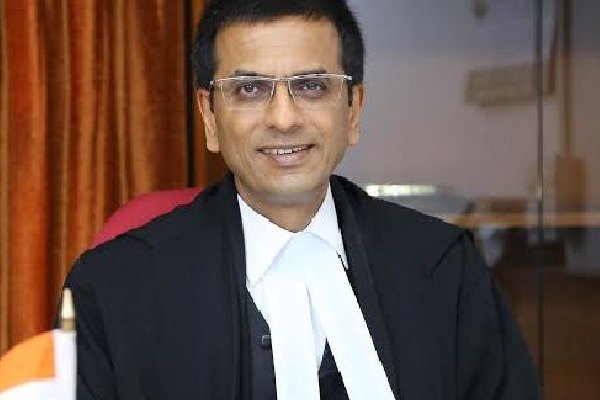
    In a significant address on Saturday, Chief Justice of India DY Chandrachud underscored the critical importance of diversity and representation in judicial decision-making. Speaking at the second annual lecture series commemorating the first sitting of the Supreme Court on January 28, 1950, Chief Justice Chandrachud welcomed International Court of Justice Judge Hilary Charlesworth as the chief guest.


    Chief Justice Chandrachud highlighted the essential role of diversity and representation in both rectifying historical injustices and enriching the decision-making capacity of courts. He emphasized that integrating gender diversity within the judiciary would lead to more comprehensive and equitable decisions, broadening the spectrum of perspectives.


    Noting the strides made by the Supreme Court in promoting gender inclusivity, Chief Justice Chandrachud mentioned initiatives such as the sensitization module on LGBTQIA+ issues and the handbook to combat gender stereotypes. These efforts aim to ensure that the judiciary is better equipped to engage with diverse communities and deliver fair and impartial justice.


    Highlighting recent advancements in gender representation within the legal profession, Chief Justice Chandrachud pointed out the significant increase in the number of women designated as Senior Advocates by the Supreme Court. This positive shift reflects a broader commitment to gender equity and inclusivity within the legal fraternity.


    Reflecting on the legacy of the Supreme Court and its role in India’s socio-political transformation, Chief Justice Chandrachud emphasized the institution’s commitment to fostering social change and upholding the principles of justice enshrined in the Constitution. He underscored the Supreme Court’s role as a product of the interplay between political, societal, and legal dynamics, shaping the course of India’s legal landscape.


    Chief Justice Chandrachud also emphasized the need for legal forums to engage with the socio-political realities and aspirations of the time. This recognition, he noted, fosters an environment conducive to mutual learning and the exchange of ideas, paving the way for transformative approaches to law and justice.


    Chief Justice Chandrachud expressed optimism about the evolving role of lawyers and scholars in reimagining legal paradigms and driving positive change within the legal system. He underscored the importance of mentoring the next generation of legal professionals to challenge existing norms and advance the cause of justice in society.


    Overall, Chief Justice Chandrachud’s address reaffirmed the Supreme Court’s commitment to diversity, inclusivity, and social transformation, emphasizing the integral role of the judiciary in shaping a more just and equitable society.

  • Parties Push for Passage of Women’s Reservation Bill

    Parties Push for Passage of Women’s Reservation Bill

    In an all-party meeting convened by the government on the eve of the five-day Parliament session, various political parties strongly advocated for the passage of the Women’s Reservation Bill during the upcoming session. The bill, which has been pending for nearly 27 years, has garnered support from several political leaders who emphasized the need to table and pass it with consensus.


    The Women’s Reservation Bill proposes to reserve one-third of all seats for women in the Lok Sabha and state legislative assemblies. Currently, the representation of women MPs in the Lok Sabha is less than 15%, and in many state assemblies, it falls below 10%.


    During the meeting, political leaders from different parties made a collective plea for the bill’s passage. Union minister Pralhad Joshi stated that an “appropriate decision will be taken at an appropriate time” regarding the bill.


    Congress leader Adhir Ranjan Chowdhury revealed that all opposition parties united in demanding the passage of the Women’s Reservation Bill in this Parliament session. NCP leader Praful Patel echoed this sentiment, urging the government to pass the bill during the session and expressing hope that it would receive consensus support.


    While discussing the bill, some regional parties also called for the inclusion of quotas for backward classes and scheduled castes within the overall reservation for women.


    Pinaki Misra, a leader from the BJD, suggested that the new Parliament building should mark the beginning of a new era, emphasizing the importance of passing the Women’s Reservation Bill.


    Chowdhury expressed that the government had informed them it was a regular session of Parliament, and only the government knows its intentions. He suggested that the government might introduce new agendas during the session. Additionally, issues such as price rises, unemployment, and the situation on the border with China were raised by his party during the meeting.


    The Women’s Reservation Bill last saw concrete progress in 2010 when the Rajya Sabha passed the bill amid a ruckus, with marshals escorting out some MPs who opposed the move to reserve 33% of seats for women in the Lok Sabha and state assemblies. However, the bill lapsed as it could not be passed by the Lok Sabha.


    The bill’s pending status has led to calls for its long-awaited passage to promote gender equality and enhance women’s representation in India’s political landscape.

  • Yashica Dutt Raises Concerns Over Credit in Made in Heaven

    Yashica Dutt Raises Concerns Over Credit in Made in Heaven

    The fifth episode of Made in Heaven 2, directed by Neeraj Ghaywan, has brought the sensitive topic of casteism into the limelight. The episode features Radhika Apte as Pallavi Menke, a bold Dalit author who fearlessly advocates for her community.


    Yashica Dutt, a prominent journalist and author known for her insightful book “Coming Out as Dalit,” has taken to Instagram to share her thoughts on the episode. While she praised the series for its depiction of a Dalit-Buddhist wedding, she expressed her dissatisfaction with what she perceived as a lack of recognition for her contributions to the core ideas of the episode. Titled “The Heart Skipped a Beat,” the episode portrays the empowering journey of a Dalit woman during her inter-caste wedding. Dutt lauded the Made in Heaven episode’s brilliance in showcasing the resilience of Dalit women, but she emphasized the importance of proper credit.


    In her Instagram post, Dutt revealed, “Seeing my likeness on screen without warning or permission was a roller-coaster starting from thrill and excitement to sadness and loss.”


    ournalist Yashica Dutt voices disapproval over lack of recognition for her contributions to the casteism episode of Made in Heaven 2.


    Dutt’s feelings stem from her belief that certain elements of the episode mirrored her own experiences, yet her name was conspicuously absent. She expressed her disappointment that her words and ideas were integrated into the narrative without proper acknowledgment. Despite her candid criticism, Dutt did not shy away from praising the episode, describing it as a “cinematic triumph” that captures “the true essence of a Dalit woman reclaiming her power in a casteist society.” She expressed ongoing support for director Neeraj Ghaywan, highlighting his role in showcasing unapologetic Dalit voices in cinema.


    Dutt acknowledged Neeraj Ghaywan’s public acknowledgment of her work on his Instagram, but she pointed out that it came only after numerous viewers raised questions about her missing credentials. She concluded her message by urging the creators of the show, including Neeraj Ghaywan, Zoya Akhtar, and Reema Kagti, to formally acknowledge her intellectual contributions.


    The episode’s exploration of casteism through the character of Pallavi Menke has ignited discussions about representation, credit, and the necessity of acknowledging the voices that contribute to such narratives. As the conversation continues, it underscores the importance of giving due recognition to those who shape and inform these stories.