Tag: rape case

  • Calcutta HC Clears Arrest of TMC Leader Shahjahan Sheikh

    Calcutta HC Clears Arrest of TMC Leader Shahjahan Sheikh

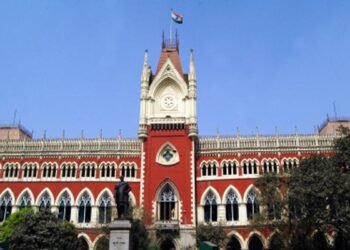
    In a significant development, the West Bengal police have received clearance from the Calcutta High Court for the arrest of Shahjahan Sheikh, a prominent leader of the Trinamool Congress (TMC). Sheikh is accused of heinous crimes including raping women at gunpoint and extorting tribal lands in Sandeshkhali, a region in West Bengal known for its complex socio-political dynamics. The court’s decision marks a pivotal moment in the ongoing legal battle against Sheikh, who has long been a controversial figure in the state’s political landscape.


    During the court proceedings, Justice T S Sivagnanam of the Calcutta High Court clarified that there is no stay on Sheikh’s arrest in the criminal cases registered against him. This directive effectively empowers the West Bengal police to take necessary action against the accused politician, who stands accused of committing grave offenses against vulnerable individuals in the Sandeshkhali area.


    Additionally, the Calcutta High Court directed key enforcement agencies such as the Enforcement Directorate (ED) and the Central Bureau of Investigation (CBI), along with the state home secretary, to be impleaded as parties in the suo motu matter initiated to address the multiple criminal charges against Shahjahan Sheikh. This move underscores the gravity of the allegations against the TMC leader and signals a concerted effort to ensure justice and accountability in the legal proceedings.


    The court’s decision comes against the backdrop of longstanding allegations of atrocities and criminal activities perpetrated by Shahjahan Sheikh and his associates in Sandeshkhali. Reports of rape, extortion, and land grabbing have plagued the region for years, leading to widespread concern among local residents and civil society organizations. The court’s intervention is seen as a critical step towards addressing these systemic issues and holding accountable those responsible for perpetrating violence and exploitation in the community.


    One of the key observations made by the court during the proceedings was the delay in addressing the incidents of atrocities in Sandeshkhali. Despite numerous complaints and reports filed with the state police over the past four years, progress in investigating and prosecuting these cases has been slow. The court expressed surprise at the prolonged delay in bringing charges against the perpetrators, highlighting the need for swift and decisive action to deliver justice to the victims and their families.


    In particular, the court emphasized the urgency of addressing the case against Sheikh, noting that there is no existing order that stays his arrest. This clear directive from the court leaves no room for ambiguity and underscores the imperative of holding individuals accountable for their actions, regardless of their political affiliations or influence.


    Moving forward, the involvement of key enforcement agencies such as the ED and the CBI signals a heightened focus on the broader implications of the case beyond the immediate criminal charges. The investigation is expected to delve into issues of corruption, financial impropriety, and abuse of power, shedding light on the nexus between politics, crime, and governance in the region.


    For the people of Sandeshkhali and the broader community in West Bengal, the court’s decision represents a ray of hope in their quest for justice and accountability. By upholding the rule of law and ensuring that those responsible for heinous crimes are brought to justice, the court sends a powerful message that impunity will not be tolerated and that the rights and dignity of all individuals must be respected and protected.


    As the legal proceedings unfold, it is essential for all stakeholders, including law enforcement agencies, civil society organizations, and the judiciary, to work together to ensure a fair and transparent process. Only through collective efforts and a steadfast commitment to upholding the principles of justice and equality can the victims of violence and exploitation in Sandeshkhali find closure and healing.

  • SC Overturns Gujarat’s Decision to Release Convicts

    SC Overturns Gujarat’s Decision to Release Convicts

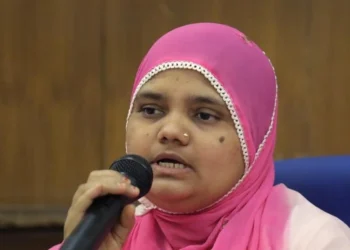
    The Supreme Court of India made a significant decision on Monday by quashing the Gujarat government’s move to grant remission and early release to 11 convicts in the Bilkis Bano rape case. The verdict was welcomed by various political figures, including Rahul Gandhi, who hailed it as a “victory of justice.”


    Rahul Gandhi expressed his views on the microblogging site X, stating, “The tendency to ‘kill justice’ for electoral gains is dangerous for the democratic system. Today the Supreme Court’s decision once again told the country who is the ‘patron of criminals’. Bilkis Bano’s tireless struggle is a symbol of the victory of justice against the arrogant BJP government.”


    Additionally, Priyanka Gandhi Vadra took to X to commend the Supreme Court’s decision, asserting that justice has ultimately prevailed. She remarked, “With this order, the veil over the anti-women policies of the Bharatiya Janata Party has been removed. After this, public confidence in the justice system will be further strengthened. Congratulations to Bilkis Bano for continuing her fight bravely.”


    The Supreme Court, in its ruling on Monday, declared the May 13, 2022 judgment of another bench null and void. This earlier decision had directed the Gujarat government to consider the remission applications of the 11 convicts in the Bilkis Bano gang-rape case and the murder of seven of her family members. The court stated that the judgment was obtained by “playing fraud on court.”


    In the May 13, 2022 verdict, a bench comprising Justices Ajay Rastogi (now retired) and Vikram Nath had instructed the Gujarat government to consider the plea of convict Radheshyam Shah for premature release based on its remission policy of July 9, 1992. The bench had held that the state where the offense occurred has the jurisdiction to decide the application.


    On Monday, the Supreme Court highlighted that Shah had initially approached the Gujarat High Court in 2019, seeking direction to consider his application for remission.


    The 11 convicts who were released prematurely included Bakabhai Vohania, Bipin Chandra Joshi, Kesarbhai Vohania, Govind Nai, Jaswant Nai, Mitesh Bhatt, Pradeep Mordhiya, Radheshyam Shah, Rajubhai Soni, Ramesh Chandana, and Shailesh Bhatt. All of them were granted remission by the Gujarat government and released on August 15, 2022.


    Apart from Bilkis Bano’s petition contesting the remission, several other PILs (Public Interest Litigations), including those filed by CPI(M) leader Subhashini Ali, independent journalist Revati Laul, and former vice-chancellor of Lucknow University Roop Rekha Verma, contested the relief. TMC leader Mahua Moitra also filed a PIL against the remission and premature release of the convicts.


    Bilkis Bano’s horrific experience unfolded when she was only 21 years old and five months pregnant. She was gang-raped while fleeing the communal riots, during which her three-year-old daughter was among seven family members killed. The decision to release the convicts prematurely sparked widespread concern and legal challenges, leading to the Supreme Court’s recent judgment overturning the Gujarat government’s move.


    The development underscores the ongoing struggle for justice and accountability in cases of sexual violence, prompting reflections on the larger issues surrounding women’s rights and the integrity of the justice system.

  • Ex-MLA Mewaram Jain Suspended Following Rape Allegations

    Ex-MLA Mewaram Jain Suspended Following Rape Allegations

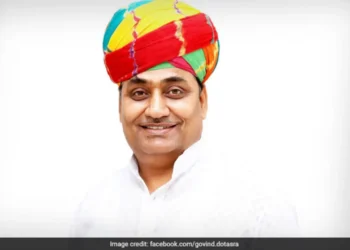
    In response to serious allegations of rape and molestation, the Rajasthan Congress has taken swift action by suspending former MLA Mewaram Jain from the primary membership of the party. The decision follows a case filed against Jain and eight others, including RPS officer Anand Singh Rajpurohit, by a woman who accused them of sexually assaulting her adolescent daughter two years ago. State Congress president Govind Singh Dotasra issued the suspension order, citing Jain’s involvement in “immoral activities” as a clear violation of party discipline.


    “Mewaram Jain, a former MLA from Barmer, has been suspended from the primary membership of the Congress with immediate effect in view of his involvement in immoral activities, which is a clear indication of a breach of discipline under the constitution of the Congress party,” stated Mr. Dotasra in the order.


    Mewaram Jain, a three-time Congress MLA from the Barmer constituency, faced defeat in the last election to BJP rebel Priyanka Choudhary. Notably, Jain has held the position of chairman of the Gau Seva Ayog. His political career has been marked by both successes and controversies, with explicit pictures/CDs of Jain surfacing over a year ago. At the time, Jain vehemently claimed that the materials were doctored and filed a case at the Kotwali Police Station in Barmer.


    The recent suspension from the Congress party comes in light of the grave accusations made against Jain and others in the rape case. A woman filed the case in December 2023, alleging that her daughter was subjected to sexual assault by nine individuals, including Jain and the RPS officer, two years ago. The suspension reflects the party’s commitment to maintaining a high standard of ethics and discipline among its members.


    In addition to the party’s disciplinary action, the zonal unit of the Enforcement Directorate in Jaipur has registered a case under the Prevention of Money Laundering Act (PMLA) in connection with the rape case. The investigation was initiated after it was revealed that an exchange of ₹5 crore had allegedly taken place in this context. This development suggests that the legal implications surrounding the case may extend beyond criminal charges to potential financial irregularities.


    The swift response from the Rajasthan Congress reflects the party’s commitment to taking a strong stand against any member accused of serious criminal offenses. By suspending Mewaram Jain from the primary membership, the party sends a message that it will not tolerate actions inconsistent with its values and principles. The decision also aligns with the broader societal call for accountability and justice in cases of sexual assault.


    The suspension comes at a time when the issue of crimes against women, especially cases of sexual assault, continues to be a matter of national concern. Political parties and institutions are increasingly under scrutiny for their responses to such allegations, and the Rajasthan Congress’s decisive action sets a precedent for addressing such matters within the political realm.


    As the legal proceedings unfold, the consequences for Mewaram Jain and others involved in the case will likely extend beyond political ramifications. The Enforcement Directorate’s involvement adds a financial dimension to the investigation, suggesting a comprehensive examination of the events surrounding the allegations.


    The suspension of Mewaram Jain from the Rajasthan Congress underscores the gravity of the charges brought against him and reflects the party’s commitment to ethical conduct and accountability. The case serves as a reminder that allegations of criminal behavior, especially those involving sexual assault, warrant thorough investigation and appropriate actions to ensure justice prevails.

  • Suspect Detained in Brutal Rape and Assault of 12-Year Girl

    Suspect Detained in Brutal Rape and Assault of 12-Year Girl

    In a significant development, the police in Ujjain, Madhya Pradesh, have detained a suspect in connection with the brutal rape and assault of a 12-year-old girl that occurred just four days ago. The incident had sent shockwaves throughout the region and led to widespread outrage.


    The suspect, identified as Bharat Soni, is an auto-rickshaw driver who was taken into custody along with three others. As per the police, Soni attempted to flee from authorities while being escorted to the crime scene for a reconstruction of the incident. During the escape attempt, both Soni and a police officer sustained injuries. However, he was subsequently apprehended and brought back into custody.


    Ujjain Superintendent of Police, Sachin Sharma, provided details about the case, stating, “There is an accused in the rape case. There is another auto driver against whom a case will be registered for not informing the police about the incident. When we were taking (the accused) for the recreation of the crime scene, the accused (Bharat Soni) tried to run away, during which he also got injured, and our police officer also got injured. They are being provided medical assistance.”


    He also emphasized that there had been attempts to spread a narrative that no one had come to the victim’s aid. However, the police investigation revealed that people had provided financial assistance to the victim, although more help could have been extended.


    The victim, who hails from Satna, had arrived in Ujjain after boarding an auto at Jeevan Kheri. The discovery of bloodstains on the passenger seat raised suspicions, leading to a forensic examination of the vehicle.


    The case gained widespread attention after a video surfaced on social media showing the injured and semi-naked girl walking the streets of Ujjain. This distressing footage triggered public outcry and demands for swift justice.


    Madhya Pradesh Chief Minister Shivraj Singh Chouhan expressed his resolve to ensure the strictest punishment for the accused, Bharat Soni. He stated, “He (accused Bharat Soni) will be given the strictest punishment. We will leave no stone unturned in getting him punished. Such criminals are not fit to be a part of society. He has injured the soul of Madhya Pradesh. She is my daughter, the daughter of Madhya Pradesh. We will care about her.”


    The incident has not only highlighted the urgent need for improved safety measures but has also galvanized public sentiment against such heinous crimes, demanding justice and accountability.

  • Rape Case quashed says says girl at 17 or 18 capable of ‘making conscious decision’

    Rape Case quashed says says girl at 17 or 18 capable of ‘making conscious decision’

    The Madhya Pradesh High Court has dismissed a rape case against a 30-year-old man, stating that the prosecutrix, an adolescent aged 17 or 18, is capable of making conscious decisions about her well-being. The court’s order, issued on July 12, took into account the development and maturity of an adolescent in that age group, concluding that there was no intention of wrongdoing in the case.


    According to the prosecution, the petitioner and the girl met on Facebook and subsequently communicated over the phone. In December 2020, the petitioner invited the prosecutrix to meet him at a hotel, where he allegedly sexually assaulted her and coerced her into intercourse. The man was also accused of threatening to release obscene pictures of her and falsely promising marriage, leading her to believe he was unmarried. In 2022, the man revealed that he was already married and could not marry her.


    Based on the prosecutrix’s complaint, an FIR was registered against the man. However, the court observed that the prosecutrix, being in the age group of 17 or 18, is capable of making conscious decisions regarding her well-being, and there was no intention to commit rape or harm on the petitioner’s part.


    The petitioner’s counsel argued that the FIR was false and filed after one year, and any intercourse that occurred was consensual. The prosecution opposed the petitioner’s plea, claiming that the case should not be quashed because the prosecutrix is a minor. Nonetheless, the court decided that proceeding with the case before the trial court would serve no purpose given the unique facts and circumstances. Ultimately, the court allowed the petitioner’s prayer and quashed the rape case against the accused.