Tag: Ram Manohar Lohia Hospital

  • NEET Man Poses as Doctor at Delhi Hospital, Arrested

    NEET Man Poses as Doctor at Delhi Hospital, Arrested

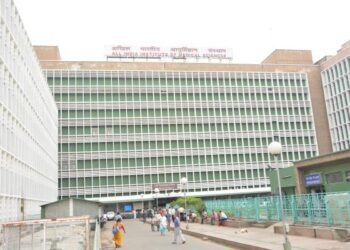
    A bizarre incident unfolded at Ram Manohar Lohia Hospital in central Delhi when a 24-year-old man, claiming to be a NEET aspirant, was apprehended for allegedly impersonating a doctor. Identified as Ashutosh Tripathi, a resident of Burari, the individual was found wandering inside the hospital premises adorned in a stethoscope and doctor’s apron, raising concerns among hospital staff. The situation came to a head when he was discovered in the emergency department on Tuesday, prompting hospital authorities to alert the police.


    Upon receiving the report, law enforcement officers swiftly intervened and detained the imposter. An FIR under section 170 (impersonating a public servant) of the Indian Penal Code was promptly registered at the North Avenue police station, following a complaint lodged by senior resident Rahul Dhamija from the department of surgery.


    Tripathi’s bewildering actions continued even during police interrogation. Initially, he claimed that he had been summoned by a friend to rendezvous at the hospital, although no such acquaintance materialized. Moreover, his assertions regarding his profession, occupation, and the supposed companion accompanying him were all debunked upon investigation.


    Authorities suspect foul play, with indications pointing towards the individual’s ulterior motive of theft. Despite his penchant for masquerading as a doctor, Tripathi failed to account for the origin of the doctor’s apparel and medical paraphernalia he was found with, further casting doubt on his intentions.


    During questioning by hospital personnel, Tripathi initially asserted his status as a qualified doctor before subsequently modifying his statement to identify himself as a medical student. Ultimately, he disclosed that he was diligently preparing for the NEET entrance examination, having appeared for the test the previous year without success.


    The incident has left authorities and hospital staff perplexed, highlighting the need for heightened vigilance and security measures to prevent such occurrences in the future. While the individual’s true intentions remain shrouded in ambiguity, the swift action taken by hospital authorities and law enforcement serves as a testament to their commitment to safeguarding public safety and maintaining the integrity of healthcare institutions.

  • Delhi Hospitals, Including AIIMS, Seek Over ₹9,000 Crore

    Delhi Hospitals, Including AIIMS, Seek Over ₹9,000 Crore

    The All India Institute of Medical Sciences (AIIMS) Delhi and three other centrally run hospitals in the national capital, including Safdarjung Hospital, Ram Manohar Lohia Hospital, and Lady Hardinge Medical College, have collectively sought a budget outlay of over ₹9,000 crore in the upcoming interim budget. The request comes as these hospitals anticipate an overall jump in allocation of around 13% compared to the previous Union budget.


    AIIMS Delhi:

    AIIMS Delhi, being a premier institute, has sought a budgetary allocation of ₹4,450 crore, reflecting a 7% increase from the previous year’s allocation. In the 2023-24 Union budget, the hospital was allocated ₹4,134 crore, of which it has received ₹3,720 crore. The increased budget expectations are attributed to the need for funding expansion programs, including the maintenance of new buildings, and covering salaries, especially for those appointed on a contractual basis.


    As an autonomous institute, AIIMS Delhi receives a separate budget, which is typically higher than those of other centrally run hospitals. The hospital administration emphasizes the importance of maintaining existing infrastructure while accommodating expansion initiatives.


    Safdarjung Hospital:

    Safdarjung Hospital has demanded a budget of around ₹2,200 crore, reflecting an 18% increase from the previous year’s allocation of ₹1,853 crore. The hospital plays a crucial role in the efforts to reduce the burden on AIIMS Delhi. The Union Health and Family Welfare Ministry have been actively working to elevate the status of Safdarjung Hospital and introduce additional departments, with a particular focus on women’s health.


    Safdarjung Hospital has been expanding its gynecology department and introducing specialized women’s OPDs (out-patient departments). In addition to routine and selective surgeries, OPD services, and super-specialty care, the hospital also provides free Ayurvedic OPD and Homeopathic OPD within its premises.


    Ram Manohar Lohia Hospital:

    Ram Manohar Lohia Hospital has submitted an expectation of nearly ₹1,600 crore, marking a 25% increase from the previous year’s allocation of ₹1,272 crore. The hospital, which has a nursing home for central government employees and members of parliament, serves as a training center for undergraduate students of Lady Hardinge Medical College.


    The increased budget is essential for supporting the hospital’s expansion plans and ensuring timely salary payments. Ram Manohar Lohia Hospital emphasizes its commitment to providing comprehensive healthcare services while maintaining its role as a training center for medical education.


    Lady Hardinge Medical College:

    Lady Hardinge Medical College has requested a budget of ₹825 crore, representing a 7% increase from the previous year’s allocation of ₹768 crore. The institute, which provides undergraduate medical education for women and postgraduate medical education for both men and women, focuses on medical care for women and children.


    A significant portion of the budget demand is allocated for timely salary payments of outsourced staff and the clearance of allowances. Lady Hardinge Medical College faces challenges related to manpower shortage for proper functioning, making the higher budget allocation crucial for addressing these issues.


    The higher budget outlays requested by these hospitals are aimed at funding expansion plans, maintaining existing infrastructure, and ensuring timely salary payments to support their critical roles in healthcare and medical education. The hospitals play pivotal roles in serving the healthcare needs of the community while contributing to medical education and training. As the national capital’s healthcare institutions, their budget allocations hold significance in providing quality healthcare services and fostering medical education in the region.

  • Indian Army Deploys Medical Teams for G-20 Summit in Delhi

    Indian Army Deploys Medical Teams for G-20 Summit in Delhi

    In anticipation of the upcoming G-20 Summit in the national capital, the Indian Army has taken proactive measures to ensure the availability of medical teams and resources to handle potential emergencies. The Indian Army has deployed Quick Reaction Medical Teams, consisting of doctors and paramedical staff, to four major hospitals in Delhi. These hospitals include All India Institute of Medical Sciences (AIIMS), Safdarjung Hospital, Ram Manohar Lohia Hospital, and Army Research and Referral Hospital.


    These fully equipped medical teams are prepared to respond to various medical emergencies and are complemented by specialist Corps of Engineers units, ready to address any unforeseen situations. Additionally, Army Research and Referral Hospital has been placed on standby to provide support if required.


    According to senior officials from AIIMS Trauma Centre, the Army medical teams have been deployed with a specific focus on addressing Chemical, Biological, Radiation, and Nuclear (CBRN) disasters. Training for doctors at various hospitals, including AIIMS Trauma Centre, Safdarjung Hospital, and Ram Manohar Lohia Hospital, commenced on September 4.


    An official from AIIMS Trauma Centre confirmed the presence of a team of 25 Army doctors, which includes both senior and junior medical professionals, ready to provide critical medical assistance during the G-20 Summit.


    While the hospitals, including AIIMS, RML, Safdarjung, and Lady Hardinge, are on high alert to manage medical emergencies, it’s important to note that this heightened state of readiness will not disrupt regular medical services for outpatients and other patient care activities.


    Special Standard Operating Procedures (SOPs) have been put in place at the hospitals to effectively handle various medical emergencies, including the management of chemical disasters.


    Dr. Ajay Shukla, Director and Medical Superintendent of RML Hospital, explained, “We have a deployment of Army doctors and Army personnel for first aid and decontamination, they will remain in the hospital till September 12.”


    In addition to medical support within hospitals, extensive arrangements have been made for the safety and well-being of attendees and the public during the G-20 Summit. These include the deployment of advanced life support (ALS) systems and ambulance services to accompany VIP convoys, ensuring swift medical assistance if needed.


    The G-20 Summit is scheduled to take place from September 9 to 10 at the newly constructed international convention and exhibition center, Bharat Mandapam, located at Pragati Maidan in Delhi. This global event is expected to bring together more than 30 heads of state, top officials from the European Union and invited guest countries, and 14 heads of international organizations.


    The Indian Army’s deployment of medical teams and the establishment of comprehensive medical response protocols underscore the commitment to ensuring a safe and secure environment during the G-20 Summit in Delhi. These measures demonstrate the readiness to address potential health-related challenges and emergencies that may arise during the event.