Tag: Putin

  • Insights from Putin: Russia’s Preference for Biden

    Insights from Putin: Russia’s Preference for Biden

    Russian President Vladimir Putin has made headlines with his recent statement expressing a preference for Joe Biden winning a second term over Donald Trump. In an interview with a correspondent of Russian state television, Putin characterized Biden as more experienced and predictable, stating that while Russia would work with any US leader elected by the American people, Biden would be their preferred choice.


    Regarding speculation about Biden’s health, Putin declined to comment, stating that he is not a doctor. This comes amid ongoing concerns and discussions about Biden’s age and memory, which his team has sought to address and dismiss. Putin noted that such discussions often intensify during election campaigns, as seen in the US.


    Putin recalled his meeting with Biden in Switzerland in June 2021, where rumors about Biden’s health were circulating. However, Putin stated that he saw no signs of incapacity in the American president and dismissed the concerns as unfounded.


    Regarding Biden’s administration policy, Putin criticized it, particularly concerning Russia-West relations, which he views as flawed even if he gave preference to Biden over Trump. Tensions escalated significantly after Russia’s incursion into Ukraine in February 2022, with Putin justifying the move as necessary to protect Russian speakers and prevent perceived threats to Russia’s security posed by Ukraine’s NATO aspirations.


    Responding to Trump’s recent statement about allowing Russia leeway with NATO member nations, Putin stated that it is up to the US to determine its role in the alliance. Trump’s remarks, which contrasted sharply with Biden’s commitment to defend every inch of NATO territory, drew reactions from European allies, who pledged to bolster their security and defense capabilities.


    Putin described NATO as a tool of US foreign policy and suggested that if the US no longer sees a need for it, it should decide accordingly. He noted Trump’s previous efforts to pressure NATO allies to increase defense spending, reflecting differing views on the alliance’s purpose and responsibilities.


    Reflecting on his recent interview with Tucker Carlson, Putin expressed surprise at Carlson’s approach, expecting him to be more aggressive. Putin used the interview to push his narrative on the conflict in Ukraine and urge Washington to recognize Moscow’s interests. However, Carlson did not address allegations of war crimes or Putin’s crackdown on dissent, leading Putin to describe him as a “dangerous man.”


    Overall, Putin’s remarks offer insight into Russia’s perspective on US leadership, international relations, and ongoing conflicts, while also highlighting the complexities and nuances of geopolitical dynamics.

  • Putin Criticizes Europe for “Russophobia”

    Putin Criticizes Europe for “Russophobia”

    Russian President Vladimir Putin’s recent criticisms of Europe for alleged “Russophobia” and accusations against the Baltic States for human rights abuses have further heightened tensions between Russia and Western nations. The remarks were made during the inauguration of a World War II memorial, where Putin consistently drew parallels between Russia’s current situation and the struggle against the Nazis.


    In his speech, Putin targeted Ukraine, accusing the regime in Kyiv of exalting Hitler’s accomplices, particularly the SS men. He claimed that Russophobia is being promoted as state policy in some European countries. These comments come in the context of Russia’s deployment of troops into Ukraine nearly two years ago, with Putin using historical references to unify the Russian nation behind its actions.


    “The Germans’ aims then were to steal the Soviet Union’s resources and eliminate its people,” Putin asserted during the commemoration of the 80th anniversary of the conclusion of the Nazi siege in the Leningrad region. Ukraine, having suffered significant devastation from Hitler’s forces during World War II, rejects these comparisons and views them as unfounded pretexts for Russia’s aggression.


    Putin’s criticism extended to the Baltic States – Estonia, Latvia, and Lithuania – which were once part of the Soviet Union and are now part of the European Union and NATO. The Baltic States have been vocal critics of Russia’s invasion of Ukraine, and Moscow has accused them of xenophobia and mistreatment of Russian minorities.


    “In the Baltic states, tens of thousands of people are declared subhuman, deprived of their most basic rights, and subjected to persecution,” Putin claimed, referring to migration crackdowns in the region.


    These statements have added fuel to the already strained relations between Russia and Western nations. The ongoing conflict in Ukraine, accusations of interference in other countries’ affairs, and human rights concerns have contributed to a deteriorating geopolitical environment.


    Putin’s use of historical references, particularly the comparison to the struggle against the Nazis, serves as a narrative to justify Russia’s actions, both domestically and internationally. By portraying Russia as a victim of Russophobia and drawing parallels with historical enemies, Putin seeks to rally domestic support and present his government as a defender of national interests.


    The accusations against the Baltic States are part of a broader pattern where Russia portrays itself as a protector of Russian minorities abroad. This narrative aligns with Moscow’s geopolitical strategy, justifying interventions or actions in neighboring countries by claiming to safeguard the rights of Russian-speaking populations. The Baltic States, being part of NATO and the European Union, have been at odds with Russia over its actions in the region.


    The international community, particularly Western nations, has often criticized Russia for its human rights record, including issues related to freedom of speech, political opposition, and treatment of minorities. Putin’s counter-accusations against European countries and the Baltic States are seen as attempts to deflect attention from internal challenges and portray Russia as a victim rather than an aggressor.


    As tensions persist, the comments made by Putin are likely to further strain diplomatic relations and complicate efforts to find peaceful solutions to ongoing conflicts. The use of historical narratives and accusations of Russophobia contribute to a narrative that justifies Russia’s actions in the eyes of its domestic audience but widens the gap between Russia and the international community.


    In this geopolitical landscape, finding common ground and fostering dialogue becomes increasingly challenging. The consequences of these tensions extend beyond regional conflicts, affecting global stability and cooperation. As leaders navigate these complex dynamics, efforts to de-escalate conflicts and promote understanding will be crucial in preventing further deterioration of international relations.

  • Farewell Service Held for Chief Yevgeny Prigozhin

    Farewell Service Held for Chief Yevgeny Prigozhin

    A farewell service has been held for Yevgeny Prigozhin, the Russian mercenary chief, who lost his life in a plane crash recently, according to a report by the news agency AP. The service took place in Prigozhin’s hometown of St. Petersburg and was open for those who wished to pay their respects at the Porokhovskoye cemetery.


    Notably, Russian President Vladimir Putin did not plan to attend Prigozhin’s funeral, as confirmed by the Kremlin. Prigozhin, aged 62, had previously challenged Putin’s authority through an armed rebellion in June. Prigozhin was known for his involvement in leading Wagner forces in Ukraine, and he was awarded Russia’s highest honor for his role in these activities.


    Last week, Putin acknowledged the contribution of Wagner leaders to the conflict in Ukraine, describing Prigozhin as both a “talented businessman” and a “man of difficult fate” who had made significant mistakes in his life.


    The official confirmation of Prigozhin’s death came from Russia’s top criminal investigation agency, the Investigative Committee. The plane crash occurred when Prigozhin’s business jet crashed shortly after takeoff from Moscow to St. Petersburg on August 23. The crash claimed the lives of several individuals, including Valery Chekalov, Wagner’s logistics chief, and Dmitry Utkin, Prigozhin’s second-in-command, who was also among the casualties.


    Prigozhin’s death followed his role in an armed rebellion against the Russian military leadership, where he ordered his mercenaries to seize the military headquarters in Rostov-on-Don and initiated a march toward Moscow.


    The plane crash and Prigozhin’s demise occurred just two months after his rebellion against the Russian military leadership, marking a significant turn of events in the realm of Russian mercenary activities. A Farewell service has will be organized as a mark of respect.

  • Elon Musk Raises Speculation on Wagner Chief’s Death

    Elon Musk Raises Speculation on Wagner Chief’s Death

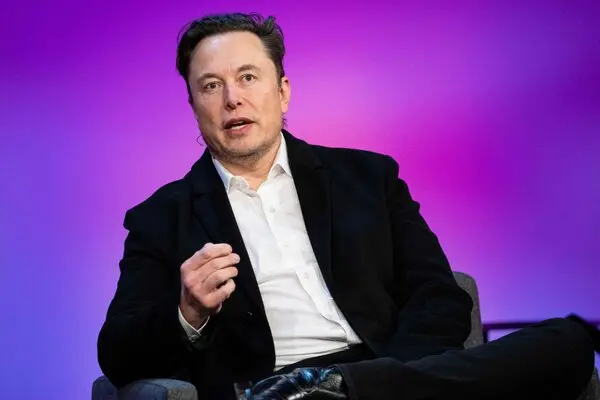
    Elon Musk, the outspoken entrepreneur and CEO of various high-profile companies, has once again made headlines with his comments, this time regarding the death of Wagner chief Yevgeny Prigozhin in a plane crash. On the microblogging site ‘X’ (formerly known as Twitter), Musk stated, “Longer than I expected. Slight chance this is a psy op” in response to the discussion surrounding Prigozhin’s demise.


    Prigozhin’s reported death in the plane crash has raised several questions and left many loopholes. The circumstances surrounding the accident remain unknown, leading experts to speculate about the potential reasons behind it. Many believe that Prigozhin’s death might be linked to President Vladimir Putin’s desire for vengeance after Prigozhin’s short-lived rebellion in June.


    Musk’s statement seems to align with the opinions of experts who suggest that Prigozhin’s death might have been a consequence of challenging Putin’s authority. The notion of a “psy op” mentioned by Musk adds another layer of intrigue to the situation. “Psy op” refers to psychological operations, which involve conveying selective information to influence the mindset and behavior of various entities, including governments and organizations.


    Musk’s response was triggered by a user’s post that remarked, “That didn’t take too long.” This comment suggests that Prigozhin’s fate was perhaps anticipated due to his defiance against the Kremlin.


    Known for his willingness to voice opinions on controversial events, Musk’s remark about the Wagner chief’s death aligns with the prevailing theory among experts and western think tanks. Many believe that the plane crash was, in fact, an assassination orchestrated to avenge Prigozhin’s mutiny against Putin’s authority.


    The circumstances around Putin’s silence regarding the incident further contribute to the speculation. Prigozhin had led a rebellion in June against the Kremlin’s military leadership, attempting to topple its authority. His death occurred when the private plane he was on crashed while traveling between Moscow and Saint Petersburg.


    As Russian authorities have not provided an official cause for the crash, numerous questions and assumptions remain unanswered. The incident highlights Putin’s history of dealing with opponents and his regime’s tightening control, raising concerns about the Kremlin’s involvement in Prigozhin’s demise. While rescuers found 10 bodies and sources within the Wagner group indicated Prigozhin’s death, official confirmation is yet to be provided.