Tag: Punjab Governor

  • Punjab Governor Banwarilal Purohit Resigns

    Punjab Governor Banwarilal Purohit Resigns

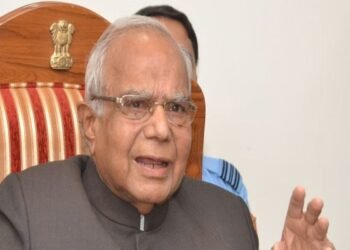
    Banwarilal Purohit, serving as the Punjab Governor and Chandigarh Administrator, tendered his resignation on Saturday, citing “personal reasons.” The unexpected development comes in the midst of political upheaval following the BJP’s victory in the Chandigarh mayoral polls, a day after Purohit’s meeting with Union Home Minister Amit Shah.


    In his resignation letter, Purohit expressed, “Due to my personal reasons and certain other commitments, I tender my resignation from the post of governor of Punjab and Administrator, Union Territory, Chandigarh. Please accept the same and oblige.”


    Political Backdrop: BJP Triumph and Allegations

    Purohit’s resignation closely follows the BJP’s significant success in the Chandigarh mayoral polls, securing all three posts. This victory dealt a blow to the Congress-Aam Aadmi Party (AAP) alliance, leading to allegations of ballot paper tampering from the opposition, despite the BJP’s electoral triumph.


    The legal battle intensified when a division bench of the Punjab and Haryana High Court denied interim relief to the AAP, which had sought fresh polls under the supervision of a retired judge. Subsequently, the Supreme Court on Friday agreed to consider the plea of an AAP councillor, seeking an urgent hearing challenging the high court order.


    Meeting with Amit Shah and Political Strife

    Purohit’s resignation comes a day after his meeting with Union Home Minister Amit Shah in Delhi. The timing of the resignation raises questions about its connection to the political dynamics, especially given the ongoing tensions and legal disputes surrounding the mayoral polls.


    The BJP’s sweeping victory in Chandigarh had political ramifications, with the Congress-AAP alliance raising concerns about the integrity of the electoral process. The opposition’s accusations of ballot paper tampering have added a layer of complexity to the post-poll scenario.


    Past Strife with Punjab Chief Minister Bhagwant Mann

    Banwarilal Purohit had previously been at odds with Punjab Chief Minister Bhagwant Mann over various issues. The friction between the two had been a source of contention, and Purohit’s resignation may contribute to the evolving political landscape in the region.


    As the political scenario in Punjab and Chandigarh remains fluid, Purohit’s resignation adds another dimension to the ongoing developments. The aftermath of the mayoral polls and the legal challenges faced by the electoral process continue to shape the political narrative, leaving room for further scrutiny and analysis.

  • Punjab Governor: Halts Tomato Consumption in Raj Bhawan

    Punjab Governor: Halts Tomato Consumption in Raj Bhawan

    In a heartfelt gesture of solidarity with the citizens who are grappling with the soaring prices of tomatoes, Punjab Governor Banwarilal Purohit has taken a significant step by temporarily halting tomato consumption in Raj Bhawan. As an administrator of the Union Territory of Chandigarh, he expressed genuine concern and empathy for the difficulties faced by the public due to the unprecedented escalation in tomato costs.


    The governor’s office released a statement highlighting the underlying factors contributing to the surge in tomato prices, including supply chain disruptions, adverse climatic conditions, and other market dynamics. Wholesale traders have reported that tomatoes are currently selling at a rate of more than ₹200 per kilogram, with predictions that prices may touch ₹300 per kilogram in the near future.


    Governor Purohit firmly believes that by reducing or stopping tomato consumption, demand will automatically decrease, which may potentially lead to a decline in prices. He urges people to use alternatives in their households temporarily to curtail the surge in tomato prices.


    While the suspension of tomato consumption in Raj Bhawan may be seen as symbolic, it carries a powerful message about the significance of empathy, frugality, and responsible use of resources during these challenging times. The governor’s action serves as a reminder to all citizens about the need to use resources wisely and come together in times of crisis.


    It is worth noting that tomato prices have been under pressure for over a month, primarily due to supply disruptions caused by heavy rainfall in key producing regions. As a result, even major retailers like Mother Dairy in Delhi have started selling tomatoes at a staggering ₹259 per kilogram through their Safal retail stores.


    Governor Purohit’s act sets an inspiring example of mindful consumption and calls for collective efforts in navigating through the difficulties posed by the surge in tomato prices. It emphasizes the importance of standing in solidarity with fellow citizens and making conscious choices to address the challenges arising from the current situation.


    Though the suspension of tomato consumption in Raj Bhawan may not directly impact prices on a large scale, it serves as a symbolic gesture of empathy and solidarity. Governor Purohit’s move resonates with the values of responsible citizenship, reminding everyone of the importance of coming together and supporting one another during these challenging times.

  • Special Assembly Session Debate : Punjab Governor and CM

    Special Assembly Session Debate : Punjab Governor and CM

    In the wake of Punjab Governor Banwarilal Purohit expressing concerns over the legality of a special Assembly session held last month, Chief Minister Bhagwant Mann took issue with the governor’s uncertainty, deeming it “very unfortunate.” Chief Minister Mann reminded everyone that during the tenure of the previous Amarinder Singh government, the Assembly session had been called twice without seeking the governor’s permission, as the session had not been prorogued. He emphasized that the recent special session had been carefully convened after consulting constitutional experts to ensure its legitimacy. However, Governor Purohit’s letter casting doubts on the legality of the session and the Bills passed during that period left Chief Minister Mann disheartened, as he criticized the governor’s lack of clarity and expressed concerns about potential legal complications.


    Among the crucial Bills passed during the June 20-21 session was the Sikh Gurdwaras (Amendment) Bill, 2023, designed to secure a free-to-air telecast of Gurbani from the revered Golden Temple in Amritsar. This move aimed to enable widespread access to the sacred Sikh religious hymns for the benefit of devotees. However, the issue of live broadcasting of Gurbani has become a contentious point of disagreement between the AAP-led state government and the Shiromani Gurdwara Parbandhak Committee (SGPC). While Chief Minister Mann advocates for the free telecast of Gurbani on all television channels, the SGPC firmly believes that the broadcast rights should be exclusively reserved for the apex Sikh body.


    As the debate continues, the state government and the SGPC are locked in a dispute over the ownership and control of the telecast rights, with both sides steadfast in their positions. The matter raises important questions about religious representation, media access, and the preservation of cultural heritage. The clash between the two parties underscores the complexities of managing religious affairs within the realm of governance and the delicate balance between upholding religious traditions and ensuring accessibility for the wider public.


    With both the Punjab Governor and Chief Minister Mann expressing their viewpoints, the situation remains under scrutiny, and the fate of the Bills passed during the special Assembly session remains uncertain until a resolution is reached. The unfolding events warrant careful examination to ensure the protection of constitutional principles while respecting the religious sentiments of the Sikh community. As the stakeholders engage in ongoing discussions, finding common ground will be paramount to upholding democratic values and preserving the rich tapestry of India’s cultural diversity.