Tag: Pollution

  • Audit Reveals Slow Progress in Vehicle Scrappage Policy

    Audit Reveals Slow Progress in Vehicle Scrappage Policy

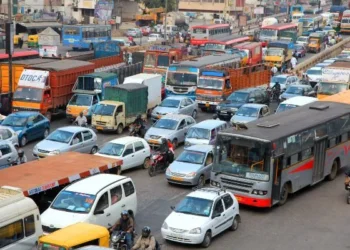
    Due to recent concerns over environmental pollution and road safety, the Union government of India announced a vehicle scrappage policy in 2021 with the aim of phasing out old and polluting vehicles. However, an internal audit conducted by the government has revealed that states have made little progress in implementing this policy, leading to its stalling and hindering efforts to curb pollution and enhance road safety.


    The audit report, shared with senior cabinet ministers, highlights the lack of traction gained by the vehicle scrappage policy. Despite its noble intentions, many vehicle owners continue to operate their old and polluting vehicles beyond the end of the registration period, opting to resell them rather than scrapping them. This practice has been observed particularly in rural areas.


    Among the key findings of the audit report is the limited progress made by states in implementing the policy. Only a few states have taken concrete steps, such as setting up automated testing stations (ATS) and registered vehicle scrapping facilities (RVSF), and instituting incentives and disincentives for vehicle users. Shockingly, seven out of the 16 states analyzed, including Delhi, have shown no progress in implementing the policy, while the progress of others has been deemed inadequate.


    One of the key components of the vehicle scrappage policy was the establishment of ATSs through the public-private partnership (PPP) route, as well as the promotion of RVSFs across the country. However, the audit found that several states, including Maharashtra, West Bengal, Delhi, Haryana, Odisha, Karnataka, and Punjab, have repeatedly extended tenders for ATSs, indicating a lack of progress in this aspect. Additionally, states like Telangana and Tamil Nadu have made no progress in this regard at all.


    Furthermore, the audit report revealed that several states, including Maharashtra, Kerala, Delhi, Andhra Pradesh, Tamil Nadu, Telangana, and Gujarat, have made no progress in providing waivers on registration fees and offering motor vehicle tax rebates to individuals scrapping their vehicles. In fact, Delhi has not even announced any motor vehicle tax concessions for its citizens.


    Despite the policy’s objectives, only around 52,000 vehicles have been scrapped since its announcement, with the majority being government vehicles. This figure pales in comparison to the over 4 million cars sold in India in 2023 alone, indicating a significant gap between the policy’s goals and its actual implementation.


    To address the challenges highlighted in the audit report, several remedial measures have been suggested. One recommendation is to simplify the rules governing ATSs and RVSFs to expedite their establishment and operation. Additionally, there is a proposal to collaborate with automakers to offer discounts to individuals scrapping their vehicles, thereby incentivizing compliance with the policy.


    The vehicle scrappage policy, launched in August 2021 by Prime Minister Narendra Modi, aimed to achieve multiple objectives. Firstly, it sought to reduce pollution by phasing out unfit vehicles from the roads. Secondly, it aimed to improve road safety by replacing old vehicles with newer, safer models. Finally, the policy aimed to enhance the national fuel efficiency of vehicles, contributing to India’s broader environmental goals.


    The policy outlined various incentives to encourage vehicle owners to scrap their old vehicles, including waivers on registration fees for new vehicles, rebates on motor vehicle tax, and higher fees for fitness testing certificates for vehicles older than 15 years. However, the slow progress in policy implementation has hampered the realization of these objectives.


    In addition to its environmental and road safety benefits, the successful implementation of the vehicle scrappage policy has the potential to boost the automotive sector. By phasing out old vehicles and encouraging the purchase of new ones, the policy could stimulate demand for automobiles, creating new job opportunities and formalizing the informal scrappage industry.


    The internal audit conducted by the Union government has revealed significant challenges in the implementation of the vehicle scrappage policy across states in India. To address these challenges and realize the policy’s objectives, concerted efforts are needed from both the central and state governments, as well as collaboration with key stakeholders in the automotive industry. Only through effective implementation can India successfully phase out old, polluting vehicles and pave the way for a cleaner, safer transportation system.

  • Delhi’s AQI of 364, Air Quality in “Very Poor” Category

    Delhi’s AQI of 364, Air Quality in “Very Poor” Category

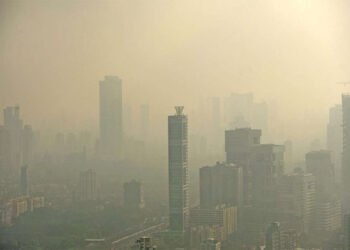
    Delhi, the capital city of India, is currently grappling with a combination of dense fog and high levels of air pollution, posing challenges for residents and authorities. As of 6:00 am on Wednesday, the Air Quality Index (AQI) in Delhi stood at 364, categorizing it as “Very Poor,” according to data from the Central Pollution Control Board (CPCB). This places Delhi in the second position among the top 10 most polluted cities in India.


    The persistent weather conditions, marked by dense fog, have significantly reduced visibility in the region, impacting daily activities and transportation. The Indian Meteorological Department (IMD) reported a minimum temperature of 8.7 degrees Celsius and a maximum temperature of 21.4 degrees Celsius in Delhi. The weather forecast for the day includes a cloudy sky with dense fog in the morning, and the city is expected to experience rain with thundershowers. Gusty winds of around 30-40 km per hour are also predicted during the evening hours.


    Various locations across Delhi have reported varying levels of air quality, with Nehru Nagar recording the worst air quality with an AQI of 445, classified as “Severe.” In contrast, Lodhi Road exhibited better air quality, with an AQI of 295 falling into the “Poor” category.


    The deteriorating air quality in Delhi is not only a result of atmospheric conditions but also the impact of various pollution sources. The city has been struggling with air pollution, especially during the winter months, when factors like stubble burning, vehicular emissions, and industrial activities contribute to the deterioration of air quality.


    In the broader National Capital Region (NCR), which includes satellite cities like Noida, Greater Noida, Ghaziabad, Faridabad, and Gurugram, varying AQI levels have been reported. Noida recorded an AQI of 346, Greater Noida 408, Ghaziabad 296, Faridabad 305, and Gurugram 282.


    The combination of cold weather and persistent pollution has raised health concerns, particularly for vulnerable populations such as children and individuals with respiratory conditions like asthma. Dr. Suresh Kumar, the Medical Director of Loknayak Jai Prakash Hospital, noted an increase in cases of chest infections and pneumonia, particularly among children and the elderly, during this winter season.


    In response to the challenging air quality conditions, the CPCB and other authorities have been closely monitoring the situation. On Monday, the sub-committee for the operationalization of the Graded Response Action Plan (GRAP) convened an emergency meeting. It was decided that if the AQI breaches the 400 mark, restrictions under Stage III of GRAP would be invoked to control air pollution. However, the central government opted against implementing these measures, considering the projected short duration of the dip in air quality, as indicated by the IMD and the Indian Institute of Tropical Meteorology (IITM).


    The citizens of Delhi have been advised to take precautions, such as using face masks and minimizing outdoor activities, especially during periods of dense fog and high pollution levels. The situation highlights the ongoing challenge of managing air quality in Delhi and the need for comprehensive measures to address pollution sources and improve overall environmental conditions in the region.


    As the day progresses, the anticipated rain and thundershowers may provide temporary relief, but addressing the underlying causes of air pollution remains crucial for the long-term well-being of Delhi’s residents. The government and relevant authorities continue to work on strategies and policies to tackle the complex issue of air pollution and create a healthier living environment for the people of Delhi.

  • Bombay High Court Restricts Diwali Firecrackers to 3 Hours

    Bombay High Court Restricts Diwali Firecrackers to 3 Hours

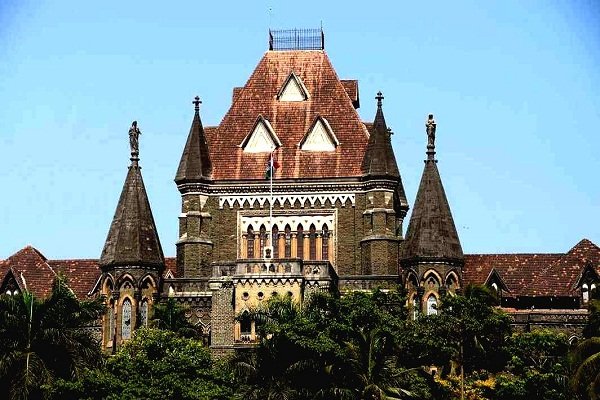
    In a move to combat worsening air pollution and address the declining air quality in Mumbai, the Bombay High Court issued a series of directions. The High Court permitted the bursting of firecrackers during a restricted window of 3 hours on Diwali, from 7 pm to 10 pm. Additionally, all construction activities within the capital city of Maharashtra were ordered to be halted until Diwali.


    The decision was taken by a division bench of Chief Justice Devendra Kumar Upadhyaya and Justice Girish Kulkarni during a Suo Motu Public Interest Litigation focusing on the deteriorating air quality in Mumbai. The High Court emphasized the need for immediate measures to tackle the rising air pollution and suggested that the state government needed to make a crucial choice.


    “We have to make a choice. Either we have a disease-free environment or we burn firecrackers and celebrate the festival. The state government will have to take a call. We cannot even walk on the footpath…With the entire city being affected in this manner, the state government will have to take a decision. We can’t depend only on nature,” the Bombay High Court remarked, as quoted by Livelaw.


    Concerns have been mounting over the deteriorating Air Quality Index (AQI) in Mumbai. The Maharashtra Pollution Control Board (MPCB) had previously issued directives to companies such as Hindustan Petroleum Corporation Limited (HPCL), Tata Power, and others, requiring them to reduce their production by 50 percent with the aim of curbing pollution.


    Furthermore, the Bombay High Court indicated that it would contemplate the possibility of banning the transportation of construction materials. The judges of the Bombay HC bench stated, “On the next date (Friday), if the air quality is not reduced, the court may consider banning construction materials from going in and out,” as reported by Livelaw.


    This series of measures aims to mitigate the adverse effects of air pollution in Mumbai, particularly during the festive season, and promote a healthier and cleaner environment for the city’s residents.

  • Delhi Air Quality Deteriorates, Registers ‘Very Poor’ AQI

    Delhi Air Quality Deteriorates, Registers ‘Very Poor’ AQI

    The air quality in Delhi worsened on Saturday morning, with the Air Quality Index (AQI) registering around 286 at 6:30 am, according to data from monitoring agencies. This decline in air quality is a cause for concern for Delhi residents, as it indicates higher levels of air pollution and poses health risks.


    Noida, a neighboring city, also reported an average AQI above 300, signifying very poor air quality. Several other cities in the region, including Rohtak, Karnal, Ghaziabad, Gurugram, and Faridabad, also experienced ‘very poor’ air quality, with AQI values exceeding 300.


    The Air Quality Index (AQI) is a tool designed to effectively communicate air quality status to the public. It categorizes air quality into six levels, ranging from “good” to “severe,” based on the level of pollutants in the air.


    Environmentalists have been stressing the need for immediate measures to combat air pollution in Delhi. Among the suggested measures are improvements in public transport facilities, the use of smog guns at construction sites, and strengthening institutions like the Delhi Pollution Control Committee (DPCC).


    Bhavreen Kandhari, an environmentalist, emphasized the importance of consistent efforts to address pollution sources and implement systemic changes. While measures like smog towers and smog guns are beneficial, she suggested that they should be mandatory equipment at construction sites throughout the year to address pollution effectively.


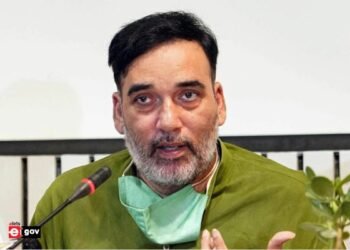
    Delhi’s Environment Minister, Gopal Rai, announced the implementation of a 15-point winter action plan to combat pollution. This comprehensive plan aims to address various sources of pollution, including vehicle emissions, biomass burning, and dust. Initiatives such as the ‘Red Light on, Gaadi off’ campaign have been introduced to reduce pollution caused by idling vehicles at traffic signals.


    As air quality remains a significant concern for Delhi residents, both environmentalists and government authorities are actively working to create a cleaner and healthier environment for the city’s inhabitants. Addressing air pollution is crucial for the well-being of the population and the overall quality of life in the national capital.

  • Delhi Environment Minister Urges Officials Attendance

    Delhi Environment Minister Urges Officials Attendance

    The air quality in the Delhi-NCR region has deteriorated to the ‘Very Poor’ category, with the air quality index (AQI) surpassing 300 in multiple areas. In light of the worsening pollution, Delhi Environment Minister Gopal Rai has written a letter to Chief Minister Arvind Kejriwal regarding the absence of Delhi’s officials at a crucial meeting addressing the rising pollution levels.


    In his letter, Minister Rai implores Chief Minister Kejriwal to appoint officers who are sensitive to the issue of air pollution. He emphasizes the need for an immediate meeting of the National Capital Civil Service Authority (NCCSA) to tackle the issue. The NCCSA is responsible for service matters, including transfers, postings, and disciplinary actions.


    Minister Rai expressed his concern over the absence of key officials, including A K Singh, Principal Secretary of the Environment Department; Ashwani Kumar, DPCC Chairman and Principal Secretary of the Revenue Department; and Ashish Kundra, Transport Commissioner, at the crucial meeting. Their absence, according to Rai, hindered the decision-making process and the implementation of essential measures.


    He concludes his letter by requesting the prompt convening of an NCCSA meeting to appoint officers who are committed to addressing pollution issues effectively.


    Earlier in the day, after a meeting with relevant departments, Minister Rai expressed disappointment over the non-attendance of department heads and the lack of awareness among senior officials regarding the deteriorating air quality and the measures their departments are taking to combat pollution.


    The deteriorating air quality in Delhi-NCR has prompted authorities to issue an advisory, urging vulnerable groups such as the elderly and children to stay indoors. The advisory cautions against prolonged or intense physical exertion and recommends opting for short walks instead of strenuous activities. It advises individuals to halt any activity if they experience unusual symptoms like coughing, chest discomfort, wheezing, breathing difficulties, or fatigue.


    The government is actively addressing the air pollution issue, and calls for greater cooperation among officials to mitigate its impact on the region’s residents.