Tag: political coalition

  • Pakistan Election 2024: Uncertainty Looms over Coalition

    Pakistan Election 2024: Uncertainty Looms over Coalition

    As Pakistan eagerly awaits the final results of the 2024 general elections, the political landscape is rife with uncertainty and speculation. While the Pakistan Election Commission is yet to announce the official outcome, unofficial trends reported by the media have triggered a flurry of activity among political parties, particularly regarding the formation of a new government.


    The electoral process for Pakistan’s national assembly involved contests for 265 seats, with one seat’s election postponed due to the demise of a candidate. In order to secure a simple majority, a political party needs to win at least 133 seats. Overall, a total of 169 seats are required for a simple majority out of the total 336 seats, which include reserved slots for women and minorities.


    The main contenders in the elections were Nawaz Sharif’s Pakistan Muslim League (PML-N), Bilawal Bhutto Zardari’s Pakistan Peoples Party (PPP), and Imran Khan’s Pakistan Tehreek-e-Insaf (PTI). However, leaders of the PTI contested as independent candidates after the party symbol, a cricket bat, was disallowed by Pakistan’s Supreme Court and the Election Commission.


    According to reports from Pakistani media outlets, unofficial results indicate that independent candidates, largely backed by Imran Khan’s PTI, have secured a significant number of seats, leading with 99 seats. The PML-N and PPP have won 69 and 52 seats, respectively. Additionally, these two parties are expected to secure most of the 70 reserved seats for women and non-Muslims in the national assembly.


    In light of these developments, speculation is rife regarding the formation of the new government. Nawaz Sharif’s PML-N has asserted its claim to forming a government, with Sharif stating that his party emerged as the single largest winning party in the country. Reports suggest that the PML-N and PPP have reached an agreement to form a coalition government in both the Centre and Punjab, despite their previous rivalries.


    Meanwhile, Imran Khan’s PTI has also asserted its position, with party chairman Barrister Gohar Ali Khan claiming that President Arif Alvi would invite the PTI to form the government, given their majority in the National Assembly. Imran Khan himself delivered a “victory speech,” expressing confidence in his party’s prospects as independent candidates backed by the PTI dominated the election results.


    However, the PTI faces significant hurdles despite its electoral success. The Election Commission’s decision to revoke the party’s symbol and the legal status of its candidates as independent pose challenges to its ability to form a government. Furthermore, the party’s leadership, including Imran Khan, is embroiled in legal controversies, with Khan currently incarcerated since last August.


    Despite these obstacles, the PTI-backed independent candidates have several options moving forward. They could choose to join another existing party within three days of their victory, according to election rules. Alternatively, they may opt to support a political party or form a group of their own. Additionally, if they remain united, they could occupy a significant position in the opposition, potentially securing the office of opposition leader in the National Assembly.


    As the political situation continues to unfold, tensions remain high, with the possibility of peaceful protests looming if complete poll results are not announced promptly. Amidst the uncertainty, Pakistan braces for a new chapter in its political journey, with the fate of its government hanging in the balance.

  • Cracks Emerge in INDIA Coalition Ahead

    Cracks Emerge in INDIA Coalition Ahead

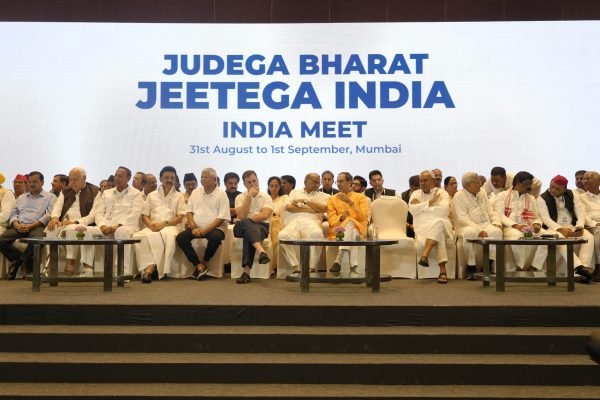
    The Indian National Developmental Inclusive Alliance (INDIA), a coalition of opposition parties formed with the goal of contesting the 2024 Lok Sabha Elections, is facing early challenges as reports of fissures within the coalition emerge.


    INDIA’s ‘Mission 2024’ aims to present a united front against the Bhartiya Janata Party (BJP)-led National Democratic Alliance (NDA) in the upcoming elections. However, the coalition has encountered internal differences even in its early stages.


    Recent media reports indicate that the Communist Party of India (Marxist) (CPI(M)) has chosen to distance itself from the INDIA coalition. The CPI(M) has cited difficulties in asking the ruling Left front to refrain from contesting seats currently held by the Congress, particularly in Kerala’s legislative assembly. This hints at the complexities arising from the Left Democratic Front (LDF) and United Democratic Front (UDF) arrangement in Kerala.


    In West Bengal, where the CPI(M) has a history of governing the state for a record thirty-four years, it has consistently maintained a distance from collaborating with either the Trinamool Congress (TMC) led by Mamata Banerjee or the Bharatiya Janata Party (BJP).


    Furthermore, concerns have been raised about the “as far as possible” clause in the INDIA coalition’s resolution to contest elections together. The resolution has triggered speculations about the coalition’s unity, particularly in state legislative assembly elections.


    The CPI(M) has also expressed reservations about the organizational structure of the INDIA bloc. While decisions are intended to be made by the leaders of constituent parties, the CPI(M) has called for organizational structures that do not impede these decisions.


    Another challenge facing the INDIA coalition is the rivalry between the Congress party and the Aam Aadmi Party (AAP). Maintaining a cordial relationship between these two parties is essential for the success of the coalition ahead of the 2024 Lok Sabha Elections.


    The emergence of fissures within the INDIA coalition highlights the complex dynamics of Indian politics, where regional rivalries, historical animosities, and differing organizational structures can strain the unity of opposition parties. Whether the coalition can navigate these challenges and present a formidable challenge to the ruling BJP-led NDA in the upcoming elections remains to be seen. The 2024 Lok Sabha Elections will serve as a crucial test for the coalition’s viability and effectiveness on the national stage.