Tag: Nikki Haley

  • Republican Primary: Trump’s Strategy Against Nikki Haley

    Republican Primary: Trump’s Strategy Against Nikki Haley

    Amidst the unfolding dynamics of the Republican primary season, Donald Trump’s campaign is strategically shifting its focus beyond contenders like Nikki Haley to concentrate on the looming rematch with Democratic President Joe Biden. Despite Trump’s resounding victories in all five Republican nominating contests thus far, Haley’s resilience as the lone challenger poses an intriguing subplot. However, with Trump’s recent win in Haley’s home state of South Carolina, his campaign plans to sideline her, aiming to diminish her relevance in the race.


    Trump’s advisers intend to adopt a dismissive approach towards Haley, aiming to relegate her campaign to obscurity. This strategic shift marks a departure from the previous tactic of intensively targeting Haley with vitriolic attacks, online smear campaigns, and pressure on her donors to switch allegiance to Trump. The campaign’s plan to disregard Haley underscores their confidence in Trump’s impending nomination and their determination to maintain a singular focus on the general election against Biden.


    Despite Trump’s victory in South Carolina, the exit poll data reveals potential vulnerabilities for him in the broader context of the general election. Notably, a significant portion of self-described independent voters in South Carolina favored Haley, suggesting a potential challenge for Trump in garnering support beyond his base. Additionally, Haley’s ability to secure a slim majority of the white college-educated vote underscores her appeal among certain demographics critical for a successful general election campaign.


    Republican strategist Chip Felkel has highlighted the significance of Haley’s performance, noting that Trump’s margin of victory in South Carolina was narrower than anticipated. While Trump remains the presumptive nominee, Felkel suggests that these indicators could serve as warning signs for the general election, particularly if Trump struggles to secure broad-based support beyond his core constituency.


    Despite the setback in South Carolina, Haley remains undeterred, reaffirming her commitment to continue her campaign through Super Tuesday. Her defiant stance reflects her determination to offer voters a genuine choice and to uphold the principles of democracy. However, the withdrawal of support from influential conservative groups like AFP Action poses a significant challenge to her campaign’s viability and underscores the formidable obstacles she faces in challenging Trump’s dominance.


    As Haley presses ahead with her campaign, she faces an uphill battle against the well-funded and organized machinery of the Trump campaign. Yet, some donors continue to rally behind her, viewing her as a potential alternative should unforeseen circumstances derail Trump’s candidacy. While the odds may seem slim, Haley’s resilience and strategic positioning could position her as a contingency plan for the GOP in the event of unexpected developments.


    In the unfolding narrative of the Republican primary, the clash between Trump and Haley encapsulates broader themes of political strategy, resilience, and the quest for leadership within the party. As the primary season progresses, the dynamics between Trump and his challengers will continue to shape the trajectory of the GOP and its prospects in the upcoming general election.

  • Trump Wins South Carolina Primary

    Trump Wins South Carolina Primary

    Donald Trump’s decisive victory in the South Carolina Republican primary on Saturday marked another significant step in his journey towards securing the GOP nomination and potentially facing off against Joe Biden in the upcoming presidential election. This victory solidified Trump’s position as the frontrunner in the Republican Party and underscored his continued dominance within the party’s ranks.


    The South Carolina primary, held on February 25, saw Trump effortlessly defeat his primary challenger, Nikki Haley, in her home state. Despite Haley’s efforts to mount a challenge against Trump, he emerged victorious with a commanding lead, further solidifying his position as the party’s standard-bearer.


    Trump’s victory in South Carolina was not unexpected, given his strong support base and popularity among Republican voters. Throughout his campaign, Trump has capitalized on his populist appeal and “America first” agenda, resonating with many conservative voters who view him as a champion of their values and priorities.


    During his victory speech in Columbia, the capital of South Carolina, Trump wasted no time in turning his attention to his potential opponent in the general election, Joe Biden. He criticized Biden’s leadership and policies, vowing to defeat him and bring about positive change for the country.


    “We’re going to look at Joe Biden and say, ‘Joe, you’re fired,’” Trump declared to cheers from his supporters. His remarks highlighted his confidence in his ability to secure victory in the general election and continue his presidency for another term.


    Despite Haley’s efforts to challenge Trump’s leadership and raise concerns about his fitness for office, she was unable to gain significant traction in her home state. Trump’s victory in South Carolina reaffirmed his stronghold on the Republican Party and his ability to rally support among conservative voters.


    David Darmofal, a politics professor at the University of South Carolina, noted the significance of Trump’s swift victory in the state. He emphasized that Trump’s projected win solidified his status as the presumptive Republican nominee for president and added pressure on Haley to reconsider her campaign.


    While Haley had hoped to outperform expectations in her home state and gain momentum heading into Super Tuesday, she ultimately fell short in the face of Trump’s overwhelming support. Despite her efforts to present herself as a viable alternative to Trump, she was unable to overcome his popularity and appeal among Republican voters.


    Throughout the campaign, Haley had raised concerns about Trump’s leadership and warned of the potential chaos that could result from another Trump presidency. She criticized his handling of various issues, including his response to the death of Russian dissident Alexei Navalny and his approach to foreign policy.


    Despite her criticisms, Haley’s message failed to resonate with enough voters to pose a significant challenge to Trump’s candidacy. As Trump continues to consolidate his support within the party, Haley’s prospects for securing the nomination appear increasingly slim.


    Looking ahead, Trump’s victory in South Carolina positions him as the clear frontrunner in the race for the Republican nomination. With Super Tuesday looming on the horizon, Trump is poised to further solidify his lead and cement his status as the party’s nominee for president. As the campaign progresses, all eyes will be on Trump as he seeks to secure another victory in the general election and continue his presidency for another term.

  • Trump vs. Haley: Clash in South Carolina Republican Primary

    Trump vs. Haley: Clash in South Carolina Republican Primary

    The Republican primary in South Carolina pits former President Donald Trump against Nikki Haley, with Trump widely expected to emerge victorious in Haley’s home state as he marches closer to securing the party’s nomination. Despite Haley’s popularity as the former governor of South Carolina and her tenure as Trump’s UN ambassador, Trump enjoys significant backing from the party establishment and holds a commanding lead in opinion polls.


    While the candidates initially refrained from direct confrontation during the earlier nominating contests in Iowa and New Hampshire, the intensity of their rhetoric has escalated as the primary contest has narrowed down to a head-to-head battle. Trump, exuding confidence at an election-eve rally, projected a sense of inevitability about his victory and focused on the upcoming general election against President Joe Biden and the Democrats.


    Polling stations opened in South Carolina amidst moderate voter turnout, with citizens casting their ballots in either the Democratic or Republican primary without indicating party allegiance. Haley, positioning herself as a traditional conservative advocating for limited government and a robust foreign policy, hopes to garner support from moderate voters, although her previous efforts failed to yield success against Trump in earlier contests.


    Interviews with voters in South Carolina revealed a mix of opinions, with some praising both candidates while others expressed reservations about Haley’s readiness for the presidency and criticized Trump’s perceived divisiveness. Meanwhile, the primary unfolds against the backdrop of Trump’s legal troubles, with the frontrunner facing multiple criminal indictments and seeking to consolidate his grip on the party by reshuffling key positions within the Republican National Committee.


    Haley has seized on Trump’s legal woes, portraying his campaign expenditures on legal fees as evidence of chaos and distraction. She has also criticized Trump’s foreign policy approach and his handling of international crises, contrasting her own leadership style with his. Additionally, Haley has emphasized polling data suggesting she would fare better than Trump in a hypothetical matchup against Biden, signaling her intention to remain competitive beyond the South Carolina primary.


    The election discourse is likely to feature reproductive rights prominently, particularly in light of Trump’s equivocation on proposals for a nationwide abortion ban and a recent ruling by Alabama’s supreme court regarding frozen embryos. Trump’s attempt to navigate this issue by expressing support for preserving access to IVF programs underscores the complexities surrounding reproductive rights and their political implications.


    As voters in South Carolina cast their ballots, the outcome of the primary will not only shape the trajectory of the Republican nomination race but also offer insights into the evolving dynamics within the party and the broader electoral landscape leading up to the general election.

  • Nikki Haley Criticizes Trump’s Foreign Policy Stance on Russia

    Nikki Haley Criticizes Trump’s Foreign Policy Stance on Russia

    In the realm of the 2024 US Presidential Polls, Nikki Haley, former South Carolina Governor and Trump’s ex-ambassador to the UN, has taken a bold stance by assailing Donald Trump’s foreign policy. In particular, she criticized his failure to denounce the death of Russian opposition figure Alexei Navalny, calling attention to Trump’s perceived indifference or tacit approval of Putin’s actions.


    Haley’s remarks, aired on ABC’s This Week, underscored the gravity of Trump’s statements regarding Russia and NATO. She condemned Trump’s apparent willingness to support Russia’s actions, stating that such rhetoric only serves to embolden Putin and undermine global security. Haley’s condemnation of Trump’s foreign policy aligns with her broader strategy to distinguish herself from her former boss as she vies for the GOP presidential nomination.


    The former ambassador’s criticism of Trump’s approach to Russia and NATO comes at a critical juncture in her political career. With the South Carolina Republican primary looming on February 24, Haley faces a formidable challenge in her bid for the presidency. Recent polls suggest that she trails significantly behind Trump, highlighting the uphill battle she faces within her own party.


    Haley’s critique of Trump’s foreign policy extends beyond his stance on Russia and NATO. She has pledged to adopt a more assertive stance towards adversaries like China while emphasizing the importance of upholding commitments to NATO allies. This approach sets her apart from Trump’s isolationist tendencies and may appeal to a broader spectrum of voters, including Democrats and independents.


    Despite facing resistance within the GOP, Haley remains steadfast in her criticism of Trump’s foreign policy. During a recent town hall event, she reiterated her commitment to holding NATO allies accountable while advocating for a more diplomatic approach. Her willingness to challenge Trump’s positions reflects her determination to carve out her own path in the political arena.


    As Haley continues to navigate the complex landscape of US politics, her stance on foreign policy will undoubtedly play a pivotal role in shaping her candidacy. By positioning herself as a principled leader with a distinct vision for America’s role in the world, she hopes to garner support from across the political spectrum and emerge as a formidable contender in the race for the presidency.

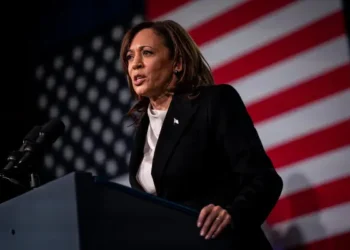
  • Kamala Harris Asserts Readiness to Serve as President

    Kamala Harris Asserts Readiness to Serve as President

    As concerns over the age and mental capacity of President Joe Biden continue to percolate, Vice President Kamala Harris has stepped forward, asserting her readiness to serve as President if the need arises. This assertion comes amid growing discussions regarding President Biden’s handling of classified documents, as highlighted in a report by Special Counsel Robert Hur. Moreover, Republican presidential candidate Nikki Haley has intensified criticisms against both Biden and former President Donald Trump, questioning their fitness for office based on age and mental acuity.


    Haley, the former Governor of South Carolina, has been particularly vocal in her attacks on Biden and Trump regarding their age and mental capacity. At a recent rally, she labeled Trump, aged 77, as mentally deficient, while branding Biden, aged 81, as too old to effectively lead the nation. This critique underscores the increasing scrutiny surrounding the presidential candidates’ abilities to fulfill their duties, especially as they advance in age.


    A September survey conducted by Reuters/Ipsos revealed that a significant majority, comprising 77% of respondents, believed that Biden’s age made him unsuitable for governmental responsibilities. Similarly, 56% of participants expressed doubts about Trump’s capability to govern due to his age. These findings underscore the widespread concerns among the electorate regarding the advancing age of presidential candidates and its potential impact on their ability to lead effectively.


    Haley has gone a step further by proposing mental capacity tests for presidential candidates above the age of 75. This suggestion reflects a growing sentiment within the Republican Party that age-related cognitive decline should be a significant consideration in assessing a candidate’s fitness for office. By advocating for such tests, Haley aims to ensure that only candidates with the requisite mental acuity are entrusted with the responsibilities of the presidency.


    The concerns over Biden’s mental capacity were further highlighted in the report by Special Counsel Robert Hur, which questioned the President’s handling of classified documents. Hur described Biden as a “well-meaning, elderly man with a poor memory,” suggesting that his age and memory lapses could impact his ability to fulfill his duties effectively. The report also noted instances where Biden appeared to forget key details during conversations with investigators, including the death of his son Beau Biden.


    President Biden has vehemently pushed back against these assertions, insisting that his memory remains intact. He expressed frustration with the report and rebuffed reporters’ inquiries, asserting that he is fully capable of executing his duties as President. Biden’s defense underscores the sensitivity surrounding discussions about age-related cognitive decline and the potential implications for his presidency.


    Meanwhile, former President Donald Trump has seized on these concerns to criticize Biden and question his fitness for office. Trump, who is facing several federal cases, including allegations related to the handling of classified documents, has accused Biden of being unfit to serve as Commander-in-Chief. Trump’s criticisms underscore the partisan divide surrounding discussions about age and mental capacity in politics, with both parties using the issue to discredit their opponents.


    As the debate over age and mental capacity in politics intensifies, Vice President Kamala Harris’s assertion of readiness to assume the presidency adds a new dimension to the conversation. While Kamala Harris’s statement is aimed at reassuring the public about the continuity of leadership, it also highlights the importance of succession planning in ensuring the stability of government.


    The debate over age and mental capacity in politics has become increasingly prominent, with concerns over President Biden’s fitness for office at the forefront. Vice President Kamala Harris’s declaration of readiness to serve as President underscores the need for transparency and accountability in assessing the capabilities of elected officials. As the discussion continues, it remains essential to prioritize the nation’s best interests while evaluating the fitness of candidates for the highest office in the land.

  • Trump Questions Absence of Nikki Haley’s Husband on Campaign

    Trump Questions Absence of Nikki Haley’s Husband on Campaign

    Former President Donald Trump’s recent questioning of the absence of Nikki Haley’s husband from the campaign trail has sparked controversy and drawn sharp responses from both Haley and her husband, Michael Haley. The incident occurred during a campaign event in Conway, South Carolina, as Trump and Haley held events across the state ahead of its Feb. 24 Republican primary.


    In his remarks to the crowd, Trump asked about Michael Haley’s whereabouts, stating, “What happened to her husband? Where is he? He’s gone. He knew. He knew.” This remark drew immediate attention and criticism, particularly because Michael Haley is currently deployed serving in the South Carolina Army National Guard on a yearlong mission.


    Responding to Trump’s comments, Nikki Haley took to social media to defend her husband’s absence and highlight his military service. In a post on X, she stated, “Michael is deployed serving our country, something you know nothing about.” This direct rebuttal from Haley underscores the significance of Michael Haley’s service and the sacrifices made by military families.


    The incident is not an isolated one in which Trump has disparaged opponents based on their military service or affiliation. Throughout his political career, Trump has been known for making controversial remarks about servicemembers and their families. This includes questioning the heroism of the late Sen. John McCain, who was a prisoner of war in Vietnam, and making derogatory comments about Gold Star families.


    Michael Haley’s deployment with the National Guard further underscores the sacrifices made by military families. His yearlong mission began in June, with Haley serving as a staff officer with the 218th Maneuver Enhancement Brigade in the Horn of Africa. Despite being thousands of miles away from home, Haley remains dedicated to his duty and service to his country.


    Shortly after Trump’s comments, Michael Haley responded with a meme on his own X account, featuring a picture of a wolf and the text: “The difference between humans and animals? Animals would never allow the dumbest ones to lead the pack.” This indirect response reflects Haley’s resilience and refusal to engage in personal attacks, even in the face of criticism.


    Trump’s comments also highlight broader issues surrounding political discourse and civility in public discourse. His tendency to attack opponents personally, including their families and military service, has been a source of controversy and criticism throughout his time in office. Many have argued that such behavior undermines the dignity of the presidency and sets a negative example for political leaders.


    In response to Trump’s remarks, Nikki Haley’s surrogates and supporters have defended Michael Haley’s service and condemned Trump’s comments. State Rep. Chris Wooten, who introduced Haley at an evening rally, stated, “When you start talking about a veteran serving overseas, I don’t care if you know them or not, that should make your heart sick.” This sentiment reflects the widespread condemnation of Trump’s remarks and the importance of respecting the sacrifices made by military families.


    Nikki Haley herself has expressed pride in her husband’s service and highlighted the challenges faced by military families. In her speeches, she often recounts her husband’s difficulty readjusting to life after deployment, emphasizing the toll that military service can take on families. Despite these challenges, Haley remains committed to supporting her husband and advocating for military families.


    The incident involving Trump’s comments about Michael Haley serves as a reminder of the sacrifices made by servicemembers and their families. It also highlights the importance of respecting military service and refraining from personal attacks in political discourse. As the campaign continues, it remains to be seen how Trump’s remarks will impact public opinion and the dynamics of the race. However, one thing is clear: the dedication and sacrifice of military families like the Haleys should be honored and respected.

  • Nikki Haley Criticizes Trump, Questions His Mental Fitness

    Nikki Haley Criticizes Trump, Questions His Mental Fitness

    Indian American leader and prominent Republican figure Nikki Haley recently criticized former President Donald Trump, raising concerns about his “mental fitness.” The remarks came after Trump made comments about Haley in connection with the Capitol riots during a rally on Friday.


    In a video message posted on social media, Haley expressed her concerns about Trump’s confusion and questioned his mental fitness for the presidency. She stated, “Last night, Trump is at a rally…and he’s going on and on, mentioning me multiple times as to why I didn’t take security during the Capitol riots, why I didn’t handle January 6 better. I wasn’t even in DC on January 6. I wasn’t in office then.”


    Haley went on to share her discomfort with Trump’s apparent confusion during the rally. “They’re saying he got confused, that he was talking about something else, he’s talking about Nancy Pelosi, he mentioned me multiple times in that scenario,” she added.


    The former United Nations Ambassador emphasized the importance of mental fitness for someone in the position of the U.S. President, particularly given the significant pressures associated with the role. She stated, “The concern I have is, I’m not saying anything derogatory, but when you’re dealing with the pressures of a presidency, we can’t have someone else that we question whether they’re mentally fit to do this.”


    This development adds a new dimension to the ongoing dynamics within the Republican Party, as both Nikki Haley and Donald Trump vie for influence and support in the GOP. The New Hampshire primary on January 23 is a critical battleground where Trump and Haley will go head-to-head in the race for the GOP presidential nomination.


    During the rally that raised concerns, Trump seemed to make a mistake regarding Haley and former House Speaker Nancy Pelosi when discussing the rioting that occurred at the U.S. Capitol on January 6. Trump’s comments included, “By the way, they never report the crowd on Jan 6. You know Nikki Haley, Nikki Haley, Nikki Haley, you know, they — do you know they destroyed all of the information, all of the evidence, everything, deleted and destroyed all of it. All of it.”


    He continued by suggesting that Nikki Haley was in charge of security during the Capitol riots and claimed that they had offered her 10,000 people, including soldiers and National Guards, but she turned it down. Trump accused her of not wanting to talk about it and referred to her as part of “these very dishonest people.”


    The tension between Trump and Haley comes as they compete for dominance in the Republican Party. In the Iowa caucuses, Trump secured a comprehensive victory, winning 20 out of 40 delegates, while Haley finished not far behind with seven delegates. Florida Governor Ron DeSantis came in second with eight delegates.


    The upcoming New Hampshire primary will be a crucial test for both Trump and Haley. According to a poll average from Decision Desk HQ and The Hill, Trump currently holds a 10.6-point lead over Haley in the race. However, a RealClearPolitics average of state surveys shows that Trump’s lead in New Hampshire is 14.2 percentage points, his smallest lead in any state with early voting.


    As the GOP presidential race unfolds, the dynamics between Trump and other contenders will shape the party’s direction in the coming months. Haley’s critique of Trump’s mental fitness adds a new layer to the ongoing political discourse within the Republican Party, emphasizing the significance of both policy positions and the personal characteristics of potential candidates. The New Hampshire primary will be a crucial battleground that could provide insights into the GOP’s trajectory and the level of support for various contenders.

  • Trump Dominates Iowa Republican Caucus

    Trump Dominates Iowa Republican Caucus

    As Iowans braved freezing temperatures to participate in the initial Republican nominating contest for the United States Presidential Election, former President Donald Trump took center stage, emerging as the front-runner and overshadowing his competition, according to a Reuters report. The Iowa caucus, a historically significant event in the U.S. political calendar, commenced at 7 pm local time on Monday, January 15 (0100 GMT on Tuesday, January 16). Despite facing legal challenges, Trump’s substantial support in the Midwestern state has turned the first-in-the-nation contest into a battle for the second spot.


    Key issues driving the caucus include immigration and the economy, according to opinion polls cited in the report. Edison Research’s survey indicates varying priorities among Republicans participating in the caucuses, emphasizing the diverse concerns within the party.


    A decisive victory for Trump in Iowa could further solidify his claim as the leading Republican candidate capable of challenging Democratic President Joe Biden. Supporters are expressing optimism, anticipating a potential landslide for the former president.


    Competing against Trump for attention in Iowa are notable figures like Florida Governor Ron DeSantis and former UN Ambassador Nikki Haley, who are positioning themselves as the main alternatives. DeSantis, in particular, is staking a significant part of his campaign on Iowa, while other contenders like Vivek Ramaswamy and Asa Hutchinson seek recognition. The outcome of this caucus, especially for DeSantis, may have significant implications for the trajectory of their campaigns.


    Despite life-threatening cold temperatures that might impact voter turnout, Trump’s hold on loyal supporters is expected to mitigate the effects, according to the report. Both DeSantis and Haley have expressed confidence, underlining their campaigns’ resilience in the challenging weather conditions.


    A wildcard factor in this caucus is the involvement of Democratic voters registering as Republicans to influence the results. This strategic move aims to impact the outcome in a state that has historically played a crucial role in the presidential campaign calendar.


    Iowa’s political landscape, once a battleground, has shifted, now leaning Republican. This marks a contrast to its support for Democrat Barack Obama in 2008 and 2012. The state’s historical significance in presidential campaigns is evident, although recent winners in the Republican caucus did not always secure the nomination in subsequent competitive contests.


    In 2016, the Republican caucus recorded a high turnout, with about 187,000 votes. Despite the shift in Iowa’s political leanings, the caucus remains a critical and closely watched event, shaping the narrative for the ongoing primary season. The report notes that Iowa Democrats will not vote in person, as their nomination process has been rescheduled, adding another layer of complexity to the evolving political landscape in the state.

  • Trump Reveals He Has Decided on 2024 Running Mate

    Trump Reveals He Has Decided on 2024 Running Mate

    In a Fox News Town Hall event in Iowa, former US President Donald Trump revealed that he has already decided on his running mate for the 2024 presidential election. Responding to a question about a potential running mate if he secures the Republican nomination, Trump, who was in Des Moines, stated, “Well, I can’t tell you that really. I mean, I know who it’s going to be.”


    The disclosure came during an interaction where Trump addressed various topics and engaged with the audience. However, the former president kept the name of his chosen running mate confidential, adding an element of suspense to his potential 2024 candidacy.


    When Fox News host Martha MacCallum asked Trump if he would be open to mending ties with any of his rivals in the race, the former president responded positively, saying, “Oh sure, I will.” This response suggests a willingness on Trump’s part to foster unity within the Republican party, indicating that alliances could be formed as the 2024 election approaches.


    In a light-hearted moment, Trump mentioned that he has started to like former New Jersey Republican Governor Chris Christie, who was previously critical of Trump and his policies. Christie, after withdrawing from the presidential nomination race, was caught on a hot mic predicting that former South Carolina governor Nikki Haley would “get smoked” in the White House race.


    On the possibility of Chris Christie serving as vice president, Trump remarked, “I don’t see it,” adding that it “would be an upsetting” move. It’s worth noting that Christie has dropped out of the Republican candidacy race but has firmly expressed his commitment to preventing Trump from becoming president again.


    “My goal has never been to be just a voice against the hate and division and the selfishness of what our party has become under Donald Trump,” Christie told supporters in New Hampshire. “I am going to make sure that in no way do I enable Donald Trump to ever be president of the United States again. And that’s more important than my own personal ambition.”


    Throughout his campaign, Trump has refrained from discussing his potential running mate, keeping the decision under wraps. Speculations within political circles continue about who might be Trump’s pick for the vice-presidential slot, with names like South Dakota governor Kristi Noem being suggested.


    In an interview with NBC, Trump expressed his inclination towards the concept of having a female vice president, stating that he “likes the concept.” This has fueled speculation about the possibility of Kristi Noem being considered for the role. However, Trump’s definitive choice remains undisclosed.


    A nationwide poll conducted by Reuters and Ipsos on Wednesday indicated strong support for Trump among Republicans. He garnered 49% support, significantly ahead of Nikki Haley at 12% and Florida Governor Ron DeSantis at 11%. The poll reflects Trump’s continued influence within the Republican base.


    Meanwhile, biotech entrepreneur Vivek Ramaswamy hinted last year that he might run on a joint ticket with Trump as his running mate if he does not secure the Republican nomination. Responding to a question from Britain’s GB News about being Trump’s vice president, Ramaswamy said, “See, this isn’t about me. If this were about me, sure. That’s a fine position for someone to have at my age.”


    He further clarified, “This is about reviving our country, and I can only reunite this country if I’m doing it from the White House as the leader and the face of our movement.”


    As Trump navigates potential running mate options and considers mending ties with former rivals, the political landscape leading up to the 2024 election continues to evolve. The revelation of Trump’s running mate is anticipated with keen interest, as it could shape the dynamics of the upcoming presidential campaign. The former president’s ability to forge alliances within the party and present a cohesive ticket will be closely observed by political analysts and voters alike.

  • Nikki Haley Warns of China’s Growing Threat

    Nikki Haley Warns of China’s Growing Threat

    In a significant policy speech delivered in the key early primary state of New Hampshire, Indian-American Republican presidential aspirant Nikki Haley has characterized China as an “existential threat” not only to the United States but to the entire world. She further claimed that China is actively “preparing for war.” Haley’s remarks come shortly after her Indian-American Republican rival, Vivek Ramaswamy, delivered a foreign policy speech focused on China, making both candidates popular GOP choices following former President Donald Trump.


    Haley stated, “Strength and pride are essential to our national survival, especially in the face of Communist China. China is an existential threat. It has spent half a century plotting to defeat us.” She accused China of taking away American manufacturing jobs, pilfering trade secrets, and gaining control of critical industries, such as medicines and advanced technology.


    Highlighting China’s rapid economic growth, Haley emphasized its ambition to become the world’s leading economy. She pointed out China’s substantial investments in its military capabilities, asserting that in some respects, China’s military is on par with the US armed forces and even surpasses them in certain areas.


    Haley’s concerns extended to China’s strategic activities, including the deployment of spy balloons in American skies and the construction of a spy base near US shores in Cuba. She unequivocally stated, “Make no mistake: The Communist Party is preparing for war. And China’s leaders intend to win.”


    Shifting her focus to economic policy, Haley outlined her plan to provide financial relief to middle-class Americans. She pledged that every middle-class family would receive significant tax relief, emphasizing the importance of individual choice in strengthening the economy.


    Among her economic proposals, Haley promised to eliminate the federal gas and diesel tax, providing immediate savings to consumers dealing with rising gas prices. She also vowed to cut income taxes for working families and eliminate President Joe Biden’s green energy subsidies, aiming to halt cash windfalls for China.


    Additionally, Haley expressed her commitment to fiscal responsibility by vetoing any spending bill that does not return the US to pre-Covid spending levels. She emphasized the need to rein in government bureaucracy, implementing term limits for bureaucrats, and allowing the removal of underperforming officials.


    Nikki Haley emphasized that public service is a privilege, not a right, and that the government should serve the people rather than accumulate power. As she seeks the Republican nomination for the presidency, her stance on China’s threat and economic reforms is expected to be a focal point in the upcoming election.