Tag: NCP

  • Bhushan Gagrani Named Mumbai Municipal Commissioner

    Bhushan Gagrani Named Mumbai Municipal Commissioner

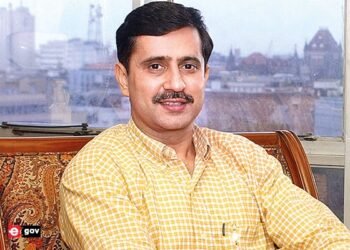
    In a significant development for Mumbai’s civic administration, senior IAS officer Bhushan Gagrani has been appointed as the new municipal commissioner of the Brihanmumbai Municipal Corporation (BMC). This decision came after the Election Commission of India directed the Chief Minister Eknath Shinde-led government to make the appointment.


    Additionally, senior bureaucrats Saurabh Rao and Kailash Shinde have been appointed as the new civic commissioners of adjoining Thane and Navi Mumbai, respectively, further reshaping the administrative landscape of Maharashtra’s urban areas.


    Bhushan Gagrani’s appointment marks a notable change in leadership within the BMC. He is set to replace Iqbal Singh Chahal, who was directed to step down from the post of BMC commissioner by the Election Commission. Previously, Gagrani had been serving as the additional chief secretary in the Chief Minister’s Office (CMO), making his transition to the municipal commissioner’s role a significant move.


    The Election Commission’s order also specified that the appointed officers, including Gagrani, Rao, and Shinde, shall not hold any additional charge outside their respective corporations, emphasizing the need for dedicated focus on their new responsibilities.


    The decision to replace Chahal and appoint new commissioners comes in the wake of the upcoming Lok Sabha elections in Maharashtra. The Election Commission’s directive aligns with the standard practice of ensuring administrative neutrality and efficiency ahead of major electoral events.


    The Lok Sabha elections in Maharashtra, with its 48 seats, are crucial for the political landscape of the state. Scheduled to be held in five phases, with voting starting from April 19 and concluding on June 1, these elections will play a significant role in shaping the state’s representation in the national parliament.


    In the 2019 Lok Sabha elections, the Bharatiya Janata Party (BJP) had emerged victorious in 23 out of the 25 contested seats, while the then undivided Shiv Sena had secured 18 out of 23 contested seats. However, with the subsequent political realignment and the formation of the Maha Vikas Aghadi (MVA) coalition comprising the Shiv Sena, Nationalist Congress Party (NCP), and Congress, the dynamics of Maharashtra’s political landscape have evolved.


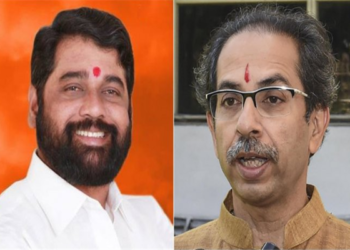
    Amidst speculation and anticipation, former Maharashtra Chief Minister and Shiv Sena leader Uddhav Thackeray announced that the names of candidates for the Maha Vikas Aghadi would be revealed shortly. However, discussions regarding the seat-sharing arrangement within the coalition are still ongoing, with the Congress, Shiv Sena, and NCP yet to finalize their respective roles.


    The Vanchit Bahujan Aghadi (VBA), a key ally of the MVA, has expressed discontent over its perceived exclusion from the decision-making process. VBA chief Prakash Ambedkar has publicly criticized the Shiv Sena and NCP for allegedly sidelining his party’s demands. Despite these challenges, Sena leader Sanjay Raut remains optimistic about the MVA’s prospects in the upcoming elections, asserting that the coalition will present a formidable challenge to the BJP-led National Democratic Alliance (NDA).


    As Maharashtra gears up for the Lok Sabha elections, the appointments of Bhushan Gagrani, Rao, and Shinde signal a strategic reconfiguration of administrative roles within the state’s key urban centers. With the BMC, Thane, and Navi Mumbai administrations under new leadership, the stage is set for renewed focus on governance and civic development, coinciding with the electoral dynamics shaping Maharashtra’s political landscape.

  • Santosh Bangar’s Remarks Spark Outrage

    Santosh Bangar’s Remarks Spark Outrage

    Kalamnuri MLA Santosh Bangar, a member of the Eknath Shinde-led Shiv Sena, has sparked controversy with his recent remarks directed at school children. In a viral video, Bangar can be heard instructing the children not to eat for two days if their parents do not vote for him in the upcoming elections. The incident occurred despite directives from the Election Commission prohibiting the involvement of children in election-related activities.


    Speaking to students at a Zilla Parishad school in Hingoli district, Bangar, addressing children below the age of 10, urged them to convey to their parents that they would only eat if their vote was cast in his favor. The Shiv Sena MLA’s remarks have drawn criticism from opposition parties, including the Congress and the Sharad Pawar-led NCP, who have called for stringent action against Bangar.


    NCP-SP spokesperson Clyde Crasto condemned Bangar’s actions, labeling him a repeat offender and accusing him of evading consequences due to his alliance with the BJP. Crasto emphasized the need for the Election Commission to impartially address Bangar’s violation of its directives.


    Similarly, Congress leader Vijay Wadettiwar questioned the state education minister’s response to Bangar’s remarks, highlighting the inappropriate nature of the comments made to school children.


    This incident is not the first time Bangar has courted controversy with his unconventional statements. In a previous instance, he made headlines by stating that he would hang himself if Narendra Modi did not return as Prime Minister after the 2024 Lok Sabha elections. Bangar’s history of provocative remarks includes an incident last year where he was booked by the Kalamnuri police for allegedly wielding a sword during a festive rally. In 2022, a video capturing Bangar slapping a catering manager of a midday meal program for laborers also went viral, further fueling public outrage.


    Bangar’s repeated involvement in contentious incidents underscores the need for accountability and responsible conduct among elected officials. The outcry from opposition parties and calls for disciplinary action highlight the seriousness of Bangar’s actions and the imperative for swift and impartial resolution by relevant authorities.

  • NCP and JMM Leaders Criticize Digital Platforms

    NCP and JMM Leaders Criticize Digital Platforms

    In a recent discussion on ‘The White Paper on Indian Economy’ in the Lok Sabha, leaders from various political parties such as NCP and JMM raised significant concerns about the state of digital platforms like Google Pay and PhonePe, alleging potential money laundering activities. NCP leader Supriya Sule particularly highlighted these concerns, describing these platforms as “ticking time bombs” and questioning the government’s efforts to prevent money laundering in the digital economy.


    Sule’s remarks were prompted by recent events, notably the controversy surrounding Paytm Payments Bank Ltd (PPBL), which she deemed “alarming” and akin to money laundering. She emphasized the widespread use of Google Pay and PhonePe compared to the lesser-known BHIM app, urging the government to take decisive steps to ensure the integrity of digital transactions in an increasingly cashless economy.


    Echoing Sule’s sentiments, JMM leader Vijay Kumar Hansdak accused the government of misusing central agencies such as the Enforcement Directorate (ED), Central Bureau of Investigation (CBI), and Income Tax department to target opposition MPs. Hansdak called for a white paper to be issued on the alleged misuse of these agencies, alleging that the government’s authority relies heavily on entities like the ED for political leverage.


    In response to these accusations, BJP MP Sanjay Jaiswal countered by pointing out the perceived corruption during the tenure of the previous UPA government. He claimed that corruption levels were unprecedented during the 10 years of UPA rule, accusing individuals of obtaining loans without intending to repay them. Jaiswal’s remarks sought to deflect attention from the current allegations and redirect focus to past grievances under the UPA regime.


    AIMIM leader Asaduddin Owaisi contributed to the debate by questioning the effectiveness of the white paper on the Indian economy, labeling it as mere rhetoric rather than substantive analysis. Owaisi urged the government to explain the disparities in economic growth rates between the UPA and NDA governments. He highlighted statistics indicating higher average growth rates and lower fiscal deficits during the UPA era compared to the NDA’s tenure.


    Owaisi also called attention to the impact of demonetization on the country’s poor and marginalized communities, pressing the government to provide insights into how the policy adversely affected these vulnerable groups. He emphasized the need for transparency regarding the economic consequences of major policy decisions like demonetization, especially in light of contrasting economic indicators between different government administrations.


    IUML MP E T Mohammed Basheer criticized the white paper as biased towards the ruling BJP, dismissing it as a tool for political propaganda rather than objective analysis. Basheer highlighted the contributions of the Congress-led UPA government in enacting crucial legislations such as the Right to Information and Right to Education Acts, as well as implementing welfare programs like MNREGA for the benefit of disadvantaged populations.


    The discussion in the Lok Sabha between NCP, JMM and other leaders has left underscored deep-seated concerns about the integrity of digital payment platforms, allegations of misuse of central agencies for political purposes, and divergent perspectives on the economic policies of past and present governments. As the debate continues, it remains to be seen how the government will address these issues and uphold accountability in economic governance.

  • Dispute: Election Commission Allots Nationalist Congress Party

    Dispute: Election Commission Allots Nationalist Congress Party

    The Election Commission (EC) has made a decisive move in the ongoing factional dispute within the Nationalist Congress Party (NCP) by allotting the name “Nationalist Congress Party – Sharadchandra Pawar” to the faction led by former union minister Sharad Pawar. This decision follows the ruling by the poll body that Ajit Pawar’s faction is the legitimate NCP, as reported by news agency PTI.


    The EC’s decision came shortly after the submission of three potential names and symbols by the Sharad Pawar faction for their political group. Among the suggested names were “Nationalist Congress Party-Sharadchandra Pawar,” “Nationalist Congress Party—Sharadrao Pawar,” and “Nationalist Congress Party-Sharad Pawar,” along with the proposed election symbol of a “banyan tree.”


    As a one-time option for the forthcoming election to six seats in the Rajya Sabha in Maharashtra, the commission acceded to the first preference suggested by the Sharad Pawar faction.


    In response to the EC’s verdict, the Ajit Pawar faction welcomed the decision, emphasizing the priority given to the majority. Conversely, the Sharad Pawar camp criticized the ruling, labeling it as a “murder of democracy.”


    Supriya Sule, Sharad Pawar’s daughter and Baramati MP, expressed the party’s intention to challenge the verdict in the Supreme Court, citing concerns over the fairness of the decision-making process. She drew parallels with similar situations faced by other political parties and highlighted the determination to pursue legal recourse.


    Jitendra Ahwad, a leader from the Sharad Pawar camp, condemned the EC’s ruling, attributing the outcome to political maneuvering orchestrated by Ajit Pawar. Despite the setback, he expressed confidence in Sharad Pawar’s leadership and resilience, affirming their intent to seek redress through legal channels.


    Meanwhile, the Ajit Pawar faction has filed a caveat application in the Supreme Court to preempt any legal challenge from the Sharad Pawar faction. This move underscores the ongoing legal battle and underscores the high stakes involved in the dispute over the NCP’s identity and leadership.


    The factional strife within the NCP underscores broader tensions within the political landscape, reflecting power struggles and differing visions within the party. As the legal battle unfolds, the Supreme Court’s intervention may provide clarity and resolution to the contentious issue, shaping the future trajectory of the NCP and its leadership.

  • Sharad Pawar Asserts BJP’s Diminished Political Fortunes

    Sharad Pawar Asserts BJP’s Diminished Political Fortunes

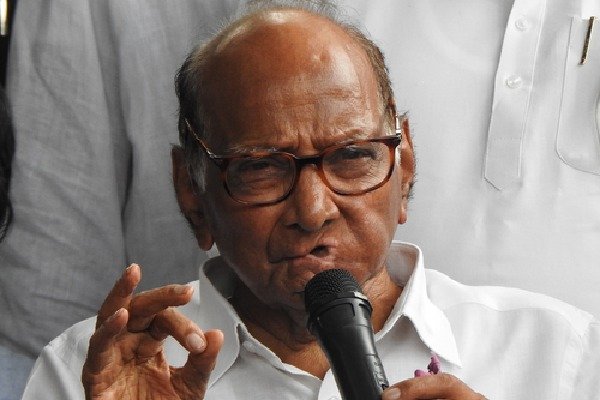
    Nationalist Congress Party (NCP) founder Sharad Pawar expressed a belief that the political scenario in the country is not conducive to the Bharatiya Janata Party (BJP) as the nation approaches the Lok Sabha polls. Speaking at an NCP conclave in Shirdi, Maharashtra, Pawar dismissed the BJP’s claim of securing over 400 seats, highlighting the party’s absence in several states.


    Addressing NCP workers, the former Union minister asserted that after assuming power in 2014, the BJP made numerous announcements and assurances but failed to implement them, leading to disillusionment among the people.


    “People have now started realizing this,” Pawar remarked, emphasizing the evolving public sentiment.


    According to Pawar, the current political situation does not favor the BJP, a sentiment echoed by the NCP, which is part of the national-level opposition INDIA alliance.


    Pawar took a dig at BJP leaders’ ambitious target of winning over 400 Lok Sabha seats out of a total of 543, highlighting that the party is currently not in power in several states across the country. States such as Kerala, Tamil Nadu, Andhra Pradesh, Telangana, Delhi, Punjab, West Bengal, Bihar, and Jharkhand are mentioned as regions where the BJP is not in a position of authority.


    The veteran politician criticized Prime Minister Narendra Modi, citing unfulfilled promises related to doubling farmers’ income by 2022, providing ‘pucca’ houses to those without homes in urban areas, and the ambitious target of achieving a $5 trillion economy by 2024-25. Pawar commented that India’s economy is not even close to 50 percent of that target, emphasizing that the Prime Minister’s guarantees often go unfulfilled.


    Pawar also addressed the concerns of the younger generation, noting their unease due to rising unemployment. He referenced the December 13 Parliament security breach and criticized the suspension of opposition members who sought to understand the motivations behind the incident and demanded statements from the Prime Minister and Home Minister.


    The NCP founder highlighted the unaffordability of fuel prices for common citizens, pointing to the economic challenges faced by the populace.


    In his address, Pawar painted a picture of a political landscape where the BJP’s dominance is diminishing, and the promises made during their tenure have fallen short of expectations. As part of the opposition INDIA alliance, the NCP is positioning itself to capitalize on the perceived disenchantment with the ruling party.


    As the Lok Sabha polls approach, Sharad Pawar’s comments reflect the ongoing political dynamics, where issues such as economic concerns, unfulfilled promises, and challenges faced by the younger generation are becoming focal points in the discourse. The political landscape seems to be evolving, and opposition parties are actively engaging in shaping the narrative ahead of the upcoming elections.

  • Political Controversy Surrounding Sharad Pawar’s Achievements

    Political Controversy Surrounding Sharad Pawar’s Achievements

    In the realm of Indian politics, the tussle between leaders and parties is a common sight. Recently, the spotlight turned towards the Nationalist Congress Party (NCP) leader, Sharad Pawar, as Prime Minister Narendra Modi criticized his contributions to the country. Shiv Sena leader Sanjay Raut, in response, questioned why the BJP government had honored Pawar with the Padma Vibhushan. This ongoing political feud has sparked a debate over Pawar’s legacy and the value of his achievements.


    Sanjay Raut, a prominent figure in Maharashtra’s political landscape, took a dig at Prime Minister Modi for his remarks regarding Sharad Pawar. Raut questioned the government’s decision to bestow the Padma Vibhushan on Pawar and defended his contributions. He highlighted Pawar’s decade-long tenure as the Agriculture Minister, emphasizing that he wasn’t just a minister but an expert in the field. Pawar’s name is synonymous with the agricultural revolution, a fact that many acknowledge. Raut also pointed out that Pawar’s philanthropic efforts extended beyond politics; his NGO played a crucial role in helping people. The message here is clear: Pawar’s accomplishments cannot be understated.


    The heart of the matter lies in Prime Minister Modi’s recent comments, where he indirectly criticized Pawar’s politics, suggesting that certain individuals from Maharashtra had exploited the farming community by engaging in political opportunism. Without naming Pawar, Modi challenged his contributions to the welfare of farmers. In response, Raut accused the Prime Minister of diverting attention from more pressing issues during his visit to Maharashtra.


    Raut noted that Modi failed to address critical issues like farmer suicides, the Maratha reservation problem, and the fast of Manoj Jarange Patil. Instead, Modi aimed to defame the leader of the state, according to Raut. The leader of Shiv Sena went a step further and criticized Maharashtra’s Deputy Chief Minister, Ajit Pawar, suggesting that he should have disassociated himself from the stage while Modi was making these critical remarks about Sharad Pawar.


    Raut expressed his concerns about the way the Prime Minister’s comments were delivered, stating that it didn’t befit someone in his position. He questioned the consistency of Modi’s statements, highlighting how Modi had previously praised Sharad Pawar’s contributions to the farming community. However, with elections looming, Raut believed Modi’s stance had shifted, leading to these critical remarks.


    Former state minister Anil Deshmukh joined the chorus of voices criticizing the Prime Minister’s remarks. He contended that Ajit Pawar should have either left the stage in protest or informed Modi to correct his statements against Sharad Pawar. Deshmukh stressed that Modi had praised Sharad Pawar in the past for his invaluable contributions to the farming sector and called for a revision of the Prime Minister’s recent comments.


    The political tension between Prime Minister Narendra Modi and NCP leader Sharad Pawar has ignited a significant debate over Pawar’s achievements and his legacy in Indian politics. Sanjay Raut and other leaders defend Pawar’s contributions, while criticizing the Prime Minister’s changing stance and remarks, especially as election season approaches. The dispute highlights the intricacies and nuances of Indian politics and the importance of recognizing a leader’s achievements while navigating the dynamic landscape of electoral politics.

    Follow Us:  X (Twitter) | Google News | LinkedIn | Pinterest | Facebook | Sharechat | Kooapp | YouTube

  • NCP Factional Dispute: Supriya Sule Questions Praful Patel’s Claims

    NCP Factional Dispute: Supriya Sule Questions Praful Patel’s Claims

    Tensions within the Nationalist Congress Party (NCP) have flared as senior leader Praful Patel claimed that the Election Commission of India (ECI) would provide its decision on the party’s name and symbol by September 30. However, his statement has sparked controversy, with party MP Supriya Sule, aligned with the Sharad Pawar faction, questioning the source of Patel’s information.


    Supriya Sule expressed her concerns, stating, “I have full faith in the EC, but I started feeling uneasy since Praful Patel started giving all the dates… EC is an independent authority then who is giving dates to Praful Patel?”


    Praful Patel responded to the queries surrounding his statement, clarifying that he had merely speculated about the possible date. “Since they (Sharad Pawar led NCP) have been asked to file their submissions by September 8, I speculated that the hearings would be completed within a couple of weeks and the verdict would be out by September 30. It was mere speculation, nothing else,” Patel stated, as reported by The Times of India.


    Meanwhile, Patel emphasized that key appointments made prior to June 30 were not in accordance with the Nationalist Congress Party’s constitution. He argued that the Election Commission should decide which faction represents the party based on electoral majority.


    The NCP experienced a split on July 2 when Ajit Pawar and eight MLAs joined the Eknath Shinde government. Since then, both the Ajit Pawar faction and the group led by party founder Sharad Pawar have asserted their legitimacy as the true representatives of the party, each claiming to have the majority of MLAs.


    Praful Patel elaborated on this issue, stating, “We have 43 MLAs in Maharashtra supporting us as well as six out of nine MLCs. While we believe in the principle of majority, it should be noted that the party can function only within the parameters of its own constitution. We never had our internal elections as per the constitution of the party, so all the appointments prior to June 30 are unconstitutional.”


    He continued, “Therefore, the only test based on which the Election Commission (of India) can decide (to whom the party, name, symbol belongs) is by the number of elected representatives.”


    The ongoing dispute within the NCP highlights the complexity of party factionalism and the intricacies of determining party legitimacy. As the Election Commission of India evaluates the competing claims, it remains to be seen which faction will ultimately secure the party name and symbol, crucial elements in the world of Indian politics. The feud also underscores the importance of adherence to a party’s constitution and the need for internal democratic processes in political organizations.

  • Ajit Pawar Sparks Speculation Amid NCP-BJP Rift Rumors

    Ajit Pawar Sparks Speculation Amid NCP-BJP Rift Rumors

    Maharashtra Deputy Chief Minister Ajit Pawar has raised eyebrows and sparked speculation about a potential rift within the NCP-BJP alliance with his recent statements. His remarks come on the heels of his absence from Home Minister Amit Shah’s events in Mumbai, where Shah visited the residences of Chief Minister Ekanth Shinde and Deputy Chief Minister Devendra Fadnavis to participate in Lord Ganesh festivities.


    Addressing a program in Pune, Ajit Pawar expressed uncertainty about his political tenure, stating, “Today, I have the responsibility of the Finance Department, but I can’t say whether it will be there tomorrow or not.” This statement added fuel to existing speculations about his Chief Ministerial aspirations and the dynamics within the alliance.


    Pawar also emphasized that he would accept the “final” decision of the Election Commission regarding the NCP’s name and poll symbol, which has been a subject of dispute within the party. This issue has contributed to ongoing tension between NCP and BJP leaders.


    Despite his candid remarks, Ajit Pawar dismissed reports of an imminent administrative reshuffle, asserting, “There is no truth in this news…I think only about development.”


    His absence from Amit Shah’s Mumbai events had raised questions, especially considering the timing and political context. Pawar clarified that he had prior commitments in Baramati, which necessitated his absence from Shah’s programs. He had informed Amit Shah’s office about these prior engagements.


    Furthermore, Ajit Pawar touched upon the issue of Muslim reservation in the state, noting that Maharashtra’s government consists of three parties. He explained that while reservations had been granted for education, employment reservations were a more complex issue that required attention and deliberation among the coalition’s leaders.


    Pawar expressed his commitment to addressing the matter, stating, “This is the government of three parties. So I will keep this issue before the Chief Minister and Deputy Chief Minister, and we will try to find a solution for it.”


    The statements made by Ajit Pawar have added an intriguing layer to the political landscape in Maharashtra. The uncertainty surrounding his political future and the ongoing discussions within the NCP-BJP alliance leave room for further speculation about the state’s governance and the dynamics between the coalition partners.

  • Sharad Pawar: ‘Leader’ Remark, Attributes it to Supriya Sule

    Sharad Pawar: ‘Leader’ Remark, Attributes it to Supriya Sule

    Nationalist Congress Party (NCP) patron Sharad Pawar has clarified his recent statement about Ajit Pawar being the leader of the party. He stated that he had not actually expressed any such views and that it was Supriya Sule, his daughter, who made that remark. This U-turn comes after media coverage and speculation about a potential split within the party.


    Sharad Pawar addressed the situation by saying, “I am not saying that Ajit Pawar is our leader. Supriya Sule had said that. They are like siblings and there is no need to look for a political meaning behind this. I did not say that Ajit Pawar is our leader.”


    He further emphasized that the media had misconstrued the situation and attributed a statement to him that was actually made by Supriya Sule. He reiterated that Ajit Pawar’s recent actions have distanced him from the party’s leadership role.


    Ajit Pawar and eight other NCP MLAs had previously joined the Shiv Sena-BJP government in Maharashtra, causing upheaval within the party. Ajit Pawar became the Deputy Chief Minister alongside BJP’s Devendra Fadnavis. However, there have been rumors and speculations that Ajit Pawar might be considering a return to the NCP.


    The situation has prompted Sharad Pawar to clarify the party’s stance on the matter. He denied any split within the NCP and explained that a split typically involves a significant group breaking away from the party at the national level, which has not occurred.


    In recent developments, some of the leaders who joined Ajit Pawar’s faction and shifted to the Shiv Sena-BJP government are reportedly under investigation by the Enforcement Directorate (ED). Sharad Pawar pointed out that this investigation has prompted some individuals to change their allegiance, stating, “Some of them did not want to face investigation.”


    Supriya Sule, daughter of Sharad Pawar, has also asserted that there is no split within the NCP. She clarified that while a group of nine MLAs and two MPs took a different path, the party leadership under Sharad Pawar remains intact.


    The ongoing political developments and meetings have generated considerable interest and speculation, with rumors circulating about Ajit Pawar’s potential return to the NCP. However, as of now, the party leadership is working to maintain unity and clarity in its stance, while also addressing the investigations involving certain members of the party.