Tag: Mobile

  • The role of mobile health apps in disease management

    The role of mobile health apps in disease management

    Mobile Health Apps

    Mobile health apps have become increasingly popular in recent years as more people seek to take control of their health and manage chronic diseases. These apps can provide a range of benefits for patients, including improved disease management, increased patient engagement, and better communication with healthcare providers. In this article, we will explore the role of mobile health apps in disease management and how they can help patients better manage their health.


    Mobile health apps are software applications that can be downloaded to a smartphone or tablet device. These apps are designed to provide users with a range of health-related information, including tracking symptoms, monitoring vital signs, and providing access to medical records. Mobile health apps have become increasingly popular in recent years, with millions of people using them to manage their health and wellness.


    Benefits of Mobile Health Apps in Disease Management

    Mobile health apps can provide a range of benefits for patients with chronic diseases. These benefits include improved disease management, increased patient engagement, and better communication with healthcare providers.


    Improved Disease Management

    Mobile health apps can help patients better manage their chronic diseases by providing them with access to important health-related information. For example, patients with diabetes can use mobile health apps to track their blood sugar levels, monitor their diet and exercise, and receive reminders to take their medication. Patients with heart disease can use mobile health apps to monitor their blood pressure and heart rate, and receive alerts if their readings are outside of a healthy range.


    Increased Patient Engagement

    Mobile health apps can also help increase patient engagement by providing patients with a range of tools and resources to help them manage their health. For example, patients can use mobile health apps to set health goals, track their progress, and receive feedback on their progress. Patients can also use mobile health apps to access educational resources, such as videos and articles, to learn more about their condition and how to manage it.


    Better Communication with Healthcare Providers

    Mobile health apps can also help improve communication between patients and healthcare providers. Patients can use mobile health apps to share health-related information, such as medication lists, symptoms, and vital signs, with their healthcare providers. This can help healthcare providers better understand their patients’ health status and provide more personalized care.


    Challenges of Mobile Health Apps in Disease Management

    While mobile health apps can provide a range of benefits for patients with chronic diseases, there are also some challenges associated with their use. These challenges include privacy and security concerns, limited access to technology, and the potential for information overload.


    Privacy and Security Concerns

    One of the main concerns associated with mobile health apps is privacy and security. Patients may be hesitant to share sensitive health-related information through a mobile app due to concerns about data breaches or unauthorized access to their personal information. Healthcare providers must ensure that the mobile health apps they recommend are secure and comply with data privacy regulations to protect patient information.


    Limited Access to Technology

    Another challenge associated with mobile health apps is limited access to technology. Not all patients have access to a smartphone or tablet device, which can limit their ability to use mobile health apps to manage their health. Healthcare providers must be aware of this limitation and provide alternative resources for patients who do not have access to technology.


    Potential for Information Overload

    Mobile health apps can also lead to information overload for patients. Patients may be overwhelmed by the amount of health-related information available through mobile health apps, which can lead to confusion and frustration. Healthcare providers must ensure that patients receive the appropriate amount of information and support to effectively manage their health.


    Conclusion

    Mobile health apps have become an important tool for patients with chronic diseases to better manage their health. These apps can provide a range of benefits for patients, including improved disease management, increased patient engagement, and better communication with healthcare providers. However, there are also some challenges associated with their use, such as privacy and security concerns, limited access to technology, and the potential for information overload. Healthcare providers must be aware of these challenges and provide patients with the appropriate resources and support to effectively use mobile health apps to manage their health.

  • Declining Profits: Nokia Faces Challenges in Q2

    Declining Profits: Nokia Faces Challenges in Q2

    Nokia, the Finnish telecommunications equipment maker, faced significant declining profits in second-quarter, primarily attributed to reduced investments by North American mobile phone operators. Despite being in the midst of a global rollout of 5G equipment and competing with rivals Ericsson and Huawei, Nokia’s net profit dropped by 37 percent to EUR 289 million (approximately Rs. 2,653 crore) compared to the same period last year, falling far below the two billion euros forecasted by analysts in a Bloomberg survey.


    While Nokia experienced growth in its mobile network business driven by deployments in India, net sales declined in North America as clients reevaluated their spending plans and reduced their inventory levels. The company’s net sales reached EUR 5.7 billion (approximately Rs. 52,340 crore), representing a three percent declining profits, but they remained relatively stable on a constant currency basis.


    In North America, net sales plummeted by 42 percent, while in stark contrast, they surged by an astonishing 333 percent in India. The uncertain macroeconomic environment weighed on sales of network infrastructure, impacting Nokia’s performance in key regions. However, despite these challenges, Nokia’s CEO, Pekka Lundmark, emphasized the resilience of their operating margin, which stood at 11 percent. This was achieved through prudent cost management and efficient resource allocation in response to the market dynamics.


    Last week, Nokia issued a statement revising its outlook for the year, acknowledging the impact of high inflation and rising interest rates on customer spending plans, particularly in North America. These macroeconomic challenges intensified throughout the second quarter, further impacting Nokia’s financial performance in the region.


    Ericsson, one of Nokia’s major rivals, also faced similar challenges, reporting a rare net quarterly loss as mobile phone operators scaled back investments in 5G networks. The evolving market dynamics and uncertainties have prompted Nokia’s management to closely monitor the situation and take proactive measures to navigate through the challenging landscape.


    Nokia’s ability to maintain an operating margin of 11 percent during this period reflects their strategic approach to cost management and efficiency. However, uncertainties in the market and ongoing challenges in North America continue to pose potential risks for the company’s performance moving forward.


    As the global rollout of 5G technology continues and competition intensifies, Nokia remains committed to strengthening its position in the industry. By closely monitoring market trends, making prudent financial decisions, and focusing on customer needs, Nokia aims to navigate through the current challenges and sustain its growth trajectory in the highly competitive telecommunications market.

  • Infinix Hot 10 Price, Specs and Review

    Infinix Hot 10 Price, Specs and Review

    Infinix Hot 10 has a 6.78-inch HD+ IPS LCD display offering a screen resolution of 720 x 1640 pixels and an aspect ratio of 20 : 9. The bezel-less display of the smartphone features a punch hole setup along with a pixel density of 264ppi.


    Infinix Hot 10 Key Specifications :

    Screen / Display  6.78 inch
    RAM 3 GB/ 4 GB / 6 GB
    Storage / Internal Memory 64 GB / 128 GB, Expandable up to 256 GB
    Processor MediaTek Helio G70
    Operating System Android v10 (Q)
    Front Camera 8 MP
    Rear Camera 16 MP + 2 MP + 2 MP
    Battery 5200 mAH


    General Details :

    Brand  Infinix
    Model Infinix Hot 10
    Height 171.1 mm
    Width 77.6 mm
    Thickness 8.88 mm
    Weight 204 grams
    Screen to Body Ratio 82.34 %
    Colors Obsidian Black, Moonlight Jade, Ocean Wave, Amber Red
    Launch Date 4 October 2020


    Display Details :

    Display Type  IPS LCD
    Aspect Ratio 20 : 9
    Bezel-less Display Yes, with punch-hole display
    Pixel Density 264 ppi
    Screen Size 6.78 inches (17.22 cm)
    Screen Resolution 720 x 1640 Pixels
    Touch Screen Capacitive Touchscreen, Multi-touch


    Camera Details :

    Main (Back) Camera Set Up  Triple
    Image Resolution 4616 x 3464 Pixels
    Flash LED
    Resolution 16 MP Primary Camera, 2 MP Depth Camera, 2 MP Macro Camera
    Auto Focus Yes
    Physical Aperture F 1.85
    Setting Exposure compensation, ISO control
    Camera Features Digital Zoom, Auto Flash, Face detection, Touch to focus
    Shooting Modes Continuos Shooting Mode, HDR Mode
    Video Recording 1920×1080 @ 30 fps
    Front Camera Set Up Single
    Resolution 8 MP f/1.8 Primary Camera
    Physical Aperture F 1.8
     Flash LED


    Network Connectivity :

    Sim 1  4G, 3G, 2G, GPRS, EDGE
    Sim 2 4G, 3G, 2G, GPRS, EDGE
    Sim Size Sim 1 – Nano, Sim 2 – Nano
    Wifi Wi-Fi 802.11, a/b/g/n
    Bluetooth v5.0
    Wifi Features Mobile Hotspot
    USB Mass storage device, USB charging, microUSB 2.0
    Network Support 4G, 3G, 2G
    GPS Yes, with A-GPS
     VoLTE Yes


    Performance Details :

    Chipset MediaTek Helio G70
    Processor Octa core (2 GHz, Dual core, Cortex A76 + 1.7 GHz, Hexa Core, Cortex A55)
    Architecture 64 bit
    Graphics Mali-G52
    RAM 3 GB / 4 GB / 6 GB


    Special Features and Battery :

    FM Radio  Yes
    Loudspeaker Yes
    Audio Jack 3.5 mm
    Fingerprint Sensor Yes, Rear
    Other Sensors Light sensor, Proximity sensor, Accelerometer, Compass, Gyroscope
    Battery Capacity 5200 mAH
    Battery Type Li-ion
  • Samsung Galaxy M01s Price, Specs and Review

    Samsung Galaxy M01s Price, Specs and Review

    Samsung Galaxy M01s smartphone was launched on 16 July 2020. The phone comes with a 6.20-inch PLS TFT LCD bezel-less waterdrop display with a screen resolution of 720 x 1280 pixels at a pixel density of 270 ppi with an aspect ratio of 19 : 9. It was launched in Light Blue and Gray colours. Samsung Galaxy M01s price in India starts at Rs. 10,083.


    Samsung Galaxy M01s Key Specifications :

    Screen / Display  6.2 inch
    RAM 3 GB
    Storage / Internal Memory 32 GB (Expandable up to 512 GB)
    Processor MediaTek Helio P22
    Operating System Android v9.0 Pie
    Front Camera 8 MP
    Rear (Main) Camera 13 MP + 2 MP
    Battery 4000 mAH


    General Details :

    Brand  Samsung
    Model Samsung Galaxy M01s
    Height 156.9 mm
    Width 75.8 mm
    Thickness 7.8 mm
    Weight 168 grams
    Screen to Body Ratio 81.8 %
    Colors Gray, Light Blue
    Launch Date 16 July 2020


    Display Details :

    Display Type PLS TFT LCD
    Aspect Ratio 19 : 9
    Bezel-less Display Yes. with waterdrop notch
    Pixel Density 271 ppi
    Screen Size 6.2 inch (15.75 cm)
    Screen Resolution 720×1520 Pixels
    Touch Screen Yes, Capacitive Touchscreen, Multi-touch


    Camera Details :

    Main (Back) Camera Set Up  Dual
    Image Resolution 4128 x 3096 Pixels
    Flash LED
    Resolution 13 MP Primary Camera, 2 MP Depth Camera
    Auto Focus Yes
    Physical Aperture F 1.8
    Setting Exposure compensation, ISO control
    Camera Features 4 x Digital Zoom, Auto Flash, Face detection, Touch to focus
    Shooting Modes Continuos Shooting Mode, HDR Mode
    Video Recording 1920×1080 @ 30 fps
    Front Camera Set Up Single
    Resolution 8 MP Primary Camera
    Physical Aperture F 2.0
     Auto Focus
    No


    Network Connectivity :

    Sim 1  4G, 3G, 2G, GPRS, EDGE
    Sim 2 4G, 3G, 2G, GPRS, EDGE
    Sim Size Sim 1 – Nano, Sim 2 – Nano
    Wifi Yes, WiFi 802.11, b/g/n
    Bluetooth Yes, v4.2
    VoLTE Yes
    USB Mass storage device, USB charging, microUSB 2.0
    Wifi Features
    Wi-Fi Direct, Mobile Hotspot
    GPS Yes, with A-GPS, Glonass


    Performance Details :

    Chipset MediaTek Helio P22
    Processor Octa core, 2 GHz, Cortex A53
    Architecture 64 bit
    Graphics PowerVR GE8320
    RAM 3 GB


    Special Features and Battery :

    FM Radio  Yes
    Loudspeaker Yes
    Audio Jack 3.5 mm
    Fingerprint Sensor Yes, Rear
    Other Sensors Light sensor, Proximity sensor, Accelerometer
    Battery Capacity 4000 mAH
    Battery Type Li-ion


    Disclaimer : We Strive for accuracy and fairness. If you see something that doesn’t look right, please Contact Here, Comment below, Join Us on Twitter  Facebook  Koo  Instagram  Telegram  and  Youtube  or Mail us at info@ganganews.com

  • Motorola Moto E7 Plus Price, Specs and Review

    Motorola Moto E7 Plus Price, Specs and Review

    Motorola Moto E7 Plus smartphone was launched on 23 September 2020. The phone comes with a 6.50 inch touchscreen display. It is powered by a 1.8GHz octa core Qualcomm Snapdragon 460 processor. It comes with 4GB of RAM, runs Android 10 and is powered by a 5000mAh battery. It was launched in Misty Blue and Twilight Orange colours. Motorola Moto E7 Plus price in India starts at Rs. 9,499.


    Motorola E7 Key Specifications :

    Screen / Display  6.5 inch
    RAM 4 GB
    Storage / Internal Memory 64 GB
    Processor Qualcomm Snapdragon 460
    Operating System Android 10
    Front Camera 8 MP
    Rear (Main) Camera 48 MP + 2 MP
    Battery 5000 mAH


    General Details :

    Brand  Motorola
    Model Moto E7 Plus
    Height 165.20 mm
    Width 75.70 mm
    Thickness 9.20 mm
    Weight 200 grams
    Screen to Body Ratio 86 %
    Colors Misty Blue, Twilight Orange
    Launch Date 23 September 2020


    Display Details :

    Display Type  IPS LCD
    Aspect Ratio 20 : 9
    Bezel-less Display Yes, with waterdrop notch
    Pixel Density 270 ppi
    Screen Size 6.5 inches (16.51 cm)
    Screen Resolution 720 x 1600 Pixels
    Touch Screen Yes, Capacitive Touchscreen, Multi touch
     Waterproof Splash proof


    Camera Details :

    Main (Back) Camera Set Up Dual
    Image Resolution 8000 x 6000 Pixels
    Flash Yes
    Resolution 48 MP (f/1.7), 2 MP (f/2.4)
    Auto Focus Yes
    Physical Aperture F 1.7
    Setting Exposure compensation, ISO control
    Camera Features Digital Zoom, Auto Flash, Face detection, Touch to focus
    Shooting Modes Continuos Shooting, HDR Mode, Burst mode
    Video Recording 1920×1080 @ 30 fps
    Front Camera Set Up Single
    Resolution 8 MP (f/2.2)
    Physical Aperture F 2.2
     Video Recording
    1920×1080 @ 30 fps


    Network Connectivity :

    Sim 1
    4G Bands: TD-LTE 2600(band 38) / 2300(band 40) / 2500(band 41) FD-LTE 2100(band 1) / 1800(band 3) / 2600(band 7) / 900(band 8) / 850(band 5) / 800(band 20), 3G Bands: UMTS 1900 / 2100 / 850 / 900 MHz, 2G Bands: GSM 1800 / 1900 / 850 / 900 MHz, GPRS, EDGE
    Sim 2
    4G Bands: TD-LTE 2600(band 38) / 2300(band 40) / 2500(band 41) FD-LTE 2100(band 1) / 1800(band 3) / 2600(band 7) / 900(band 8) / 850(band 5) / 800(band 20), 3G Bands: UMTS 1900 / 2100 / 850 / 900 MHz, 2G Bands: GSM 1800 / 1900 / 850 / 900 MHz, GPRS, EDGE
    Sim Size Sim 1 – Nano, Sim 2 – Nano
    Wifi Yes, 802.11 a/b/g/n
    Bluetooth Yes, v 5.00
    VoLTE Yes
    USB Mass storage device, USB charging, microUSB 2.0
    Network Support 2G, 3G, 4G
    GPS Yes


    Performance Details :

    Chipset Qualcomm Snapdragon 460 
    Processor Octa core (1.8 GHz, Quad core, Kryo 240 + 1.8 GHz, Quad core, Kryo 240)
    Architecture 64 Bit
    Graphics Adreno 610
    RAM 4 GB


    Special Features and Battery :

    FM Radio  Yes
    Loudspeaker Yes
    Audio Jack 3.5 mm
    Fingerprint Sensor Yes
    Other Sensors Ambient Light sensor, Proximity sensor, Accelerometer
    Battery Capacity 5000 mAH
    Battery Type Li-Polymer


    Disclaimer : We Strive for accuracy and fairness. If you see something that doesn’t look right, please Contact Here, Comment below, Join Us on Twitter  Facebook  Koo  Instagram  Telegram  and  Youtube  or Mail us at info@ganganews.com

  • Lava Z66 mobile phone price, specs and review

    Lava Z66 mobile phone price, specs and review

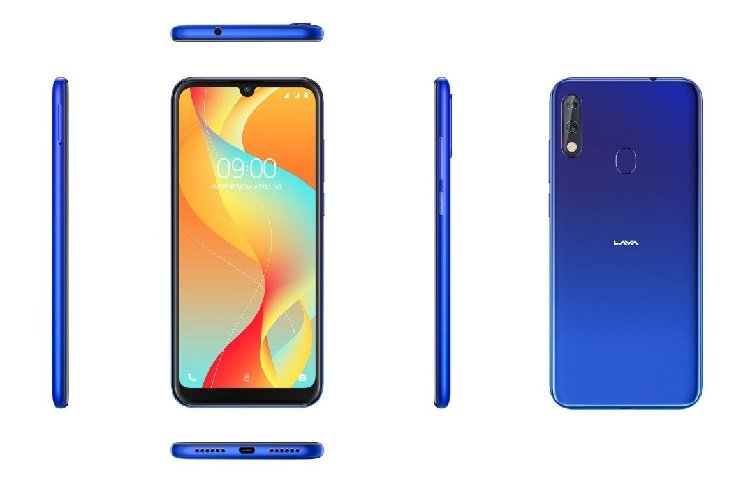
    Lava Z66 was launched in the country on 3 August, 2020. As for the color options, the Lava Z66 phone comes in Midnight Blue, Marine Blue, Berry Red colors. For the network and connectivity options, the smartphone offers 4G VoLTE, Wi-Fi, Mobile Hotspot, v4.2 Bluetooth, A-GPS, and microUSB 2.0. Sensors on the phone include accelerometer, ambient light sensor, proximity sensor, and fingerprint sensor. The Lava Z66 supports face unlock. Lava Z66 price in India starts at Rs. 7,777.


    Lava Z66 Key Specifications :

     Screen / Display
     15.44 cm (6.08 inch) HD+ Display
     RAM 3 GB
     Storage / Internal Memory
    32 GB (Expandable Up to 128 GB)
     Processor
    Octa Core, 1.6 GHz
     Operating System
    Android v10 (Q)
     Front Camera
    13 MP
    Rear Camera 13 MP + 5 MP
     Battery 3950 mAH


    General Details :

     Brand  Lava
     Model Z66
     Height 155.6 mm
     Width 73.5 mm
     Thickness 8.8 mm
     Weight 162 grams
    Colors
    Midnight Blue, Marine Blue, Berry Red
     Launch Date
    3 August, 2020


    Display Details :

     Display Type
     IPS LCD
     Aspect Ratio
    19 : 9
     Bezel-less Display
    Yes
     Pixel Density
    283 PPI
     Screen Size
    15.44 cm (6.08 inches)
     Screen Resolution
    1560 x 720 Pixels
     Touch Screen
    Capacitive Touchscreen, Multi Touch


    Camera Details :

     Main (Back) Camera Set Up
     Dual
    Image  Resolution 4128 x 3096 Pixels
     Flash LED
     Resolution 13 MP f/2.0 Primary Camera(1.12µm pixel size), 5 MP Depth Camera
     Auto Focus Yes
     Physical Aperture
    F 2.0
     Setting Exposure Compensation, ISO Control
    Camera Features
    Digital Zoom, Auto Flash, Face Detection, Touch to Focus
    Shooting Modes
    Continuous Shooting, HDR Mode, Burst Mode
    Video Recording
    1920 x 1080 @ 30 FPS
    Front Camera Set Up
    Single
    Resolution
    13 MP/f 2.2
    Physical Aperture
    F 2.2 Primary Camera (1.12µm pixel size)


    Network Connectivity :

     Sim 1
    4G Bands – TD-LTE 2300(band 40), FD-LTE 1800 (band 3), 3G Bands – UMTS 2100 / 900 MHz, 2G Bands – GSM 1800 / 1900 / 850 / 900 MHz, GPRS – Available, EDGE – Available
     Sim 2
    4G Bands – TD-LTE 2300(band 40), FD-LTE 1800 (band 3), 3G Bands – UMTS 2100 / 900 MHz, 2G Bands – GSM 1800 / 1900 / 850 / 900 MHz, GPRS – Available, EDGE – Available
     Sim Size
    Sim 1 – Nano, Sim 2 – Nano
     Wifi Yes, Wi-fi 802.11, b/g/n, Mobile Hotspot
     Bluetooth Yes, v4.2
     VOLTE Yes
     USB MSD, USB Charging, Micro USB 2.0
    Network Support 4G, 3G, 2G
    GPS Yes


    Special Features and Battery :

     FM Radio
     Yes
     Loudspeaker Yes
     Audio Jack
    3.5 mm
     Fingerprint Sensor
    Yes, Rear
     Other Sensors
    Light Sensor, Proximity Sensor, Accelerometer
     Battery Capacity
    3950 mAH
     Battery Type
    Li-Polymer
    Talktime
    Up to 16 Hours (3G) / 38 Hours (2G)


    Disclaimer : We Strive for accuracy and fairness. If you see something that doesn’t look right, please Contact Here, Comment below, Join Us on Twitter  Facebook  Koo  Instagram  Telegram  and  Youtube  or Mail us at info@ganganews.com

  • Redmi Note 9 Price, Specs and Review

    Redmi Note 9 Price, Specs and Review

    Xiaomi has launched the Redmi Note 9 on 24 July 2020 in three colours; Pebble Grey, Arctic White, and Aqua Green. It has rear mounted fingerprint scanner with the glossy finish and hole punch display. The front facing camera is in the upper left corner.


    The Redmi Note 9 has a 6.53 inch display with a full HD+ resolution and Corning Gorilla Glass 5 for protection. There are three variants of the Redmi Note 9; 4GB of RAM with 64GB of storage, 4GB of RAM with 128GB of storage, and 6GB of RAM with 128GB of storage. These variants are priced at Rs. 11,999, Rs, 13,499, and Rs. 14,999 respectively at launch. It offers expandable storage with a dedicated microSD card slot.


    Redmi Note 9 Key Specifications :

    Screen / Display  6.53 inch
    RAM 4 GB / 6 GB
    Storage / Internal Memory 64 GB / 128 GB
    Processor MediaTek Helio G85
    Operating System Android v10 (Q)
    Front Camera 13 MP
    Rear (Main) Camera 48 MP + 5 MP + 2 MP + 2 MP
    Battery 5020 mAH


    General Details :

    Brand  Xiaomi
    Model Redmi Note 9
    Height 161.4 mm
    Width 76.7 mm
    Thickness 8.7 mm
    Weight 200 grams
    Screen to Body Ratio 84.37 %
    Colors Pebble Grey, Arctic White, Aqua Green
    Launch Date 24 July 2020


    Display Details :

    Display Type  IPS LCD
    Aspect Ratio 19.5 : 9
    Bezel-less Display Yes, With Punch hole display
    Pixel Density 395 ppi
    Screen Size 6.53 inches (16.59 cm)
    Screen Resolution 1080 x 2340 Pixels
    Touch Screen Capacitive Touchscreen, Multi-touch
     Screen Protection
    Corning Gorilla Glass v5


    Camera Details :

    Main (Back) Camera Set Up  Quad
    Image Resolution 8000 x 6000 Pixel
    Flash LED
    Resolution 48 MP f/1.79 Primary Camera, 8 MP f/2.2, Wide Angle, Ultra-Wide Angle Camera, 2 MP f/2.4, Macro Camera, 2 MP f/2.4, Depth Camera
    Auto Focus Yes
    Physical Aperture F 1.79
    Setting Exposure compensation, ISO control
    Camera Features Digital Zoom, Auto Flash, Face detection, Touch to focus
    Shooting Modes Continuous Shooting Mode, HDR Mode, Burst mode
    Video Recording 3840×2160 @ 30 fps
    Front Camera Set Up Single
    Resolution 13 MP f/2.25 Primary Camera
    Physical Aperture F 2.25
     Video Recording
    1920×1080 @ 30 fps


    Network Connectivity :

    Sim 1
    4G Bands : TD-LTE 2300(band 40) / 2500(band 41)
    FD-LTE 2100(band 1) / 1800(band 3) / 900(band 8) / 850(band 5), 3G Bands : UMTS 1900 / 2100 / 850 / 900 MHz, 2G Bands : GSM 1800 / 1900 / 850 / 900 MHz , GPRS, EDGE
    Sim 2 4G Bands : TD-LTE 2300(band 40) / 2500(band 41)
    FD-LTE 2100(band 1) / 1800(band 3) / 900(band 8) / 850(band 5), 3G Bands : UMTS 1900 / 2100 / 850 / 900 MHz, 2G Bands : GSM 1800 / 1900 / 850 / 900 MHz , GPRS, EDGE
    Sim Size Sim 1 – Nano, Sim 2 – Nano
    Wifi Wi-Fi 802.11, a/b/g/n
    Bluetooth v5.0
    Wifi Features WiFi Direct, Mobile Hotspot, wifi Calling
    USB Mass storage device, USB charging
    Network Support 4G, 3G, 2G
    GPS Yes, with A-GPS, Glonass


    Performance Details :

    Chipset MediaTek Helio G85
    Processor Octa core (2 GHz, Dual core, Cortex A75 + 2 GHz, Hexa Core, Cortex A55)
    Architecture 64 Bit
    Graphics Mali-G52
    RAM 4 GB / 6 GB
    Boot Up Time 23 S


    Special Fatures and Battery :

    Loudspeaker Yes
    Audio Jack 3.5 mm
    Fingerprint Sensor Yes, Rear
    Other Sensors Light sensor, Proximity sensor, Accelerometer, Compass, Gyroscope
    Battery Capacity 5020 mAH
    Battery Type Li-ion
    Quick Charging
    Yes, 22.5W


    Disclaimer : We Strive for accuracy and fairness. If you see something that doesn’t look right, please Contact Here, Comment below, Join Us on Twitter  Facebook  Koo  Instagram  Telegram  and  Youtube  or Mail us at info@ganganews.com