Tag: Middle East Crisis

  • US and UK Launch Second Round of Strikes on Yemen

    US and UK Launch Second Round of Strikes on Yemen

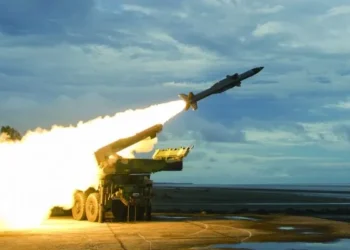
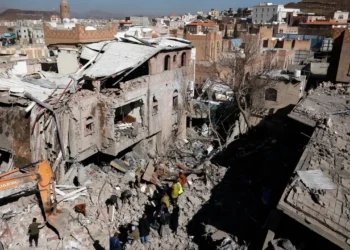
    The United States and Britain launched a second round of joint military strikes against Yemen’s Houthi rebels on Tuesday, responding to the rebels’ attacks on shipping in the Red Sea. The Iran-backed rebels have pledged to retaliate, raising concerns about a broader conflict directly involving Iran. Residents in the rebel-held capital Sanaa reported hearing the latest raids around midnight, targeting eight Houthi locations, according to a joint US-UK statement. In response, the Houthi rebels claimed 18 strikes across their territory. This comes after the US and British forces conducted an initial wave of strikes against the Houthi group earlier this month, with the US launching further air raids against missiles deemed as imminent threats to both civilian and military vessels.


    The Houthi rebels have persisted in their attacks on shipping, contributing to a growing crisis in the Middle East that is linked to the Israel-Hamas conflict. Fears of a broader war, potentially involving Iran, have heightened tensions in the region. The recent US-UK strikes targeted “eight Houthi targets in Yemen in response to the Huthis’ continued attacks against international and commercial shipping as well as naval vessels transiting the Red Sea,” as stated in a joint statement. The precision strikes aimed to disrupt and degrade the Houthi capabilities threatening global trade and maritime safety.


    The US Central Command provided details on the targets, stating that the strikes included missile systems and launchers, air defense systems, radars, and deeply buried weapons storage facilities. British Foreign Secretary David Cameron emphasized that the Houthi attacks on shipping had exceeded 12 incidents since the first round of joint strikes on January 11. Cameron stated, “What we have done again is send the clearest possible message that we will continue to degrade their ability to carry out these attacks and that we back our words and our warnings with action.”


    Despite the joint military action, the Houthi rebels remain defiant. The Houthi military spokesman, Yahya Saree, vowed a response, stating, “These attacks will not go unanswered and unpunished.” Saree listed 18 strikes in various provinces, including Sanaa, Hodeida, Taez, and Al-Bayda. Iranian Foreign Minister Hossein Amir-Abdollahian warned that the US-UK joint action is a “strategic mistake” and a threat to peace and security in the region. He conveyed a message to British Foreign Secretary Cameron during the World Economic Forum in Davos, emphasizing the potential consequences of the intensified conflict.


    A senior US military official provided insights into the strikes, explaining that a combination of precision-guided munitions from US and British aircraft, along with Tomahawk cruise missiles, were used. The official assured that there were no concerns about civilian casualties at the targeted sites, and the specific targeting aimed at disrupting Houthi capabilities threatening maritime vessels in the Red Sea, Bab al-Mandab, and the Gulf of Aden.


    On Monday, just before the joint military operation, the Houthi rebels claimed to have fired on a US military cargo ship off the coast of Yemen. However, the claim was promptly denied by a US defense official. The Houthi rebels initiated attacks on Red Sea shipping in November, justifying their actions by asserting that they targeted Israeli-linked vessels in support of Palestinians in Gaza. The Houthi rebels have expanded their declared targets to include US and British interests as legitimate targets.


    Beyond military action, the United States is employing diplomatic and financial pressure on the Houthi rebels. Last week, the US officially redesignated them as a “terrorist” organization, reversing the decision made soon after President Joe Biden took office. This move reflects an effort to apply additional pressure on the rebels through non-military means.


    The Houthi rebels, in response to the joint strikes, reiterated their commitment to “respond to any attack” on Yemen. They also expressed their intent to continue preventing Israeli ships from passing through the Gulf of Aden and the Red Sea until the end of the conflict in Gaza. The ongoing Israel-Hamas conflict, sparked by an unprecedented October attack by the Palestinian militant group, has led to a cycle of violence resulting in significant casualties on both sides.


    Israel responded with a relentless air and ground offensive that has caused numerous deaths, particularly among civilians in Gaza. The conflict has triggered regional unrest and violence involving Iran-backed groups in Lebanon, Iraq, Syria, and now Yemen. The US and UK joint military strikes against the Houthi rebels represent an escalation in response to their continued attacks on shipping, but the situation remains complex, with potential ramifications for regional stability and peace.

  • Pakistan Recalls Ambassador and Expels Iranian Envoy

    Pakistan Recalls Ambassador and Expels Iranian Envoy

    Pakistan has taken decisive diplomatic action by recalling its ambassador and expelling the Iranian envoy following a missile strike that resulted in casualties, including the tragic death of two children. The missile attack targeted bases belonging to the militant group Jaish al-Adl in Balochistan province, escalating tensions between the two neighboring nations.


    The missile strike, which occurred near Panjgur in southwest Balochistan, resulted in the death of two young girls and injuries to three other family members. The incident has been strongly condemned by Pakistan, describing it as an “unprovoked and blatant breach of sovereignty” by Iran. The missile strike has strained diplomatic relations between the two countries, leading to reciprocal measures, hence the measure of expulsion of the ambassador.


    A statement from Pakistan’s spokeswoman, Mumtaz Zahra Baloch, emphasized that the missile strike constitutes a violation of international law and the principles of the United Nations Charter. The Pakistani government views the attack as a serious breach of sovereignty, demanding accountability and adherence to diplomatic norms.


    The Iranian state media initially reported the missile strike, claiming that the paramilitary Revolutionary Guard targeted Jaish al-Adl bases. However, these reports were later withdrawn without explanation. While Tehran did not claim responsibility for the incident, Iranian Foreign Minister Hossein Amirabdollahian acknowledged during the World Economic Forum in Davos that Iran had carried out the attacks in Pakistan.


    The missile strike and its aftermath come at a time of heightened tensions in the Middle East, particularly amid the ongoing conflict in Gaza. The situation adds complexity to regional dynamics, and the international community is closely monitoring developments in the aftermath of the missile attack.


    The targeted bases belonged to Jaish al-Adl, a militant group operating in the region. The missile strike raises concerns about the potential for further escalation between Iran and Pakistan, two countries with historically complex relations. The incident comes as part of a broader Middle East crisis that has witnessed conflicts and geopolitical tensions and hence expelling the ambassador.


    The casualties resulting from the missile strike, especially the loss of innocent lives, have intensified the diplomatic fallout between Iran and Pakistan. The international community, including the United Nations, is expected to closely observe developments and potentially intervene to ease tensions and encourage diplomatic dialogue.


    The repercussions of this incident could have broader implications for regional stability, emphasizing the need for diplomatic efforts to prevent further escalation. As both countries grapple with the aftermath of the missile strike, the situation remains fluid, and diplomatic channels will play a crucial role in determining the path forward.

  • Biden: ‘Deep Sadness and Outrage’ Over Gaza Hospital Bombing

    Biden: ‘Deep Sadness and Outrage’ Over Gaza Hospital Bombing

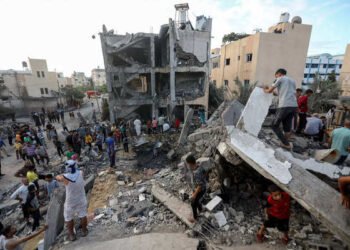
    President Biden’s visit to Israel, aimed at reaffirming the United States’ unwavering support for its ally and preventing the Israel-Hamas war from escalating into a broader regional conflict, was overshadowed by a tragic event. Just hours after his arrival, a devastating airstrike hit a Gaza Strip hospital, resulting in the loss of nearly 500 lives. The hospital bombing incident has sent shockwaves around the world and added to the grim toll of civilian casualties in the ongoing Israel-Hamas conflict.


    The attack on the Al Ahli Hospital in Gaza triggered a dispute between the parties involved, with Hamas blaming Israel for the tragedy, while the Israeli Defense Forces claimed that a missile misfired from the Islamic Jihad militant group was responsible for the casualties. The immediate aftermath of the strike saw horrifying scenes as the hospital’s medical staff struggled to cope with the influx of wounded and dismembered patients.


    During a meeting with Israeli Prime Minister Benjamin Netanyahu, President Biden expressed his profound sadness and outrage over the hospital explosion and bombing. He made it clear that he believed Hamas did not represent all Palestinians and that their actions had brought suffering to the Palestinian people.


    President Biden appeared to stand with Israel by stating, “Based on what I’ve seen, it appears as though it was done by the other team, not you.” However, he acknowledged that there was some uncertainty regarding the cause of the blast, saying, “There are a lot of people out there who aren’t sure what caused the blast.”


    Biden reiterated the United States’ commitment to supporting Israel, while Netanyahu emphasized his government and the Israeli Defense Forces’ determination to minimize civilian casualties. President Biden had initially planned to visit Jordan after his stop in Israel, but meetings with Arab leaders were canceled following the hospital explosion and bombing.


    President Biden’s remarks reflected the horrors that both Israelis and Palestinians have endured during the conflict. He stressed the need to find ways to provide life-saving assistance to innocent Palestinians caught in the midst of the crisis.


    While expressing his support for Israel, Biden also highlighted the suffering of the Palestinian people in Gaza. He stated that Hamas had “slaughtered” Israelis in an attack in October and described the harrowing experience of innocent Israelis, including children.


    Prime Minister Netanyahu expressed his gratitude for President Biden’s visit, describing it as “deeply, deeply moving.” He conveyed the appreciation of all Israelis and underscored the importance of the United States standing with Israel in the face of the ongoing conflict.


    In response, Netanyahu drew a clear line between the “forces of civilization and the forces of barbarism.” He emphasized Israel’s commitment to defeating Hamas and called for unity in the civilized world against the militant group.


    Meanwhile, Hamas accused the U.S. of being “complicit in the massacres” in Gaza and criticized the endorsement of the Israeli narrative by the U.S. administration.


    As the conflict continues, Israel is preparing for a potential ground invasion of Gaza in response to Hamas’ attacks. The toll of civilian casualties in Gaza remains distressingly high, with approximately 2,800 Palestinians reported killed by Israeli strikes, and an estimated 1,200 people believed to be buried under the rubble. The recent hospital blast at Al-Ahli has added to the tragedy, and a clear cause for the explosion is yet to be established. The international community continues to call for a ceasefire and a resolution to the conflict to prevent further loss of innocent lives.