Tag: lunar mission

  • Chandrayaan 3: Russian Consul General Expresses Anticipation

    Chandrayaan 3: Russian Consul General Expresses Anticipation

    Oleg Nikolayevich Avdeev, the Russian Consul General to South India, has eagerly expressed his anticipation for India’s Chandrayaan-3 lunar mission. He believes that the upcoming mission will not only be a significant milestone for India but also a great success that will contribute to the country’s fruitful lunar exploration program.


    Russian Consul conveyed his enthusiasm, stating, “Everybody in India and also myself are all eagerly waiting for tomorrow’s event in the lunar orbit. I am sure that it will be a success for the Indian lunar program and the rover will land safely and start functioning…” He also expressed confidence in the mission’s success, mentioning that the Chandrayaan-3 mission will undoubtedly yield positive outcomes, leading to more exploration on the moon.


    After Russia’s Luna-25 mission encountered difficulties, attention has shifted to India’s Chandrayaan-3, which is poised to make a soft landing on the moon’s surface on August 23, 2023, at approximately 1804 IST.


    The Indian Space Research Organisation (ISRO) has confirmed that the Chandrayaan-3 mission is proceeding as scheduled, with regular checks being conducted on the systems. ISRO shared the positive status update, stating, “Smooth sailing is continuing. The Mission Operations Complex (at ISRO) is buzzed with energy and excitement!”


    The landing operations will be telecasted live, starting at 5:20 PM IST on Wednesday. Viewers can watch the broadcast on various platforms, including the ISRO website, YouTube channel, Facebook, and public broadcaster DD National TV, beginning from 5:27 PM IST on the same day.


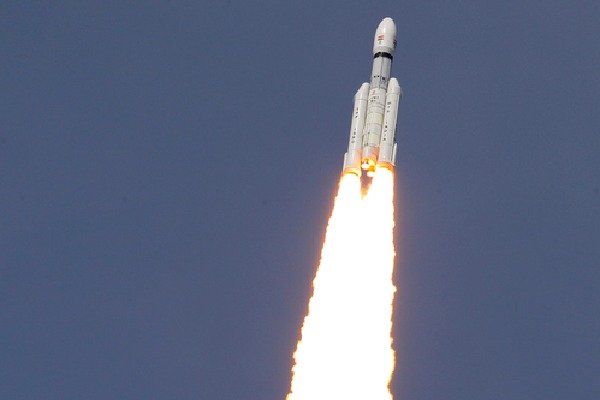
    The Chandrayaan-3 mission was launched by ISRO on July 14 from the Satish Dhawan Space Centre in Sriharikota, Andhra Pradesh. This marks India’s third lunar mission, with its objectives encompassing a safe and soft landing on the lunar surface, rover mobility on the moon, and in-situ scientific experiments. Notably, India will become the fourth country in the world, after the United States, Russia, and China, to achieve a soft landing on the moon. However, India will distinguish itself as the only nation to accomplish this feat on the lunar south pole.

  • Chandraayan Mission: ISRO Establishes Two-Way Communication

    Chandraayan Mission: ISRO Establishes Two-Way Communication

    The Indian Space Research Organisation (ISRO) achieved a significant milestone on Monday as it successfully established a two-way communication link between the Chandrayaan-2 orbiter and the Chandrayaan-3 lander module. In a social media post on ‘X’, ISRO announced the achievement with the message, “‘Welcome, buddy!’ Ch-2 orbiter formally welcomed Ch-3 LM. Two-way communication between the two is established. MOX has now more routes to reach the LM.”


    Chandrayaan-2, ISRO’s previous lunar mission, was launched in 2019. Although the lander’s soft landing attempt on the Moon’s surface failed, the orbiter continued to orbit the Moon successfully. Now, this orbiter has established a crucial connection with the Chandrayaan-3 lander module, named Vikram, which carries a rover.


    The significance of this communication connection lies in the enhancement of communication routes for the upcoming Chandrayaan-3 mission. With the orbiter’s established connection, the lander module is now connected to the ISRO headquarters through multiple channels, ensuring better communication and coordination during the mission.


    The Mission Operations Complex (MOX) at ISRO Telemetry, Tracking, and Command Network (ISTRAC) in Bengaluru played a vital role in establishing these communication links. The precise launch and orbital maneuvers of Chandrayaan-2 have extended the orbiter’s mission life to seven years.


    ISRO has also provided details about the anticipated landing of the Chandrayaan-3 lander module. According to the space agency, the lander is expected to touch down on the Moon’s surface around 6.04 pm on August 23. The live telecast of the landing event will commence at 5.20 pm and will be available on various platforms including the ISRO website, YouTube channel, Facebook, and DD National TV.


    The Chandrayaan-3 mission marks a significant step in India’s lunar exploration journey. The lander module, Vikram, is tasked with landing on the Moon’s south pole, a challenging terrain. Once landed, Vikram will deploy various payloads to conduct scientific experiments and studies. These payloads include instruments to measure temperature, thermal conductivity, seismic activity, plasma density, and more.


    The successful establishment of communication between the Chandrayaan-2 orbiter and the Chandrayaan-3 lander brings ISRO closer to achieving its lunar exploration objectives and contributes to the advancement of India’s space exploration endeavors.

  • Chandrayaan-3 Mission Reaches Crucial Milestone

    Chandrayaan-3 Mission Reaches Crucial Milestone

    The Chandrayaan-3 mission has marked a significant achievement as its Lander Module carrying the rover successfully separated from the Propulsion Module. This achievement brings the mission closer to its historic goal of achieving a soft landing on the lunar south pole, scheduled for 5.47 pm on Wednesday, August 23.


    Chandrayaan-3 is a follow-on mission to Chandrayaan-2 and holds the objectives of showcasing safe and soft landing on the lunar surface, rover mobility on the moon, and conducting in-situ scientific experiments.


    The mission carries added significance due to lessons learned from Chandrayaan-2, where ISRO’s lander ‘Vikram’ crashed during a soft landing attempt in 2019. According to ISRO Chairman S Somanath, the most critical aspect of the landing process involves transitioning the velocity of the lander from a horizontal to a vertical direction. This complex maneuver requires careful calculations and simulations to ensure a successful landing.


    Explaining the technical challenge, Somanath highlighted the need to shift the velocity of the lander from its horizontal orientation to a vertical one, which was a crucial point of failure in Chandrayaan-2. The Chandrayaan-3 mission addresses this challenge with improved calculations and simulations to ensure a successful landing.


    Unlike its predecessor, Chandrayaan-3’s Propulsion Module carries a significant payload named SHAPE (Spectro-polarimetry of HAbitable Planet Earth). This experimental payload aims to study Earth from the lunar orbit, analyzing spectro-polarimetric signatures in the near-infrared wavelength range. This addition enhances the scientific objectives of the mission, adding a unique dimension to India’s lunar exploration efforts.


    The successful completion of Chandrayaan-3’s mission would signify a major achievement for India’s space agency, ISRO. If the mission accomplishes a safe and soft landing on the moon’s surface, India will join the ranks of the US, China, and the former Soviet Union as one of the few countries to master the complex technology of lunar surface soft landings.


    The Chandrayaan-3 mission highlights India’s determination to overcome challenges and build upon its space exploration capabilities. It showcases the nation’s commitment to advancing scientific knowledge through space missions and contributing to humanity’s understanding of the lunar environment.

  • Russia Successfully Launches Lunar Moon Mission

    Russia Successfully Launches Lunar Moon Mission

    Russia has achieved a significant milestone in space exploration by successfully launching its inaugural moon-landing spacecraft after a gap of 47 years. The primary objective of the moon mission is to achieve a gentle landing on the lunar south pole, a region believed to contain valuable reservoirs of water ice.


    The recent lunar mission from Russia is in competition with India, which launched its Chandrayaan-3 lunar lander to space last month. This race is part of a larger global competition involving the United States and China, both of which have well-established lunar exploration initiatives focused on the moon’s southern region.


    The launch of the Luna-25 spacecraft took place from the Vostochny Cosmodrome, located 3,450 miles (5,550 km) east of Moscow. A Soyuz 2.1v rocket was used for the successful launch, which occurred at 2:11 a.m. Moscow time on Friday (1111 GMT on Thursday).


    According to Yuri Borisov, the head of Russia’s space agency Roscosmos, the lunar lander is expected to make contact with the Moon’s surface on August 21, slightly differing from the earlier projected landing date of August 23.


    The Luna-25 spacecraft, about the size of a small car, is designed to operate on the moon’s south pole for approximately one year. This region has gained attention due to the detection of traces of water ice in the shadowed craters by scientists at NASA and other space agencies.


    The success of this lunar moon mission holds significance for Russia, particularly in the context of Western sanctions imposed due to the Ukraine conflict. The mission also showcases Russia’s growing self-reliance in space exploration, a strategy that gained momentum after reduced collaborations with Western nations following the invasion of Ukraine in 2022.


    The moon mission is not only a technological endeavor but also serves as an expression of national power on the global stage for Russia. Historian Asif Siddiqi notes that Russia’s aspirations toward the moon are intertwined with various factors.


    While Neil Armstrong’s moonwalk gained global recognition in 1969, the Soviet Union’s Luna-2 mission in 1959 was the first spacecraft to reach the moon’s surface, and Luna-9 achieved the first soft landing in 1966. With this lunar mission, Russia is redirecting its focus toward lunar exploration after a period of concentrating on Mars and refraining from launching probes beyond Earth’s orbit since the dissolution of the Soviet Union in 1991.


    The Luna-25 spacecraft’s departure from Earth’s orbit was anticipated to occur around 3:30 a.m. Moscow time. This achievement marks a significant step in Russia’s reinvigorated space exploration endeavors.