Tag: Lawlessness

  • Arif Mohammed Khan Receives Extended Z Security Cover

    Arif Mohammed Khan Receives Extended Z Security Cover

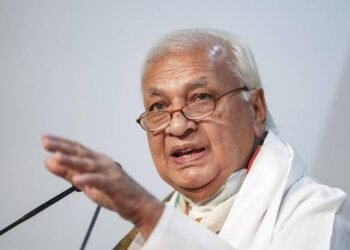
    In a dramatic turn of events in Kollam district, Kerala, Governor Arif Mohammed Khan found himself at the center of a contentious situation when he faced a black flag protest organized by members of the Students Federation of India (SFI), the student wing affiliated with the Communist Party of India (Marxist) or CPI(M). The protest unfolded in the midst of a broader conflict between the Raj Bhavan and the ruling Left Democratic Front (LDF) government in the state.


    The episode began with the SFI staging a demonstration, expressing their dissent against the Governor. In response, Governor Arif Mohammed Khan chose to confront the protesters directly. He disembarked from his vehicle, engaged with the agitating SFI members, and even took a seat on the roadside to make his position clear. During this impromptu interaction, Governor Khan did not shy away from criticizing Chief Minister Pinarayi Vijayan, accusing him of promoting lawlessness in the state.


    The incident occurred in Nilamel, a town approximately 40 kilometers from the state capital, Thiruvananthapuram. What started as a protest soon escalated into a face-off between the Governor and the protesting SFI members. Governor Khan emphasized that he was not staging a protest himself but rather waiting for the police to provide him with a copy of the First Information Report (FIR) he had demanded against the SFI activists involved in the demonstration.


    The standoff persisted for over two hours, with Governor Arif Mohammed Khan remaining seated on the roadside. His actions and statements during this time reflected his frustration with what he perceived as a breakdown of law and order in the state, attributing it to the policies of Chief Minister Pinarayi Vijayan.


    The situation eventually saw some resolution when the police presented Governor Khan with a copy of the FIR filed against 17 SFI activists. The FIR reportedly invoked non-bailable provisions of the law. Following the presentation of the FIR, Governor Khan chose to leave the location.


    This incident is the latest development in an ongoing power struggle between the Raj Bhavan, the official residence of the Governor, and the LDF government in Kerala. Tensions have been escalating, with disagreements and conflicts becoming increasingly public. The Governor’s decision to directly confront the protesters and express his discontent with the Chief Minister’s governance style adds a new dimension to the already strained relationship between the two entities.


    In the larger political context, Kerala has been witnessing a complex interplay of power dynamics, with the Governor’s role becoming pivotal. The SFI’s protest against Governor Khan reflects broader discontent among certain sections of the student community aligned with the Left, and it underscores the challenges faced by the Governor in maintaining a harmonious relationship with the state government.


    The Governor’s accusation of Chief Minister Pinarayi Vijayan promoting lawlessness raises serious questions about the functioning of the administration and the rule of law in the state. The public confrontation also highlights the deep-rooted ideological and political differences that continue to define the political landscape in Kerala.


    As the situation unfolds, it remains to be seen how the state government and the Raj Bhavan will navigate these contentious waters. The incident has once again brought the power struggle in Kerala to the forefront, prompting discussions about the appropriate roles and responsibilities of constitutional authorities and elected representatives in the state.

  • State of Emergency Declared in Papua New Guinea

    State of Emergency Declared in Papua New Guinea

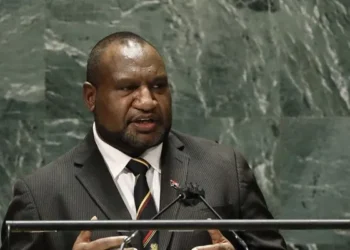
    Papua New Guinea plunged into chaos as Prime Minister James Marape declared a state of emergency in the wake of violent riots that resulted in 16 fatalities. The unrest erupted during a police and public sector protest over a perceived pay cut, which authorities attribute to an administrative glitch.


    The protest, initially focused on a pay-related grievance, quickly descended into lawlessness, with shocking scenes of thousands of people flooding the streets of the capital, Port Moresby. Television footage revealed widespread looting, and black smoke billowed over the city, highlighting the severity of the situation, hence the declaration of emergency.


    According to Australian state broadcaster ABC, nine people lost their lives in the rioting in Port Moresby, while seven were killed in Lae, a city in the northern region of the gold and copper-rich country.


    In response to the escalating crisis, Prime Minister Marape announced the suspension of key figures, including Papua New Guinea’s chief of police and top bureaucrats in the finance and treasury departments along with other restrictions in case of emergency. This move is part of a broader government review aimed at understanding the root causes of the riots.


    Marape, addressing reporters at a press conference, expressed concern over evidence of organized rioting. The review, he said, is crucial to ensuring the preservation of democracy and the rule of law in the country. Additionally, the prime minister revealed that approximately 1,000 military personnel were on standby to prevent further unrest.


    While violence in the capital subsided on Thursday, the government took swift action by deploying additional police to maintain order. However, the United States embassy in Port Moresby noted that tensions remained high, emphasizing the potential for a change in the relative calm.


    The riots also resulted in injuries to several Chinese citizens, with stores owned by Chinese nationals subjected to vandalism and looting, according to the Chinese embassy.


    Australian Prime Minister Anthony Albanese assured that the country’s high commission was closely monitoring the situation. Although Papua New Guinea has not formally requested assistance, Australia, with its established relationship, remains ready to provide support.


    The unrest comes at a challenging time for Papua New Guinea, where the police force has been grappling with a surge in violent crime over the past year. Prime Minister Marape has repeatedly emphasized the need to enhance security to attract foreign investment in the nation’s abundant gold and copper resources.


    The catalyst for the recent turmoil was a police strike triggered by the discovery of a reduction in their pay. The government swiftly moved to dispel rumors of a new tax on police, attributing the pay shortfall to an administrative error. Marape assured that corrective measures would be taken to rectify the issue.


    As the nation grapples with the aftermath of the violent riots, questions loom over its ability to restore order, address the grievances of the police force, and navigate the broader socio-political implications of this crisis. International attention and concern underscore the significance of stabilizing the situation in Papua New Guinea.