Tag: junta

  • Myanmar Attends ASEAN Meeting After Two Years

    Myanmar Attends ASEAN Meeting After Two Years

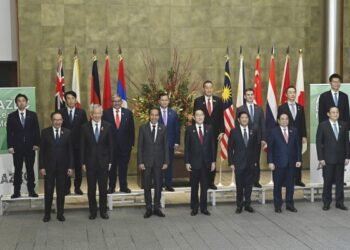
    Myanmar’s diplomatic isolation seems to be showing signs of change as the junta sent a senior official to participate in an ASEAN gathering in Laos on Monday. This marks the first time in over two years that Myanmar has attended a high-level meeting of the regional bloc, as the country grapples with the aftermath of a military coup in 2021 that ousted Aung San Suu Kyi’s civilian government.


    The Association of Southeast Asian Nations (ASEAN), consisting of 10 member states, has been at the forefront of diplomatic efforts to address the crisis in Myanmar. However, these efforts have yielded little progress, with a local monitoring group reporting over 4,400 casualties and nearly 20,000 people in detention due to the military crackdown on dissent.


    Since October 2021, ASEAN had taken a firm stance by excluding junta leaders from its summits and ministerial meetings. The military generals, in turn, had declined invitations to send “non-political” representatives. However, on Monday, senior foreign ministry bureaucrat Marlar Than Htike represented Myanmar at the talks in Luang Prabang, Laos.


    Laos Foreign Minister Saleumxay Kommasith welcomed Myanmar’s attendance after a two-year absence, expressing a cautious optimism about the engagement’s potential. He acknowledged the complex nature of the crisis, stating, “We are sure that the more we engage Myanmar, the more understanding… about the real situation that is happening in Myanmar.”


    Despite the positive tone, it remains uncertain whether Myanmar’s participation indicates a substantive shift in the ongoing crisis. The diplomatic efforts by ASEAN have faced challenges, with minimal progress since the adoption of a five-point peace plan in 2021, a plan Myanmar has yet to implement.


    Tensions within ASEAN over differing approaches to the Myanmar crisis have been evident, reflecting the broader discord among member states. Friction escalated last year, especially when Thailand’s previous government decided to engage with junta foreign minister Than Shwe.


    Laos, a one-party communist state with close ties to Myanmar’s ally China, currently chairs ASEAN, presenting an opportunity for renewed engagement. Saleumxay suggested that “many members welcome the participation of non-political representation from Myanmar.”


    The call for engagement aligns with a recent move by the Laotian special envoy of ASEAN, Alounkeo Kittikhoun, who met with junta leader Min Aung Hlaing in Naypyidaw. This meeting, focused on the government’s efforts to ensure peace and stability, preceded Myanmar’s representation at the ASEAN foreign ministers’ meeting.


    Despite these developments, representatives from Indonesia, Singapore, and the Philippines emphasized that Monday’s attendance did not signify a policy shift within ASEAN. Singaporean Foreign Minister Vivian Balakrishnan expressed cautious sentiments, stating it was “helpful” to have the Myanmar representative but refraining from optimism about the junta’s commitment to the five-point peace deal.


    One critical aspect highlighted during the meeting was the continued need for humanitarian aid to Myanmar. Laos commended efforts led by Thailand for humanitarian assistance, emphasizing the collective will of ASEAN member countries to support Myanmar’s people effectively.


    Myanmar’s participation in the ASEAN meeting, though symbolic, raises questions about the prospects of diplomatic breakthroughs amid the ongoing crisis. While some members express optimism, challenges persist, and the impact of this engagement on the ground remains uncertain. The need for humanitarian aid underscores the urgency of addressing the multifaceted issues faced by Myanmar’s population.

  • Arakan Army Captures Town and Outposts

    Arakan Army Captures Town and Outposts

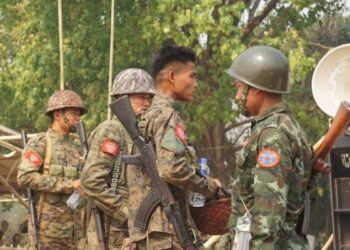
    In a significant escalation of tensions in Myanmar, the Arakan Army (AA), an armed ethnic minority group, has claimed to capture a town and multiple junta outposts near the country’s border with Bangladesh and India. This development marks another setback for the embattled military junta that seized power in a coup in 2021.


    Clashes have been ongoing in Myanmar’s western Rakhine and Chin states since November when the Arakan Army attacked security forces, ending a ceasefire that had largely held since the 2021 coup. The Arakan Army is one of several armed ethnic minority groups in Myanmar that have been in conflict with the military for decades, seeking autonomy and control over valuable resources.


    The latest incident involves the capture of the town of Paletwa in Chin state, situated approximately 20 kilometers from the Bangladesh border. Paletwa is strategically located on the Kaladan River, a key area for an infrastructure initiative backed by New Delhi that aims to link India’s landlocked northeast to the Bay of Bengal.


    On Sunday, the Arakan Army released images claiming to show its fighters outside the police station and general administration office in Paletwa. According to their statement, they have taken control of the entire Paletwa township, which had a population of over 64,000 people according to the 2014 census.


    In addition to the town, the Arakan Army asserts that it has captured six military bases along the border with India’s Mizoram state. As of now, these claims have not been independently verified by media outlets.


    The situation adds to the complexity of conflicts in Myanmar, where various ethnic groups have been seeking autonomy and facing off against the military junta. The Arakan Army, primarily composed of ethnic Rakhine Buddhists, has been in conflict with the military for years.


    In October, an alliance comprising the Arakan Army and two other ethnic minority groups initiated a joint offensive in Myanmar’s northern Shan state. The alliance captured towns and seized crucial trade hubs on the China border. Last week, the alliance announced a ceasefire mediated by China in Shan state after months of conflict, marking a significant development and posing a substantial challenge to the military junta.


    The capture of Paletwa and military outposts along the India-Myanmar border is likely to raise concerns about regional stability and security. It comes at a time when Myanmar is already grappling with internal conflicts, a military junta facing resistance from various quarters, and a refugee crisis.


    The Arakan Army’s actions not only highlight the ongoing volatility in Myanmar but also have potential implications for neighboring countries, especially India and Bangladesh. The proximity of these conflicts to the borders of India and Bangladesh adds a layer of complexity, and these nations may face challenges related to security, refugees, and potential spillover effects.


    For India, which has been involved in infrastructure projects in the region, including the Kaladan Multi-Modal Transit Transport Project, the conflict near the border is of significant concern. The strategic implications of instability in Myanmar could impact India’s plans for regional connectivity and influence.


    Bangladesh, which already hosts a substantial number of Rohingya refugees from Myanmar, may experience additional pressures if conflict-induced displacement increases. The international community, including neighboring countries and regional organizations, will likely closely monitor the situation and assess its impact on stability and security in the region.


    As the Arakan Army asserts control over Paletwa and military outposts, questions arise about the response of the Myanmar military junta and the potential for further escalation. The dynamics of Myanmar’s internal conflicts remain complex, with various ethnic groups seeking autonomy and the military attempting to assert control.


    The international community’s role in addressing the root causes of these conflicts and facilitating dialogue for a sustainable resolution becomes crucial. The situation in Myanmar underscores the need for diplomatic efforts, regional cooperation, and a focus on human rights to bring about stability and peace in the country.


    In the coming days, the evolving situation in Paletwa and its implications for the broader region will be closely watched. The international community, including neighboring countries and organizations, may need to collaborate to address the multifaceted challenges posed by the conflicts in Myanmar and work toward a comprehensive and lasting solution.