Tag: Jharkhand

  • IMD Issues Alerts for Heavy Rain, Snowfall, Heat Waves

    IMD Issues Alerts for Heavy Rain, Snowfall, Heat Waves

    The India Meteorological Department (IMD) has issued a series of weather alerts across various regions of the country, warning of heavy rain, snowfall, heat waves, and hailstorms. These alerts are crucial for residents and authorities to take necessary precautions and prepare for any adverse weather conditions.


    In Jammu and Kashmir and Himachal Pradesh, an orange alert has been issued for heavy rain and snowfall on the 29th and 30th of March. This alert indicates the likelihood of significant precipitation, which could lead to disruptions in transportation, potential flooding, and hazardous road conditions, especially in hilly areas.


    Similarly, in Ladakh and parts of Jammu and Kashmir, isolated heavy rainfall or snowfall is expected on the same days. These regions often experience harsh winter weather, and such alerts are essential for residents and travelers to take appropriate safety measures.


    Moving to North Interior Karnataka and Vidarbha, IMD has issued a yellow alert for heatwave conditions. With temperatures soaring, residents are advised to stay indoors during peak hours, stay hydrated, and avoid prolonged exposure to the sun. Heat waves can pose serious health risks, especially to vulnerable populations such as the elderly and young children.


    Recent temperature observations from various regions across India highlight the severity of the heatwave conditions. Places like Akola in Maharashtra, Malegaon in Maharashtra, Phaladi in Rajasthan, Amreli in Gujarat, and Nandyal in Andhra Pradesh have recorded high temperatures, further emphasizing the importance of staying cool and hydrated.


    In addition to heatwave alerts, the IMD has also issued warnings for hailstorms in Punjab, Himachal Pradesh, Jammu & Kashmir, Uttarakhand, Haryana, Chandigarh, and Punjab. Hailstorms can cause damage to crops, property, and vehicles, posing risks to life and livelihoods. Residents in these areas are advised to take precautions and stay indoors during hailstorm warnings.


    The IMD has also predicted rainfall and thunderstorm activity over Northwest India from the 28th to the 31st of March. Isolated heavy falls are expected over the Western Himalayan Region on the 29th and 30th of March, which could lead to localized flooding and landslides in susceptible areas.


    In the northeastern states of Assam and Meghalaya, isolated heavy rainfall is forecasted from the 30th of March to the 1st of April. There is a possibility of very heavy falls in Arunachal Pradesh, Assam, and Meghalaya on the 31st of March, raising concerns about potential flooding and landslides in these regions.


    Gangetic West Bengal and Odisha are also expected to experience isolated light to moderate rainfall with thunderstorms and lightning from the 28th of March to the 1st of April. Similarly, Bihar and Jharkhand may experience light to moderate rainfall with thunderstorms and lightning on the 30th and 31st of March.


    In the national capital, Delhi, the Regional Weather Forecasting Centre (RWFC) has predicted a generally cloudy sky with very light rain and thunderstorms in some areas. The maximum and minimum temperatures are likely to settle around 36 degrees Celsius and 21 degrees Celsius, respectively. Residents are advised to stay updated with the latest weather forecasts and take necessary precautions to stay safe during adverse weather conditions.


    Overall, these weather alerts related to snow, rain and heat waves issued by the IMD serve as crucial information for residents, authorities, and disaster management agencies to prepare and respond effectively to potential hazards posed by heavy rain, snowfall, heatwaves, hailstorms, and other extreme weather events across India.

  • Spanish Woman Gang-Rape Case in Jharkhand

    Spanish Woman Gang-Rape Case in Jharkhand

    The harrowing incident of a Spanish woman allegedly gang-raped by seven men in Jharkhand’s Dumka district has sent shockwaves across the nation. The victim, a travel vlogger, shared shocking details of the ordeal in the FIR report, revealing the brutality and trauma she endured during the attack. According to reports from The Indian Express, the woman recounted being threatened with a dagger, physically assaulted with kicks and punches, and repeatedly raped over a span of nearly two and a half hours.


    The incident took place on March 1st when the 28-year-old woman and her husband were spending the night in a tent at Kurumahat in the Hansdiha police station area. Recounting the events leading up to the assault, the victim mentioned that they chose the location for its calm and scenic beauty, believing it to be safe for their overnight stay. However, their peaceful night turned into a nightmare when a group of assailants attacked them, leaving the woman traumatized and severely injured.


    In her statement to the police, the victim described how the assailants quarreled with her husband before assaulting and tying him up. She recalled being forcibly grabbed and thrown to the ground, where she was subjected to repeated acts of violence and sexual assault by the seven perpetrators. The attackers, whom she described as slightly intoxicated, also robbed the couple of their personal belongings, including cash, credit cards, and valuables.


    The FIR filed by the victim paints a grim picture of the horrific ordeal she endured, shedding light on the brutality and callousness of the assailants. The incident has sparked outrage and condemnation from across the country, with demands for swift and stringent action against the perpetrators.


    Despite the traumatic experience, the victim displayed remarkable resilience and courage, expressing her gratitude towards the people of India for their kindness and hospitality. Speaking to reporters before leaving for Nepal with her husband, she emphasized that her ordeal should not reflect negatively on the people of India, whom she described as “nice” and “kind.” She affirmed her resolve to continue her world tour, undeterred by the heinous act of violence she experienced.


    In response to the incident, the Jharkhand Police have arrested five additional suspects, bringing the total number of apprehended individuals to eight. The authorities have vowed to conduct a thorough investigation, leveraging the assistance of the Criminal Investigation Department (CID) and forensic experts to ensure justice is served swiftly. Dumka’s Superintendent of Police, Pitamber Singh Kherwar, reiterated the commitment to delivering stringent punishment to the accused through a speedy trial.


    The case underscores the urgent need for greater efforts to combat sexual violence and ensure the safety and security of women in India. It serves as a stark reminder of the pervasive challenges of gender-based violence and the imperative for collective action to address systemic issues and promote a culture of respect, equality, and dignity for all individuals. As the nation grapples with the aftermath of this appalling crime, there is a renewed call for meaningful reforms and measures to prevent such atrocities in the future.

  • Spanish Tourist Gang-Raped in Jharkhand

    Spanish Tourist Gang-Raped in Jharkhand

    The recent gang-rape of a Spanish tourist while traveling through Jharkhand with her husband has sent shockwaves across the globe, drawing widespread condemnation and sparking a heated debate on social media platforms. The incident, which occurred on Friday night in the Dumka district of Jharkhand, has reignited concerns about the safety of women in India and raised questions about the effectiveness of measures to prevent such heinous crimes.


    According to reports, the couple was camping in the Dumka district when they were attacked by a group of assailants. Three individuals have been arrested in connection with the brutal assault, while a manhunt is underway to apprehend the remaining perpetrators. The incident has once again highlighted the urgent need for stronger measures to address violence against women and ensure their safety and security.


    The incident received extensive coverage on foreign media platforms, drawing attention to the prevalence of sexual violence in India. In response to the incident, NCW chief Rekha Sharma engaged in a heated social media debate with US-based writer David Josef Volodzko. The exchange underscored the deep divisions and differing perspectives on the issue of women’s safety in India.


    Volodzko’s initial tweet, in which he expressed concern about the level of sexual aggression he witnessed while living in India, prompted a sharp response from Sharma. She urged him not to “defame” the entire country and questioned whether he had reported the incident to the police. Sharma emphasized that India takes the safety of women very seriously and called for responsible reporting of such incidents.


    However, Volodzko countered Sharma’s assertion, pointing out instances where the NCW had faced criticism for its handling of complaints filed by women’s rights groups. He accused Sharma of failing to address credible allegations of violence against women and criticized her for dismissing concerns raised by individuals like himself.


    The debate between Sharma and Volodzko reflects the broader discourse surrounding gender-based violence in India and the challenges faced in addressing this issue effectively. While the Indian government has introduced various legislative measures and initiatives aimed at enhancing the safety and security of women, incidents of sexual violence continue to occur with alarming frequency.


    The gang-rape of the Spanish tourist has once again underscored the urgent need for concerted efforts to combat sexual violence and ensure justice for survivors. It has also highlighted the importance of holding perpetrators accountable for their actions and addressing the underlying factors that contribute to such crimes.


    In response to the incident, the National Commission for Women condemned the gang-rape and called for a swift and thorough investigation. The commission emphasized the importance of taking concrete steps to prevent violence against women and ensure their safety in public spaces.


    Moving forward, it is imperative for authorities to take proactive measures to address the root causes of gender-based violence and create a culture of respect and equality. This includes strengthening law enforcement, improving access to support services for survivors, and promoting gender-sensitive education and awareness programs.


    Ultimately, the gang-rape of the Spanish tourist serves as a stark reminder of the challenges that remain in combating sexual violence and ensuring the safety and security of women in India. It is incumbent upon all stakeholders – government agencies, civil society organizations, and individuals – to work together to address this pervasive and deeply entrenched issue. Only through collective action and sustained efforts can meaningful progress be made towards creating a society where every woman can live free from fear and violence.

  • Hemant Soren Alleges Conspiracy, Involvement in His Arrest

    Hemant Soren Alleges Conspiracy, Involvement in His Arrest

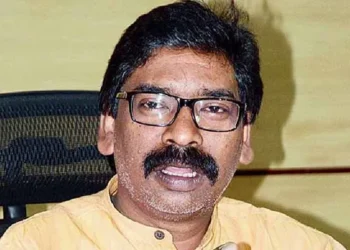
    Former Jharkhand Chief Minister and Jharkhand Mukti Morcha (JMM) leader Hemant Soren, on February 5, alleged that the Raj Bhavan was complicit in his arrest following a “conspiracy” orchestrated by the Centre. Speaking in the Jharkhand assembly ahead of the floor test, Soren expressed his concerns, stating, “Raj Bhavan was instrumental in my arrest after a conspiracy hatched by the Centre.”


    Soren went on to describe the events of January 31 as a “black night” and a “black chapter” added to the country’s democracy. He claimed that it was the first time in the country’s history that a chief minister was arrested inside the Raj Bhavan. “I think Raj Bhavan has collaborated in this episode,” added Soren.


    The former Chief Minister, who was in the custody of the Enforcement Directorate (ED), was allowed by a special PMLA (Prevention of Money Laundering Act) court to participate in the trust vote. Speaking about his arrest, Soren alleged a planned conspiracy dating back to 2022. “They have been planning this January 31 episode for a long time, since 2022. They were cooking this up in low flame for a long time. But this dish was not ready to be cooked. However, they served the half-cooked dish for themselves, and they arrested me,” claimed Soren.


    Expressing surprise at the way the episode was planned, Soren emphasized his Adivasi background and lack of familiarity with certain rules and procedures. However, he asserted, “The ability to distinguish between right and wrong is there in every human and every animal.”


    During his address in the Assembly, Hemant Soren challenged the Bharatiya Janata Party (BJP) to substantiate corruption charges against him. He boldly stated, “I challenge the BJP to prove corruption charges against me. If proved, I will resign from politics.” Soren’s arrest came in the backdrop of a money laundering case, leading to the JMM legislature party leader, Champai Soren, taking oath as the Chief Minister on February 2.


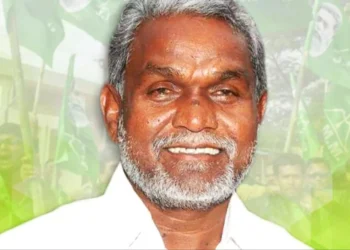
    In response to the ongoing developments, the current Chief Minister, Champai Soren, accused the Central government of misusing agencies. He highlighted that Hemant Soren received a mandate in 2019 and questioned the arrest of a sitting Chief Minister in a land scam case. Champai Soren remarked that there is a historical pattern of suppressing tribal leadership whenever efforts are made to empower the tribal community in Jharkhand. The political dynamics in Jharkhand continue to unfold as the state navigates the aftermath of Hemant Soren’s arrest and the subsequent floor test.

  • Jharkhand CM Hemant Soren Sent to Judicial Custody

    Jharkhand CM Hemant Soren Sent to Judicial Custody

    Former Jharkhand Chief Minister Hemant Soren was sent to judicial custody for one day on Thursday in connection with a money laundering case. The Enforcement Directorate (ED) had taken him into custody on Wednesday in connection with an alleged land scam linked to money laundering. Advocate Manish Singh revealed that a demand for a 10-day remand was put forward, but the order has been reserved for the next hearing scheduled on Friday, February 2.


    The arrest of Hemant Soren has created a political upheaval in Jharkhand, reminiscent of the recent political drama in Bihar. The ED’s actions have led to a situation where there is currently no Chief Minister in the state. The ruling Jharkhand Mukti Morcha (JMM)-led alliance is in talks with the Governor to address the confusion and uncertainty.


    Champai Soren, a senior JMM leader, has been proposed as the new Chief Minister by the ruling alliance. However, despite having the support of 47 MLAs, the alliance is awaiting an invite from the Raj Bhavan to form the new government. The delay in the swearing-in ceremony has raised concerns and drawn parallels with the recent political developments in Bihar.


    The political crisis in Jharkhand began with Hemant Soren’s arrest by the ED. The agency grilled him for seven hours in connection with a money laundering case linked to an alleged land scam. The arrest followed the resignation of Hemant Soren as the Chief Minister, and the ruling alliance swiftly proposed Champai Soren as the successor.


    In a video message recorded just before his arrest, Hemant Soren claimed that the ED was arresting him in a planned manner on matters not related to him. He also lodged an FIR against ED personnel, alleging that the agency tried to tarnish his image by conducting raids at his Delhi residence.


    Despite the proposal for a new Chief Minister, the JMM-led alliance is facing challenges in taking prompt action. The delay has prompted discussions about a potential constitutional crisis in the state, with questions raised about the unnatural situation of a state without a Chief Minister.


    The situation in Jharkhand has triggered reactions from various quarters. Members of the Opposition accuse the Bharatiya Janata Party (BJP) of using agencies to destabilize governments, while the BJP maintains that the ED’s action of asking the CM to judicial custody is justified.


    The political uncertainty in Jharkhand is expected to continue, and the Supreme Court is set to hear Hemant Soren’s plea against his arrest in the money laundering case. As the state grapples with a constitutional crisis and political turmoil, the developments are closely watched for their impact on the future political landscape.

  • Champai Soren: The ‘Jharkhand Tiger’ Takes Charge as CM

    Champai Soren: The ‘Jharkhand Tiger’ Takes Charge as CM

    Jharkhand Chief Minister Hemant Soren resigned amidst concerns of potential arrest by the Enforcement Directorate (ED) in a money laundering case. The ED had recently conducted a search at his Delhi residence, seizing a BMW car and ₹36 lakh in cash. In a late-night development, the Jharkhand Mukti Morcha (JMM) and MLAs supporting the Soren government elected senior cabinet minister Champai Soren as the leader of the legislative party and nominated him for the Chief Minister post.


    Champai Soren, also known as the ‘Jharkhand Tiger,’ is a senior minister in the Hemant Soren government and the eldest son of Simal Soren, a farmer from Jilinggoda village in the Saraikela-Kharsawan district. He actively participated in the Jharkhand movement in the late 90s alongside Shibu Soren, earning him the moniker ‘Jharkhand Tiger.’ Despite receiving education up to the 10th grade from a government school and getting married at a young age with four sons and three daughters, Champai Soren emerged as a prominent political figure.


    Starting his political career by becoming an independent MLA through a by-election on the Saraikela seat, Champai Soren gained experience and recognition. He was later appointed as a cabinet minister in the BJP government led by Arjun Munda, holding important ministries from September 11, 2010, to January 18, 2013. Following the President’s rule, when Hemant Soren formed a government in the state, Champai Soren assumed the role of Minister of Food and Civil Supplies and Transport.


    The sudden change in leadership comes in the backdrop of the ED’s actions against Hemant Soren and the subsequent decision to elect Champai Soren as the new Chief Minister. As Jharkhand navigates this transition, Champai Soren’s experience in both governance and political movements will play a crucial role in leading the state through this period of change.

  • CM Hemant Soren Allegedly Absconds Amidst ED Summons

    CM Hemant Soren Allegedly Absconds Amidst ED Summons

    Jharkhand Chief Minister Hemant Soren is allegedly missing after an Enforcement Directorate (ED) team visited his Delhi residence as part of an ongoing money laundering investigation related to an alleged land fraud case. The ED had issued fresh summons, requesting Soren’s participation in questioning scheduled for January 29. The unexpected development has raised concerns about the chief minister’s whereabouts and has prompted criticism from political opponents.


    State BJP president Babulal Marandi took to X (formerly Twitter) to claim that Hemant Soren has been absconding for the last 18 hours. According to Marandi, media sources suggest that Soren, wearing slippers and covering his face with a sheet, ran away from his Delhi residence on foot late at night. The State BJP president added that Ajay Singh, a security personnel from the special branch accompanying Soren to Delhi, is also missing. Both their mobile phones have been switched off, leading to a search operation by the ED and Delhi Police. Marandi criticized the security lapse, calling it a gross negligence regarding the security of the chief minister.


    The ED’s investigation revolves around an alleged “huge racket of illegal change of ownership of land by the mafia” in Jharkhand. The federal agency had previously questioned Hemant Soren at his official residence in Ranchi on January 20 in connection with the case. Fresh summons were issued for further questioning on either January 29 or January 31.


    Official sources have claimed that Hemant Soren is “missing” and cannot be contacted by the federal agency. During the search conducted at Soren’s residence, the ED seized a Haryana-registered BMW car and recovered some documents. The investigation has already led to the arrest of 14 individuals, including 2011-batch IAS officer Chhavi Ranjan, who served as the director of the state’s Social Welfare Department and deputy commissioner of Ranchi.


    The ED’s actions have heightened political tensions in Jharkhand, with the ruling party and the opposition exchanging criticisms. The sudden disappearance of the chief minister amidst ED summons has become a focal point for political discussions. The BJP’s accusations of Soren’s absconding and the subsequent search operations have added a layer of complexity to the ongoing investigation.


    While concerns about the chief minister’s whereabouts are growing, it is essential to await official statements and updates from law enforcement agencies. The case underscores the broader issue of corruption and illegal activities in land transactions, raising questions about the involvement of political figures. As investigations unfold, the political landscape in Jharkhand may witness further developments, impacting the state’s governance and public perception.


    The ED’s pursuit of individuals involved in the alleged land fraud case signals a commitment to addressing corruption and criminal activities. However, the manner in which the investigation unfolds, especially concerning the chief minister, will have significant implications for the state’s political dynamics. As the situation develops, clarity on Soren’s status and the outcome of the ED’s inquiries will shape the narrative around governance and accountability in Jharkhand.

  • ED to Question Jharkhand CM Hemant Soren at His Residence

    ED to Question Jharkhand CM Hemant Soren at His Residence

    In a significant development, the Enforcement Directorate (ED) has intensified its investigation into the ‘illegal mining case’ involving Jharkhand Chief Minister Hemant Soren. The ED has summoned the Chief Minister for the eighth time, marking a week of heightened scrutiny. Recent reports indicate that the central probing agency is set to question him at his official residence in Ranchi on January 20. This move has sparked reactions, with increased security measures and protests by Jharkhand Mukti Morcha (JMM) workers outside the Chief Minister’s residence.


    The Background:

    The ‘illegal mining case’ has been a persistent concern, leading to multiple summonses for Chief Minister Hemant Soren. The ED has been actively investigating alleged money laundering linked to this case, raising questions about the financial aspects surrounding the mining activities.


    ED’s Approach:

    The ED, which has previously summoned Chief Minister Soren’s press advisor, Abhishek Prasad, is now shifting its focus to question the Chief Minister directly. The central agency had issued a summons for Prasad to join the investigation on January 16. However, the attention has now turned to Chief Minister Soren, with the ED teams entering his official residence in Ranchi on Saturday.


    Security Measures:

    The anticipation of the ED’s visit has prompted heightened security measures in and around CM Soren’s official residence and various areas in Ranchi. Rajkumar Mehta, Superintendent of Police in Ranchi, emphasized the deployment of heavy forces in key locations, ensuring the safety of citizens and cautioning against any untoward incidents. The move indicates the sensitivity and potential impact of the ongoing investigation on the state’s political landscape.


    JMM Worker Protests:

    As news of the ED’s visit to the Chief Minister’s residence spread, several JMM workers gathered and raised slogans against the ED probe. The political ramifications of the investigation are becoming evident, with party supporters expressing their solidarity with Chief Minister Soren. The protests underscore the tense atmosphere surrounding the case and its implications for the political landscape in Jharkhand.


    Chief Minister’s Response:

    In response to the summons, Chief Minister Hemant Soren wrote to the ED, offering to have his statement recorded in the land scam case at his official residence on January 20. This strategic move could be seen as an attempt to manage the optics of the situation while cooperating with the investigation. The Chief Minister has consistently maintained his innocence and cooperation with the legal processes.


    ED’s Investigation Trajectory:

    The ED’s investigation has been unfolding in stages, with the central agency focusing on various individuals connected to the case. The summoning of the Chief Minister and his press advisor indicates a widening scope of the probe, delving into financial transactions and potential money laundering activities related to the alleged illegal mining.


    Legal and Political Implications:

    The repeated summons and the ED’s scrutiny of top political figures in Jharkhand have legal and political implications. The investigation could impact the political landscape in the state, potentially influencing public perception and electoral dynamics. The legal outcomes will also determine the future trajectory of the ‘illegal mining case’ and its consequences for those involved.


    As the Enforcement Directorate continues its questioning and investigation into the ‘illegal mining case’ involving Jharkhand Chief Minister Hemant Soren, the political and legal landscape in the state undergoes significant shifts. The heightened security measures, protests by party workers, and the Chief Minister’s cooperation with the ED indicate the gravity of the situation. The unfolding events will shape the narrative around the case, with potential ramifications for Jharkhand’s political scenario. As the investigation progresses, it remains to be seen how the legal proceedings and political responses evolve, creating a dynamic environment with implications beyond the immediate case at hand.

  • INDIA Alliance Protests in Jharkhand Against Manipur Incident

    INDIA Alliance Protests in Jharkhand Against Manipur Incident

    The INDIA alliance protest is set to organize statewide protests in Jharkhand on Tuesday, August 2, in response to the disturbing Manipur viral video incident, wherein two women were paraded naked in the strife-torn northeastern state. Alongside condemning the incident, the opposition bloc will also call for the implementation of President’s Rule in Manipur.


    State Congress chief Rajesh Thakur informed media personnel, as quoted by PTI, that demonstrations will be held near Raj Bhavan in Ranchi and other district collectorates on August 1 to voice their opposition against the heinous act in Manipur. Furthermore, the opposition leaders plan to submit a memorandum to the President via the Jharkhand governor, urging immediate imposition of President’s Rule in the northeastern state.


    Thakur strongly criticized the BJP-led double-engine government, holding them responsible for the escalating violence in Manipur. He accused both the Central government and Manipur’s leadership of failing to prevent crimes against women in the region, stressing that the INDIA alliance cannot tolerate further assaults on women in Manipur.


    The decision to stage protests and demand President’s Rule was made during a meeting attended by prominent figures, including Parliamentary Affairs Minister Alamgir Alam, senior Congress leader Bandhu Tirkey, Rajya Sabha MP from JMM Vijay Hansda, senior JMM leader Vinod Kumar Pandey, Jharkhand JD (U) president Khiru Mahto, RJD’s Rajesh Yadav, CPI’s Ajay Singh, and Janaradan Singh from CPI (ML).


    The ongoing ethnic clashes in Manipur began on May 3, following a ‘Tribal Solidarity March’ held in the hill districts to protest against the Meitei community’s request for Scheduled Tribe (ST) status. Unfortunately, the violent confrontations have resulted in over 160 fatalities and several hundred injuries.


    Manipur’s population comprises Meiteis, representing around 53% of the total population and primarily residing in the Imphal Valley, and Tribals, specifically Nagas and Kukis, who constitute slightly over 40% of the population and live in the hill districts.