Tag: Israel-Gaza conflict

  • Netanyahu Rejects Hamas Ceasefire Proposal

    Netanyahu Rejects Hamas Ceasefire Proposal

    In a significant setback to diplomatic efforts aimed at halting the Israel-Gaza conflict, Prime Minister Benjamin Netanyahu dismissed Hamas’ proposals for a ceasefire and hostage deal in Gaza as “delusional,” as per CNN’s report.


    During a briefing on Wednesday, Netanyahu asserted, “We haven’t agreed to anything. We have not accepted any of Hamas’ delusional demands, including the release of terrorists with blood on their hands.”


    Netanyahu emphasized that there has been no commitment on Israel’s part, highlighting the necessity for negotiation and a structured process. He expressed skepticism about Hamas’ sincerity in engaging in meaningful dialogue, stating, “From what I see from Hamas at the moment, negotiation is not happening.”


    Israel’s objective, according to Netanyahu, remains “complete victory,” asserting that the country will settle for nothing less. He conveyed optimism about the attainability of this victory, asserting that it is not a matter of years or decades but of months.


    Netanyahu’s stance deals a blow to US Secretary of State Antony Blinken’s efforts as he visits the region to facilitate an end to the violence. Despite this, Netanyahu did not entirely rule out the possibility of further discussions.


    Meanwhile, Hamas spokesperson Osama Hamdan announced in a news conference in Beirut that the organization would dispatch a delegation to Cairo to follow up on their proposals for the hostage and ceasefire arrangements. Hamdan expressed the delegation’s commitment to achieving the best possible outcomes.


    In a separate development, Blinken met with Prime Minister Netanyahu in Tel Aviv on Wednesday, according to CNN’s report. The meeting, which took place at 11:50 am local time, was held behind closed doors.


    Blinken’s visit to Israel is part of his efforts to engage with key government officials and advocate for a “humanitarian pause” amidst mounting international and domestic pressure to end the Gaza conflict. The discussions gained added significance as Hamas responded to a proposal aimed at securing the release of remaining hostages and achieving a sustainable cessation of hostilities in Gaza.


    Hamas’ response outlines a three-phase plan, with each phase lasting 45 days. It includes the withdrawal of Israeli troops from Gaza, significant humanitarian efforts, and unrestricted movement for Gazans, according to information obtained by CNN.


    During both his current and previous trips to the Middle East, Blinken has emphasized the need for the Israeli government to make “difficult” decisions and work towards a two-state solution. This, he argues, is crucial for achieving normalization with Saudi Arabia and garnering support from Arab neighbors for Gaza’s reconstruction and security.


    Blinken’s meeting with Saudi Crown Prince Mohammed bin Salman underscored Saudi Arabia’s interest in normalizing relations with Israel. However, the Crown Prince emphasized that ending the Gaza conflict and establishing a clear path to a Palestinian state are essential prerequisites for such normalization.

  • Israel Escalates Bombardment of Gaza as Tensions Rise

    Israel Escalates Bombardment of Gaza as Tensions Rise

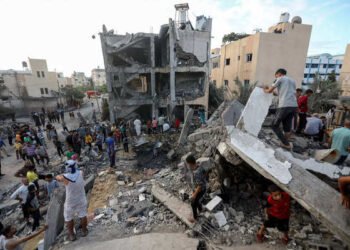
    Israel has significantly increased its airstrikes on Gaza overnight, raising fears of an impending ground invasion as the conflict with Hamas enters its third week. Israeli forces have called for residents in North Gaza to leave the area, dropping leaflets that warn of the danger of staying. The ongoing violence has also led to Israeli airstrikes in Syria and the West Bank, further escalating the situation.


    In the ongoing Israel-Gaza conflict, Israel has intensified its airstrikes on Gaza, prompting concerns about the possibility of a ground invasion. The conflict, which began as a response to Hamas’s attack on October 7, has entered its third week, with no immediate resolution in sight.


    Israel has repeatedly called on residents in North Gaza to leave the area, issuing warnings through leaflets dropped from the air. These warnings emphasize that staying in North Gaza, particularly north of Wadi Gaza, could place lives in danger. Furthermore, individuals who choose not to relocate to the south of Wadi Gaza might be identified as accomplices to a terrorist organization, as stated in the leaflet.


    Israeli warplanes have continued to strike targets across Gaza, and the conflict has expanded to involve attacks on two airports in Syria and a mosque in the occupied West Bank, which is alleged to have been used by militants. The situation has raised concerns that the two-week-old war with Hamas could lead to a broader and more complex regional conflict.


    The Israel-Gaza conflict has also spilled over into tensions with Lebanon’s Hezbollah militant group. Israel has engaged in near-daily exchanges of fire with Hezbollah since the conflict began. Additionally, there is growing tension in the Israeli-occupied West Bank, where Israeli forces have clashed with militants in refugee camps and conducted two recent airstrikes.


    The looming possibility of a ground offensive by Israel has been a major concern. Tanks and tens of thousands of troops have gathered at the border, and Israeli leaders have indicated that the conflict is entering an undefined “next stage” in its operations. While Israel has estimated that approximately 700,000 people have already fled the affected areas, hundreds of thousands remain in Gaza. This situation raises significant concerns about the potential for mass civilian casualties if a ground offensive is launched.


    Israeli military officials have noted that Hamas’ infrastructure and underground tunnel system are concentrated in Gaza City. They have indicated that the next stage of the offensive may involve unprecedented force in the city, potentially leading to a further escalation of the conflict.


    The Israel-Gaza conflict continues to evolve, with significant implications for the region and the safety of civilians caught in the crossfire. The international community remains concerned about the ongoing violence and its potential consequences.

  • Arab Leaders Condemn Israel’s Gaza Bombardment

    Arab Leaders Condemn Israel’s Gaza Bombardment

    Arab leaders met at a hastily convened gathering in Cairo, the Cairo Peace Summit, to address the ongoing conflict between Israel and Hamas in Gaza. The two-week-old bombardment of Gaza by Israel has led to significant casualties and raised concerns about the potential for a wider regional war. The summit aimed to find ways to prevent further escalation and seek a path towards a Middle East peace settlement.


    Jordan’s King Abdullah, speaking at the summit, condemned the global silence surrounding Israel’s attacks on Gaza and called for an equitable approach to the Israeli-Palestinian conflict. He expressed outrage over the violence inflicted on innocent civilians in Gaza, the West Bank, and Israel, emphasizing that Palestinian lives should hold equal value to Israeli lives. The King stressed the need for a foundation of justice for lasting peace and security in the region, urging the Israeli leadership to recognize this imperative.


    Palestinian President Mahmoud Abbas reaffirmed his commitment to the Palestinian cause and declared that Palestinians would not be displaced or driven from their land. His impassioned plea emphasized the determination of the Palestinian people to remain in their homeland.


    The ongoing conflict was triggered by an attack on southern Israel by the Gaza-based Hamas group, resulting in the deadliest Palestinian assault in Israeli history, with 1,400 casualties. Israel has vowed to eliminate Hamas entirely, and its military campaign has caused severe casualties in Gaza, sparking a humanitarian crisis.


    The Cairo Peace Summit was convened to seek ways to prevent further escalation and regional war. However, it faced significant challenges in achieving a common position among the participating Middle Eastern and European leaders. Diplomats noted that the summit was unlikely to issue a joint statement due to sensitivities surrounding the call for a ceasefire and how to address Hamas’s attack and Israel’s right to defend itself.


    The absence of top officials from the United States and some Western leaders cooled expectations for the summit’s outcomes. The United States, currently without an ambassador in Egypt, was represented by its embassy Charge d’Affaires.


    While the summit met, Israel prepared for a ground assault on Gaza, causing increasing concern. The conflict has already led to over 4,100 Palestinian casualties and deepened the humanitarian crisis in Gaza.


    Arab countries have expressed anger and condemnation over Israel’s extensive bombardment and blockade of Gaza, home to 2.3 million people. Their demands for justice and an independent Palestinian state have been echoed throughout the summit.


    Egyptian President Abdel Fattah al-Sisi highlighted his country’s opposition to the displacement of Palestinians into Egypt’s Sinai region. He emphasized that the only solution to the Palestinian issue is justice and the realization of Palestinians’ legitimate rights in an independent state.


    Egypt has been working to channel humanitarian relief to Gaza through the Rafah crossing, the only access point not controlled by Israel. Egyptian state TV footage showed trucks loaded with humanitarian aid entering Gaza shortly before the summit’s opening.


    The summit’s specific goals were not fully disclosed, but they revolved around addressing recent developments in the Gaza crisis and the future of the Palestinian issue. European leaders, including German Chancellor Olaf Scholz and British Prime Minister Rishi Sunak, did not attend, reflecting ongoing difficulties in achieving a united European approach to the conflict. It remains uncertain whether the summit will result in a common declaration due to differences among participants and Arab leaders.