Tag: Indian Meteorological Department

  • IMD Forecasts Dry Spell After Recent Wet Spell

    IMD Forecasts Dry Spell After Recent Wet Spell

    The Indian Meteorological Department (IMD) has issued a forecast indicating that a dry spell is likely to prevail across India in the coming days following a recent wet spell on February 5. The forecast covers various aspects, including rainfall, fog alerts, and changes in minimum temperatures in different regions.


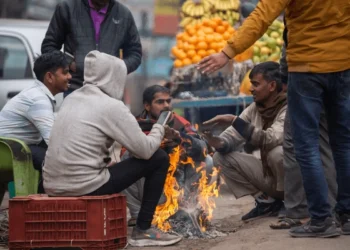
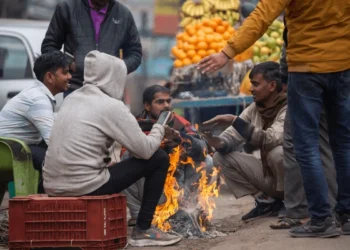
    For the national capital, Delhi, the IMD predicts mainly clear skies with moderate fog in the morning. The minimum and maximum temperatures are expected to settle around 9 and 20 degrees Celsius, respectively. Notably, Delhi experienced a wet February, recording the highest rainfall in the first five days of the month in the last decade.


    Contrasting conditions have been observed in the winter season, with January 2023 receiving normal rainfall while February 2024 has turned out to be the wettest in the last 10 years, recording 30.8mm of rainfall in the first five days.


    The Skymet weather report suggests that rain and snowfall may continue over Arunachal Pradesh for the next 24 to 48 hours. The IMD has also issued a yellow alert for dense fog in Odisha on February 6.


    IMD Forecast: Rainfall

    • Dry weather is expected over Jammu, Kashmir, Ladakh, Gilgit, Baltistan, Muzaffarabad, Himachal Pradesh, and Uttarakhand.
    • Dry weather will prevail in Uttar Pradesh, East Rajasthan, and Madhya Pradesh.
    • Moderate rainfall or snowfall is predicted over Arunachal Pradesh, Sub-Himalayan West Bengal and Sikkim,
    • Assam & Meghalaya, and Nagaland, Mizoram, Manipur & Tripura during February 6-7.


    IMD Forecast: Dense Fog

    • Very dense fog conditions are likely in Punjab on February 6.
    • Dense fog conditions are expected in Haryana, north Rajasthan, Jharkhand on February 6, and over Odisha on February 6 and 7.


    Dense Fog Alert in Punjab for February 6:

    • Impact expected due to very dense fog in Punjab
    • May affect some airports, highways, and railway routes in the areas of the met-sub-division.
    • Difficult driving conditions with slower journey times.
    • Tripping of power lines in the very dense fog routes.
    • Lung-related health impacts due to particulate matter in dense fog.


    IMD Forecast: Minimum Temperature

    • The IMD predicts a fall in minimum temperatures by 2-4°C over many parts of Northwest India during the next 3 days, with no significant change thereafter.
    • There will be a gradual fall in minimum temperatures by 2-4°C over many parts of Central India during the next 5 days.
    • No significant change in minimum temperatures is expected over the rest of North India.


    As India experiences these weather variations, individuals and authorities are advised to stay informed about the latest forecasts and take necessary precautions to ensure safety and well-being.

  • HP Set for Snowfall and Rainfall After Prolonged Dry Spell

    HP Set for Snowfall and Rainfall After Prolonged Dry Spell

    After experiencing a prolonged dry spell, several regions in Himachal Pradesh are set to witness snowfall and rainfall in the next 48 hours, according to the latest weather forecast from the Indian Meteorological Department (IMD). The IMD has issued an orange alert for the state, indicating the likelihood of heavy snowfall in certain districts, while a yellow alert has been issued for other areas, signaling possible thunderstorms.


    The affected districts where heavy snowfall is anticipated include Chamba, Kangra, Kinnaur, Kullu, Lahaul Spiti, Mandi, and Shimla. The weather activity is expected to commence from Tuesday late night and persist until the morning of February 2. Additionally, the IMD has predicted snowfall in the high-altitude areas of the state, along with rain in the plains.


    Sandeep Kumar Sharma, Senior Scientist at IMD, provided insights into the forecast, stating, “During the next five or six days right from tonight, there are possibilities of rain and snow in the higher reaches of Himachal Pradesh. The rain activity will start tonight. On January 31 and February 1, in the districts of Chamba, Lahaul-Spiti, Kinnaur, and Kullu, there are chances of moderate to heavy snowfall. We have issued an orange alert for these areas. There are chances of rain and thunderstorms with lightning activities in districts of Kangra, Bilaspur, and Shimla.”


    He further explained that after February 2, the weather activity is expected to subside, followed by another western disturbance approaching on February 3. On February 3 and 4, rain is anticipated in the plain areas, while higher reaches are likely to experience snowfall. The temperatures, which have been above normal, are expected to decrease after the rain.


    The IMD has specifically issued an orange alert for districts such as Chamba, Lahaul-Spiti, Kullu, and Kinnaur, highlighting the potential for significant snowfall in the higher mountain regions between January 31 and February 1. Additionally, a yellow alert has been issued for other areas, indicating the possibility of thunderstorms.


    Sandeep Kumar Sharma also mentioned that a thunderstorm alert has been issued for the day across Kangra, Mandi, Hamirpur, Shimla, Bilaspur, Mandi, and Sirmaur. The orange alerts for districts like Chamba, Lahaul-Spiti, Kullu, and Kinnaur indicate the heightened risk of weather-related disruptions.


    Over the last 24 hours, the lowest minimum temperature in the region was recorded at minus 4.9 degrees Celsius at Kukumseri in Lahaul-Spiti district. The second-lowest temperature was noted at Kalpa in Kinnaur, reaching minus 2.6 degrees Celsius.


    The anticipation of snowfall and rainfall is a welcome development for Himachal Pradesh, which has been grappling with a prolonged dry spell. Such weather activities are crucial for the replenishment of water resources, including rivers, lakes, and groundwater, supporting agriculture and sustaining the ecosystem. However, authorities are also vigilant about the potential challenges posed by heavy snowfall, including disruptions in transportation and potential avalanche risks in certain terrains.


    As the weather patterns evolve, residents and authorities will closely monitor the developments, and preparations will be in place to respond to any adverse impacts or emergencies arising from the anticipated snowfall and rainfall in the coming days.

  • Very Dense Fog in Northwest, Temperature Fall in East

    Very Dense Fog in Northwest, Temperature Fall in East

    The Indian Meteorological Department (IMD) has issued a comprehensive weather update, indicating various weather phenomena across different regions of the country. From very dense fog in northwest India to temperature fall in central and east India, the forecast covers a range of weather conditions.


    Northwest India: Very Dense Fog and Cold Wave Conditions

    In northwest India, very dense fog conditions are expected to persist during the morning hours over the next five days. States like Punjab, Haryana, and Chandigarh are likely to experience this phenomenon from January 11 to January 15. Additionally, severe cold wave conditions are anticipated in Rajasthan on January 11 and 12.


    Punjab and Haryana, along with Chandigarh, are expected to face cold wave conditions on January 11 and 12, with Punjab continuing to experience it until January 15. Isolated pockets in Uttarakhand, West Rajasthan, and Uttar Pradesh are also likely to witness cold day conditions during this period.


    The Indian Meteorological Department predicts that the cold day conditions will abate after this period, providing some relief from the severe weather.


    Central and East India: Temperature Fall and Dense Fog

    Central and East India will see a fall in temperatures by 2-3°C over the next three days, according to the IMD. Cold wave conditions are expected to prevail in Punjab and Haryana on January 11 and 12. In specific areas like Chandigarh, Delhi, and northwest Rajasthan, dense fog conditions are likely to persist during the morning hours.


    The forecast indicates that East Uttar Pradesh and West Uttar Pradesh will experience very dense fog on January 11 and 12, followed by dense fog in Gangetic West Bengal, Odisha, Jammu division on January 11, and over Himachal Pradesh, Uttarakhand, Bihar, Sub-Himalayan West Bengal, Sikkim, and north Madhya Pradesh on January 11 and 12.


    Assam, Meghalaya, Mizoram, and Tripura are expected to face dense fog conditions from January 11 to January 15.


    Rainfall in North India

    North India, particularly Jammu and Kashmir, Ladakh, Gilgit, Baltistan, Muzaffarabad, Himachal Pradesh, Uttarakhand, is likely to experience rainfall or snowfall on January 12, 13, 16, and 17. These regions can expect precipitation during these periods, contributing to the winter weather conditions.


    South India: Northeast Monsoon Update

    Conditions in South India are becoming favorable for the cessation of Northeast Monsoon rains over Tamil Nadu, Puducherry, Karaikal, Kerala, Mahe, Coastal Andhra Pradesh, Yanam, Rayalaseema, and South Interior Karnataka around January 15, 2024.


    Rainfall is expected over Tamil Nadu, Kerala, and Lakshadweep in the next 24 hours, followed by dry weather thereafter. Additionally, heavy rainfall is anticipated over south Tamil Nadu today.


    As various regions across India experience diverse weather conditions, it is essential for residents and travelers to stay informed and take necessary precautions. Very dense fog can impact visibility on roads, leading to potential transportation disruptions. Cold wave conditions require adequate protection against extreme temperatures, and regions experiencing rainfall or snowfall should be prepared for associated challenges.


    Government agencies, local authorities, and meteorological departments play a crucial role in disseminating accurate and timely weather information. Individuals are encouraged to stay updated on weather forecasts, follow safety guidelines, and take appropriate measures to ensure their well-being during these weather variations.


    Weather awareness and preparedness are key to mitigating the impact of changing weather patterns. By staying informed and adopting necessary precautions, individuals and communities can navigate through these weather conditions with greater resilience.

  • IMD Forecasts Reduction in Severe Cold Day Conditions

    IMD Forecasts Reduction in Severe Cold Day Conditions

    The Indian Meteorological Department (IMD) has issued weather updates indicating changes in temperature and visibility conditions especially a reduction in cold day conditions across various regions of India. Here are the key highlights of the current weather forecast:


    North India:

    Cold Day and Dense Fog

    IMD forecasts a reduction in severe cold day conditions over northwest India starting from January 11, 2024. Dense fog is expected to persist during morning hours in isolated pockets of northwest India for the next four days.


    On Wednesday, Jammu experienced the coldest day of the season, recording a maximum temperature of 9 degrees Celsius, which was nine notches below normal. Delhi also witnessed cold day conditions with the maximum temperature settling at 15.2 degrees Celsius, four notches below normal. Moderate fog was reported in isolated pockets of Delhi, while the sky remained mainly clear during the day.


    The IMD predicts very dense fog conditions in north Rajasthan on January 11 and 12, followed by a reduction. Dense fog is also likely in morning hours over Punjab, Haryana, Chandigarh, Uttar Pradesh, Assam, Meghalaya, Mizoram, and Tripura from January 11 to 15. Additionally, Jammu division, Himachal Pradesh, Uttarakhand, north Madhya Pradesh, Odisha, Bihar, West Bengal, and Sikkim may experience dense fog on January 11 and 12.


    Cold day conditions are expected to continue in Haryana, Chandigarh, Delhi, Punjab, Uttar Pradesh, and Rajasthan on January 11, with a subsequent abatement, according to the IMD.


    Cold Wave

    The IMD rules out the likelihood of cold wave conditions over the country for the next four days. However, ground frost conditions are expected to prevail over Uttarakhand on January 11 and 12. A fall in temperature by 2-3°C is forecasted for central and East India over the next three days.


    South India:

    Rainfall

    A cyclonic circulation lies over the Kerala coast in lower tropospheric levels, according to the IMD. Under the influence of this system, moderate rainfall is expected at some places over Tamil Nadu, Kerala, Coastal Karnataka, and Lakshadweep during the next two days. Dry weather is anticipated thereafter.


    As the weather patterns evolve, the IMD continues to monitor and update forecasts, providing valuable information for residents and authorities to prepare for and adapt to changing conditions.

  • Yellow Alert Issued as Heavy Rainfall Lashes Mumbai

    Yellow Alert Issued as Heavy Rainfall Lashes Mumbai

    As the monsoon season continues to envelop Mumbai and its neighboring regions, the Indian Meteorological Department (IMD) has issued a yellow alert, signaling caution due to heavy rainfall. This alert, in effect until Thursday, serves as a reminder of the unpredictable nature of the monsoon and the need for residents and authorities to be prepared for potential disruptions.


    Over the next 48 hours, Mumbai and its suburbs are expected to experience generally cloudy skies with intermittent episodes of moderate rain or thundershowers. The Regional Meteorological Department in Mumbai has provided temperature forecasts, indicating that maximum temperatures are likely to reach around 32 degrees Celsius, while minimum temperatures will hover around 25 degrees Celsius during this period.


    However, the impact of heavy rainfall extends beyond just wet streets and umbrellas. Flight operations at Chatrapati Shivaji Maharaj International Airport (CSMIA) have been affected, leading to complaints from travelers about delays. Social media, particularly platform X (formerly Twitter), has been abuzz with reports of flight disruptions and passenger inconveniences.


    Despite the complaints on social media, CSMIA had not made an official announcement regarding flight delays at the time of the reports. However, it’s not uncommon for heavy rainfall to disrupt airport operations. Rainfall can lead to poor visibility, waterlogging on runways, and challenging conditions for takeoffs and landings, all of which necessitate precautionary measures and, at times, temporary suspensions of flight operations.


    Airport authorities and airlines typically prioritize passenger safety and operational integrity, and any delays or disruptions are part of the measures to ensure that travelers arrive safely at their destinations.


    For Mumbai, heavy rainfall during the monsoon season is a recurring challenge. The city is known for its resilience in the face of such weather events, with infrastructure improvements aimed at mitigating the impact of heavy rains. These efforts include better drainage systems, improved flood control mechanisms, and enhanced disaster preparedness.


    Residents and travelers are advised to stay updated with the latest weather forecasts and official announcements from relevant authorities during periods of adverse weather conditions. Additionally, individuals are encouraged to exercise caution, avoid unnecessary travel during heavy rainfall, and follow safety guidelines provided by local authorities.


    While the monsoon brings much-needed relief from the scorching summer heat and replenishes water reserves, it also presents challenges that communities and authorities must navigate together. Mumbai, with its experience in monsoon management, continues to adapt and evolve to meet these challenges, ensuring that life goes on even during heavy downpours.

  • Delhi NCR to Experience Overcast Conditions

    Delhi NCR to Experience Overcast Conditions

    The Delhi Regional Meteorological Centre has issued a weather forecast indicating overcast conditions in certain areas of the Delhi National Capital Region (NCR) until September 20. On September 18, predominantly cloudy weather is expected with the possibility of scattered light rain and drizzle in various parts of Delhi NCR. September 19 and 20 are predicted to have partly cloudy skies across the entire region.


    In a contrasting weather development, heavy rainfall has inundated numerous regions of Gujarat, resulting in flooding in low-lying areas and the isolation of several villages. Rivers, including the Narmada, are flowing at full capacity. In response to the situation, authorities have relocated 9,600 individuals to safer locations and rescued 207 others across five districts.


    Ahmedabad, in particular, experienced significant waterlogging as the city received 76 mm of rainfall within a 12-hour period ending at 6 pm on Sunday, severely disrupting normal life. As a precautionary measure, underpasses were blocked to traffic.


    The Indian Meteorological Department (IMD) has issued a red alert for several districts in Gujarat, including Panchmahal, Dahod, Kheda, Aravalli, Mahisagar, Banaskantha, and Sabarkantha, predicting isolated instances of extremely heavy rainfall until Tuesday morning.


    The IMD has forecasted light to moderate rainfall in numerous Indian states, with some regions expecting heavy to very heavy downpours, continuing until September 21.


    On September 17, certain areas of Tamil Nadu and Odisha are expected to experience light to moderate rainfall with isolated instances of heavy rain. Similar weather patterns are anticipated in several northeastern Indian states, including Nagaland, Manipur, Mizoram, and Tripura from September 17 to 21, in Assam and Meghalaya from September 18 to 21, and in Arunachal Pradesh on September 20 and 21.


    There is a high probability of isolated exceptionally heavy rainfall in southeastern Rajasthan on September 17 and September 17-18. Furthermore, on September 18 and 19, a few isolated regions in Saurashtra and Kutch may also experience very heavy rainfall. The monsoon season continues to bring varied weather conditions across India.

  • Devastating Rains Trigger Destruction in Himachal Pradesh

    Devastating Rains Trigger Destruction in Himachal Pradesh

    In a tragic turn of events, the serene landscape of Himachal Pradesh has been marred by intense rains leading to floods and landslides, resulting in the loss of over 50 lives. The state’s hilly terrain has been severely affected, with dozens more feared missing in the wake of this calamity.


    Sukhvinder Singh Sukhu, the Chief Minister of Himachal Pradesh, revealed the grim toll, stating, “Over 50 people have lost their lives in the state in the last 24 hours.” He also highlighted the ongoing search and rescue operations, emphasizing that the death toll might rise. More than 20 individuals remain trapped in precarious situations, heightening concerns for their safety.


    Sukhu also noted the solidarity extended by prominent leaders in the wake of this disaster. He shared, “President Droupadi Murmu, Union Home Minister Amit Shah, Mallikarjun Kharge, BJP chief JP Nadda, Congress leaders Rahul Gandhi, and Priyanka Gandhi have all reached out to provide all possible help to the state government.”


    The Indian Meteorological Department (IMD) issued a warning of extremely heavy rains in nine out of 12 districts of the state, with a yellow alert for the following day in three districts.


    Tragedy struck in Shimla as well, where 14 bodies were recovered from sites of two landslides. Authorities remain concerned about the possibility of additional people being trapped under debris, especially around the Shiva temple in the Summer Hill area.


    Mandi district also reported 19 casualties due to rain-related incidents, further highlighting the scale of the disaster.


    Amidst the crisis, educational institutions in the state were shut down, and the emergency operation center reported the closure of 621 roads due to the calamitous conditions. While India anticipates the celebration of its 77th Independence Day, Himachal Pradesh and Uttarakhand are grappling with the aftermath of landslides and flash floods, stemming from relentless and intense rainfall.


    These incidents serve as a stark reminder of the impact of climate change, which is exacerbating the frequency and severity of such natural disasters. While monsoons are known to bring floods and landslides to the region, experts underline the role of climate change in intensifying these events.


    As the state government works tirelessly to address the situation, the movement of trains in the Kandaghat-Shimla route has been cancelled due to the washed-out railway track caused by a landslide. In a further tragedy earlier, a cloudburst in Himachal Pradesh’s Solan claimed seven lives and led to the destruction of homes and property.


    These heart-wrenching incidents underscore the need for immediate attention to climate change and disaster management strategies to mitigate the impact of such devastating events.