Tag: INDIA Bloc

  • TMC Drops Nusrat Jahan, Fields Nurul Islam

    TMC Drops Nusrat Jahan, Fields Nurul Islam

    The Trinamool Congress (TMC) made significant announcements regarding its candidates for the upcoming Lok Sabha elections in West Bengal. Among the notable decisions was the dropping of MP Nusrat Jahan from contesting the Basirhat Lok Sabha seat, a move that garnered attention amid the Sandeshkhali row. Instead, the party has fielded Nurul Islam as the candidate for the Basirhat seat.


    Mamata Banerjee-led TMC revealed its list of 42 candidates from West Bengal, comprising several high-profile names. Notable inclusions are former cricketer Yousuf Pathan, who will contest from the Baharampur seat, and Shatrughan Sinha, who will represent the party in Asansol. Additionally, Kirti Azad has been fielded from Durgapur, among others.


    The decision to drop Nusrat Jahan and field Nurul Islam reflects the party’s strategic considerations amidst ongoing controversies. Nusrat Jahan’s exclusion comes in the wake of the Sandeshkhali row, suggesting a response to internal and external pressures within the party.


    The TMC’s decision to nominate candidates for all 42 seats in West Bengal puts an end to speculation regarding seat-sharing pacts with other parties, particularly the Congress. Despite not forming an alliance with the Congress, the TMC maintains its affiliation with the grand old party in the INDIA bloc.


    Abhishek Banerjee, the nephew of West Bengal Chief Minister Mamata Banerjee, made the official announcement of the TMC candidates in Kolkata. The move demonstrates the party’s assertiveness and autonomy in decision-making, signaling a departure from potential collaborative arrangements with other political entities.


    The announcement of candidates by the TMC prompted reactions from various quarters, including Congress MP Jairam Ramesh. Ramesh emphasized the importance of mutual negotiations and collective decision-making in seat-sharing talks. He expressed the Congress’s willingness to strengthen the INDIA alliance in West Bengal while advocating for a respectful and collaborative approach to seat allocation.


    The decision-making process within the TMC reflects the party’s strategy to consolidate its position and assert its dominance in West Bengal politics. By nominating candidates for all 42 seats, the TMC aims to project strength and unity, sending a message of readiness to contest the upcoming elections independently.


    The exclusion of Nusrat Jahan and the nomination of Nurul Islam underscore the party’s focus on addressing internal rifts and external challenges effectively. It also highlights the TMC’s commitment to adapting to changing political dynamics and responding to emerging controversies proactively.


    While the TMC’s decision may have disappointed some quarters, particularly those hoping for a seat-sharing pact with the Congress, it reaffirms the party’s resolve to chart its own course and pursue its political agenda independently.


    As the Lok Sabha elections draw nearer, the TMC’s candidate list sets the stage for a fiercely contested electoral battle in West Bengal. With high-profile candidates and strategic maneuvering, the TMC aims to retain its stronghold in the state and secure a significant victory in the upcoming polls.


    Overall, the TMC’s announcement of candidates for all 42 Lok Sabha seats in West Bengal reflects its assertive approach, strategic calculations, and readiness to navigate the complex political landscape of the state.

  • AAP Offers One Lok Sabha Seat to Congress in Delhi

    AAP Offers One Lok Sabha Seat to Congress in Delhi

    As seat-sharing negotiations between members of the INDIA bloc for the upcoming Lok Sabha elections remain unresolved, the Aam Aadmi Party (AAP) made its stance clear on Tuesday, expressing its desire to contest six seats in the national capital while offering only one seat to the Congress.


    Speaking at a press conference following a meeting of the party’s Political Affairs Committee (PAC), AAP Rajya Sabha MP Sandeep Pathak emphasized that, based on merit, the Congress did not deserve any seats in Delhi. However, adhering to the principle of alliance, AAP was willing to allocate one seat to its senior partner.


    “Given the ‘dharma of alliance,’ we are offering the Congress party one seat in Delhi, although they do not merit it on a purely meritocratic basis,” Pathak stated.


    Pathak reiterated AAP’s intent to contest six seats in Delhi for the 2024 Lok Sabha polls and urged the Congress to expedite seat-sharing discussions to reach a resolution promptly.


    Highlighting the Congress’s electoral performance in Delhi, Pathak pointed out that the party had failed to secure any seats in both the Lok Sabha and Assembly elections, and only managed to win nine seats out of 250 in the MCD elections.


    In addition to outlining its stance on seat allocation in Delhi, AAP also announced its candidates for two Lok Sabha seats in Gujarat and one in Goa. Venzy Viegas was named as the candidate for the South Goa seat, while Chaitar Vasava and Umesh Bhai Makwana were chosen to contest from the Bharuch and Bhavnagar seats in Gujarat, respectively.


    Furthermore, Pathak disclosed that AAP had requested eight Lok Sabha seats in Gujarat, which is proportionate to the party’s vote share in the last assembly poll.


    The ongoing discussions between the Congress and AAP regarding seat-sharing arrangements within the INDIA bloc commenced with their first formal meeting on January 8. However, despite the deliberations, an agreement has yet to be reached.


    In a separate development, AAP national convenor and Delhi Chief Minister Arvind Kejriwal recently declared that the party would not form an alliance with the Congress in Punjab. Instead, AAP intends to contest all 14 Lok Sabha seats in the state along with Chandigarh independently.


    With negotiations ongoing and the political landscape evolving, the coming days will likely see further developments as parties strive to solidify their electoral strategies ahead of the Lok Sabha elections.

  • Akhilesh: Absence in Bharat Jodo Nyay Yatra Sparks Controversy

    Akhilesh: Absence in Bharat Jodo Nyay Yatra Sparks Controversy

    Samajwadi Party (SP) chief and INDIA bloc leader Akhilesh Yadav’s absence in the Bharat Jodo Nyay Yatra has become a topic of discussion. During the Yatra, he remarked, “Many big events are organised, but we are not invited.” Addressing the Ayodhya Ram temple invitation extended by the BJP, Yadav stated that he would visit whenever it aligns with God’s will.


    In a recent development, the Samajwadi Party and Congress finalized their seat-sharing agreement in Uttar Pradesh. The party, led by Akhilesh Yadav, disclosed its first list of 16 candidates for the upcoming Lok Sabha elections. Among them, sitting MP Dimple Yadav will contest from Mainpuri, and Shafiqur Rahman Barq will represent Sambhal. Awadhesh Prasad, a nine-time MLA, is named as the candidate for the Faizabad constituency, covering the Ayodhya district.


    The SP is expected to unveil more candidates in the coming days as the Lok Sabha elections draw nearer. Akhilesh Yadav’s party plays a crucial role in the INDIA bloc alliance, formed in 2023 to challenge the ruling BJP government led by Prime Minister Narendra Modi in the 2024 Lok Sabha elections.


    Meanwhile, Congress has launched the Bharat Jodo Nyay Yatra across India, led by Congress MP Rahul Gandhi. The yatra resumed from Dhanbad, marking the third day of Rahul Gandhi’s journey in Jharkhand. The yatra will cover 804 km, passing through 13 districts in the state over eight days in two phases. In total, it plans to travel 6,713 km in 67 days, traversing 110 districts in 15 states before concluding in Mumbai on March 20.


    The Bharat Jodo Nyay Yatra is a strategic move by the Congress Party to strengthen its presence on the ground ahead of the Lok Sabha elections. This initiative signifies the party’s commitment to connect with people across various states and build support for the upcoming polls.


    As the political landscape intensifies, allegations and accusations echo from both sides. Rahul Gandhi’s yatra and Akhilesh Yadav’s absence add layers to the unfolding narrative, setting the stage for a dynamic and closely watched Lok Sabha election in 2024.

  • Cracks in INDIA Bloc Ahead of Elections

    Cracks in INDIA Bloc Ahead of Elections

    The much-anticipated INDIA Bloc, a coalition of opposition parties gearing up for the Lok Sabha elections, is showing signs of internal strain as key members distance themselves from joint efforts. The recent decisions by the Aam Aadmi Party (AAP) in Punjab, Trinamool Congress in West Bengal, and now the Janata Dal (United) led by Bihar Chief Minister Nitish Kumar, indicate challenges to the unity of the opposition alliance.


    Today, it was revealed that Nitish Kumar has opted not to join Congress leader Rahul Gandhi’s Bharat Jodo Nyay march when it enters Bihar on January 30. This decision by the Bihar Chief Minister, who played a pivotal role in forming the INDIA Bloc, hints at internal discord within the coalition. The JD(U), an ally of Lalu Yadav’s Rashtriya Janata Dal (RJD) in the Bihar government, appears to be sending a subtle message that not all is well within the opposition alliance.


    The decision not to march with Rahul Gandhi is noteworthy, considering Nitish Kumar’s role as one of the architects of the INDIA Bloc. The internal strife within the alliance is further fueled by allegations that Nitish Kumar took a swipe at RJD chief Lalu Yadav over “dynastic politics.” However, JD(U) leader KC Tyagi clarified that Nitish Kumar’s statement was merely emphasizing the aversion to dynastic succession in politics, as highlighted by socialist leader Karpoori Thakur.


    The INDIA Bloc, aimed at creating a united front against the ruling party, seems to be grappling with internal challenges, with key members expressing reservations or opting out of joint initiatives. This development follows the Trinamool Congress’s decision in West Bengal to go solo in the elections, with allegations that the alliance breakdown was influenced by the Bengal Congress chief Adhir Ranjan Chowdhury’s alleged collaboration with the BJP.


    The Aam Aadmi Party in Punjab has also declined to form an alliance with the Congress, signaling confidence in winning all 13 seats independently. The INDIA Bloc’s internal troubles raise questions about its cohesion and effectiveness in presenting a unified front in the upcoming Lok Sabha elections. As opposition parties navigate alliance dynamics, the political landscape leading to the elections appears to be witnessing shifts and challenges that could impact the broader opposition strategy.

  • Seat Sharing Discussions: Congress and Samajwadi Party

    Seat Sharing Discussions: Congress and Samajwadi Party

    The Congress and the Samajwadi Party have initiated discussions on seat sharing in Uttar Pradesh, dispelling earlier speculations of a potential rift. Senior Congress leader Salman Khurshid confirmed that the discussions are progressing positively, and both parties are looking into all possibilities and winnabilities. The seat-sharing arrangement is a crucial aspect of the upcoming Lok Sabha elections, especially in a state as politically significant as Uttar Pradesh.


    Details of the Discussions:

    According to Salman Khurshid, the parties have shared details of each seat with each other. The objective is to create a mutually agreeable arrangement that maximizes the chances of victory for the alliance. The alliance will also include Ajit Singh’s Rashtriya Lok Dal (RLD), as it is already an ally of the Samajwadi Party. The collaboration with RLD further strengthens the alliance’s position and broadens its appeal. Senior Samajwadi Party leader Ram Gopal Yadav confirmed that the parties have made progress in the discussions. He stated that they have covered halfway distance, and the remaining half will be addressed soon. This suggests a positive momentum in the negotiations.


    Background and Context:

    Over the years, the Congress party’s influence in Uttar Pradesh has witnessed a decline. The state, with its 80 Lok Sabha seats, plays a pivotal role in national politics. The Congress party’s diminishing prominence has impacted its alliance dynamics, especially with regional players like the Samajwadi Party. The Samajwadi Party has been hesitant in its association with the Congress, particularly after setbacks in the recent Madhya Pradesh assembly elections. The seat-sharing deal in Madhya Pradesh did not materialize as expected, leading to strains in the relationship between the two parties. The Congress-Samajwadi Party alliance faced a significant defeat in the 2017 Uttar Pradesh assembly elections. The Bharatiya Janata Party (BJP) secured a resounding victory, reducing the influence of the alliance in the state. In the 2019 Lok Sabha elections, the Samajwadi Party offered only two seats to the Congress – the Gandhi strongholds of Amethi and Raebareli. However, the defeat of Rahul Gandhi in Amethi added complexities to the partnership.


    The ongoing discussions between the Congress and the Samajwadi Party regarding seat sharing in Uttar Pradesh signify a crucial phase in the lead-up to the Lok Sabha elections. Both parties recognize the importance of strategic collaboration to counter the formidable challenge posed by the BJP. The inclusion of Ajit Singh’s RLD further enhances the alliance’s prospects. As negotiations continue, the alliance aims to finalize a seat-sharing arrangement that reflects a cohesive and formidable opposition in one of India’s politically significant states. The upcoming Bharat Jodo Nyay Yatra adds urgency to the alliance’s efforts, emphasizing the need for a unified front to address the diverse political landscape of Uttar Pradesh.

  • Farooq Abdullah: INDIA Bloc Formed to Safeguard Democracy

    Farooq Abdullah: INDIA Bloc Formed to Safeguard Democracy

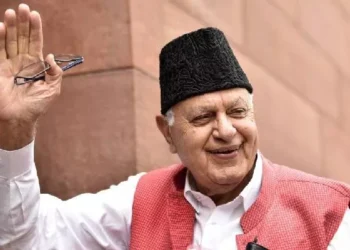
    National Conference president Farooq Abdullah reiterated the commitment of the INDIA Bloc to safeguarding democracy and the Constitution of India. Speaking on Monday, he emphasized that the opposition alliance, comprising parties like the National Conference and the Peoples Democratic Party from Jammu and Kashmir, is united in its goal of creating a democratic India where the voices of the people are heard.


    Abdullah dismissed any speculation of internal conflicts within the INDIA Bloc over the prime minister’s post. He underscored that the alliance is focused on democratic values, ensuring space for criticism, and correcting any faults. The primary objective, according to Abdullah, is to work towards an inclusive India where people of different religious and cultural backgrounds coexist and progress together.


    “We want an India where Hindus, Muslims, Sikhs, Christians, and others live like brothers and progress together. We are fighting for this India and not for mere power,” stated Farooq Abdullah. He clarified that the INDIA Bloc is dedicated to upholding democratic values and the Constitution, considering it a sacred book bestowed upon the citizens by their elders.


    Abdullah outlined the intentions of the opposition alliance, highlighting the goal of creating an India that respects diversity and ensures equal treatment for all citizens. He mentioned the formation of a board to decide on seat-sharing among alliance partners and the possibility of establishing a secretariat and a convenor for the INDIA Bloc.


    Responding to queries about the prime ministerial candidate, Abdullah emphasized that a leader would naturally emerge over time, guiding India forward. Drawing historical parallels, he cited examples like I. K. Gujral becoming the prime minister in 1997-98 and Atal Bihari Vajpayee garnering support from 23 parties with different ideologies.


    “We have to look equally at all the citizens and ensure equal treatment to them without any bias or discrimination. India belongs to each one of us, and we have to take it forward,” asserted Farooq Abdullah. He indirectly referred to criticisms by certain political figures against former Prime Minister Jawaharlal Nehru, acknowledging Nehru’s contributions in establishing institutions like the Indian Space Research Organisation and initiating educational reforms.


    Abdullah also highlighted the progress made under former Prime Minister Indira Gandhi, leading to a green revolution and positioning India as a global food producer. In the context of his religion, he emphasized the teachings to remember the good deeds of the deceased and overlook any wrongdoing.


    “They don’t accept it, and all this is done for power,” he added, without explicitly naming any particular party. The comments reflect Abdullah’s stance on focusing on constructive aspects of governance rather than engaging in divisive rhetoric.


    Farooq Abdullah’s statements underscore the commitment of the INDIA Bloc to democratic values, diversity, and the Constitution of India. The opposition alliance aims to work collaboratively to address the challenges facing the nation and create an inclusive and progressive India. The emphasis on unity and shared objectives signals the alliance’s determination to provide an alternative vision for the country based on democratic principles.

  • Kamal Nath May Resign as Madhya Pradesh Congress Chief

    Kamal Nath May Resign as Madhya Pradesh Congress Chief

    In the aftermath of the Madhya Pradesh Assembly elections, where the Congress faced a setback, there are indications that state party Chief Kamal Nath might submit his resignation. A meeting with Congress party President Mallikarjun Kharge is expected on Tuesday, as reported by PTI, citing inside sources.


    The election results revealed a commanding victory for the BJP, securing a two-thirds majority with 163 out of 230 seats in the Madhya Pradesh assembly. In contrast, the Congress managed to secure only 66 seats in the polls held last month, with the votes counted on Sunday.


    To address the defeat and analyze the reasons behind the poor performance, the Congress has convened a meeting of all 230 candidates on Tuesday. Kamal Nath is slated to address the gathering, joined by senior leaders such as Digvijaya Singh and Suresh Pachouri, to discuss the factors contributing to the party’s electoral setback.


    According to PTI reports, dissatisfaction within the Congress leadership stems from Nath’s remarks against several leaders of the INDIA bloc. This includes Samajwadi Party chief Akhilesh Yadav and JD(U) supremo Nitish Kumar, particularly regarding seat-sharing agreements. The opposition INDIA bloc, formed to challenge the BJP in the 2024 Lok Sabha polls, faced disagreements over seat allocations. The Congress leadership is reportedly displeased with Nath’s stance during these negotiations.


    Notably, the Samajwadi Party sought four to six seats, and the JD(U) requested only one seat in Madhya Pradesh. However, disagreements on these terms led to discord within the opposition alliance.


    The Congress leadership is also said to be unhappy with Kamal Nath’s decision to meet Chief Minister Shivraj Singh Chouhan on Monday while not engaging with party leaders and workers. This move has added to the dissatisfaction within the party ranks.


    During the previous state assembly elections in 2018, the Congress emerged victorious, securing 114 seats and leading the BJP, which won 109 seats. Kamal Nath assumed the role of chief minister, but political dynamics shifted dramatically in 2020 when Jyotiraditya Scindia, along with 22 loyalist MLAs, switched allegiance to the BJP. This move led to the fall of the Congress government, and the BJP, with Shivraj Singh Chouhan at the helm, returned to power.


    Madhya Pradesh has been a traditional stronghold for the BJP for the past two decades, except for the brief 15-month period of the Kamal Nath-led Congress government in 2018. The recent election results underscore the state’s historical political landscape and the challenges faced by the Congress in maintaining a sustained presence.

  • Ajay Maken Appointed New Treasurer of Congress

    Ajay Maken Appointed New Treasurer of Congress

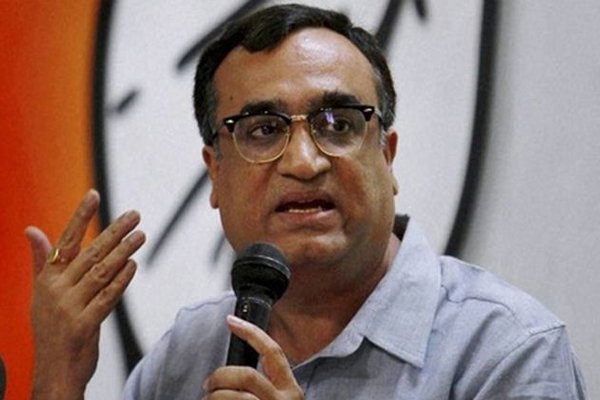
    The Congress party announced on Sunday the appointment of senior leader Ajay Maken as the new treasurer, succeeding Pawan Kumar Bansal. Maken, known for his close association with Rahul Gandhi, had been without a specific party post since resigning as the Congress general secretary in charge of Rajasthan a few months ago.


    Party general secretary K C Venugopal made the official announcement, stating, “Congress president has appointed Ajay Maken as the treasurer of the All India Congress Committee, with immediate effect.” The statement also expressed appreciation for the outgoing treasurer, Pawan Kumar Bansal, who had taken on the role following the passing of Ahmed Patel.


    Ajay Maken, a former Union Minister, has a long history within the Congress party. He previously served as the Delhi unit chief and held ministerial positions in the government of Sheila Dikshit in Delhi. Additionally, he has been a General Secretary of the All India Congress Committee (AICC) and is a member of the Congress Working Committee (CWC). Maken’s appointment as treasurer aligns with his continued prominence within the party.


    In another development within the Congress party, there have been calls to delay seat-sharing talks with INDIA bloc partners for the 2024 Lok Sabha elections. Some Congress leaders, particularly those from states where the Congress is in direct competition with certain INDIA bloc partners, have advocated postponing these talks until November. This delay is seen as a strategic move to negotiate from a position of greater strength.


    During a recent two-day brainstorming session of the Congress Working Committee, several leaders supported the idea of strengthening the Congress organization and the opposition INDIA alliance. While party leaders emphasized the need to bolster the Congress and the broader opposition bloc, they cautioned against rushing into seat-sharing arrangements with like-minded parties.


    Both Sonia Gandhi and Rahul Gandhi emphasized the importance of strengthening the INDIA alliance. Sonia Gandhi called for enhancing the alliance, while Rahul Gandhi stressed the need to fortify both the Congress party and the opposition alliance. This suggests that Congress is adopting a cautious and deliberative approach to its alliances for the upcoming Lok Sabha elections, aiming to build a strong and united front.


    The delay in seat-sharing talks reflects the party’s commitment to securing the best possible electoral outcomes while ensuring that the Congress and its partners are well-prepared to take on the challenges of the 2024 elections. The Congress party is keen to position itself strategically within the INDIA bloc to maximize its influence and chances of success in the upcoming polls.

  • Asaduddin Owaisi Accuses INDIA Bloc of Discrimination

    Asaduddin Owaisi Accuses INDIA Bloc of Discrimination

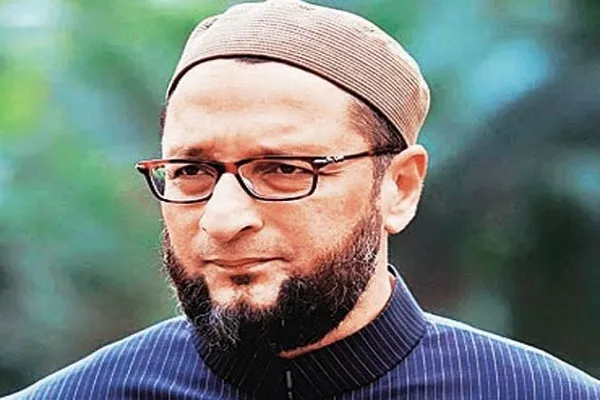
    In a scathing revelation, All India Majlis-E-Ittehadul Muslimeen (AIMIM) MP Asaduddin Owaisi has accused the Indian National Developmental Inclusive Alliance (INDIA) Bloc of indulging in bigotry by denying him a ticket for the upcoming 2024 Lok Sabha Elections. Owaisi alleged that the INDIA Bloc refused to provide him with a ticket, citing concerns that they would lose Hindu votes.


    Speaking at a conference in Delhi, the AIMIM chief explained his party’s decision to abstain from joining the INDIA coalition aimed at opposing the Bhartiya Janata Party (BJP)-led National Democratic Alliance (NDA) in the upcoming elections. He expressed his disinterest in the alliance, stating that it would be suffocating for him. Owaisi also questioned why the INDIA Bloc was not actively opposing the BJP based on their ideology.


    Asaduddin Owaisi asserted, “I am saying this openly, they say this behind closed walls.” He emphasized that his orientation advocates for Muslim participation in elections and encouraged Muslims not to refrain from contesting elections due to the fear of defeat. He stressed that standing up in elections is essential, even if one faces initial losses, as it is crucial for eventual success.


    Owaisi also delved into the political landscape in India, pointing out that sectarian politics against Muslims has been ongoing since 1950, insinuating that the Congress had a role in marginalizing Muslim politicians.


    Regarding Rahul Gandhi’s victory in Wayanad, Owaisi remarked, “Rahul Gandhi lost in Amethi but won in Wayanad. Asaduddin Owaisi did not contest elections there. I did not have any deal with the BJP there. He won from Wayanad because there is the Muslim League there. Muslim League saved him from drowning.”


    Earlier this year, Rahul Gandhi had defended the Congress’s alliance with the Muslim League in Kerala, describing it as a secular party. This statement garnered criticism from the BJP, which accused him of calling a religious party secular. The controversy resulted in a debate over the distinction between the Indian Union Muslim League (IUML) and Mohammad Ali Jinnah’s Muslim League.


    As Owaisi makes these allegations and the political landscape evolves, the upcoming Lok Sabha Elections in 2024 are expected to be closely watched for shifts in alliances and voter dynamics.

  • Owaisi Calls for a Third Front, Criticizes INDIA Bloc and Congress

    Owaisi Calls for a Third Front, Criticizes INDIA Bloc and Congress

    Asaduddin Owaisi, the president of the All India Majlis-e-Ittehadul Muslimeen (AIMIM), has criticized both the ruling Bharatiya Janata Party (BJP) and the newly formed Indian National Developmental Inclusive Alliance (INDIA) bloc, stating that there is a political vacuum in the country that necessitates the formation of a third front.


    Owaisi’s AIMIM has not joined the INDIA bloc, which comprises 28 Opposition political parties. He expressed indifference to not being invited to join the alliance, saying, “I don’t care about not being invited. BSP chief Mayawati, Telangana CM K Chandrashekar Rao, and several parties from Northeast and Maharashtra are also not members of this alliance.” He further emphasized that there is a political vacuum that needs to be filled.


    “We have asked Telangana CM KCR to go ahead and form a third front and take several parties in this. There is a political vacuum that will be filled if KCR takes the lead. INDIA alliance is not being able to fill this vacuum,” Owaisi remarked.


    Responding to Owaisi’s comments, Pawan Khera, a spokesperson for the Congress, alleged that Owaisi secretly allies with Amit Shah, the Home Minister of India. “We knew it long before and now the country also knows it. Amit Shah was supposed to do a rally in Maharashtra, but then as he got to know that the Congress would hold a rally in Hyderabad, he came to Telangana. Owaisi did not hold any rally in Hyderabad for a long time. But now he will also hold a rally. Owaisi has another friend which is BRS. So this is ABC (Asaduddin Owaisi, BRS, and Chanakya),” Khera asserted.


    Owaisi’s statements come at a time when the Congress party is strategizing for the upcoming Assembly and the 2024 Lok Sabha polls. The Congress Working Committee (CWC) recently held an extended meeting in Hyderabad to discuss its strategy.


    During the meeting, the Congress party emphasized the need for social justice and expressed its commitment to making the INDIA bloc a success both ideologically and electorally. The party also called for the passage of the women’s reservation bill, a caste census, and an increase in the reservation limits for Scheduled Castes (SCs), Scheduled Tribes (STs), and Other Backward Classes (OBCs). Additionally, the CWC rejected the concept of “one nation, one election,” considering it a threat to the country’s federal structure.


    As Indian politics continues to evolve, the formation of alliances and the emergence of new fronts are likely to play a crucial role in shaping the political landscape of the nation.

  • Special Parliament Session with Focus on 75-Year Journey

    Special Parliament Session with Focus on 75-Year Journey

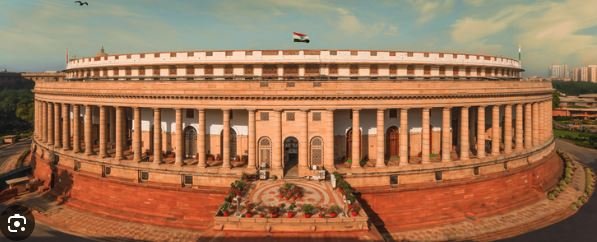
    The eagerly awaited five-day special session of Parliament is scheduled to commence on Monday, September 18, with a special discussion titled ‘Samvidhan Sabha’ that reflects on Parliament’s remarkable 75-year journey. This significant milestone marks the first gathering of Parliament, which convened on December 9, 1946.


    The Central government has released a tentative agenda for the special session. It includes the convening of an all-party meeting on Monday evening, just hours before the session begins. During this meeting, leaders from various political parties are expected to discuss the week’s agenda and key issues.


    One notable event during the special session is the formal shifting from the old Parliament building to the new one, which is scheduled for September 19, coinciding with the auspicious occasion of Ganesh Chaturthi. The special session will conclude on September 22.


    Agenda for the Special Session:
    In addition to the discussion on Parliament’s 75-year journey, the government has identified several bills and legislative matters for consideration during the session. Notable among them are:

    Chief Election Commissioner Bill: A bill aimed at regulating the appointment, conditions of service, and term of office of the Chief Election Commissioner and other Election Commissioners.


    The Advocates (Amendment) Bill, 2023: An amendment to the Advocates Act, 1961.


    The Press and Registration of Periodicals Bill, 2023: A bill that repeals the Press and Registration of Books Act, 1867.


    The Post Office Bill, 2023: This bill, introduced in Rajya Sabha on August 10, 2023, repeals the Indian Post Office Act, 1898.


    Participation of INDIA Bloc:
    A total of 24 parties belonging to the INDIA Bloc have confirmed their participation in the special session of Parliament. Congress Parliamentary Party Chairperson Sonia Gandhi has written to Prime Minister Modi, urging a discussion and debate on several pressing issues, including the current economic situation of the country.


    In her letter, Sonia Gandhi highlighted that the Special Session was convened without prior consultation with other political parties, leading to uncertainty regarding the session’s agenda. She called for discussions on a range of issues, such as the need for a caste census, the situation in Manipur, communal clashes, inflation, and the disputes between various states and the Centre.


    The special session holds significant importance as it brings together leaders from diverse political backgrounds to deliberate on key legislative matters and address the critical challenges facing the nation.