Tag: Harmony

  • Chief Imam Faces Fatwa for Attending Ceremony in Ayodhya

    Chief Imam Faces Fatwa for Attending Ceremony in Ayodhya

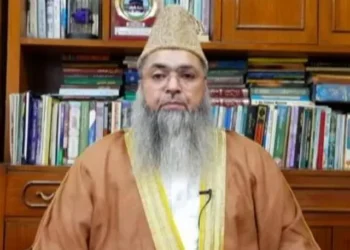
    The Chief Imam of the All India Imam Organization, Dr Umer Ahmed Ilyasi, is grappling with a fatwa and threats after attending the Pran Pratishtha ceremony of Ram Lalla at the Ram Temple in Ayodhya. Despite the backlash, Ilyasi remains steadfast, highlighting that his decision was aimed at promoting harmony, and he has received positive responses from various quarters.


    The Pran Pratishtha ceremony of the Ram Lalla idol took place on January 22 at the Ayodhya Ram Mandir, and it was a historic event attended by dignitaries, including Prime Minister Narendra Modi, RSS Chief Mohan Bhagwat, Uttar Pradesh Governor Anandiben Patel, Chief Minister Yogi Adityanath, business leaders, Bollywood celebrities, and other eminent personalities.


    Following his attendance at the ceremony, Chief Imam Umer Ahmed Ilyasi faced a fatwa, a religious decree, for his participation. Subsequently, he received threat calls and messages demanding his resignation. However, amid the challenges, Ilyasi also received appreciation for his gesture of attending the event, emphasizing unity.


    “As a chief Imam, I received the invitation from Shri Ram Janmbhoomi Teerth Kshetra. I contemplated for two days and then decided to go to Ayodhya for harmony, for the country. The fatwa was issued yesterday but I had been receiving threat calls from the evening of January 22,” shared Ilyasi, acknowledging the gravity of the situation.


    Despite the criticism and threats, Ilyasi remains resolute in his stance. He expressed that his decision to attend the Pran Pratishtha ceremony was driven by a desire for harmony, both within the country and for humanity. He received a positive response from many individuals who appreciated his effort to send a message of brotherhood through his attendance.


    Responding to those who continued to criticize him for attending the ceremony, Ilyasi took a strong stance, suggesting that they “go to Pakistan.” He refused to apologize for his actions and reiterated that he would not resign, emphasizing that his intentions were rooted in promoting love and unity.


    “I have recorded a few calls wherein the callers gave me life threats. Those who love me, love the nation – will support me. Those who hate me for attending the ceremony should perhaps go to Pakistan. I have given a message of love; I did not do any crime. I will not apologize or resign; they can do whatever they want,” asserted Ilyasi, confronting the challenges head-on.


    The Pran Pratishtha ceremony at the Ram Temple in Ayodhya marked a significant moment in India’s history, symbolizing the culmination of a long-standing dispute and the beginning of a new chapter for the nation. Prime Minister Narendra Modi, along with various leaders and dignitaries, participated in the ceremony, underscoring the inclusive spirit that the event aimed to foster.


    Despite the differing perspectives and reactions to his attendance, Chief Imam Umer Ahmed Ilyasi remains focused on his commitment to promoting unity and understanding. The incident serves as a reminder of the complexities surrounding religious and cultural sensitivities in India and the ongoing efforts to bridge divides for a harmonious coexistence.

  • Unpacking the Complex Dynamics of the Manipur Violence

    Unpacking the Complex Dynamics of the Manipur Violence

    Since May 3rd, Manipur has been gripped by a wave of violence stemming from what was initially called a “tribal solidarity march.” These events have led to widespread clashes, resulting in the tragic loss of at least 180 lives, with hundreds more injured. The situation in Manipur has ignited discussions both locally and internationally, with the complex dynamics at play coming into sharp focus.


    One voice contributing to the dialogue is that of Indian-American woman Rajshree Keisham, who recently shared her insights during a Congressional hearing. Her testimony shed light on the oversimplification of the Manipur clashes as mere religious conflicts aimed at tarnishing the image of Hindus. She stressed that this issue is far more intricate than it appears, encompassing various factors, including politics, militancy, narcotics, and more.


    Keisham emphasized that Manipur’s true strength lies in its diversity, which she describes as a testament to harmonious coexistence. Rather than being a source of division, the diverse demography of Manipur has historically been marked by peaceful cohabitation among different communities.


    The prevailing narrative simplifying the Manipur crisis as a religious clash has, in Keisham’s view, ignored the underlying causes and complexities. Beneath the surface, Manipur’s challenges are characterized by a complex web of internecine conflict. This complexity involves deep-seated issues such as violence, mistrust, socio-political tensions, and a dangerous trifecta of militancy, narcotics, and illegal infiltration, which collectively pose significant threats to India’s national security.


    Regarding the demographic makeup of Manipur, Keisham pointed out that the Hindu population in the state represents a diverse group hailing from various parts of India, including Punjab, Bihar, Tamil Nadu, and even neighboring Nepal. Similarly, the Christian community in Manipur is a tapestry of different identities, such as Nagas and Kuki.


    She made it clear that the rich diversity within Manipur is not a source of division; rather, it has long been a hallmark of the state’s heritage, marked by peaceful coexistence. This sentiment highlights the need to preserve and celebrate this diversity rather than allowing it to become a source of tension.


    Rajshree Keisham concluded her testimony with a heartfelt hope for a resolution to the ongoing violence in Manipur. She called for the mitigation of any biases or apprehensions toward Hindus and stressed the importance of achieving a constructive solution. Such a solution, she believes, will pave the way for a healing, rejuvenation, and reconstruction process in Manipur, leading the state towards a more stable and harmonious future.


    The situation in Manipur is a stark reminder of the complexities that often underlie conflicts. It emphasizes the need for comprehensive, inclusive, and nuanced approaches to address the root causes of violence and ensure lasting peace. By recognizing and appreciating the diverse fabric of Manipur’s society, there is hope that a path forward can be found that respects and celebrates the coexistence of different communities while working to address the multifaceted issues that contribute to instability in the region.