Tag: fossil fuels

  • COP28 Dubai: Day 5 Updates

    COP28 Dubai: Day 5 Updates

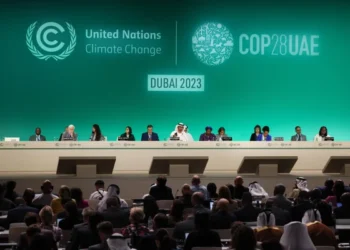
    As the critical Conference of the Parties (COP) 28 summit in Dubai approaches its conclusion on Day 5, the controversies surrounding COP28 President Sultan Al Jaber continue to captivate attention. Amidst sessions focusing on “Finance, Trade, Gender Equality, and Accountability,” with the rallying slogan “Unite, Act, and Deliver,” Monday (December 4) unfolded with a mix of controversies, deals, and significant announcements.


    Controversy Over COP28 Presidency:

    On Monday, COP28 President Sultan Al Jaber addressed and defended his role in hosting this year’s UN climate summit. Responding to a report in The Guardian on comments made last month about the phase-out of fossil fuels, Al Jaber insisted on his understanding and respect for climate change science. The controversy stems from a November 21 online event where he remarked that there is no scenario suggesting the phase-out of fossil fuels is the key to achieving the 1.5°C target. Al Jaber expressed disappointment at the misrepresentation of one statement taken out of context, asserting the COP28 presidency’s commitment to reducing 43% of global emissions by 2030.


    The broader controversy lies in the host country, the UAE, being one of the world’s top oil-producing nations and Al Jaber, the CEO of the state-owned oil company, presiding over COP28 talks. Reports indicate that the COP28 Presidency, in collaboration with Saudi Arabia, launched the Oil and Gas Decarbonisation Charter (OGDC). This global industry charter garnered signatures from 50 oil and gas companies, representing over 40% of global oil production. The signatories committed to net-zero operations by 2050, ending routine flaring by 2030, and achieving near-zero upstream methane emissions.


    Key Announcements on Day 5:

    UAE Banking Federation’s Pledge: During the Global Climate Action Through Fostering Sustainable Finance event at COP28, HE Abdul Aziz Al Ghurair, Chair of the UAE Banking Federation, unveiled a significant commitment. The UAE Banking Federation collectively pledged to mobilize AED 1 trillion, equivalent to nearly $270 billion, by 2030 for sustainable finance initiatives.


    Future Declarations by COP28 President: COP28 President Sultan Al Jaber announced that three more declarations would be made in the coming days, focusing on hydrogen, cooling, and gender. He expressed pride in delivering the first-ever declarations on health and food systems during the COP28 Presidency.


    UK’s Climate-Resilient Debt Clauses: The UK announced the introduction of climate-resilient debt clauses in Africa, starting with Senegal. In collaboration with 73 countries, a call to action was issued for the adoption of these clauses. The United Kingdom, along with France, the World Bank, the African Development Bank Group, the European Bank for Reconstruction and Development (EBRD), and the Inter-American Development Bank (IDB), expanded the use of climate-resilient debt clauses in their lending. These clauses aim to pause debt when countries are impacted by natural disasters.


    France and Japan’s Support for African Development Bank: France and Japan pledged to lead in supporting the African Development Bank’s breakthrough facility to leverage Special Drawing Rights (SDRs) for climate and development. SDRs, foreign exchange reserves held at the International Monetary Fund, backed by major currencies, will be channeled for climate-related initiatives.


    ReNew Energy Global’s Funding Pact with ADB: Renewable energy firm ReNew Energy Global Plc inked an initial pact with the Asian Development Bank (ADB) for a funding of $5.3 billion. The memorandum of understanding (MoU) was signed during COP28, emphasizing collaboration for sustainable energy transition.


    Arab Energy Fund’s Investment in Decarbonisation: The Arab Energy Fund, formerly known as APICORP, announced plans to invest up to $1 billion over the next five years in decarbonisation technologies. This initiative aligns with the institution’s strategy to support the regional energy transition towards net-zero goals.


    Rockefeller Foundation’s Pilot Initiative: A consortium led by the Rockefeller Foundation launched the Coal to Clean Credit Initiative (CCCI). This pilot initiative aims to use carbon credits to retire a coal power plant in the Philippines before its natural life ends. The CCCI plans to finance the early closure of the South Luzon Thermal Energy Corporation (SLTEC) plant by as early as 2030, leveraging carbon credits.


    ADB’s Climate Finance for the Philippines: The Asian Development Bank (ADB) committed $10 billion in climate finance for the Philippines between 2024 and 2029. These funds will support the Philippines in implementing its climate action commitments under the Paris Agreement.


    Methane Regulations: Canada, Brazil, and Egypt announced new methane regulations at the COP28 climate summit. As part of the Global Methane Pledge, 155 countries have committed to collectively reducing methane emissions by 30% from 2020 levels by 2030.


    Insights from Key Speakers:

    • UN Secretary-General Antonio Guterres emphasized the need for developed countries to double adaptation finance to $40 billion a year by 2025 and clarify the delivery of the promised $100 billion.


    • Razan Khalifa Al Mubarak, UN Climate Change High-Level, announced the launch of COP28 gender-responsive trust transition and climate action partnership, acknowledging the crucial role of women in climate action.


    • IMF Managing Director Kristalina Georgieva stressed the urgency of swift, quality, and deep action to fulfill duties to future generations.


    • UN Special Envoy for Climate Action and Finance, Mark Carney, underscored the critical role of reducing emissions without waiting a decade.


    Day 5 of COP28 in Dubai unfolded with a mix of controversies, groundbreaking announcements, and commitments shaping the global climate agenda. From financial mobilization to sustainable finance pledges and innovative initiatives, the spotlight remains on the collective efforts to address climate challenges and fulfill international climate targets. The action agenda of “Unite, Act, and Deliver” is guiding principles, signaling a commitment to scale up sustainable finance and manage financial risks effectively. The COP28 summit continues to serve as a platform for meaningful discussions, collaborations, and tangible actions towards a more sustainable future.

  • International Energy Agency Predicts Peak in Fossil Fuel Demand

    International Energy Agency Predicts Peak in Fossil Fuel Demand

    In a groundbreaking announcement, the head of the International Energy Agency (IEA) stated on Tuesday that the demand for all three major fossil fuels—oil, coal, and natural gas—will reach its peak this decade. This signifies a pivotal moment in the global transition towards renewable energy and marks a historic turning point in the energy landscape.


    While the IEA has previously predicted that demand for fossil fuels was nearing its zenith, this is the first time the agency has forecasted a peak in demand for all three fossil fuel sources.


    This prediction, based on data from an upcoming annual IEA report, suggests that existing climate policies designed to shift away from fossil fuels will be sufficient to reach peak demand for all fossil fuels before 2030. This implies that more robust actions on climate change could accelerate the decline in fossil fuel demand.


    Fatih Birol, the IEA’s executive director, commented, “Fossil fuels will be with us for many years to come—but looking at our numbers, we may be witnessing the beginning of the end of the fossil fuel era. This isn’t driven by any shortage of fossil fuel resource but by the spectacular rise of clean energy technologies.”


    Last year, the IEA had estimated that total fossil fuel demand might peak around 2030, with some fossil fuels experiencing rising demand due to rapid growth in Asia. The latest forecast advances this timeline due to the swift adoption of renewable energy, partly facilitated by energy crises.


    Simultaneously, the efforts of major oil producers such as Saudi Arabia and Russia to limit global oil production and boost prices may also contribute to this shift. Higher oil prices can make renewable energy more competitive, especially in the transportation sector.


    Birol emphasized, “Higher oil prices only make the alternatives—such as electric vehicles—more competitive and accelerate the transition to clean energy, especially in the transport sector.”


    The recent increase in Brent crude prices to their highest levels since November 2022, largely driven by Saudi Arabia’s oil production cuts, is indicative of oil market tightness. This tightening of the oil market, coupled with higher prices, can further incentivize the adoption of renewable energy.


    Despite the IEA’s earlier-than-expected timeframe for peak fossil fuel demand, Birol cautioned that the pace of decline would not be sufficient to meet global climate targets, such as limiting global warming to 1.5 degrees Celsius above pre-industrial levels. Stronger and more immediate action would be necessary to achieve these goals.


    The IEA and Birol have faced criticism from fossil fuel producers in the past for making bold claims about the energy transition. Many oil producers believe that an overly swift transition away from fossil fuels could contribute to future energy-supply challenges.


    In an opinion piece published in the Financial Times, Birol wrote, “The world is on the cusp of a historic turning point. The age of seemingly relentless growth [in fossil fuel demand] is set to come to an end this decade, bringing with it significant implications for the global energy sector and the fight against climate change.”

  • G20 Nations Urged to Lead Climate Change Mitigation

    G20 Nations Urged to Lead Climate Change Mitigation

    COP28 President-designate Sultan Al Jaber and UNFCCC executive secretary Simon Stiell have jointly urged G20 nations to take a stronger leadership role in addressing climate change mitigation and adaptation. During the G20 ministerial meeting in Chennai, the leaders issued a statement calling on G20 nations to play a crucial role in achieving positive outcomes on mitigation at the upcoming COP28 climate conference.


    The statement emphasized the necessity for a robust mitigation outcome at COP28, focusing on substantial emissions reduction while considering equity and the just transition for developing countries. The leaders emphasized the urgency to accelerate the phase-down of all fossil fuels responsibly and achieve an energy system free from unabated fossil fuels by the middle of the century. They reiterated the need to triple global renewable energy capacity and double energy efficiency improvements across sectors by 2030.


    While the G20 Energy Ministerial discussed energy transition and aligning pathways with the Paris Goals, the outcome did not provide a clear signal for transforming global energy systems, scaling up renewable and clean energy sources, and responsibly phasing out fossil fuels.


    The leaders expressed hope that any progress achieved by the G20 would lead to a strong outcome at COP28, focusing on the Just Transition Work Programme to ensure a fair transition that supports developing countries in overcoming development challenges.


    Additionally, they urged G20 nations to prioritize defining a Global Goal on Adaptation (GGA) and operationalizing the loss and damage fund and funding arrangements. Urgent doubling of adaptation finance was stressed to provide support to those on the frontline of climate change.


    The leaders also emphasized the importance of delivering on the 2030 agenda by making climate finance more accessible and affordable to developing countries. They called on G20 nations to prioritize revised commitments on climate finance, contributions to the Green Climate Fund replenishment, and aligning with the Paris Goals.


    The statement concluded with an urgent call for political will, unity, and action from world leaders, starting with the G20, to tackle the climate crisis and usher in a new era of sustainable development, leading up to COP28.