Tag: foreign relations

  • China Supports Maldives’ Territorial Sovereignty

    China Supports Maldives’ Territorial Sovereignty

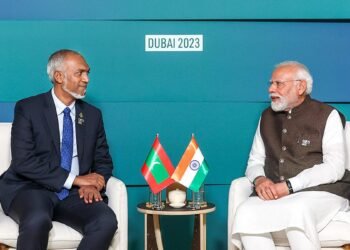
    Amidst regional tensions, the recent withdrawal of Indian military personnel from the Maldives has sparked reactions from China, signaling potential shifts in regional dynamics and foreign relations. The move comes after the Maldivian President Mohamed Muizzu requested India to withdraw its forces from the archipelago island, raising questions about territorial sovereignty and strategic alliances in the Indian Ocean region.


    The first batch of Indian military troops stationed in the Maldives reportedly began withdrawing from the country following President Muizzu’s request. As reported by Mihaaru newspaper, 25 Indian troops deployed in the southernmost atoll of Addu left the Maldives ahead of the March 10 deadline. The withdrawal process was said to have commenced after the Indian military personnel handed over the operations of surveillance aircraft/helicopters to an Indian civilian crew.


    While there was no official confirmation from either the Maldivian or Indian authorities, Mihaaru claimed that the Maldivian National Defence Force confirmed the withdrawal of Indian troops. This development follows President Muizzu’s earlier statement in January, where he urged India to withdraw nearly 90 military personnel from the Maldives. He later announced that no Indian military personnel, including those in civilian attire, would be allowed in the country after May 10.


    The withdrawal of Indian troops from the Maldives has drawn attention from China, with spokesperson Wang Wenbin expressing China’s support for the Maldives in safeguarding its territorial sovereignty. Wenbin’s statement, reported by China’s state media Global Times, emphasized China’s stance on maintaining friendly cooperation with all sides based on independence. The Chinese Foreign Ministry spokesperson’s response underscores China’s interest in the region and its strategic positioning vis-à-vis India.


    In response to inquiries about the specifics of the Indian troop withdrawal, Wang Wenbin stated that he was not aware of the details. However, his affirmation of China’s support for the Maldives reflects China’s broader foreign policy objectives and regional interests. China’s engagement with the Maldives and other South Asian countries has intensified in recent years through infrastructure projects, economic assistance, and military cooperation, raising concerns among Indian policymakers about China’s growing influence in the Indian Ocean region.


    The withdrawal of Indian military personnel from the Maldives comes amidst a backdrop of geopolitical competition between India and China in the Indian Ocean. Both countries have sought to expand their influence in the region through infrastructure development, economic partnerships, and military cooperation with smaller Indian Ocean littoral states. The Maldives, strategically located in the Indian Ocean, has become a focal point in this power struggle, with both India and China vying for influence in the archipelago.


    China’s reaction to the withdrawal of Indian troops from the Maldives underscores its strategic interests in the region and its efforts to consolidate its influence in South Asia. In addition to expressing support for the Maldives’ territorial sovereignty, China has been actively engaging with other countries in the region, including Sri Lanka and Nepal, to strengthen defense ties and deepen cooperation on regional security issues. The recent visit of a Chinese military delegation to the Maldives, Sri Lanka, and Nepal highlights China’s growing military presence and influence in South Asia.


    In recent years, China has stepped up its engagement with the Maldives through investments in infrastructure projects and economic assistance. The signing of a “military assistance” deal between China and the Maldives, under which China will provide ‘non-lethal’ weapons to the Maldives free of cost, reflects China’s expanding military cooperation with Indian Ocean littoral states. This deal, along with other Chinese investments in the Maldives, has raised concerns in India about China’s growing influence and strategic presence in the region.


    The withdrawal of Indian military personnel from the Maldives, territorial sovereignty and China’s response to the development highlight the complex geopolitical dynamics at play in the Indian Ocean region. As major powers like India and China compete for influence in the strategically important region, smaller states like the Maldives find themselves caught in the middle, balancing between competing interests and strategic partnerships. The evolving security environment in the Indian Ocean underscores the need for regional cooperation and dialogue to address common challenges and maintain peace and stability in the region.

  • China Invites Bangladesh PM Sheikh Hasina for Talks

    China Invites Bangladesh PM Sheikh Hasina for Talks

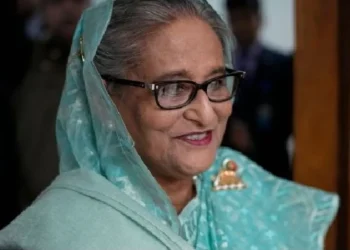
    China has formally invited Bangladesh Prime Minister Sheikh Hasina for an official visit, expressing eagerness to collaborate with the new government in Dhaka to enhance bilateral cooperation across various sectors.


    “We (Dhaka) will find a suitable time for the visit,” stated Foreign Minister Hassan Mahmud during a press briefing after his meeting with Chinese Ambassador to Bangladesh Yao Wen on Sunday.


    Ambassador Yao Wen’s meeting with Minister Mahmud occurred following the successful re-election of the Awami League, led by Prime Minister Sheikh Hasina, for a consecutive fourth term in the elections held on January 7. The Bangladesh Nationalist Party (BNP), a major opposition party, boycotted the elections.


    Foreign Minister Mahmud mentioned that discussions are in progress to coordinate the visit at a mutually convenient time for Prime Minister Hasina’s official tour to Beijing.


    Prime Minister Hasina previously visited China from July 1-6, 2019, where she also participated in the 13th Summer Davos Forum in Dalian and had a meeting with Chinese President Xi Jinping.


    In a statement, the foreign ministry emphasized that China reaffirmed its commitment to strengthening bilateral relations during the tenure of Bangladesh’s new government.


    After the January 7 polls, Chinese President Xi congratulated Prime Minister Hasina and expressed confidence in fostering stronger ties between the two nations.


    Sources from the Bangladesh foreign ministry disclosed that China had initially proposed a visit by Prime Minister Hasina in September of the previous year. However, due to the elections and other commitments, the visit was postponed.


    China’s invitation comes shortly after Obaidul Quader, the general secretary of the ruling party, and Road Transport Minister, acknowledged India’s support during the elections. Quader stated that there is no reason for strained relations with India, and he believes that the wall of confusion and mistrust has been broken by the leaders of both countries.


    A senior foreign ministry official, speaking on the condition of anonymity, emphasized that Bangladesh aims to maintain a balanced relationship with both India and China. The strategic positioning of Bangladesh between these two neighboring nations requires careful diplomacy to ensure stability and development.


    Analysts credit Prime Minister Hasina for skillfully navigating the competing interests of India and China. Bangladesh finds itself situated between these two powerful nations, and Hasina’s diplomatic efforts have garnered support from both India and China, as well as other significant global players like Russia.


    India characterized the Bangladesh election as an “internal matter,” a sentiment echoed by Beijing. While Western powers, including the United States, have called for credible polls, Hasina’s adept handling of diplomatic relations has contributed to maintaining stability in Bangladesh.

  • India-China Border Dispute – Jaishankar Asserts Firm Resolution

    India-China Border Dispute – Jaishankar Asserts Firm Resolution

    The persistent border dispute between India and China will remain a significant factor affecting relations between the two nations on multiple fronts, including trade and economics, clarified External Affairs Minister S Jaishankar on Saturday. Addressing a meeting, Jaishankar emphasized that normal relations between India and China are unlikely unless a firm solution is reached on the border issue, and the forces stationed there face each other.


    “I have explained to my Chinese counterpart that unless you find a solution on the border, if the forces will remain face-to-face and there will be tension, then you should not expect that the rest of the relations will go on in a normal manner; it is impossible,” stated Jaishankar during the ‘Manthan’ townhall meeting in Maharashtra’s Nagpur.


    The border tensions between India and China have been a persistent issue, leading to military standoffs and impacting diplomatic ties. Jaishankar’s recent remarks underline the Indian government’s stance on the matter, highlighting the necessity of resolving the border dispute for the normalization of broader bilateral relations.


    In the course of the interaction, Jaishankar addressed various aspects of Indian diplomacy, shedding light on India’s efforts to secure a permanent seat in the United Nations Security Council (UNSC). He noted that over time, more countries are expressing support for India’s inclusion in the UNSC, but he acknowledged that achieving such recognition requires proactive efforts.


    “With each passing year, the world feels that India should be there, and I can feel that support. The world does not give things easily and generously; sometimes you have to take it,” Jaishankar remarked on India’s pursuit of a permanent seat in the UNSC.


    Responding to questions about India’s participation in international groupings like QUAD and BRICS, Jaishankar highlighted the importance of maintaining ties with different nations in diplomacy. He emphasized India’s independent stance, noting the need to manage interests by dealing with diverse groups. Jaishankar drew an analogy to everyday life, where individuals strive to maintain friendly relationships with people who may have disagreements with each other.


    “Just like how people visit different parties to maintain good relations with other people, I follow the same practice for India’s foreign policy,” explained Jaishankar, underscoring the significance of engaging with various nations to safeguard India’s interests.


    The External Affairs Minister’s insights into India’s foreign policy and diplomatic strategies provide valuable perspectives on the challenges and opportunities the country faces in the global arena. As the India-China border issue continues to impact broader relations, Jaishankar’s emphasis on the need for a resolution underscores the complexities involved in managing bilateral ties amid regional and global dynamics.

  • India Reiterates Opposition to China’s Belt and Road Initiative

    India Reiterates Opposition to China’s Belt and Road Initiative

    India has reaffirmed its opposition to China’s Belt and Road Initiative (BRI) amidst recent developments in the Maldives. The Indian Ministry of External Affairs spokesperson, Arindam Bagchi, emphasized that India’s cooperation with the Maldives is based on jointly addressing shared challenges and priorities.


    These developments follow the Maldives’ president-elect, Mohamed Muizzu, expressing support for China’s BRI. Bagchi reiterated India’s well-established stance on the BRI, which includes concerns about the program’s “lack of respect for our sovereignty and territorial integrity.”


    India did not receive an invitation to this year’s Belt and Road Forum hosted by China. The key reason for India’s absence from the BRI is its objections to the China-Pakistan Economic Corridor (CPEC), a significant component of the initiative, which runs through Pakistan-occupied Kashmir. India believes the program does not offer a level playing field for non-Chinese companies.


    Bagchi pointed out that parts of the CPEC pass through territories in “illegal occupation of Pakistan,” which is viewed as a violation of India’s sovereignty and territorial integrity. India’s concerns about the BRI have remained consistent since its statement in May 2017 during the first Belt and Road Forum.


    The 10th-anniversary Belt and Road Forum was attended by Russian President Vladimir Putin, who had skipped the G20 Summit hosted by India. However, Bagchi emphasized that India does not wish to link G20 participation with other matters, highlighting that India had invited all G20 members to the summit in New Delhi.


    In response to questions about the Maldives’ president-elect endorsing the BRI and plans to remove Indian military personnel from the archipelago, Bagchi emphasized India’s contributions to the Maldives in humanitarian aid, disaster relief, medical evacuations, and combating illegal maritime activities. Over the past five years, Indian personnel have carried out more than 500 medical evacuations, saving Maldivian lives. India has conducted multifaceted missions to safeguard maritime security, underscoring its commitment to the partnership with the Maldives, particularly in areas of humanitarian assistance, welfare, and disaster relief.

  • India and China Agree to Make Efforts for Border Disengagement

    India and China Agree to Make Efforts for Border Disengagement

    At the sidelines of the BRICS summit in Johannesburg, Indian Prime Minister Narendra Modi and Chinese President Xi Jinping engaged in discussions that have resulted in an agreement to intensify efforts towards border disengagement and de-escalation between the two nations. This move is aimed at addressing ongoing tensions and concerns along the Line of Actual Control (LAC) in the western sector of the India-China border areas.


    Foreign Secretary Vinay Kwatra confirmed the discussions and stated that during their conversation, Prime Minister Modi conveyed India’s concerns regarding the unresolved border issues in the western sector of the India-China border. He emphasized the significance of maintaining peace and tranquility along the border areas, as well as respecting the Line of Actual Control (LAC), as crucial factors for the normalization of the India-China relationship.


    Despite the border dispute being a complex issue, China and India have recognized the importance of addressing it within the broader context of their bilateral relationship. While China has attempted to separate the border issue from the overall relationship, India has consistently highlighted it as a key obstacle that needs to be addressed.


    The discussions between Modi and Xi come after a period of reduced direct talks between the two leaders since the border dispute began. Although they had met numerous times between 2014 and 2019, the border tensions led to a decrease in direct interactions. The recent meeting at the BRICS summit signals a willingness on both sides to engage and work towards a resolution.


    The outcome of this discussion underscores the significance of dialogue and diplomatic engagement in addressing complex issues and fostering stability in the India-China relationship. It remains to be seen how these intensified efforts towards border disengagement and de-escalation will unfold and contribute to the overall bilateral ties between the two nations.