Tag: Flash Flood

  • Flash Flood in Sikkim: 27 Bodies Recovered

    Flash Flood in Sikkim: 27 Bodies Recovered

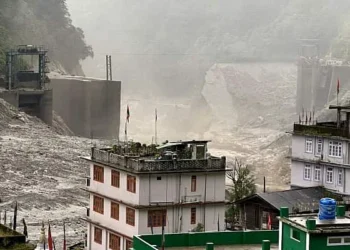
    The flash flood in Sikkim’s Teesta river, triggered by a cloudburst in Lhonak Lake, has had devastating consequences, with 27 bodies recovered so far, including seven Army personnel. The search continues for the 142 people still missing in the aftermath of this natural disaster. The flash flood has caused widespread damage in the region, impacting over 25,000 people and resulting in the destruction of more than 1,200 houses. Thirteen bridges have been washed away, isolating several areas in the picturesque Himalayan state from the rest of the country.


    Rescue efforts have been underway, with 2,413 people rescued from various locations affected by the flash flood. Approximately 6,875 people are currently taking shelter in 22 relief camps that have been set up across the state. Sikkim has been severely affected by the flash flood, leading Chief Minister Prem Singh Tamang to announce financial assistance of ₹4 lakh for the families of the deceased and immediate relief of ₹2,000 each for those taking shelter in the camps.


    Union Home Minister Amit Shah has approved the release of ₹44.8 crore as an advance amount from the central share of the State Disaster Response Fund (SDRF) to provide relief to those affected by the disaster. Efforts have also been made to rescue approximately 3,000 tourists who were stranded in North Sikkim. However, inclement weather conditions have posed challenges to these rescue operations.


    In light of this tragic event, steps are being taken to establish early warning systems for glacial floods in vulnerable areas such as Lhonak Lake and Shako Cho in Sikkim. This preventive measure aims to mitigate the impact of similar disasters in the future. The India Meteorological Department (IMD) has forecasted the possibility of light to moderate rain in Mangan district over the next five days, which will need to be monitored closely.


    This tragedy underscores the critical importance of disaster preparedness and the need for effective early warning systems in regions prone to natural disasters like flash floods and cloudbursts. The ongoing rescue and relief efforts reflect a commitment to finding and assisting all those affected by this devastating event, as the state of Sikkim works towards recovery and rehabilitation.

  • Government Urges Tourists to Postpone Visits After Flash Flood

    Government Urges Tourists to Postpone Visits After Flash Flood

    The Prem Singh Tamang government in Sikkim has made an urgent appeal to tourists planning to visit the Himalayan state to postpone their travel plans until the situation normalizes in the wake of a devastating flash flood that has claimed at least 14 lives, with 102 individuals still missing.


    The state government is also reassuring those stranded in the flood-affected Mangan district not to panic, as evacuation efforts are set to commence on Friday. Over 3,000 tourists, including foreigners, are reportedly stuck in various parts of the state.


    In response to the unfolding crisis, the Tourism and Civil Aviation Department has issued an advisory urging all tourists planning to visit Sikkim to delay their travel until conditions improve. The department also noted that the state government would extend all possible assistance and support during the evacuation process, which is scheduled to begin on October 6, subject to weather conditions.


    This advisory was issued shortly after Chief Minister Prem Singh Tamang instructed officials to stop issuing permits to tourists for popular destinations such as Tsomgo Lake, Baba Mandir, and Nathula starting from Friday.


    According to the Tourism and Civil Aviation Department, all tourists stranded in the Lachung and Lachen areas are safe, and there have been no reports of adverse incidents concerning them.


    In another advisory, the state government appealed to hoteliers, travel agents, tourist taxi drivers, and other stakeholders in the tourism sector to come forward and provide support to the stranded travelers in light of the flood situation in the Teesta river basin. The department urged taxi drivers and stakeholders to offer necessary assistance to tourists by maintaining normal and reasonable fares for taxis and accommodations during this time of distress.


    Earlier in the day, the Indian Army facilitated the provision of satellite phones for stranded tourists, enabling them to communicate with their families from inaccessible locations in northern Sikkim, which has been severely impacted by the flash flood in the Teesta river basin.


    Search and rescue operations are ongoing, with Indian Army and NDRF teams working diligently to locate individuals swept away by the flash flood. As of now, 14 bodies have been recovered, while 102 people, including 22 army personnel, remain missing following the cloudburst over Lhonak Lake in north Sikkim.


    The flash flood occurred in the early hours of Wednesday, triggering a calamity that has affected 22,034 individuals, as reported by the Sikkim State Disaster Management Authority (SSDMA). A total of 2,011 people have been successfully rescued from the affected areas, and efforts continue to locate those missing and provide assistance to those in need.


    The Sikkim government’s advisories and measures aim to prioritize safety and the well-being of tourists and residents during this challenging time.