Tag: Emmanuel Macron

  • China Seeks Closer Ties with France Following Macron’s India Visit

    China Seeks Closer Ties with France Following Macron’s India Visit

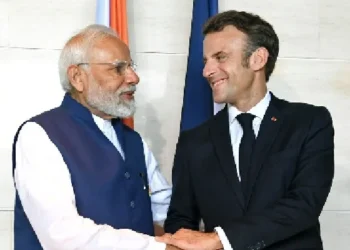
    In the aftermath of French President Emmanuel Macron’s significant visit to India, Chinese President Xi Jinping has announced a desire to enhance ties with France. On the occasion of the 60th anniversary of diplomatic relations between China and France, President Xi expressed the need to “open up a path of peace, security, prosperity, and progress for human development” in collaboration with France.


    Chinese Foreign Minister Wang Yi emphasized China’s commitment to boosting imports from France and fostering a favorable business environment for Chinese companies. “We will continue to unleash consumer and investment market demand and expand the import of high-quality products and services from France,” Wang Yi stated. He also expressed hope that France would reciprocate by providing Chinese companies with a fair, just, and predictable business environment.


    This move comes at a time when France, under the leadership of President Macron, is advocating for Europe to position itself as a third bloc, acting as a balancing force between the United States and China. Macron’s recent visit to India, where he was the chief guest at the 75th Republic Day celebrations, marked a strengthening of ties between India and France. During the visit, both nations unveiled an ambitious defence roadmap and intensified cooperation in the strategic Indian Ocean and the broader Indo-Pacific region.


    The deepening of India-France collaboration in the Indian Ocean has drawn attention from China, which is seeking to expand its influence in India’s vicinity. President Macron’s visit and the subsequent agreements with India have positioned France as a key defence partner to India. This strategic partnership aligns with broader efforts by the United States and the European Union to engage India as a counterweight to China’s increasing influence.


    China’s interest in bolstering ties with France indicates its recognition of the evolving geopolitical landscape and the significance of strategic partnerships in shaping global dynamics. As France strengthens its presence in the Indo-Pacific, China is keen on maintaining diplomatic and economic relations to navigate the changing international order.


    The Indo-Pacific region has become a focal point in global discussions, with the United States, India, and various other nations emphasizing the need for a free, open, and thriving Indo-Pacific. Concerns over China’s assertive military actions in the region have prompted collaborative efforts to ensure regional stability and safeguard shared interests.


    The move by China to prioritize ties with France in the aftermath of Macron’s India visit underscores the intricate geopolitical maneuvering taking place on the world stage. It reflects the interconnectedness of nations and the strategic calculations being made to secure economic, diplomatic, and security interests.


    As China expresses its willingness to strengthen economic ties with France, the global community will be closely watching the developments in this relationship. The dynamics between major powers, including China, France, and other key players, will play a crucial role in shaping the geopolitical landscape and influencing international relations in the years to come.


    China’s overtures towards France highlight the evolving nature of global alliances and partnerships. The geopolitical chessboard is witnessing strategic moves that have implications for regional and global stability. As nations navigate these complexities, the outcomes will shape the contours of international relations and cooperation in the foreseeable future.

  • Emmanuel Macron’s Visit: Strengthening Indo-French Ties

    Emmanuel Macron’s Visit: Strengthening Indo-French Ties

    French President Emmanuel Macron is set to visit Jaipur on January 25 ahead of his participation as the Chief Guest in India’s 75th Republic Day celebrations. The visit is a significant diplomatic event that not only underscores the deep-rooted ties between India and France but also marks the 25th-anniversary celebrations of the strategic partnership between the two nations.


    Historic Ties and Diplomatic Relations:

    India and France share a rich history of diplomatic relations dating back to the establishment of formal ties in 1947. Over the years, the two countries have collaborated on various fronts, including defense, trade, culture, and education. The strategic partnership, formalized in 1998, has strengthened bilateral cooperation in diverse areas, making France one of India’s key allies in Europe.


    Macron’s Previous Visits and Bilateral Engagements:

    President Macron has been no stranger to India, having visited the country on multiple occasions. His previous state visit in March 2018 and an official visit in September 2023 for the Delhi G20 Summit showcased the importance both nations place on fostering robust diplomatic ties. Additionally, Macron has extended invitations to Prime Minister Narendra Modi, welcoming him to France on four separate occasions.


    Symbolic Participation in Republic Day Celebrations:

    Emmanuel Macron’s visit as the Chief Guest for India’s 75th Republic Day celebrations is symbolic of the close and amicable relationship between the two nations. This honor signifies France’s sixth participation, the highest among all countries, as the Chief Guest on India’s Republic Day. Such symbolic gestures underscore the mutual respect and shared values that form the foundation of the Indo-French partnership.


    Itinerary Highlights:

    President Macron’s visit to Jaipur is scheduled to commence with a tour of the historic Amber Fort. The Pink City has been adorned with posters of both Prime Minister Narendra Modi and the French President, creating an atmosphere of anticipation and celebration. Following his arrival, Macron will be received by PM Modi, and the two leaders will explore key landmarks of Jaipur together, including the iconic Jantar Mantar.


    Cultural Interactions and Bilateral Talks:

    Apart from the ceremonial aspects, Macron’s visit includes significant cultural interactions. He will engage with local artisans and stakeholders involved in Indo-French cultural projects. This cultural exchange not only fosters people-to-people connections but also highlights the shared appreciation for art and heritage between the two nations.


    After the cultural engagements, President Macron and Prime Minister Modi will delve into in-depth bilateral talks. These discussions are expected to cover a spectrum of issues, including economic cooperation, defense ties, climate change, and global challenges. Such high-level talks are instrumental in aligning the strategic priorities of both nations and finding common ground on various regional and global issues.


    French Delegation and Business Ties:

    Accompanying President Macron on his state visit is a ministerial delegation comprising Stephane Sejourne (Europe and Foreign Affairs), Sebastien Lecornu (Armed Forces), and Rachida Dati (Culture). The presence of these ministers reflects the diverse areas of cooperation that will be discussed during the visit.


    In addition to the ministerial delegation, a C-level business delegation representing French majors, SMEs, and mid-caps will accompany Macron. Strengthening economic ties has been a consistent focus of the Indo-French partnership. The business leaders from both countries will explore avenues for enhancing trade and investments, further solidifying the economic dimension of the bilateral relationship.


    Defense Cooperation and Republic Day Parade:

    One of the highlights of President Emmanuel Macron’s participation in the Republic Day celebrations is the active involvement of a contingent from the French armed forces in the parade. This symbolic gesture underscores the strong defense cooperation between India and France. The joint participation of the armed forces in the parade serves as a visible manifestation of the strategic alignment between the two nations on security matters.


    President Emmanuel Macron’s visit to India for the Republic Day celebrations is more than a diplomatic event; it is a reaffirmation of the enduring friendship between India and France. As both nations navigate global challenges, the strategic partnership continues to evolve, encompassing a wide range of collaborative efforts. From cultural exchanges to defense cooperation, the multifaceted Indo-French relationship exemplifies the shared commitment to a future of mutual growth and prosperity. Macron’s visit not only honors the historical ties but also sets the stage for deeper engagements and collaborations in the years to come.

  • Macron Appoints Gabriel Attal, 34, as France’s New PM

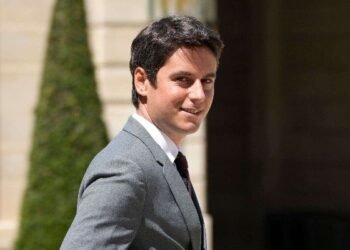
    Macron Appoints Gabriel Attal, 34, as France’s New PM

    In a strategic move to inject fresh energy into his second term and enhance the chances of his centrist party in the upcoming European Parliament elections, French President Emmanuel Macron has appointed Gabriel Attal, the 34-year-old Education Minister, as the new prime minister. While this decision may not trigger a significant political shift, it reflects Macron’s intention to move beyond the unpopular pension and immigration reforms of the previous year.


    Opinion polls currently indicate Macron’s camp trailing the far-right leader Marine Le Pen’s party by approximately eight to ten percentage points. By bringing in a dynamic and popular figure like Gabriel Attal, Macron aims to appeal to a broader audience and potentially narrow this gap.


    Attal, a close ally of Macron, gained widespread recognition as the government spokesman during the challenging times of the COVID-19 pandemic. His effective communication skills and adept handling of public relations have positioned him as one of the country’s most popular politicians, according to recent polls. Attal’s ease in navigating radio shows and parliamentary sessions has contributed to his political stature.


    As Gabriel Attal assumes the role of prime minister, he makes history by becoming France’s youngest prime minister and the first to be openly gay. This move aligns with Macron’s broader strategy of fostering inclusivity and diversity within his administration.


    Comparisons have been drawn between Gabriel Attal and the Emmanuel Macron of 2017, highlighting the youthful and authoritative qualities they share. MP Patrick Vignal noted that Attal is clear and possesses authority, reminiscent of Macron’s initial popularity when he became the youngest leader in modern French history.


    The Macron-Attal duo is expected to bring a fresh perspective and vigor to the government, addressing challenges and pursuing initiatives that resonate with the public. However, Macron’s struggles with a more turbulent parliament, especially after losing his absolute majority in 2022, remain a significant backdrop to this leadership change.


    Harris Interactive pollster Jean-Daniel Levy expressed optimism, stating that the Macron-Attal partnership has the potential to breathe new life into the government. However, opposition leaders have been quick to downplay expectations, emphasizing that much of the decision-making still rests with Macron himself.


    Socialist Party leader Olivier Faure commented that irrespective of the prime minister being Elisabeth Borne, Gabriel Attal, or someone else, he expects the continuation of the same policies. This sentiment reflects the skepticism among opposition leaders regarding substantial policy shifts with the change in prime minister.


    As Gabriel Attal takes on the responsibilities of prime minister, the eyes of the nation are on how this youthful and dynamic leadership will navigate the challenges ahead, define its policy agenda, and influence the political landscape in the run-up to the European Parliament elections.

  • France Deploys 7,000 Soldiers After School Stabbing Attack

    France Deploys 7,000 Soldiers After School Stabbing Attack

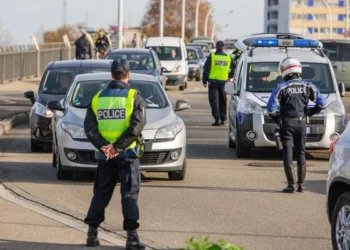
    Following a deadly attack on a school in Arras, France, where a Chechen-origin man fatally stabbed a teacher and wounded three others, the French government has decided to deploy 7,000 soldiers to enhance security. The attack, which occurred on Friday, has been labeled by President Emmanuel Macron as an act of “Islamist terror.”


    President Macron declared the deployment of the soldiers, and this move will be completed by Monday evening, underscoring the seriousness of the situation. France has raised its alert level to the highest position after a security meeting chaired by Macron, during which he mentioned that another “attempted attack” had been thwarted by security forces.


    The attack, which took place in Arras, a town in northeastern France with significant Jewish and Muslim populations, was condemned by President Macron, who visited the school following the incident. Macron praised the victim, the teacher, for his courage in trying to thwart the attacker and said he had “probably saved many lives.”


    The suspected attacker, Mohammed Moguchkov, a man in his 20s with Chechen origins from Russia’s predominantly Muslim southern Caucasus region, has been taken into custody by the police. He was reportedly listed on a French national register known as “Fiche S,” which identifies individuals as potential security threats. France’s domestic intelligence agency, the DGSI, had been conducting electronic and physical surveillance on him.


    The preliminary investigation into the attack revealed that Moguchkov cried out the Arabic phrase “Allahu akbar!” (God is greatest) during the assault, pointing to a possible Islamist motivation behind the attack.


    This incident underscores the ongoing security challenges that France and many other countries face as they deal with the threat of terrorism, particularly from individuals with extremist ideologies. The government’s decision to deploy thousands of soldiers is aimed at enhancing security and preventing further attacks, as the nation grapples with the serious implications of this tragic event.