Tag: Electoral Process

  • Election Commission Bans Exit Polls

    Election Commission Bans Exit Polls

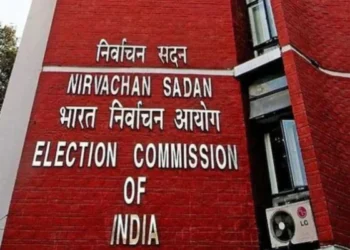
    With the Lok Sabha elections looming on the horizon, the Election Commission of India (ECI) has taken measures to regulate the dissemination of information during the electoral process. In an official notification, the ECI announced a ban on the publication or publicizing of exit polls in the country from 7 am on April 19 to 6:30 pm on June 1. Additionally, the display of any election-related content, including results of opinion polls or surveys, on electronic media will be prohibited during the 48 hours leading up to the conclusion of the poll.


    This decision by the ECI aims to uphold the integrity and impartiality of the electoral process by preventing the premature disclosure of voting trends and outcomes. Exit polls, which seek to forecast the election results based on voter surveys conducted after individuals have cast their ballots, are seen as potentially influencing voter behavior and can undermine the sanctity of the electoral process. By imposing a ban on the dissemination of such polls during the specified period, the ECI seeks to ensure a level playing field for all political parties and candidates contesting in the elections.


    In addition to regulating exit polls, the ECI has also outlined the schedule for the Lok Sabha elections, which is set to unfold in seven phases over 44 days, beginning on April 19 and concluding on June 1. The counting of votes is scheduled to take place on June 4. The voting schedule has been divided geographically, with different states and union territories casting their votes on different dates across multiple phases.


    During the first phase on April 19, 21 states and union territories will participate in voting across 102 constituencies. Subsequent phases will see varying numbers of states and constituencies casting their votes, culminating in the final phase on June 1, where eight states and union territories will cast their votes across 57 constituencies. Overall, there are over 97 crore eligible voters and 543 Lok Sabha seats up for grabs in these elections.


    Aside from the Lok Sabha polls, several state assemblies, including those of Andhra Pradesh, Arunachal Pradesh, Odisha, and Sikkim, will also be going to elections during the same period. Additionally, bye-elections to 25 assembly constituencies in 12 states will be conducted concurrently with the Lok Sabha elections, further adding to the electoral activity during this 44-day period.


    The comprehensive electoral schedule and regulations put in place by the ECI demonstrate its commitment to conducting free, fair, and transparent elections in the world’s largest democracy. By meticulously planning the polling process and enforcing guidelines to prevent the premature disclosure of election-related information, the ECI aims to safeguard the democratic principles upon which the Indian electoral system is built.


    As the electoral process unfolds over the coming weeks, all stakeholders, including political parties, candidates, and voters, are expected to adhere to the guidelines laid down by the ECI to ensure the integrity and credibility of the electoral process. With the eyes of the nation and the world upon it, the ECI plays a crucial role in upholding the democratic ideals and values that form the foundation of India’s electoral democracy.

  • JNUSU Elections 2024: A Renewed Era of Student Democracy

    The upcoming Jawaharlal Nehru University Students’ Union (JNUSU) elections scheduled for March 22, 2024, mark a significant moment for the university community after a hiatus of more than four years since the last elections in September 2019. The announcement of the election schedule by the JNUSU Election Committee has set the stage for a democratic exercise that holds immense importance for the student body and the university as a whole.


    According to the schedule outlined by the Election Committee, the electoral process will commence on Monday with the publication and correction of the tentative voters’ list. This step is crucial for ensuring the accuracy and integrity of the electoral roll, laying the foundation for a transparent and fair election process.


    On March 24, the actual polling will take place, followed by the counting of votes later in the day and the subsequent declaration of results. The timeline reflects a carefully planned sequence of events aimed at facilitating smooth conduct and timely completion of the electoral process.


    The Election Committee has emphasized the importance of addressing any discrepancies or objections regarding the voters’ list well in advance of the nomination filing process. To facilitate this, a tentative voters’ list will be released on March 11, allowing stakeholders to review and raise any concerns they may have. Corrections to the list can be made on March 12 during the designated window.


    Nomination forms will be issued on March 15, marking the official commencement of the candidate nomination process. Candidates will have until March 16 to file their nominations, ensuring that all interested parties have a fair opportunity to participate in the election.


    Following the submission of nominations, the Election Committee will scrutinize the validity of the candidates’ nominations and publish the list of valid nominees on March 17. This step is essential for ensuring compliance with the election guidelines and maintaining the integrity of the electoral process.


    Candidates will then have the opportunity to withdraw their nominations on the same day, leading to the finalization of the list of candidates who will contest in the elections. This transparency in the candidate selection process is crucial for upholding the principles of democracy and ensuring that all eligible candidates have an equal chance to participate.


    The decision to hold the JNUSU elections comes after sustained advocacy efforts by the student union and the broader student community. The demand for elections was rooted in the desire to uphold the principles of democratic governance and ensure student representation in university decision-making processes.


    The student union’s advocacy efforts succeeded in pressuring the JNU administration to conduct the elections in accordance with the recommendations of the Lyngdoh committee. The committee, constituted by the Union Ministry of Human Resource Development and chaired by former Chief Election Commissioner JM Lyngdoh, had proposed guidelines for student union elections in higher education institutions across India.


    The conduct of the JNUSU elections in adherence to the Lyngdoh committee recommendations underscores the university’s commitment to democratic values and student empowerment. By providing a platform for students to participate in the electoral process and elect their representatives, the JNUSU elections contribute to the vibrant democratic ethos of the university community.

  • Russian Election 2024: Putin’s Grip Tightens Amid Controversy

    Russian Election 2024: Putin’s Grip Tightens Amid Controversy

    The upcoming Russian election slated for this week is poised to solidify President Vladimir Putin’s grip on power until at least 2030. As the political landscape stands, any opposition figures capable of challenging Putin’s authority have been either imprisoned or exiled abroad. Additionally, independent media outlets critical of Putin’s policies have faced censorship and blockades, further consolidating the Kremlin’s control over the electoral process in the country of 146 million.


    Despite these challenges, the Russian election is expected to draw significant attention from both domestic and international observers, providing insights into the trajectory of the major nuclear power, especially amidst its ongoing full-scale invasion of Ukraine.


    Here’s what you need to know about the upcoming election, including details on voting procedures, the candidates on the ballot, and concerns regarding the election’s fairness and transparency.


    Who Can Vote in the Russian Election?

    Any Russian citizen above the age of 18, not serving a criminal conviction in prison, is eligible to vote in the Russian election. The Central Election Commission has reported a total of 112.3 million eligible voters within Russia and Russian-occupied parts of Ukraine, along with an additional 1.9 million eligible voters residing abroad.


    How Will Voting Unfold?

    Voting across Russia will occur over three days, a departure from the traditional single-day voting process. This extended duration was first introduced during the 2020 constitutional referendum orchestrated by Putin, allowing voters more flexibility in participating. Notably, this election will also witness the introduction of online voting, available in 27 Russian regions and Crimea, annexed from Ukraine in 2014.


    Despite criticisms and objections from Kyiv and Western countries, voting will take place in the annexed regions of Donetsk, Luhansk, Zaporizhzhia, and Kherson. Early voting has already commenced in some regions and will progressively roll out in others over the designated voting period.


    Who Is on the Ballot?
    The prominent candidate in the election is President Vladimir Putin, running as an independent candidate seeking his fifth term in office. Putin, in power since 2000, orchestrated constitutional changes in 2020 that reset his term limits, enabling him to potentially extend his tenure until 2030.


    Other candidates representing Kremlin-friendly parties include Nikolai Kharitonov of the Communist Party, Leonid Slutsky of the Liberal Democratic Party, and Vladislav Davankov of the New People Party. However, historical data suggests that these candidates are unlikely to pose a significant challenge to Putin, with the 2018 presidential election showcasing Putin’s dominance with over 76% of the vote.


    Concerns Regarding Fairness and Transparency

    Observers and opposition groups have expressed skepticism regarding the fairness and transparency of the Russian election. Criticisms have been directed towards the extension of the voting period and the introduction of online voting, which are perceived to hinder election transparency.


    Instances of electoral malpractice, including forced voting and ballot-box stuffing, have been reported in past elections, raising concerns about the integrity of the electoral process. The 2018 presidential election was deemed lacking in genuine competition by the Organization for Security and Co-operation in Europe (OSCE), citing continued pressure on critical voices.


    The Election’s Significance and Challenges

    Political analysts view the upcoming election as a pivotal moment, serving as a referendum on Putin’s leadership and the ongoing war in Ukraine. However, with limited alternatives to Putin on the ballot and a fractured opposition, the election presents challenges in fostering genuine political change.


    The recent death of prominent opposition figure Alexei Navalny, coupled with the imprisonment and exile of other opposition leaders, underscores the Kremlin’s efforts to suppress dissent and maintain control over the political narrative.

    The Russian election of 2024 carries significant implications for the country’s political future and its relations with the international community. Despite concerns surrounding the fairness and transparency of the electoral process, the outcome will likely reinforce President Putin’s authority and influence for the foreseeable future. As the world watches closely, the election will undoubtedly shape Russia’s trajectory in the years to come, both domestically and on the global stage.

  • Pakistan Election 2024: Political Landscape

    Pakistan Election 2024: Political Landscape

    In the aftermath of the February 8 polls in Pakistan, the political landscape remains uncertain as no single party has secured a clear majority in Parliament. Amidst the ambiguity, the nation eagerly awaits the formation of a new government and the subsequent direction of its governance.


    Former Prime Ministers Nawaz Sharif and Imran Khan have both laid claim to victory, each declaring their respective parties as the winner. Nawaz Sharif’s Pakistan Muslim League (N) asserts its position as the single largest party, while Imran Khan’s Pakistan Tehreek-e-Insaf (PTI) remains confident despite facing what they term as a crackdown.


    The current tally stands with PTI-backed candidates securing 93 seats, followed by PML-N with 74 seats and the Pakistan Peoples Party (PPP) with 54 seats in the National Assembly, as per reports from Pakistani media outlets. However, to form a government, a party needs to secure at least 133 out of the 265 contested seats.


    One of the critical steps in the formation of a government is the demonstration of a simple majority in the National Assembly, which comprises 336 seats. While 266 seats are decided through direct voting, an additional 70 reserved seats, 60 for women and 10 for non-Muslims, play a significant role in determining the final position of parties in the Assembly.


    In the wake of the electoral outcome, political parties are swiftly maneuvering to forge alliances and secure their positions in the new government. The MQM-P and PML-N have recently announced a “principle agreement” to collaborate, signaling a potential alliance in the making. Additionally, the PML-N is also exploring the possibility of joining hands with the Pakistan Muslim League-Quaid (PML-Q) to consolidate its position further.


    However, coalition talks are not without their complications. Reports suggest that the PPP has set a condition for joining hands with the PML-N, demanding the premiership for Bilawal Bhutto Zardari. This condition underscores the intricacies involved in forming a cohesive government and the negotiations required to address diverging interests among political stakeholders.


    On the other hand, Imran Khan’s PTI is adamant about assuming leadership roles in Punjab, Khyber Pakhtunkhwa, and at the federal level. The party is actively engaging with potential allies and party-backed candidates to garner support for its governance agenda. Additionally, PTI has dismissed attempts to form a “PDM 2,” referring to the Pakistan Democratic Movement, an alliance of opposition parties led by Nawaz Sharif.


    In the midst of these political maneuvers, concerns about electoral integrity have also surfaced. Reports of suspicious activities and allegations of electoral misconduct have prompted PTI to postpone all protests, emphasizing the need for peaceful resolution and adherence to democratic norms. This development highlights the delicate balance between political activism and responsible governance.


    Moreover, the statement issued by Pakistan’s army chief underscores the importance of political cohesion in serving the nation’s interests. It emphasizes the need for political leaders to rise above self-interests and work collaboratively towards governing effectively. This endorsement from the military establishment underscores the significance of political stability in Pakistan’s democratic framework.


    Looking ahead, the formation of a new government in Pakistan hinges on successful coalition-building efforts and constructive dialogue among political stakeholders. As the nation navigates through this critical juncture, the world watches with anticipation, hoping for a smooth transition of power and the emergence of effective governance to address the myriad challenges facing Pakistan.

  • Senegal Postpones Presidential Elections

    Senegal Postpones Presidential Elections

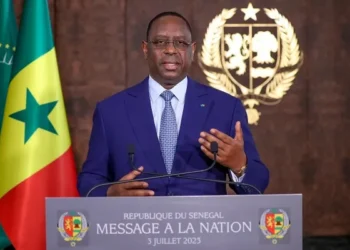
    In a rare move, Senegal has decided to postpone its upcoming presidential elections following a controversy over the disqualification of opposition candidates. The decision to delay the elections was prompted by an investigation into the validation process of the contenders after doubts were raised about the independence of two judges at the Constitutional Council, which finalized the list of 20 candidates eligible to run on February 25.


    Senegal’s President Macky Sall announced the postponement in an address to the nation, emphasizing the need to avoid a crisis in the country. This marks the first time that presidential elections have been delayed in Senegal, which has experienced four mostly peaceful transitions of power since gaining independence from France in 1960.


    The controversy erupted over the disqualification of key opposition figures, including Ousmane Sonko and Karim Wade, from the list of candidates challenging the ruling party’s aspirant, Prime Minister Amadou Ba. Sonko posed a significant threat to the ruling coalition, and his exclusion raised concerns about the credibility of the electoral process.


    The decision to postpone the elections has been met with criticism, with some labeling it a “democratic setback” for Senegal. Critics argue that President Sall risks consolidating power and potentially facing accusations of a “constitutional coup” if he remains in power after April 2, when his mandate ends.


    Ousmane Sonko, who was disqualified from the race last month, had been convicted of libel for insulting the tourism minister and received a suspended prison sentence. He has thrown his support behind Bassirou Faye, the secretary-general of his dissolved Pastef party, who was expected to be a significant challenger to Prime Minister Amadou Ba.


    The delay in the elections and the controversy surrounding the disqualification of opposition candidates may have broader implications for Senegal, potentially deterring investment in an economy that was expected to expand at its fastest pace in almost five decades. The political upheaval adds an element of uncertainty to the country’s future political landscape.


    The US State Department’s Bureau of African Affairs has urged participants in Senegal’s electoral process to engage peacefully in efforts to set a new date and ensure conditions for a timely, free, and fair election. The move to delay the elections underscores the importance of addressing concerns about the integrity of the electoral process to maintain stability and credibility in Senegal’s democratic institutions.


    As the situation evolves, it remains to be seen how Senegal will navigate the challenges posed by the postponement and work towards conducting a transparent and inclusive electoral process. The delay in the presidential elections highlights the delicate balance between political stability, democratic principles, and the aspirations of the Senegalese people.