Tag: drone attack

  • Iran: US Signals Consequential Response Amid Rising Tensions

    Iran: US Signals Consequential Response Amid Rising Tensions

    The United States has emphatically expressed its aversion to engaging in a war with Iran, asserting that it perceives no inclination from Tehran to seek war either. This declaration from the Pentagon comes on the heels of an incident in Jordan where an Iran-backed group allegedly orchestrated a drone attack on a base, resulting in the tragic deaths of three American soldiers. Pentagon spokesperson Sabrina Singh conveyed the U.S. stance, emphasizing that while they do not actively seek conflict, they stand ready to respond to any attacks on their forces.


    The attack in question claimed the lives of three U.S. soldiers and left over 40 troops wounded, with injuries ranging from cuts and bruises to brain injuries. Eight of the wounded were evacuated for medical treatment, including three transported to Landstuhl Regional Medical Center in Germany. The remaining five, who sustained “minor traumatic brain injuries,” were expected to return to duty.


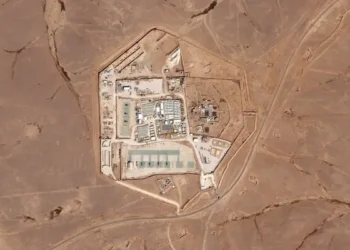
    Initial reports suggest that U.S. forces might have mistaken the enemy drone for an American one, allowing it to infiltrate a desert base in Jordan known as Tower 22, where the fatal attack occurred. Sabrina Singh expressed assurance that the U.S. would take decisive action in response to these attacks on its forces. She attributed the attacks to Iran, alleging that the assailants carried the unmistakable “footprints” of the Iran-backed group, Katiab Hezbollah.


    The recent escalation comes amid heightened tensions for the United States in the Red Sea, a critical trade route where Houthi rebels from Yemen have been launching missile attacks on various vessels, including oil tankers, posing a potential threat to the global supply chain. In response, the U.S. reportedly conducted airstrikes in Yemen. The Houthis have cited solidarity with Palestinians in Gaza as the motivation behind their Red Sea attacks.


    The Gaza conflict has been ongoing for over three months, resulting in a significant loss of life, with at least 25,000 reported deaths in the densely populated Gaza Strip. Israel’s offensive has intensified the complexities of the region, leading to broader implications for geopolitical dynamics.


    President Joe Biden faces a delicate balancing act in responding to the attacks. While placing blame on Iran, he seeks to strike back forcefully without escalating tensions in the Gaza conflict further. The political pressure on President Biden to take decisive action against Iran has been mounting, but he remains cautious to avoid sparking a broader conflict in the Middle East.


    On Sunday, President Biden pledged to hold those responsible for the recent attacks to account but reiterated the U.S.’s reluctance to plunge into another conflict in the volatile Middle East. The drone attack that claimed the lives of three U.S. soldiers in the remote Tower 22 provides President Biden with a nuanced political space to retaliate against Iran-backed forces without plunging into a direct war with Tehran.


    The Pentagon officially identified the soldiers killed in the attack as Sgt. William Jerome Rivers, 46, of Carrollton, Georgia; Spc. Kennedy Ladon Sanders, 24, of Waycross, Georgia; and Spc. Breonna Alexsondria Moffett, 23, of Savannah, Georgia.


    The region has witnessed more than 150 attacks on American forces by Iran-backed groups since the commencement of the Israel-Hamas war in October. The precarious situation underscores the complex challenges facing the United States in the Middle East and the delicate diplomatic considerations that will shape its response to acts of aggression in the region.

  • US Defense Secretary Expresses Outrage Over Drone Attack

    US Defense Secretary Expresses Outrage Over Drone Attack

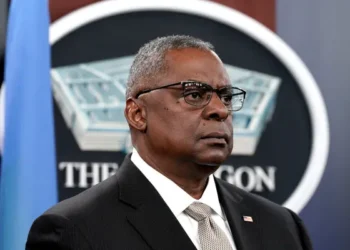
    In the aftermath of a devastating drone attack on a small American outpost in Jordan, U.S. Defense Secretary Lloyd Austin has expressed a mix of anger and sorrow over the loss of three U.S. Army soldiers. The attack, targeting a site in northeastern Jordan near the Syrian border, occurred as American forces were actively engaged in the fight against the Islamic State of Iraq and Syria (ISIS).


    In a strongly worded statement released by the Department of Defense, Secretary Austin conveyed his outrage, stating, “I am outraged and deeply saddened by the deaths of three of our U.S. service members and the wounding of other American troops in an attack last night against U.S. and Coalition forces.” The troops had been deployed to the area with the mission of working towards the lasting defeat of ISIS.


    Secretary Austin, alongside President Joe Biden, unequivocally declared that the United States will not tolerate attacks on American forces. Austin pledged, “We will take all necessary actions to defend the United States, our troops, and our interests.” This firm stance reflects the gravity of the situation and the determination of the U.S. government to safeguard its military personnel.


    Attributing the attacks to Iran-backed militias, Secretary Austin asserted that the U.S. would respond at a time and place of its choosing. The continuous assaults on U.S. forces by these militias have been a cause for growing concern, and the U.S. government appears resolute in its commitment to holding those responsible accountable.


    Expressing his condolences, Secretary Austin stated, “These brave Americans and their families are in my prayers, and the entire Department of Defense mourns their loss.” The loss of lives underscores the inherent risks that U.S. service members face while undertaking missions in volatile regions, and it highlights the sacrifices made by these individuals and their families.


    The drone attack in Jordan represents a significant escalation, marking the first instance of U.S. troops losing their lives to enemy gunfire in the Middle East since the beginning of the Gaza war. The assault specifically targeted Tower 22, a location close to the Syrian border, further exacerbating an already tense situation in the region.


    According to U.S. authorities cited by CNN, the drone responsible for the attack is believed to have been launched by militants supported by Iran and appeared to originate from Syria. The use of sophisticated drone technology in the attack underscores the evolving nature of threats faced by U.S. forces, adding a layer of complexity to their mission.


    U.S. Central Command officially confirmed the casualties, stating that a one-way drone attack on the outpost resulted in the deaths of three service members and injuries to 25 others. President Joe Biden, in response to the attack, pledged accountability for the incident. He identified the perpetrators as extremist groups supported by Iran, operating in Syria and Iraq, emphasizing that the responsible parties would face consequences determined by the United States.


    “These service members embodied the very best of our nation: unwavering in their bravery, unflinching in their duty, unbending in their commitment to our country—risking their own safety for the safety of their fellow Americans and our allies and partners with whom we stand in the fight against terrorism,” remarked President Biden, paying tribute to the fallen soldiers.


    Despite a continuous onslaught involving drones, rockets, and missiles, the majority of the reported attacks on U.S. and coalition forces in Iraq and Syria had been deemed unsuccessful as of the previous Friday. However, the specific reasons for the failure of air defenses to intercept the drone in this recent incident remain unclear, raising questions about the effectiveness of existing defense mechanisms.


    The assault on Tower 22 is the first documented attack since the series of attacks on U.S. and coalition forces commenced on October 17. U.S. forces stationed at the outpost are engaged in an advise-and-assist mission with Jordan, emphasizing the collaborative nature of efforts to maintain stability in the region. Despite the increasing frequency of these attacks, officials have reiterated their reluctance to see heightened tensions escalate into a regional war. The delicate balance of power in the Middle East and the potential for a broader conflict underscore the complex challenges facing the Biden administration in managing the evolving situation.

  • U.S. Politicians Call for Strong Response After Iran Drone Attack

    U.S. Politicians Call for Strong Response After Iran Drone Attack

    In the aftermath of the drone attack in Jordan that claimed the lives of at least three U.S. service members and left several others injured, a chorus of voices from prominent U.S. politicians, including Senator Lindsey Graham from South Carolina, is calling for a decisive response against Iran.


    Senator Graham, expressing his frustration, took to X (formerly Twitter) to state, “Hit Iran now. Hit them hard.” He criticized Secretary Austin’s attempts to deter aggression against U.S. forces in the region, describing them as a dismal failure. Graham voiced his lack of confidence in the Biden national security team’s ability to deter Iran and warned of further consequences for American service members if policies are not changed promptly.


    According to Graham, the only language the Iranian regime comprehends is force, and unless they face repercussions in terms of infrastructure and personnel, attacks on U.S. troops will persist.


    The attack, targeting U.S. forces stationed in northeast Jordan, has heightened tensions between the United States and Iran, leading some Republican lawmakers, such as Roger Wicker, the top Republican on the Senate Armed Services Committee, to call for direct strikes on Iranian targets and leadership. Wicker criticized the Biden administration’s responses to previous attacks, arguing that they have only encouraged further aggression from Iran and its proxies.


    In contrast, Senator Jack Reed, the committee’s Democratic chairman, expressed confidence in the Biden administration’s ability to respond in a deliberate and proportional manner. President Joe Biden himself pledged retaliation, emphasizing that those responsible for the attack would be held accountable at a time and in a manner of the U.S. government’s choosing.


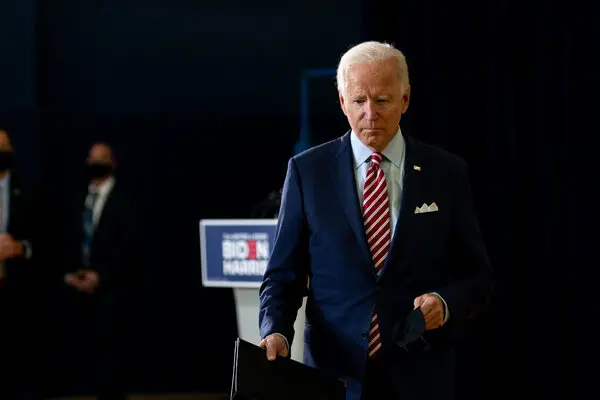
    Biden, speaking at a campaign event in Columbia, South Carolina, assured a robust response while acknowledging that the attack was carried out by Iran-backed militant groups operating in Syria and Iraq. The administration believes that a stronger response is warranted due to the loss of American lives, marking a departure from previous attacks where there were no U.S. casualties.


    The drone attack in Jordan, resulting in the first American military casualties by hostile fire in the Middle East since the beginning of the Israel-Hamas war, has escalated tensions in the region. The incident raises concerns about a broader conflict involving Iran directly, with potential implications for the ongoing Israel-Hamas conflict.


    Hamas, in response, interpreted the death of U.S. soldiers as an indication that Washington’s support for Israel might lead to broader regional consequences. They warned of a possible “regional explosion” if the Gaza war continues, highlighting the intricate geopolitical dynamics at play in the Middle East.


    The killings of U.S. service members mark the first American fatalities in months of strikes against U.S. forces by Iranian-backed militias across the Middle East. This grim development heightens the risk of further escalation and underscores the complex challenges facing the Biden administration in managing the volatile situation in the region.

  • Ukraine-Russia Conflict: Day 610 Updates on Ongoing War

    Ukraine-Russia Conflict: Day 610 Updates on Ongoing War

    The enduring conflict between Ukraine, led by President Volodymyr Zelensky, and Russia, under President Vladimir Putin, has now reached its 610th day. Despite international efforts, the war continues to bring suffering to civilians and disrupt daily life in both nations. Here are the top ten updates from this prolonged conflict:


    Energy Infrastructure Preparedness: President Zelensky expressed Ukraine’s readiness for renewed Russian attacks on its energy infrastructure as the country braces for the second winter of Vladimir Putin’s full-scale invasion.


    Russian Nuclear Retaliation Test: Russia conducted a simulated nuclear strike in a military exercise involving missile launches from land, sea, and air. This exercise was reported by Russia’s defense minister, Sergei Shoigu.


    Missile Defense Success: Russia’s military claimed to have intercepted two long-range US-made ATACM missiles fired by Ukraine at Russian targets using its air defense forces.


    Drone Attack Near Nuclear Plant: A Russian drone attack near the Khmelnytskyi nuclear power plant disrupted power to off-site radiation monitoring stations, raising concerns about nuclear safety, as reported by the International Atomic Energy Agency.


    Drone Attack Details: The drone attack involved 11 Shahed drones and resulted in injuries to 16 people, according to local authorities.


    Russian Advance on Avdiivka: Ukrainian forces reported that Russian troops continue their push to capture the eastern Ukrainian city of Avdiivka, indicating the ongoing struggle for territorial control.


    Russian Military Recruitment: Dmitry Medvedev, Russia’s deputy chair of the Security Council, revealed that more than 385,000 people were recruited into the Russian armed forces in 2023, with approximately 1,600 people signing contracts daily.


    Ukraine’s Drone Production: Ukraine aims to bolster its domestic drone production, with plans to manufacture tens of thousands of drones each month by the end of the year, according to Oleksandr Kamyshin, the minister overseeing Ukraine’s defense industry.


    CTBT Ratification Reversal: The upper house of Russia’s parliament unanimously approved a bill to revoke the country’s ratification of the Comprehensive Nuclear-Test-Ban Treaty (CTBT), pending President Putin’s signature.


    Arms Industry Profits: Arms manufacturers are reporting profits that exceed market expectations as the United States and other Western countries replenish their military equipment sent to Ukraine, according to Al Jazeera reports.


    EU’s Support for Ukraine: Italian Prime Minister Giorgia Meloni emphasized the importance of maintaining strong European Union support for Ukraine, urging against weakening the collective stance in a meeting of EU leaders.


    The conflict’s longevity and ongoing military activities continue to have significant regional and global implications, with both sides involved in various operations and diplomatic maneuvers.

  • Military Scandal: President Zelenskyy Replaces Defense Minister

    Military Scandal: President Zelenskyy Replaces Defense Minister

    Ukrainian President Volodymyr Zelenskyy has announced the replacement of Defense Minister Oleksii Reznikov with Rustem Umerov, citing the need for new leadership in the Ministry of Defense after Reznikov’s more than 550 days in a full-scale war environment. Zelenskyy made this announcement through his official Telegram account.


    In a night address, President Zelenskyy emphasized the necessity of new approaches and different formats of interaction for the Ministry, both with the military and society. He expressed his expectation of support for Umerov’s candidacy from the Verkhovna Rada (parliament) of Ukraine.


    Rustem Umerov, a 41-year-old politician from the opposition Holos party, has been serving as the head of the State Property Fund of Ukraine since September 2022. He played a key role in the exchange of prisoners of war, political prisoners, children, and civilians, as well as the evacuation of civilians from occupied territories. Umerov was also a part of the Ukrainian delegation involved in negotiations with Russia over the UN-backed grain deal.


    The decision to replace Defense Minister Reznikov comes amid a military scandal involving the Ministry of Defense’s procurement of military jackets. Investigative journalists reported that the materials for the jackets were purchased at a price three times higher than normal, and instead of winter jackets, summer ones were ordered. Reznikov had denied these allegations during a news conference held last week.


    This announcement follows a recent Russian drone attack on the Reni seaport in Ukraine’s Odesa region, which resulted in two people being hospitalized. The attack involved 25 Iranian-made Shahed drones fired along the Danube River, with 22 of them being shot down by Ukrainian air defenses, according to the Ukrainian Air Force.


    The drone attack occurred just before Russian President Vladimir Putin’s scheduled meeting with his Turkish counterpart, Recep Tayyip Erdogan, to discuss the resumption of food shipments from Ukraine under a Black Sea grain agreement that Moscow had previously suspended in July.


    Andriy Yermak, the chief of staff for President Zelenskyy, described the drone assault as part of a Russian effort “to provoke a food crisis and hunger in the world.” The situation in Ukraine remains tense as the country faces military threats and ongoing challenges in its relations with Russia.