Tag: DMK

  • MK Stalin Rejects Implementation of Citizenship Amendment Act

    MK Stalin Rejects Implementation of Citizenship Amendment Act

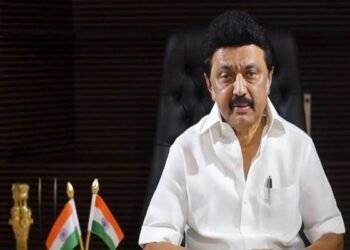
    Tamil Nadu Chief Minister MK Stalin’s firm rejection of the implementation of the Citizenship Amendment Act (CAA) has added another layer of complexity to the ongoing debate surrounding this controversial legislation. Just a day after the Union government notified the rules of the CAA, Stalin made it clear that Tamil Nadu would not comply with its provisions.


    Stalin labeled the CAA as ‘divisive and bereft of any use,’ echoing sentiments shared by many opposition leaders and civil society members across the country. His strong stance against the CAA reflects concerns about its potential impact on social harmony and religious freedom in India.


    The timing of the notification of CAA rules, especially with the Lok Sabha polls looming, has drawn criticism from various quarters. Stalin, who also heads the ruling Dravida Munnetra Kazhagam (DMK) party, accused the Bharatiya Janata Party (BJP)-led central government of rushing to implement the CAA without due consideration for its implications.


    According to Stalin, the CAA serves no beneficial purpose and only serves to sow divisions among the Indian populace. His government’s official release reiterated Tamil Nadu’s refusal to cooperate in any way with the implementation of the CAA within the state’s borders.


    Stalin’s objections to the CAA are grounded in concerns about its compatibility with principles of pluralism, secularism, and the rights of minority communities, including Sri Lankan Tamil refugees. By rejecting the CAA outright, Stalin is sending a clear message that Tamil Nadu stands firmly against any legislation that threatens the secular fabric of the nation.


    Stalin’s stance aligns with that of other opposition leaders, such as West Bengal Chief Minister Mamata Banerjee, who have also condemned the CAA and its implementation. Banerjee, addressing a gathering in North 24 Parganas district, termed the CAA rules as unconstitutional and discriminatory.


    Banerjee’s assertion that she would not allow the implementation of the CAA in West Bengal underscores the widespread opposition to the legislation among opposition-ruled states. She urged people to think twice before applying for citizenship under the law, questioning the legal validity of the rules notified by the Ministry of Home Affairs (MHA).


    The CAA has been a contentious issue ever since its passage in Parliament in 2019. The act fast-tracks citizenship for non-Muslim migrants from neighboring countries who entered India before 2014. However, critics argue that it discriminates against Muslims and undermines the secular foundations of the Indian Constitution.


    The MHA’s notification of CAA rules on Monday has reignited debates surrounding the legislation. The new rules enable eligible individuals to apply for Indian citizenship through an online portal, specifying the year of their entry into India without travel documents.


    Stalin’s opposition to the CAA highlights the growing rift between the BJP-led central government and opposition-ruled states over key policy matters. With state governments increasingly asserting their autonomy and resisting what they perceive as encroachments on their jurisdiction, the political landscape of India is becoming increasingly polarized.


    Tamil Nadu Chief Minister MK Stalin’s rejection of the Citizenship Amendment Act reflects broader concerns about the legislation’s impact on India’s social fabric and constitutional values. His defiance, along with that of other opposition leaders, underscores the deep divisions within Indian polity over issues of identity, citizenship, and secularism. As the debate over the CAA continues to unfold, it remains to be seen how the central government will navigate the challenges posed by widespread opposition to the legislation.

  • DMK Denies Links with Accused in Drug Trafficking Case

    DMK Denies Links with Accused in Drug Trafficking Case

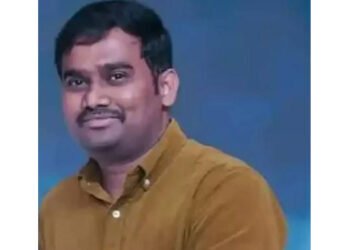
    Tamil Nadu Law Minister and DMK leader S. Regupathy vehemently denied any links between his party and Jaffer Sadiq, the prime accused in an international drug trafficking case under investigation by the Narcotics Control Bureau (NCB). The DMK issued a stern warning of legal action against anyone attempting to associate Sadiq with the party or its leaders.


    Speaking to reporters, Minister Regupathy emphasized that the DMK had not received any financial contributions from Sadiq, dispelling any notion of association between the two parties. He criticized the Bharatiya Janata Party (BJP) government for allegedly orchestrating efforts to tarnish the DMK’s reputation through the misuse of investigative agencies such as the Enforcement Directorate, Income Tax Department, and Central Bureau of Investigation.


    Regupathy accused the NCB Deputy Director General Gyaneshwar Singh of prematurely holding a press conference about Sadiq’s arrest before the completion of the investigation. He alleged that this was a deliberate attempt to smear the DMK’s image and gain political advantage for the BJP ahead of the upcoming Lok Sabha polls.


    Highlighting the swift actions taken by the DMK government against drug peddling since assuming office in 2021, Regupathy reiterated that the people of Tamil Nadu were aware of the BJP’s motives. He criticized the previous AIADMK regime for allegedly neglecting cases like the sale of banned gutkha, suggesting that the BJP’s focus on targeting the DMK was politically motivated.


    Regupathy questioned the NCB’s delay in arresting Sadiq despite issuing a lookout notice on February 15, noting that Sadiq had attended a public event in Chennai on February 21. He accused the BJP advocate, who represented Sadiq in a 2013 NCB case, of colluding with the AIADMK government to secure Sadiq’s acquittal.


    Responding to concerns about Sadiq’s membership in the DMK despite his past involvement in legal cases, Regupathy clarified that the party had over two crore members, making it impractical to vet each applicant’s background thoroughly. However, he emphasized that the DMK promptly expelled members upon learning of any wrongdoing.


    Regupathy dismissed suggestions that Sadiq’s arrest was politically motivated, asserting that the DMK had already expelled him from the party before his arrest. He accused the BJP-led Centre of fabricating false allegations against the DMK to gain political mileage ahead of the elections.


    Asserting Tamil Nadu’s zero tolerance for drug trafficking, Regupathy criticized the NCB for holding a press conference on an ongoing investigation. He mocked AIADMK chief Edappadi K. Palaniswami’s visit to the Governor over the issue, suggesting that the former Chief Minister should acknowledge his party’s failure to act on the 2013 case against Sadiq.


    DMK Rajya Sabha MP and senior advocate P. Wilson warned of civil and criminal prosecution against anyone attempting to link the party or its leaders to the NCB case involving Sadiq.

  • Controversy Erupts Over A Raja’s Remarks on Jai Shri Ram

    Controversy Erupts Over A Raja’s Remarks on Jai Shri Ram

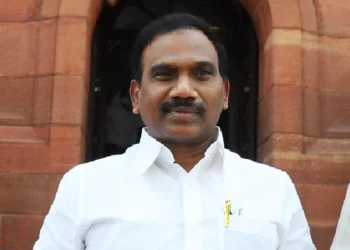
    The recent remarks made by Dravida Munnetra Kazhagam (DMK) leader A Raja have sparked controversy and drawn sharp criticism from various quarters, particularly the Bharatiya Janata Party (BJP). In a speech delivered in Madurai, Raja questioned the idea of India as a nation and made disparaging comments about the slogans “Jai Shri Ram” and “Bharat Mata ki Jai.” He also reportedly stated, “we are enemies of Ram,” prompting condemnation from political leaders and the public alike.


    The BJP, through its IT cell head Amit Malviya, shared a translation of Raja’s speech on social media, alleging that he called for the balkanization of India and made derogatory remarks about Manipuris. According to Malviya’s translation, Raja claimed that India is not a nation but a subcontinent composed of various languages, traditions, and cultures. He also questioned the unity of India, suggesting that it is not a single nation due to its diversity.


    Raja’s comments on the slogans “Jai Shri Ram” and “Bharat Mata ki Jai” have particularly drawn criticism, with BJP MP Ravi Shankar Prasad condemning them as an insult to Hindu gods and questioning the loyalty of the DMK-led alliance to the Indian nation. Prasad accused the DMK of promoting an agenda that undermines India’s cultural and religious ethos and questioned whether leaders of the Congress party, which is part of the alliance, endorse such remarks.


    The Congress party, while distancing itself from Raja’s statement, emphasized the need for restraint in public discourse and condemned any remarks that disrespect religious sentiments. Congress spokesperson Supriya Shrinate stressed that the concept of Ram belongs to everyone and urged for mutual respect and inclusivity in discussions about religion and culture.


    Similarly, Tejashwi Yadav, a key ally of the DMK, distanced his party from Raja’s comments, stating that they do not represent the views of the alliance. Yadav clarified that Raja’s statement was personal and not endorsed by his party.


    Union Minister Anurag Thakur also criticized the DMK, accusing its leaders of promoting divisive rhetoric and questioning their commitment to national unity. Thakur highlighted previous instances where DMK leaders allegedly undermined national symbols and supported separatist tendencies.


    Overall, A Raja’s remarks have reignited debates about the diversity of India and the need for tolerance and respect for different cultures and beliefs. The controversy underscores the importance of responsible political discourse and the implications of inflammatory statements on social harmony and national unity.

  • Tamil Nadu Governor Withdraws Search Committees

    Tamil Nadu Governor Withdraws Search Committees

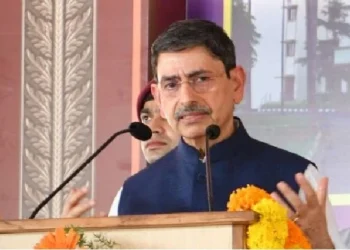
    In what is being hailed as a major victory for the ruling DMK (Dravida Munnetra Kazhagam) in Tamil Nadu, the state Governor RN Ravi has decided to withdraw search committees that he had unilaterally constituted for the appointment of Vice Chancellors for three state universities—University of Madras, Bharathiar University, and the Tamil Nadu Teachers Training University. The committees were controversially inclusive of a University Grants Commission (UGC) Chairman’s nominee.


    The Tamil Nadu government challenged the Governor’s move of constituting search committees, asserting that it was illegal. In response, the state government reconstituted the committees, excluding UGC nominees. The entire matter had been taken to the Supreme Court for resolution.


    The decision to withdraw the search committees comes ahead of the Supreme Court hearing on the issue. The state government, in addition to contesting the Governor’s appointments, is seeking a specific timeframe for Governors to dispose of bills passed by the state assembly. This includes approvals for appointments to key bodies like the Tamil Nadu Public Service Commission and investigations into corruption allegations against former ministers from the AIADMK.


    The issue has broader implications, with more than ten bills passed by the Tamil Nadu assembly pending with the Governor for as long as three years. Some of these bills aim to curtail the powers of the Governor in appointing Vice Chancellors for state universities in his capacity as Chancellor. The Governor had returned these bills ahead of an earlier Supreme Court hearing. While the Tamil Nadu assembly swiftly re-enacted them, the Governor, controversially, chose to refer them to the President. The court observed that the Governor couldn’t exercise this option after the assembly’s second re-enactment.


    Similar disputes between opposition-ruled states, such as Kerala and Punjab, and BJP-ruled Union Government-appointed Governors have reached the Supreme Court. Allegations include delays in approvals and claims of Governors undermining duly elected governments, impacting the states’ development.


    The Supreme Court, in recent pronouncements, has reinforced the principle that Governors should abide by the aid and advice of the council of Ministers. Following this, a meeting between the Tamil Nadu Chief Minister MK Stalin and Governor RN Ravi took place. During the meeting, MK Stalin urged the Governor to withdraw bills sent to the President and promptly grant assent to them, along with addressing other pending pleas.


    However, the Governor, referencing orders from the Madras High Court and the Supreme Court regarding the appointment of Vice Chancellors in Puducherry and Kerala, has urged the state to reconstitute the committees by including a UGC nominee. This move adds a new layer of complexity to the ongoing debate on the role and powers of Governors in state governance matters.


    The DMK, the ruling party in Tamil Nadu, is optimistic about the developments, calling it a major victory. Nevertheless, DMK MP and legal counsel P Wilson expressed concerns about the Governor’s insistence on UGC recommendations, stating, “Every University in Tamil Nadu is governed by an Act, and here we have not accepted the UGC recommendation to include a UGC Chairman nominee. So judgments in the case of universities can’t apply here. The Governor can’t turn into a judge.” The situation continues to unfold, prompting a closer examination of the constitutional dynamics at play.

  • Udhayanidhi Stalin’s Remarks on Sanatan Dharma Stir Controversy

    Udhayanidhi Stalin’s Remarks on Sanatan Dharma Stir Controversy

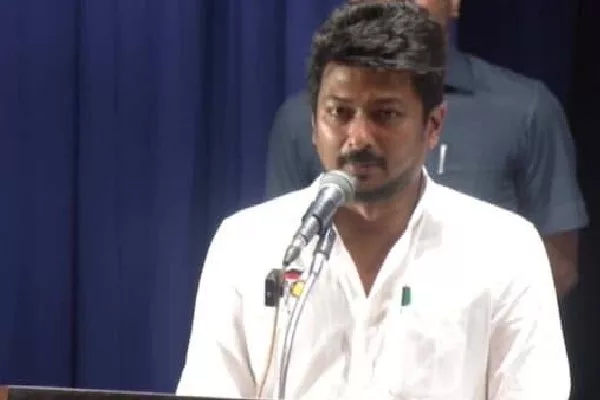
    DMK (Dravida Munnetra Kazhagam) leader and Tamil Nadu Youth Welfare Minister Udhayanidhi Stalin’s recent remarks about Sanatan Dharma have ignited a political storm and garnered mixed reactions. During an address at a meet of the Tamil Nadu Progressive Writers and Artists Association, Udhayanidhi Stalin criticized Sanatan Dharma, alleging that it is against social justice and equality. He likened it to a principle that divides people on the basis of caste and religion. He stated that the term “Sanatan” means eternal and unchanging, and he claimed that it has contributed to caste-based divisions in society.


    In response to the controversy surrounding his remarks, Udhayanidhi Stalin remained defiant and reiterated his stance. He clarified that he included all religions in his criticism and spoke out against caste differences. He defended his statements, stating that he is the voice of the oppressed and marginalized people who suffer due to Sanatan Dharma.


    Udhayanidhi Stalin compared Sanatan Dharma to diseases like COVID-19, dengue, and malaria, asserting that it should not be opposed but eradicated. He emphasized that uprooting Sanatan Dharma is essential to uphold humanity and human equality.


    In a tweet, Udhayanidhi Stalin reaffirmed his commitment to his words and expressed readiness to present extensive writings by prominent figures like Periyar and Ambedkar, who have conducted research on Sanatan Dharma’s impact on society.


    He mentioned that his late father, former Chief Minister M. Karunanidhi, had taken steps to promote equality by establishing equality neighborhoods (Samathuvapuram) where people from all communities lived together.


    The controversy over Udhayanidhi Stalin’s remarks has polarized opinions, with some supporting his critique of Sanatan Dharma’s alleged role in perpetuating social inequalities, while others have criticized his statements as offensive and divisive.


    Udhayanidhi Stalin concluded his speech by expressing the goal of winning all 39 Parliamentary constituencies in Tamil Nadu and the one segment in Puducherry in the 2024 Lok Sabha polls, with the aim of defeating Sanatan Dharma and promoting the Dravidian ideology.


    The controversy surrounding Udhayanidhi Stalin’s comments highlights the sensitive nature of discussions related to religion, caste, and social justice in India’s political landscape.