Tag: Delhi air quality

  • Cities Grapple with ‘Very Poor’ Air Quality

    Cities Grapple with ‘Very Poor’ Air Quality

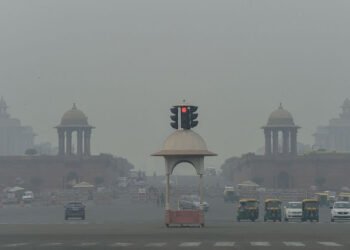
    The air quality in Delhi, Noida, and Gurugram remains a cause for concern as it falls into the ‘Very Poor’ category, with Air Quality Index (AQI) levels ranging from 314 to 324, according to data from the System of Air Quality and Weather Forecasting And Research (SAFAR) as of 7 am. Despite a 15-point winter action plan aimed at mitigating the rising pollution levels, the battle against deteriorating air quality continues in the National Capital Region. Initiatives like ‘Red Light on, Gaadi off’ are underway to combat vehicular emissions and biomass burning, both of which contribute to elevated PM2.5 levels. The forecast predicts that ‘Very Poor’ air quality will persist in the region from October 29 to 31, 2023.


    Mumbai’s Air Quality Maintains ‘Moderate’ Levels:

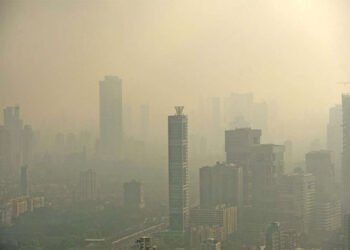
    In contrast to the North, Mumbai’s air quality remains in the ‘Moderate’ category with an AQI of 128 as per SAFAR-India’s data. Here are some specific AQI levels in various areas of Mumbai:


    • AQI in Borivali: 22
    • AQI in Malad: 147
    • AQI in Bhandup: 142
    • AQI in Navi Mumbai: 128
    • AQI in Colaba: 169
    • AQI in Mazgaon: 162


    Aam Aadmi Party Criticizes the Central Government:

    The Aam Aadmi Party (AAP) has taken issue with the Central Government’s response to the ongoing air quality crisis in Northern India. AAP Senior Leader and National Spokesperson, Reena Gupta, voiced her concerns during a press conference. Gupta alleged that the entire Northern region of India is grappling with severe air pollution, but the Central Government lacks a concrete action plan to address the issue.


    Gupta further highlighted that a significant portion of Delhi’s air pollution (approximately 70 percent) originates from outside Delhi, particularly from states ruled by the Bharatiya Janata Party (BJP). She noted that on October 24, the Central Government shut down the SAFAR website, a system designed for monitoring air quality and weather forecasting, just as concerns about external sources of pollution were being raised. The move to close the website has drawn criticism and raised questions about transparency and accountability in addressing air quality issues in the region.


    Air quality issues in Delhi, Noida, and Gurugram persist in the ‘Very Poor’ range, prompting ongoing efforts to combat pollution. The significant number of farm fires in Punjab adds to the challenge. In contrast, Mumbai maintains ‘Moderate’ air quality. The Aam Aadmi Party has criticized the Central Government for its handling of the air pollution crisis, emphasizing the need for a comprehensive and collaborative approach to address the issue, including addressing sources of pollution beyond Delhi’s borders.

  • Delhi Environment Minister Urges Officials Attendance

    Delhi Environment Minister Urges Officials Attendance

    The air quality in the Delhi-NCR region has deteriorated to the ‘Very Poor’ category, with the air quality index (AQI) surpassing 300 in multiple areas. In light of the worsening pollution, Delhi Environment Minister Gopal Rai has written a letter to Chief Minister Arvind Kejriwal regarding the absence of Delhi’s officials at a crucial meeting addressing the rising pollution levels.


    In his letter, Minister Rai implores Chief Minister Kejriwal to appoint officers who are sensitive to the issue of air pollution. He emphasizes the need for an immediate meeting of the National Capital Civil Service Authority (NCCSA) to tackle the issue. The NCCSA is responsible for service matters, including transfers, postings, and disciplinary actions.


    Minister Rai expressed his concern over the absence of key officials, including A K Singh, Principal Secretary of the Environment Department; Ashwani Kumar, DPCC Chairman and Principal Secretary of the Revenue Department; and Ashish Kundra, Transport Commissioner, at the crucial meeting. Their absence, according to Rai, hindered the decision-making process and the implementation of essential measures.


    He concludes his letter by requesting the prompt convening of an NCCSA meeting to appoint officers who are committed to addressing pollution issues effectively.


    Earlier in the day, after a meeting with relevant departments, Minister Rai expressed disappointment over the non-attendance of department heads and the lack of awareness among senior officials regarding the deteriorating air quality and the measures their departments are taking to combat pollution.


    The deteriorating air quality in Delhi-NCR has prompted authorities to issue an advisory, urging vulnerable groups such as the elderly and children to stay indoors. The advisory cautions against prolonged or intense physical exertion and recommends opting for short walks instead of strenuous activities. It advises individuals to halt any activity if they experience unusual symptoms like coughing, chest discomfort, wheezing, breathing difficulties, or fatigue.


    The government is actively addressing the air pollution issue, and calls for greater cooperation among officials to mitigate its impact on the region’s residents.

  • Delhi NCR Air Quality Registers Moderate Levels

    Delhi NCR Air Quality Registers Moderate Levels

    Delhi, the capital city of India, is well-known for its battle against air pollution. However, as seasons change, so do the dynamics of air quality. In recent reports, Delhi’s Air Quality Index (AQI) has shown a moderate reading, indicating a transition from the more critical pollution levels it often experiences.


    Around 6 am, the Central Pollution Control Board (CPCB) data reported an AQI of 162, falling within the ‘moderate’ category. A similar reading was noted by the System of Air Quality and Weather Forecasting And Research (SAFAR), which recorded an AQI of 173. These figures reflect an improvement in air quality compared to the hazardous levels that Delhi often contends with.


    The key contributors to air pollution in Delhi are fine particulate matter known as PM 2.5 and PM 10. On this particular day, PM 10 levels were registered at 161, while PM 2.5 levels stood at 82. These readings provide insights into the different particle sizes suspended in the air, with PM 2.5 particles being finer and having more potential health impacts as they can penetrate deeper into the respiratory system.


    The India Meteorological Department has predicted mainly clear skies for October 21, with a recorded temperature of 17.2 degrees Celsius in the early hours. The maximum and minimum temperatures for the National Capital Region (NCR) are expected to reach 32 and 16 degrees Celsius, respectively.


    A detailed breakdown of the AQI at various monitoring stations across Delhi provides a more comprehensive view of the air quality. The Jawaharlal Nehru Stadium reported an AQI of 190, indicating ‘moderate’ air quality. The CRRI Mathura Road station recorded a reading of 152, ITO station reported an AQI of 191, and Mandir Marg station noted a reading of 176, all within the ‘moderate’ category. These stations represent different parts of the city and reflect variations in air quality.


    In certain areas, however, pollution levels were in the ‘poor’ category, demonstrating the persistence of air quality issues in Delhi. For instance, Burari reported an AQI of 275, Dwarka Sector-8 recorded an AQI of 251, Jahangirpuri registered 263, Rohini noted 247, and Wazirpur reported an AQI of 235, all within the ‘poor’ range. The Anand Vihar station recorded an AQI of 239, further highlighting air quality challenges in some parts of the city.


    It is important to note that the AQI is categorized based on specific thresholds. An AQI between 0 and 50 is considered ‘good,’ while 51 to 100 is ‘satisfactory.’ When the AQI falls between 101 and 200, it is classified as ‘moderate,’ as seen in Delhi recently. As pollution levels increase, the categories shift to ‘poor’ (201-300), ‘very poor’ (301-400), and ‘severe’ (401-500). These categories help individuals and authorities gauge the extent of air pollution and its potential health impacts.


    Delhi’s ongoing battle with air pollution is closely linked to a variety of factors, including industrial emissions, vehicular pollution, construction activities, and weather conditions. As seasons change, some improvements in air quality can be observed. However, this temporary relief must be supplemented with sustainable measures to address the long-term challenges of air pollution in the city.


    The government and relevant authorities continue to implement policies and strategies to combat air pollution. These efforts include promoting cleaner fuel technologies, enhancing public transportation, regulating construction activities, and enforcing measures to curb industrial emissions. Additionally, raising public awareness and encouraging individual actions, such as reducing vehicle emissions and minimizing outdoor exposure during high pollution days, are vital components of addressing the issue.

  • Delhi’s Air Quality Registers as ‘Poor’ With an AQI of 266

    Delhi’s Air Quality Registers as ‘Poor’ With an AQI of 266

    On Saturday morning, Delhi’s air quality was reported as ‘poor,’ with an Air Quality Index (AQI) of 266, according to data from the System of Air Quality and Weather Forecasting and Research (SAFAR-India). The AQI provides crucial information about air quality conditions and their potential health impacts.


    At 7.01 a.m., the AQI at Lodhi Road was recorded at 211, indicating a ‘poor’ air quality level, while in the Pusa Road area, it stood at 193, classifying it as ‘moderate.’ Gurugram registered an AQI of 162, falling into the ‘moderate’ category. In contrast, the AQI at the Delhi Airport (T3) reached 286, placing it in the ‘poor’ category.


    Near Delhi University, the air quality was measured at an AQI of 331, classified as ‘very poor.’ In Noida (Uttar Pradesh), the AQI reached 283, also marking it as ‘poor.’


    In Ayanagar, the air quality was determined to be ‘poor’ with an AQI of 201, while the Mathura Road area recorded an AQI of 179, which is considered ‘moderate.’ The IIT Delhi area displayed an AQI of 215, and Dhirpur recorded an AQI of 329, indicating a ‘very poor’ air quality level.


    The AQI scale simplifies communication about air quality conditions using easily understandable categories. These six AQI categories include ‘Good,’ ‘Satisfactory,’ ‘Moderately Polluted,’ ‘Poor,’ ‘Very Poor,’ and ‘Severe,’ with classification based on the concentration levels of air pollutants and their potential health impacts, known as health breakpoints.


    As per the AQI scale, air quality ranging from 0 to 50 is labeled as ‘good,’ 51 to 100 as ‘satisfactory,’ 101 to 200 as ‘moderate,’ 201 to 300 as ‘poor,’ 301 to 400 as ‘very poor,’ and 401 to 450 as ‘severe.’ The term ‘severe’ is employed when the AQI surpasses 450.


    Delhi has been actively working to improve its air quality, with recent reports indicating significant progress. In 2022, the air quality in the city improved by 8%. In 2023, the improvement has reached 31%. A report highlighted that in the last eight years, excluding the COVID period, Delhi’s air quality has shown marked improvements.


    To address air pollution concerns, the National Air Quality Committee issued instructions to authorities in the National Capital Region, including prohibiting coal consumption in hotels and eateries. Penalties were also recommended for industries and thermal power plants contributing to pollution. These measures are part of the ‘Graded Response Action Plan’ (GRAP), the government’s pollution control strategy implemented in the Delhi-NCR region during the winter season to address air pollution issues.


    The ongoing efforts to monitor and improve air quality underscore the importance of addressing environmental challenges and safeguarding public health in the region.