Tag: death

  • Alexei Navalny’s Death Sparks Outrage and Censorship

    Alexei Navalny’s Death Sparks Outrage and Censorship

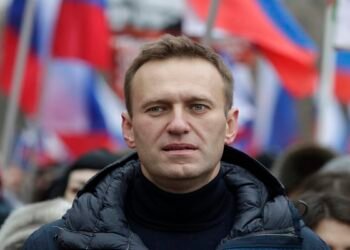
    Amidst the frosty landscapes of the Arctic Circle, the death of Alexei Navalny, Russia’s most prominent opposition leader, sent shockwaves across the globe. Navalny, a fierce critic of President Vladimir Putin’s regime, had survived multiple assassination attempts, only to meet his demise while serving a 19-year sentence in a Russian penal colony.


    The circumstances surrounding Navalny’s death remain shrouded in mystery, prompting widespread suspicion and outrage. While the global media extensively covered Navalny’s life and the questionable circumstances of his death, Russia’s state-controlled television channels offered minimal coverage. Channels like Channel One and Rossiya 1 reportedly provided only brief updates on Navalny’s death, lacking context about his political activism and significance as an opposition figure. Some reports even refrained from mentioning his full name, referring to him simply as “Navalny.”


    The muted response from Russian media outlets underscores the extent of censorship and control exerted by the Kremlin over information dissemination. Rather than engaging in meaningful dialogue or investigation into Navalny’s death, Russian state media seemed intent on downplaying the event and diverting attention elsewhere. During discussions about Navalny’s death, panelists expressing condolences were abruptly silenced by anchors, indicating a deliberate effort to suppress dissenting voices.


    However, while traditional media outlets in Russia remained subdued, social media platforms like Twitter and Telegram erupted with outrage and condemnation. Citizens of Russia took to these platforms to express their shock and grief over Navalny’s death, with many holding President Putin’s government responsible for the tragedy. The hashtags #Navalny and #PutinKiller trended widely, reflecting the widespread discontent and frustration among the Russian populace.


    The Kremlin’s response to the allegations of its involvement in Navalny’s death was predictable. Pro-government factions in Russia dismissed accusations against Putin and his administration, arguing that orchestrating Navalny’s death would only serve to bolster the opposition’s influence and undermine the government’s credibility. They questioned the logic of such a move, particularly in the lead-up to elections, suggesting that it would be politically counterproductive for the Kremlin.


    Meanwhile, outside Russia, liberal protestors gathered in front of Russian embassies, demanding justice for Alexei Navalny and condemning Putin’s regime. Western leaders wasted no time in blaming the Kremlin for Navalny’s death, citing a pattern of persecution and violence against political dissidents in Russia. Calls for sanctions and diplomatic pressure on the Russian government intensified, as world leaders sought to hold Putin’s administration accountable for its alleged human rights abuses and suppression of dissent.


    The death of Alexei Navalny marks a somber chapter in Russia’s ongoing struggle for democracy and freedom of expression. Navalny’s unwavering commitment to exposing corruption and advocating for political reform made him a symbol of resistance against authoritarianism. His tragic demise serves as a grim reminder of the perils faced by those who dare to challenge entrenched power structures and speak truth to power.


    As investigations into Navalny’s death continue, the international community must remain vigilant in demanding transparency and accountability from the Russian government. The voices of Navalny’s supporters, both within Russia and abroad, must not be silenced or ignored. Only through sustained pressure and solidarity can justice be served for Navalny and others who have sacrificed their lives in the pursuit of freedom and democracy.

  • Renowned Urdu Poet Munawwar Rana Passes Away at 71

    Renowned Urdu Poet Munawwar Rana Passes Away at 71

    Renowned Urdu poet Munawwar Rana, a stalwart in the realm of Urdu literature, breathed his last at the age of 71 on Sunday. The poet succumbed to a cardiac arrest at the Sanjay Gandhi Post Graduate Institute of Medical Sciences in Lucknow, Uttar Pradesh, where he had been undergoing treatment. Munawwar Rana had been battling health issues, including lung and throat infections since 2017, and he regularly received treatment for kidney problems, necessitating dialysis.


    Born on November 26, 1952, in Raebareli, Uttar Pradesh, Munawwar Rana made significant contributions to Urdu literature, particularly through his poignant ghazals. His literary prowess was acknowledged in 2014 when he was honored with the Sahitya Akademi Award for his poem titled ‘Shahdaba.’ However, he later returned the award, citing concerns about ‘intolerance’ in the country. In 2012, he was bestowed with the Maati Ratan Samman by Shaheed Shodha Sansthan for his exemplary services to Urdu literature. Over the course of his illustrious career, he received numerous accolades, including the Ameer Khusro Award, the Mir Taqi Mir Award, the Ghalib Award, the Dr. Zakir Hussain Award, and the Saraswati Samaj Award.


    Munawwar Rana’s literary legacy is defined by his ability to capture the essence of life through his verses. One of his most celebrated works is the poem ‘Maa,’ which holds a special place in the world of Urdu literature. His poems often reflected deep emotions, touching the hearts of readers and earning him admiration not only in India but also among Urdu poetry enthusiasts globally.


    In a social media post, Samajwadi Party chief Akhilesh Yadav expressed his sorrow, stating, “The demise of the country’s renowned poet Munawwar Rana is extremely heartbreaking. Wishing peace to the departed soul. Heartfelt tribute.” Munawwar Rana’s impact extended beyond literature, and his poems resonated with people from diverse backgrounds.


    It is worth noting that in August 2020, Munawwar Rana made headlines when he accused the former Chief Justice of India, Ranjan Gogoi, of allegedly ‘selling himself’ to deliver the Ayodhya verdict. He asserted that it was not justice but an order.


    Despite facing personal challenges, including the arrest of his son in 2021 for allegedly orchestrating a staged shootout against himself, Munawwar Rana’s commitment to his craft remained unwavering. His daughter, Sumaiya Rana, joined the Samajwadi Party, continuing the family’s association with public life.


    Munawwar Rana’s passing marks the end of an era in Urdu literature, leaving behind a legacy of words that resonated with the soul, depicting the myriad emotions of life, love, and loss. His contribution to the world of poetry will be remembered, and his verses will continue to inspire generations to come.

  • Michael Gambon, Famous for Albus Dumbledore Passes Away

    Michael Gambon, Famous for Albus Dumbledore Passes Away

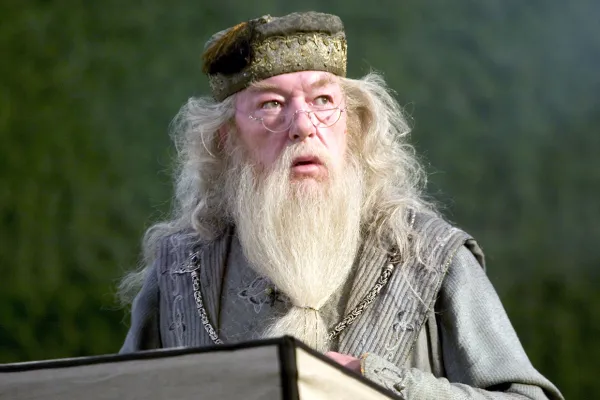
    In a heart-wrenching update, the world mourns the loss of Michael Gambon, the beloved actor who brought the iconic character of Albus Dumbledore to life in the Harry Potter film series. Gambon passed away on September 28 at the age of 82, leaving behind a legacy that will forever be cherished by fans worldwide.


    Although Michael Gambon’s impressive filmography included notable roles in productions like ‘The Lord of the Rings,’ he will forever be etched in the hearts of fans as Hogwarts’ revered headmaster, Albus Dumbledore.


    Amid the outpouring of grief and tributes for the veteran actor on social media, one particular Dumbledore quote on death from ‘Harry Potter and the Sorcerer’s Stone’ has resurfaced and gone viral. In the book, Dumbledore imparts his wisdom on the subject of death: “After all, to the well-organized mind, death is but the next great adventure.”


    This profound quote resonates deeply with fans, as it reflects Dumbledore’s philosophical perspective on the inevitability of death as a part of life’s journey. The quote is a poignant reminder of the wisdom and compassion that Gambon brought to the character of Dumbledore.


    For context, Dumbledore utters these words to Harry Potter in the hospital wing towards the end of ‘Harry Potter and the Sorcerer’s Stone.’ It pertains to Dumbledore and Nicolas Flamel’s joint decision to destroy the Sorcerer’s Stone, an act that ultimately signifies Flamel’s acceptance of his own mortality.


    Michael Gambon’s passing is a significant loss to the world of entertainment, and he will be remembered not only for his remarkable portrayal of Albus Dumbledore but also for his extensive contributions to cinema and theater.


    In an official statement issued by his family, his publicist confirmed that Gambon passed away following a battle with pneumonia. The statement expressed their profound grief, describing Michael Gambon as a beloved husband and father. He peacefully departed this world with his wife Anne and son Fergus by his side.


    The Harry Potter franchise has sadly bid farewell to another cherished cast member, following the passing of Robbie Coltrane, who portrayed Hagrid, on October 14, 2022, at the age of 72. The loss of these beloved actors serves as a poignant reminder of the enduring impact and fond memories they have left behind for fans around the globe.

  • The ongoing debate over death penalty

    The ongoing debate over death penalty

    The Death Penalty 

    The death penalty, also known as capital punishment, is a legal process in which a person is sentenced to death by the state as a punishment for a crime they have committed. The use of the death penalty is highly controversial, with many people arguing that it is a cruel and inhumane form of punishment.


    Arguments in Favor of the Death Penalty

    One of the main arguments in favor of the death penalty is that it serves as a deterrent to crime. Supporters of the death penalty argue that knowing that they could face the death penalty for their crimes will deter potential criminals from committing those crimes. Another argument in favor of the death penalty is that it provides closure for victims’ families. Supporters argue that the death penalty provides a sense of justice and closure for the families of victims.


    Arguments Against the Death Penalty

    One of the main arguments against the death penalty is that it is an inhumane form of punishment. Opponents of the death penalty argue that it is cruel and that there is no evidence to suggest that it serves as a deterrent to crime. Another argument against the death penalty is that it is often applied unfairly. Opponents argue that the death penalty is disproportionately applied to people of color and people from low-income backgrounds.


    The Death Penalty Around the World

    The use of the death penalty varies widely around the world. Some countries, such as the United States, still use the death penalty, while others have abolished it. In 2020, 18 countries carried out executions, with China accounting for the majority of those executions. In the United States, the use of the death penalty has been declining in recent years, with many states abolishing the death penalty or placing moratoriums on its use.


    The Future of the Death Penalty

    The future of the death penalty is uncertain. While some states and countries are moving away from the use of the death penalty, others are still using it as a form of punishment. As the debate over the death penalty continues, it’s likely that we will see more changes to the way the death penalty is used around the world.


    Important points of debate over death penalty

    – The use of the death penalty is declining in the United States, with many states abolishing it or placing moratoriums on its use.


    – Many people argue that the death penalty is applied unfairly, with people of color and people from low-income backgrounds being disproportionately sentenced to death.


    – Other countries, such as China, still use the death penalty, with a large number of executions taking place there each year.


    – There is ongoing debate about the effectiveness of the death penalty as a deterrent to crime, with many experts arguing that there is no evidence to support this claim.


    – The use of the death penalty is often influenced by political factors, with politicians using it as a way to appear tough on crime.


    – There are many alternative forms of punishment that could be used instead of the death penalty, such as life imprisonment without the possibility of parole.