Tag: CPEC

  • Chinese President Xi Jinping Congratulates Asif Ali Zardari

    Chinese President Xi Jinping Congratulates Asif Ali Zardari

    Chinese President Xi Jinping extended warm congratulations to Asif Ali Zardari on his election as the President of Pakistan, emphasizing the enduring friendship between China and Pakistan. Zardari, the husband of the late Benazir Bhutto and the co-chairperson of the Pakistan Peoples Party (PPP), secured a resounding victory in the presidential election, marking his return to the highest office in the country.


    President Xi underscored the strong historical ties between China and Pakistan, describing their relationship as an “iron-clad friendship” and a “choice of history.” He highlighted the strategic significance of their partnership, particularly in the context of recent global developments.


    In his message to President Zardari, President Xi emphasized the close high-level exchanges between China and Pakistan in recent years. He noted that the two countries have supported each other on issues concerning their core interests and major concerns. Additionally, President Xi praised the progress achieved in the construction of the China-Pakistan Economic Corridor (CPEC), a flagship project aimed at enhancing connectivity and promoting economic development in the region.


    President Xi also acknowledged the profound changes taking place in the world and emphasized the growing strategic significance of China-Pakistan relations. He expressed his commitment to further strengthening the traditional friendship between the two countries and advancing practical cooperation across various fields. President Xi reiterated his readiness to work with President Zardari to deepen bilateral ties and promote the development of a closer China-Pakistan community with a shared future.


    The return of Asif Ali Zardari to the presidency of Pakistan, alongside the election of Shehbaz Sharif as Prime Minister, holds significant implications for the country’s political landscape. Both Zardari and Sharif have maintained close ties with Chinese leaders over the years and have played pivotal roles in advancing strategic cooperation between Pakistan and China.


    The strategic partnership between China and Pakistan has been characterized by robust cooperation in diverse fields, including trade, infrastructure development, defense, and counterterrorism. The China-Pakistan Economic Corridor (CPEC), a flagship project under China’s Belt and Road Initiative (BRI), has emerged as a symbol of the deepening economic ties between the two countries.


    CPEC aims to connect China’s western region with Pakistan’s Gwadar Port through a network of highways, railways, and pipelines, facilitating the flow of goods and promoting regional connectivity. The project has the potential to transform Pakistan’s economy by attracting investment, creating jobs, and enhancing trade opportunities.


    In addition to economic cooperation, China and Pakistan have also collaborated closely on regional and global issues of mutual interest. Both countries have supported each other on issues such as Kashmir and Afghanistan, advocating for peaceful resolutions to regional conflicts.


    Furthermore, China has been a key partner in Pakistan’s efforts to enhance its defense capabilities. The two countries have conducted joint military exercises and have engaged in defense collaboration, including arms sales and technology transfers.


    The strategic alliance between China and Pakistan is viewed with interest by neighboring India and other regional stakeholders. The deepening cooperation between Beijing and Islamabad has raised concerns among some observers about its potential implications for regional security dynamics.


    However, both China and Pakistan have emphasized that their partnership is not directed against any third party and is based on mutual respect, equality, and non-interference in each other’s internal affairs. They have reiterated their commitment to promoting peace, stability, and prosperity in the region.


    As Asif Ali Zardari assumes the presidency of Pakistan for the second time, he faces formidable challenges, including economic instability, political polarization, and security threats. However, his close ties with China and his commitment to advancing bilateral cooperation could provide valuable support in addressing these challenges.


    Overall, the warm congratulations extended by President Xi Jinping to President Asif Ali Zardari underscore the enduring strength of the friendship between China and Pakistan. As the two countries continue to deepen their strategic partnership, they are likely to play an increasingly important role in shaping the dynamics of the region and beyond.

  • Baloch Republican Party Exposes Atrocities by Pakistan Army

    Baloch Republican Party Exposes Atrocities by Pakistan Army

    The Baloch Republican Party has brought to light what it claims to be atrocities committed by the Pakistan Army in the Dera Bugti district of Balochistan. In a statement released on social media platform ‘X’ on Sunday, the party’s spokesperson, Sher Mohammad Bugti, alleged that the labour quarters in Sui town had been sealed by the enforcement agencies, and approximately 150 people, including families and children of labourers, had been taken into custody.


    Bugti, in his post, accused the Pakistani deep state of employing these actions as a tactic to pave the way for its chosen candidates in the so-called ‘elections’. He expressed skepticism about the fairness of elections in Balochistan, asserting that it is more of a selection process orchestrated by the powerful Inter-Services Intelligence (ISI) and the Pakistani army. Bugti’s post conveyed a sense of frustration, stating, “There is no need for the state to conduct so much drama in order to pick a puppet, which it can do without any problem.”


    The issue of abductions and extrajudicial killings at the hands of the Pakistan Army and ISI has been a longstanding and deeply concerning matter for the people of Balochistan. The Baloch community has consistently raised its voice against these human rights violations, seeking international attention and condemnation.


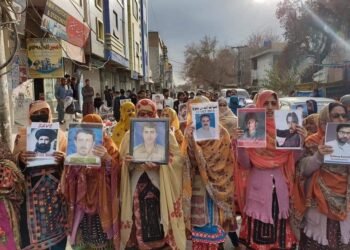
    Currently, the situation in Balochistan is further exacerbated by the blockade of the China-Pakistan Economic Corridor (CPEC) route by family members of three Baloch students—Aslam, Hammal, and Bahadur Chakar. The students were allegedly abducted from Hoshap and Tajaban provinces, turning their abduction into a focal point for major protests in the region.


    Mahrang, a prominent leader of a large demonstration in the area, emphasized the dual nature of the situation. While the people of Balochistan are protesting against the alleged Baloch genocide and human rights violations, the state continues its perceived inhumane policy, which has been described as the Baloch genocide.


    The leader Mahrang, appealing to international human rights organizations, called for a more significant role in ensuring the recovery of Baloch youth. The ongoing protests underscore the gravity of the human rights crisis in Balochistan and the urgent need for attention from the global community.


    The Baloch Republican Party’s claims add to the complex and deeply rooted issues faced by the Baloch people. The accusations of forced disappearances, arbitrary detentions, and sealing of communities paint a grim picture of the challenges faced by the residents of Balochistan. The concerns raised by the party echo those raised by various human rights organizations, shedding light on a situation that demands thorough investigation and international intervention.


    As the allegations unfold, the international community faces the challenge of addressing these reported human rights violations and ensuring accountability for the actions of the Pakistan Army and ISI. The plight of the Baloch people, caught in the crossfire of geopolitical interests and regional conflicts, serves as a stark reminder of the urgency to prioritize human rights and work towards a peaceful resolution in the troubled region of Balochistan.