Tag: Constitutional Amendment

  • BJP Firmly Denies MP’s Call for Constitution Change

    BJP Firmly Denies MP’s Call for Constitution Change

    The recent remarks made by BJP MP Ananth Kumar Hegde regarding the Constitution have stirred controversy and prompted a swift response from the Bharatiya Janata Party (BJP). Hegde’s suggestion of a potential amendment to the Constitution if the BJP were to secure a two-thirds majority in Parliament has raised eyebrows and invited criticism.


    In response to Hegde’s comments, the BJP issued a statement on social media platform X, clarifying that Hegde’s remarks were his personal views and did not represent the party’s official stance. The party reaffirmed its commitment to upholding the nation’s Constitution and announced its intention to seek an explanation from Hegde regarding his statements.


    Hegde’s proposition for amending the Constitution stems from his belief that certain distortions and additions made by the Congress need to be rectified. He argues that the Constitution has been altered in a manner that suppresses Hindu society, referencing laws introduced by the Congress party. Hegde contends that to address these perceived distortions, a two-thirds majority in Parliament is necessary.


    The BJP MP’s assertion that the party would need to win more than 20 states to achieve this goal underscores the magnitude of the proposed constitutional amendment. Hegde’s reference to the Citizenship (Amendment) Act serves as an example of legislative hurdles faced by the BJP despite having a majority in Parliament. He highlights the challenges of obtaining state approvals for such laws, which can impede their implementation.


    This is not the first instance of Hegde making controversial remarks regarding the Constitution. In 2017, while serving as the Union Minister of State for Skill Development, he attracted criticism for similar comments. Despite apologizing in the Lok Sabha for any offense caused, Hegde maintained that his original statement had been misrepresented.


    The BJP’s prompt response to Hegde’s remarks indicates a desire to mitigate any potential fallout and reaffirm the party’s commitment to constitutional principles. By distancing itself from Hegde’s comments and emphasizing its adherence to the Constitution, the BJP aims to reassure the public and stakeholders of its dedication to democratic values.


    Critics of Hegde’s proposal argue that any attempt to amend the Constitution should be approached with caution and consensus-building. They emphasize the importance of preserving the integrity of the Constitution, which serves as the cornerstone of India’s democratic framework. Additionally, concerns have been raised about the potential implications of altering the Constitution and the need for inclusive decision-making processes.


    In light of the controversy sparked by Hegde’s remarks, the BJP faces scrutiny over its stance on constitutional matters and its commitment to democratic principles. The party’s response to Hegde’s comments will likely shape public perception and influence its approach to contentious issues related to governance and constitutional reform.


    As India navigates complex political dynamics and societal challenges, the role of political leaders in upholding constitutional values remains paramount. Hegde’s remarks serve as a reminder of the importance of robust institutions and democratic norms in safeguarding the rights and liberties of all citizens.

  • Australia’s Indigenous Advocacy Committee Referendum Closes

    Australia’s Indigenous Advocacy Committee Referendum Closes

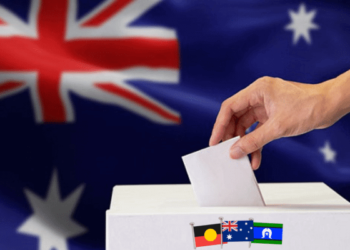
    Polling stations have closed in half of Australia’s states as the country grapples with its first referendum in a generation. The vote revolves around the pivotal question of whether to address Indigenous disadvantages by establishing a new advocacy committee within the country’s constitution. The referendum closed first in New South Wales, Victoria, and Tasmania at 6 p.m. local time (07:00 GMT), while South Australia, Queensland, and Western Australia, in different time zones, saw their polling stations shuttered three hours later.


    The proposal for an Indigenous Voice to Parliament has sparked considerable division within Australia’s Indigenous minority as well as the wider population. Indigenous activist Susanne Levy criticized the proposal, stating it would be a setback for Indigenous rights imposed by non-Indigenous Australians, emphasizing that Indigenous voices have always existed but might not have been heard by the broader population.


    In response to the referendum, Levy spent the day at the Aboriginal Tent Embassy, an Indigenous land rights protest located in Canberra, the national capital. This protest site has been a symbol of Indigenous resistance since 1972 and has historically stood in close proximity to the Australian Parliament.


    On the other side of the debate, Arnagretta Hunter, a supporter of the “yes” campaign, expressed sympathy for the concerns of those opposing the Indigenous Voice. Nevertheless, she believes that establishing the Voice in the constitution is a significant step forward for the nation, allowing Indigenous voices to be heard and considered in the decision-making process.


    The proposed Indigenous Voice would create a committee comprised of Indigenous Australians who would advise the Parliament and government on issues affecting the nation’s most disadvantaged ethnic minority. Proponents of the Voice argue that it would lead to more effective delivery of government services and better outcomes for Indigenous lives. Indigenous Australians face significant disparities, with a lower life expectancy, a higher suicide rate, and a higher prevalence of diseases, particularly in remote areas.


    The referendum witnessed a significant number of voters, with almost 18 million Australians eligible to participate, marking the country’s first referendum since 1999. Approximately 6 million people cast their ballots in early voting over the past three weeks. Additionally, around 2 million postal votes will be counted within 13 days of the referendum’s closure.


    The result is expected to be revealed later on the day of the vote, provided there is no close outcome. To pass, a majority of Australians must vote “yes,” and there must be a majority in at least four of the six states. Despite the government’s push for the referendum, recent opinion polls suggest a strong majority of Australians oppose the proposal. If passed, it will be the first successful constitutional amendment since 1977 and the first to do so without bipartisan support from major political parties.


    Critics have described the Indigenous Voice as “another layer of democracy” that might not yield practical outcomes. Senator Lidia Thorpe, an Indigenous member of parliament, voted “no,” highlighting the need for grassroots solutions to Indigenous issues.


    Prime Minister Anthony Albanese, who supported the “yes” campaign, visited every Australian state and mainland territory in the past week, countering critics who claimed the proposal had created division. He argued that the true division in Australia lies in the disparities in living standards between Indigenous people and the wider community.