Tag: Constitution

  • BJP Firmly Denies MP’s Call for Constitution Change

    BJP Firmly Denies MP’s Call for Constitution Change

    The recent remarks made by BJP MP Ananth Kumar Hegde regarding the Constitution have stirred controversy and prompted a swift response from the Bharatiya Janata Party (BJP). Hegde’s suggestion of a potential amendment to the Constitution if the BJP were to secure a two-thirds majority in Parliament has raised eyebrows and invited criticism.


    In response to Hegde’s comments, the BJP issued a statement on social media platform X, clarifying that Hegde’s remarks were his personal views and did not represent the party’s official stance. The party reaffirmed its commitment to upholding the nation’s Constitution and announced its intention to seek an explanation from Hegde regarding his statements.


    Hegde’s proposition for amending the Constitution stems from his belief that certain distortions and additions made by the Congress need to be rectified. He argues that the Constitution has been altered in a manner that suppresses Hindu society, referencing laws introduced by the Congress party. Hegde contends that to address these perceived distortions, a two-thirds majority in Parliament is necessary.


    The BJP MP’s assertion that the party would need to win more than 20 states to achieve this goal underscores the magnitude of the proposed constitutional amendment. Hegde’s reference to the Citizenship (Amendment) Act serves as an example of legislative hurdles faced by the BJP despite having a majority in Parliament. He highlights the challenges of obtaining state approvals for such laws, which can impede their implementation.


    This is not the first instance of Hegde making controversial remarks regarding the Constitution. In 2017, while serving as the Union Minister of State for Skill Development, he attracted criticism for similar comments. Despite apologizing in the Lok Sabha for any offense caused, Hegde maintained that his original statement had been misrepresented.


    The BJP’s prompt response to Hegde’s remarks indicates a desire to mitigate any potential fallout and reaffirm the party’s commitment to constitutional principles. By distancing itself from Hegde’s comments and emphasizing its adherence to the Constitution, the BJP aims to reassure the public and stakeholders of its dedication to democratic values.


    Critics of Hegde’s proposal argue that any attempt to amend the Constitution should be approached with caution and consensus-building. They emphasize the importance of preserving the integrity of the Constitution, which serves as the cornerstone of India’s democratic framework. Additionally, concerns have been raised about the potential implications of altering the Constitution and the need for inclusive decision-making processes.


    In light of the controversy sparked by Hegde’s remarks, the BJP faces scrutiny over its stance on constitutional matters and its commitment to democratic principles. The party’s response to Hegde’s comments will likely shape public perception and influence its approach to contentious issues related to governance and constitutional reform.


    As India navigates complex political dynamics and societal challenges, the role of political leaders in upholding constitutional values remains paramount. Hegde’s remarks serve as a reminder of the importance of robust institutions and democratic norms in safeguarding the rights and liberties of all citizens.

  • Role of Institutions in Upholding Constitutional Confidence

    Role of Institutions in Upholding Constitutional Confidence

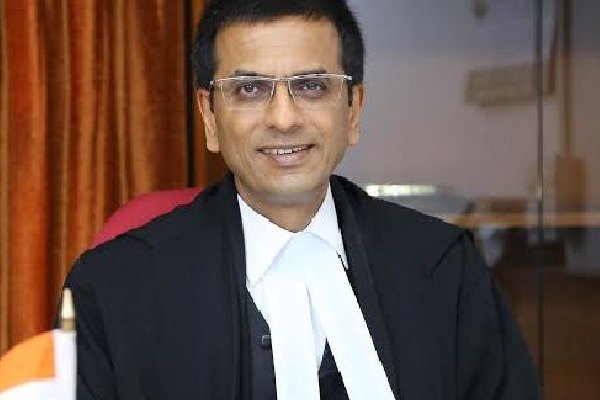
    Chief Justice of India D Y Chandrachud delivered a significant address on Saturday, highlighting the pivotal role played by institutions such as Parliament, the Supreme Court, and the Election Commission in fostering public confidence in the Constitution. Speaking at the valedictory function of a two-day legal conference in Bangladesh’s capital, Dhaka, Chandrachud underscored the importance of addressing ambiguity and uncertainty through decisive action by these institutions.


    Chandrachud emphasized that constitutions, by their very nature, serve as blueprints rather than exhaustive guides for all potential scenarios. Unlike statutes like the Income Tax Act, which delineate specific rules, constitutions provide broad frameworks that require interpretation and application in various contexts. The Chief Justice emphasized that it is the responsibility of institutions to translate constitutional principles into tangible benefits for the people, who are the ultimate source of authority.


    The legitimacy of governance institutions, including the judiciary, is intricately tied to their adherence to constitutional norms and principles. Chandrachud stressed that public confidence in the Constitution is reinforced when these institutions effectively navigate situations characterized by ambiguity and uncertainty. It is during such challenging circumstances that institutions must rise to the occasion, demonstrating their commitment to upholding the rule of law and protecting fundamental rights.


    In his address titled “Post-Colonial Constitutional Development in South Asia,” Chandrachud highlighted the significance of securing principles such as liberty, equality, non-discrimination, and due process. He underscored the mandate of the judiciary to safeguard these principles and ensure their meaningful implementation in society. Chandrachud’s remarks resonated with the conference attendees, which included prominent legal figures from both India and Bangladesh.


    Prime Minister Sheikh Hasina graced the occasion as the chief guest, alongside Chief Justice of Bangladesh Obaidul Hassan. Chandrachud praised the collaborative efforts between India and Bangladesh in fostering constitutional development and strengthening judicial systems. He emphasized the need for greater utilization of technology to enhance access to justice and bridge the digital divide.


    The Chief Justice advocated for leveraging technology to facilitate communication between the judiciary and citizens. He emphasized the importance of courts reaching out to citizens, rather than expecting the public to initiate contact. Chandrachud highlighted initiatives undertaken in India to harness technology for legal empowerment, including the allocation of significant funds to modernize the judiciary and improve digital infrastructure.


    One notable initiative mentioned by Chandrachud was the establishment of a national judicial database, which maps cases across India and enhances transparency and efficiency in the judicial process. Additionally, efforts are underway to establish “e-seva kendras” in every court and judicial establishment, ensuring that citizens without smartphones can access essential services.


    Chandrachud’s address underscored the evolving nature of constitutional and judicial systems in India and Bangladesh. Both countries recognize their constitutions as living documents that evolve with societal changes. By embracing technological advancements and upholding constitutional principles, India and Bangladesh aim to ensure stability, promote justice, and safeguard fundamental rights for all citizens.


    Chief Justice D Y Chandrachud’s address reaffirmed the critical role of institutions in upholding constitutional confidence and advancing the rule of law in South Asia. His remarks underscored the importance of adaptability, transparency, and technological innovation in strengthening judicial systems and promoting access to justice.

  • President Droupadi Murmu to Unfurl National Flag

    President Droupadi Murmu to Unfurl National Flag

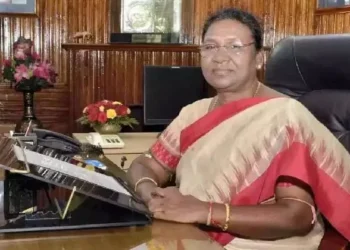
    As India prepares to celebrate its 75th Republic Day on January 26, 2024, there is a common question about who will unfurl the national flag on this special occasion. To clarify, Prime Minister Narendra Modi will not be unfurling the flag on Republic Day; instead, the honor goes to President Droupadi Murmu. Understanding the significance of this distinction sheds light on the historical and ceremonial aspects of Republic Day celebrations.


    Independence Day and Republic Day carry distinct flag hoisting traditions. On Independence Day, Prime Minister Narendra Modi raises the national flag at Red Fort, symbolizing India’s emergence from colonial rule and marking the inception of an independent nation. In contrast, Republic Day begins with the President of India unfurling the flag at Kartavya Path (formerly Rajpath), already at the peak with flowers tied to it. This act signifies that India, having gained independence, celebrates its established freedom and the enactment of its Constitution.


    The choice of venues and subsequent proceedings further differentiates these two national celebrations. Independence Day’s flag hoisting at Red Fort by the prime minister is followed by a national address. On the other hand, Republic Day’s unfurling by the president at Kartavya Path heralds a grand parade, showcasing India’s diverse culture, military prowess, and achievements.


    The historical significance of January 26 dates back to 1930 when the Indian National Congress began observing it as India’s Independence Day to honor freedom fighters. However, when the transfer of power officially occurred on August 15, 1947, this date became the new Independence Day. As India’s Constitution came into effect on January 26, 1950, the day officially marked the establishment of the Republic. Since then, January 26 has been celebrated annually as Republic Day, signifying the adoption of the Constitution and the reaffirmation of India as a sovereign republic.


    In the context of Republic Day 2024, President Droupadi Murmu’s role in unfurl the national flag at Kartavya Path emphasizes the constitutional and ceremonial significance of the day. It symbolizes India’s commitment to democratic values, unity in diversity, and the continuous journey of progress and development as a republic.


    As the nation gears up for the 75th Republic Day celebration, the participation of President Droupadi Murmu in the flag hoisting ceremony underscores the continuity of democratic traditions and the collective spirit of the Indian people in upholding the principles enshrined in the Constitution.

  • Farooq Abdullah: INDIA Bloc Formed to Safeguard Democracy

    Farooq Abdullah: INDIA Bloc Formed to Safeguard Democracy

    National Conference president Farooq Abdullah reiterated the commitment of the INDIA Bloc to safeguarding democracy and the Constitution of India. Speaking on Monday, he emphasized that the opposition alliance, comprising parties like the National Conference and the Peoples Democratic Party from Jammu and Kashmir, is united in its goal of creating a democratic India where the voices of the people are heard.


    Abdullah dismissed any speculation of internal conflicts within the INDIA Bloc over the prime minister’s post. He underscored that the alliance is focused on democratic values, ensuring space for criticism, and correcting any faults. The primary objective, according to Abdullah, is to work towards an inclusive India where people of different religious and cultural backgrounds coexist and progress together.


    “We want an India where Hindus, Muslims, Sikhs, Christians, and others live like brothers and progress together. We are fighting for this India and not for mere power,” stated Farooq Abdullah. He clarified that the INDIA Bloc is dedicated to upholding democratic values and the Constitution, considering it a sacred book bestowed upon the citizens by their elders.


    Abdullah outlined the intentions of the opposition alliance, highlighting the goal of creating an India that respects diversity and ensures equal treatment for all citizens. He mentioned the formation of a board to decide on seat-sharing among alliance partners and the possibility of establishing a secretariat and a convenor for the INDIA Bloc.


    Responding to queries about the prime ministerial candidate, Abdullah emphasized that a leader would naturally emerge over time, guiding India forward. Drawing historical parallels, he cited examples like I. K. Gujral becoming the prime minister in 1997-98 and Atal Bihari Vajpayee garnering support from 23 parties with different ideologies.


    “We have to look equally at all the citizens and ensure equal treatment to them without any bias or discrimination. India belongs to each one of us, and we have to take it forward,” asserted Farooq Abdullah. He indirectly referred to criticisms by certain political figures against former Prime Minister Jawaharlal Nehru, acknowledging Nehru’s contributions in establishing institutions like the Indian Space Research Organisation and initiating educational reforms.


    Abdullah also highlighted the progress made under former Prime Minister Indira Gandhi, leading to a green revolution and positioning India as a global food producer. In the context of his religion, he emphasized the teachings to remember the good deeds of the deceased and overlook any wrongdoing.


    “They don’t accept it, and all this is done for power,” he added, without explicitly naming any particular party. The comments reflect Abdullah’s stance on focusing on constructive aspects of governance rather than engaging in divisive rhetoric.


    Farooq Abdullah’s statements underscore the commitment of the INDIA Bloc to democratic values, diversity, and the Constitution of India. The opposition alliance aims to work collaboratively to address the challenges facing the nation and create an inclusive and progressive India. The emphasis on unity and shared objectives signals the alliance’s determination to provide an alternative vision for the country based on democratic principles.

  • Debate: Reference to “Prime Minister of Bharat”

    Debate: Reference to “Prime Minister of Bharat”

    The reference to Prime Minister Narendra Modi as the “Prime Minister of Bharat” during his visit to Indonesia for the ASEAN-India and East Asia summits has ignited a debate over a potential change in the country’s name. This comes shortly after a G20 dinner invitation addressed to the “President of Bharat” triggered controversy, with opposition parties alleging that the government intends to replace “India” with “Bharat” as the country’s official name.


    Senior BJP leaders and ministers have expressed support for the use of “President of Bharat,” with Union Minister Rajeev Chandrasekhar questioning the objections, asserting that the country is officially known as both “India” and “Bharat” and hence the reference to “Prime Minister of Bharat” is nothing wrong.


    The ongoing debate has fueled speculation that the issue of changing the country’s name could be raised during the upcoming five-day special session of Parliament, scheduled to commence on September 18.


    Opposition leaders, including Congress General Secretary Jairam Ramesh, who initially highlighted the development, have accused the government of undermining the constitutional idea of the country as a “Union of States,” as stated in Article 1 of the Constitution, which recognizes the nation as “India, that is Bharat.”


    Jairam Ramesh commented, “So the news is indeed true. Rashtrapati Bhavan has sent out an invite for a G20 dinner on 9 September in the name of ‘President of Bharat’ instead of the usual ‘President of India.’ Now, Article 1 in the Constitution can read: Bharat, that was India, shall be a Union of States.”


    The controversy arose just days after Rashtriya Swayamsevak Sangh (RSS) chief Mohan Bhagwat advocated for the use of “Bharat” instead of “India.” Bhagwat, addressing an event in Guwahati on September 1, emphasized that the name “Bharat” has an ancient lineage and should be preserved. He stated, “The name of our country has been Bharat for ages. Whatever may be the language, the name remains the same.”


    The debate over the country’s name change reflects broader discussions about national identity and nomenclature. While “India” is the common English reference, “Bharat” is deeply rooted in India’s historical and cultural heritage. The issue remains a topic of public discourse, with varying perspectives on how to address the country officially.

  • Jagdeep Dhankhar: I Defend the Constitution, Not Individuals

    Jagdeep Dhankhar: I Defend the Constitution, Not Individuals

    Vice President and Rajya Sabha Chairman, Jagdeep Dhankhar, has made it clear that his role in Parliament is not to defend any individual, including Prime Minister Narendra Modi, but to uphold the Constitution and safeguard citizens’ rights. This statement comes in response to allegations made by Leader of the Opposition, Mallikarjun Kharge, who accused Dhankhar of defending the Prime Minister over the Opposition’s demand for a debate on the Manipur issue.


    Jagdeep Dhankhar emphasized that his primary responsibility is to uphold the Constitution and protect citizens’ rights, rather than taking sides or defending any specific individual. He expressed his disappointment at the Leader of the Opposition’s observation, stating that it is not conducive to healthy parliamentary proceedings.


    The ongoing Monsoon Session of Parliament has been marred by disruptions and adjournments, as the Opposition has been pressing for a debate on the Manipur issue. The demand for a statement from the Prime Minister on the matter has further escalated tensions in the house.


    In Lok Sabha, disruptions persisted on Thursday, leading to the adjournment of proceedings until 2 pm due to protests by Opposition members regarding the Manipur issue. Speaker Om Birla, upset at the repeated disruptions, chose not to chair the proceedings during Question Hour for the second consecutive day.


    The focus on the Manipur issue and the demand for a debate continue to hamper the smooth functioning of legislative proceedings in both houses of Parliament. The situation remains tense, and finding a resolution to the issue has become paramount to restoring order and allowing other important legislative matters to be addressed.


    Vice President Dhankhar’s assertion that his duty is to defend the Constitution and uphold democratic principles underscores the importance of maintaining parliamentary decorum and prioritizing the interests of the citizens. As the debates and discussions continue, it is crucial for all members of Parliament to remember their responsibilities as representatives of the people and work towards finding a resolution through constructive dialogue and cooperation. Only by adhering to the principles of democracy and respecting parliamentary norms can meaningful progress be made in addressing the concerns and issues that affect the nation and its citizens.