Tag: Border Security

  • Pakistan Blames Afghanistan for Surge in Terrorism

    Pakistan Blames Afghanistan for Surge in Terrorism

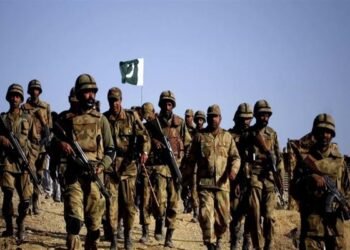
    In recent developments, Pakistan has accused Afghanistan of being complicit in a surge of terrorist activities, pointing to a string of attacks, including a deadly assault on a border Army post. Officials from Pakistan’s foreign ministry have stated that Islamabad conducted intelligence-based anti-terror operations in border regions of Afghanistan, targeting militants associated with the Hafiz Gul Bahadur Group.


    The Hafiz Gul Bahadur Group has been implicated in numerous attacks within Pakistan, alongside the Tehrik-i-Taliban Pakistan (TTP). These operations come in response to escalating violence, notably a March 16 militant attack that claimed the lives of seven Pakistani soldiers at a border Army post. The attack, attributed to militants crossing over from Afghanistan, prompted swift retaliatory measures by Pakistani security forces.


    Last week’s suicide bombing in northwestern Pakistan, which resulted in the deaths of seven soldiers, was a stark reminder of the persistent threat posed by terrorist organizations operating along the Pakistan-Afghanistan border. In response, Pakistani security forces engaged and neutralized all six attackers involved in the bombing, demonstrating a firm resolve to combat terrorism within its borders.


    While a newly formed militant group, Jaish-e-Fursan-e-Muhammad, claimed responsibility for the Mir Ali attack, Pakistani security officials believe that the group comprises primarily members of the Tehrik-e-Taliban Pakistan (TTP). The TTP, a banned outfit, has long been involved in orchestrating acts of terrorism aimed at destabilizing Pakistan’s security and governance.


    The Pakistani military has underscored the need for enhanced vigilance and security measures to counter the evolving terrorist threats emanating from across the border. It has noted a concerning increase in terrorist incidents, facilitated by support from elements within the Afghan Taliban and the influx of modern weaponry into the region.


    The relationship between Pakistan and Afghanistan, particularly concerning border security and counterterrorism efforts, has been fraught with challenges and mutual suspicions. Both countries have accused each other of harboring and supporting militant groups that operate along their shared border, exacerbating tensions and hindering bilateral cooperation in combating terrorism.


    Pakistan’s accusations against Afghanistan highlight the complexities of regional security dynamics and underscore the urgent need for coordinated efforts to address the menace of terrorism. Efforts to enhance intelligence-sharing, border management, and joint counterterrorism operations between Pakistan and Afghanistan are crucial to effectively combatting extremist elements operating in the region.


    In response to Pakistan’s allegations, Afghan authorities have reiterated their commitment to combating terrorism and maintaining security along the border. Afghanistan has faced its own challenges in combating terrorism, contending with various insurgent groups and internal security threats.


    The international community, including key stakeholders such as the United States, has a vested interest in promoting stability and security in the region. Addressing the root causes of terrorism, fostering dialogue between Pakistan and Afghanistan, and supporting efforts to strengthen governance and socioeconomic development are essential components of a comprehensive approach to countering extremism and violence.


    As Pakistan intensifies its efforts to root out terrorism and ensure the safety and security of its citizens, collaboration with regional and international partners will be crucial in achieving long-term stability and peace in the volatile border region. By addressing the underlying drivers of extremism and fostering cooperation among neighboring countries, the scourge of terrorism can be effectively tackled, paving the way for a more secure and prosperous future for the region.

  • Delhi Police Gears Up for Farmers’ ‘Chalo Delhi’ Protest

    Delhi Police Gears Up for Farmers’ ‘Chalo Delhi’ Protest

    Amidst the looming threat of a re-run of the 2020 Farmers’ Protest, both the Haryana and Delhi police are leaving no stone unturned in their preparations for the farmers’ ‘Chalo Delhi’ protest scheduled for February 13. The Delhi Police, in particular, is on high alert, keen to avoid a recurrence of the unfortunate events of January 26, 2021, when clashes between protesting farmers and Delhi Police marred the national capital.


    The farmers participating in the protest march of the Chalo Delhi hail from various states including Punjab, Haryana, Rajasthan, Uttar Pradesh, Kerala, and Karnataka. Their demands include the enactment of a law to guarantee Minimum Support Price (MSP) and pension benefits. In anticipation of the protest, the Delhi Police has issued a precautionary order under section 144 of the Criminal Procedure Code to maintain law and order and prevent any untoward incidents.


    The Delhi Police’s preparations for the Farmers’ Protest are comprehensive and multifaceted:

    • Border Blocking: The Delhi Police, in collaboration with the Haryana Police, is blocking the borders of the national capital with Haryana, deploying barriers and cranes to prevent the entry of protesting farmers into Delhi.
    • Cement Barriers: Haryana authorities have also installed cement barriers to reinforce border security and prevent farmers from crossing into Delhi.
    • Drills and Preparations: Delhi Police officers are conducting drills and practicing firing tear gas shells in case protesters refuse to disperse. These drills aim to ensure swift and effective response in managing any potential unrest.
    • Estimation of Protesters: It is estimated that around 20,000 farmers, accompanied by 2,000 tractors, will attempt to enter Delhi. Delhi Police are also vigilant about the possibility of protesters using alternative modes of transportation to evade security measures.
    • VIP Security: Special attention is being paid to the security of VIPs including the Prime Minister, ministers, and BJP leaders, with police anticipating the possibility of protests outside their residences.
    • Social Media Monitoring: Delhi Police are closely monitoring social media platforms to preemptively identify and address any attempts to incite violence or organize disruptive activities.
    • Tractor Rehearsals: In collaboration with the Haryana and Punjab police, tractor rehearsals have been conducted to simulate the protest and practice response strategies.
    • Paramilitary Deployment: To bolster security measures, 50 paramilitary companies have been deployed to block the farmers’ entry into Delhi.


    In addition to these measures for Chalo Delhi movement, the Delhi Police has imposed various restrictions, including prohibiting gatherings at border areas between Delhi and Uttar Pradesh, restricting the entry of vehicles and protestors from Uttar Pradesh, and disallowing the carrying of arms or weapons by protestors. These restrictions will remain in place from February 11 to March 11, 2024.


    As tensions mount ahead of the Farmers’ Protest and the Chalo Delhi movement, the coordinated efforts of law enforcement agencies aim to ensure the safety and security of citizens while upholding the democratic right to protest peacefully. However, the situation remains fluid, and both sides are bracing for potential challenges and contingencies.

  • India Scraps Free Movement Regime with Myanmar

    India Scraps Free Movement Regime with Myanmar

    On February 8, Union Home Minister Amit Shah made a significant announcement regarding India’s border policy with Myanmar. He revealed that the Ministry of Home Affairs (MHA) had decided to scrap the Free Movement Regime (FMR) between India and Myanmar. This decision, he emphasized, was made with the primary objective of ensuring the internal security of India and maintaining the demographic structure of the country’s North Eastern States bordering Myanmar.


    The Free Movement Regime (FMR), established as part of India’s Act East policy in 2018, allowed people residing close to the India-Myanmar border to venture 16 kilometers into each other’s territory without requiring any documents. However, citing concerns related to national security and the influx of unauthorized individuals, the MHA decided to recommend the immediate suspension of the FMR.


    Amit Shah’s announcement came just two days after he revealed plans for the construction of a fence along the entire 1,643-kilometer-long India-Myanmar border. This ambitious project aims to enhance surveillance and security along the border, thereby curbing unauthorized cross-border activities.


    The decision to scrap the FMR and erect a fence along the border has evoked mixed reactions, particularly from the North Eastern border states directly affected by these measures. Various ethnic groups and civil organizations in states like Mizoram, Manipur, Nagaland, and Arunachal Pradesh have expressed divergent views on the matter.


    Among the concerns raised by some groups is the fear that fencing the border and canceling the FMR would sever ethnic ties and disrupt the social fabric of communities living along the border. For instance, the Kuki-Zo people have voiced apprehensions that the border fence could divide their ethnic community between the two countries.


    Similarly, the Mizoram Zirlai Pawl (MZP), the apex students’ body in Mizoram, has argued that border fencing would not only impact ethnic relations but also bring an end to the Free Movement Regime, which has facilitated interactions and exchanges between communities on both sides of the border.


    In Mizoram, both the state government and civil society organizations have opposed the move to fence the border, with Chief Minister Lalduhoma highlighting the historical context of the Indo-Myanmar border and its imposition by colonial authorities without consulting the local population. Fencing the border, according to him, would signify acceptance of the colonial demarcation, which is unacceptable to the people of Mizoram.


    Similarly, Naga organizations in Manipur have expressed their opposition to the border fencing and the cancellation of the Free Movement Regime. The United Naga Council (UNC), representing the Naga community in the state, has stated that these measures are unacceptable and could have adverse consequences for the indigenous population.


    On the other hand, there are voices in support of the government’s decision to enhance border security through fencing and stricter regulations. Arunachal Pradesh Chief Minister Pema Khandu has welcomed the move, describing it as a step in the right direction to make the borders foolproof and prevent the infiltration of unauthorized individuals.


    Khandu’s endorsement of the border fencing project reflects the broader sentiment among certain sections of society that prioritize national security and territorial integrity. They view the measures as necessary steps to safeguard India’s borders and prevent illegal activities, such as smuggling and infiltration, from across the border.


    Overall, the decision to scrap the Free Movement Regime and fence the India-Myanmar border represents a significant policy shift aimed at bolstering border security and safeguarding national interests. However, it also highlights the complex socio-political dynamics and diverse perspectives within the North Eastern states, where border issues intersect with ethnic identities, historical grievances, and aspirations for autonomy. As the government moves forward with its border security measures, it must navigate these complexities sensitively and ensure that the concerns of all stakeholders are addressed effectively.

  • Indian Army Foils Infiltration Bid, Kills Two Pakistani Terrorists

    Indian Army Foils Infiltration Bid, Kills Two Pakistani Terrorists

    In a significant counterterrorism operation, the Indian Army successfully repelled an infiltration bid by eliminating two Pakistani terrorists along the Line of Control (LoC) in the Poonch district of Jammu and Kashmir. The operation took place in the Balakote sector and marks a crucial achievement in maintaining border security.


    According to an Indian Army spokesperson, the bodies of the terrorists could not be retrieved as they managed to escape across the LoC before succumbing to injuries sustained during a confrontation with the Army. Recovered from the site of the gunfight were significant items including one AK-47 rifle, two magazines, 30 rounds of ammunition, two hand grenades, and medicines of Pakistani origin.


    Lt Col Suneel Bartwal, a Jammu-based defence PRO, explained the sequence of events leading to the successful operation. Based on intelligence inputs from various sources, it was revealed that terrorists were planning to cross the LoC from the opposite Balakote sector. As a result, the Indian Army heightened its surveillance and established multiple ambushes at strategic locations.


    Alert troops spotted the two Pakistani terrorists attempting to infiltrate into Indian territory. The challenging conditions of inclement weather, dense fog, thick foliage, and uneven terrain in the Hamirpur area of Balakote did not deter the vigilant troops.


    The Army engaged the terrorists in a firefight, forcing them to retreat and flee the ambush site. One of the terrorists was injured and fell near the LoC. Subsequent search operations led to the discovery of an AK-47 rifle, magazines, ammunition, grenades, and Pakistani medicines. Blood trails were also detected, indicating that both terrorists were injured.


    Despite their injuries, the infiltrators managed to return across the LoC and later succumbed to their wounds. Lt Col Bartwal emphasized that Indian troops remain on high alert and maintain vigilance to thwart any future infiltration attempts from across the border.


    This incident marks the second time this month that the Indian Army has effectively countered an infiltration attempt along the LoC in the Poonch district. The Army’s proactive approach to border security and its commitment to safeguarding the nation against such threats continue to play a critical role in maintaining stability in the region.