Tag: Bilateral Cooperation

  • India to Withdraw Troops from Maldives by May

    India to Withdraw Troops from Maldives by May

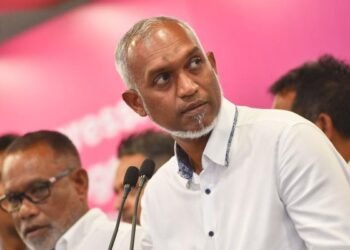
    India has decided to withdraw its troops stationed in the Maldives by May, as announced by the Maldivian Foreign Ministry on Saturday. This move comes in the backdrop of strained ties between the two nations, particularly since Mohamed Muizzu assumed the presidency of the Maldives, expressing a commitment to end the country’s “India First” policy. Approximately 80 soldiers will be replaced by civilians, marking a significant development in the evolving dynamics of the relationship between India and the Maldives.


    The decision to withdraw troops stems from a series of disagreements that have surfaced since Mohamed Muizzu’s election as the Maldivian president. The “India First” policy, traditionally maintained by the Maldives, has faced challenges, contributing to the existing strain between the two nations. President Muizzu, who assumed office last year, has been vocal about ending this policy, resulting in a recalibration of the Maldives’ approach to its regional relationships.


    The troop withdrawal deadline, set for May, follows President Muizzu’s call for the removal of Indian troops by March 15. The gradual withdrawal process will see the first batch of Indian troops leaving by March 10, with the complete evacuation expected by May 10. These details were finalized during a high-level meeting in the Indian capital that addressed various issues concerning bilateral cooperation between India and the Maldives.


    The decision to replace military personnel with civilians is significant and denotes a strategic shift in the relations between the two nations. The bilateral discussions encompassed a range of issues, including military support, humanitarian activities, and broader cooperation. The focus on finding “mutually workable solutions” suggests a diplomatic effort to address differences and forge common ground between India and the Maldives.


    The discussions also led to an agreement on the continued operation of Indian aviation platforms, which have played a pivotal role in providing humanitarian services to the Maldives. These platforms are vital for medical evacuations and support for residents of remote islands. The joint statement from the Maldivian Foreign Ministry emphasized the importance of these aviation platforms and showcased a commitment to maintaining cooperative efforts for the well-being of the Maldivian people.


    The strategic implications of the troop withdrawal are situated within the context of broader geopolitical dynamics in the Indo-Pacific region. The move comes at a time when major powers, including India and China, are vying for influence in the strategically vital Indo-Pacific region. The Maldives, positioned in the Indian Ocean, has become a focal point in this geopolitical competition.


    The decision also highlights the evolving nature of India-Maldives relations. With geopolitical dynamics continually shifting, nations are reevaluating their strategic alignments and diplomatic approaches. The troop withdrawal and the subsequent civilian replacement signify a nuanced approach to addressing geopolitical complexities and maintaining regional stability.


    The agreement reached during the high-level meeting not only focuses on troop withdrawal but also emphasizes continued cooperation in various aspects of bilateral relations. This multifaceted approach is crucial for navigating the intricate web of geopolitical challenges in the Indo-Pacific.


    As the withdrawal process unfolds, the next bilateral meeting scheduled in the last week of February in Male, the capital of the Maldives, will likely play a pivotal role in shaping the future trajectory of India-Maldives relations. Observers will keenly watch how both nations navigate their diplomatic ties amid the broader geopolitical currents in the Indo-Pacific region.


    The decision by India to withdraw its troops from the Maldives by May represents a diplomatic maneuver to address strained ties and forge a path forward. The gradual replacement of military personnel with civilians, coupled with an agreement on continued cooperation, reflects a nuanced approach to navigating the geopolitical complexities of the Indo-Pacific region. The next bilateral meeting is poised to provide further insights into the evolving dynamics of India-Maldives relations.

  • China Invites Bangladesh PM Sheikh Hasina for Talks

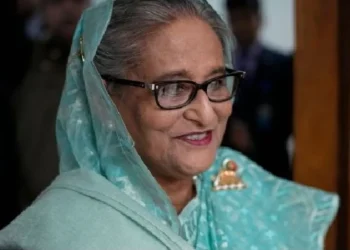
    China Invites Bangladesh PM Sheikh Hasina for Talks

    China has formally invited Bangladesh Prime Minister Sheikh Hasina for an official visit, expressing eagerness to collaborate with the new government in Dhaka to enhance bilateral cooperation across various sectors.


    “We (Dhaka) will find a suitable time for the visit,” stated Foreign Minister Hassan Mahmud during a press briefing after his meeting with Chinese Ambassador to Bangladesh Yao Wen on Sunday.


    Ambassador Yao Wen’s meeting with Minister Mahmud occurred following the successful re-election of the Awami League, led by Prime Minister Sheikh Hasina, for a consecutive fourth term in the elections held on January 7. The Bangladesh Nationalist Party (BNP), a major opposition party, boycotted the elections.


    Foreign Minister Mahmud mentioned that discussions are in progress to coordinate the visit at a mutually convenient time for Prime Minister Hasina’s official tour to Beijing.


    Prime Minister Hasina previously visited China from July 1-6, 2019, where she also participated in the 13th Summer Davos Forum in Dalian and had a meeting with Chinese President Xi Jinping.


    In a statement, the foreign ministry emphasized that China reaffirmed its commitment to strengthening bilateral relations during the tenure of Bangladesh’s new government.


    After the January 7 polls, Chinese President Xi congratulated Prime Minister Hasina and expressed confidence in fostering stronger ties between the two nations.


    Sources from the Bangladesh foreign ministry disclosed that China had initially proposed a visit by Prime Minister Hasina in September of the previous year. However, due to the elections and other commitments, the visit was postponed.


    China’s invitation comes shortly after Obaidul Quader, the general secretary of the ruling party, and Road Transport Minister, acknowledged India’s support during the elections. Quader stated that there is no reason for strained relations with India, and he believes that the wall of confusion and mistrust has been broken by the leaders of both countries.


    A senior foreign ministry official, speaking on the condition of anonymity, emphasized that Bangladesh aims to maintain a balanced relationship with both India and China. The strategic positioning of Bangladesh between these two neighboring nations requires careful diplomacy to ensure stability and development.


    Analysts credit Prime Minister Hasina for skillfully navigating the competing interests of India and China. Bangladesh finds itself situated between these two powerful nations, and Hasina’s diplomatic efforts have garnered support from both India and China, as well as other significant global players like Russia.


    India characterized the Bangladesh election as an “internal matter,” a sentiment echoed by Beijing. While Western powers, including the United States, have called for credible polls, Hasina’s adept handling of diplomatic relations has contributed to maintaining stability in Bangladesh.

  • India Inks Key Agreements with UAE and Czech Republic

    India Inks Key Agreements with UAE and Czech Republic

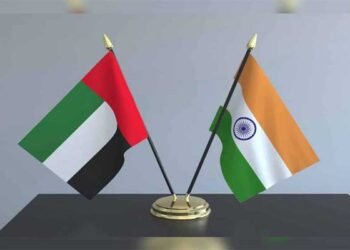
    India has inked several bilateral cooperation agreements with the United Arab Emirates (UAE) and the Czech Republic during the Vibrant Gujarat summit. The agreements cover various sectors, showcasing the diverse areas of collaboration that India is fostering with these nations.


    With the UAE, the agreements span healthcare, the development of food parks, and renewable energy. The healthcare sector is likely to witness enhanced collaboration, contributing to the overall well-being of both nations. Furthermore, the development of food parks aligns with the I2U2 partnership involving India, Israel, the UAE, and the United States, aiming to bolster the food and agriculture sectors. The focus on renewable energy, particularly green hydrogen and solar power, highlights the commitment to sustainable practices and combating climate change. The ongoing discussions about grid interconnectivity suggest a shared vision for a robust and interconnected energy landscape.


    The presence of UAE President Mohamed bin Zayed Al Nahyan as the chief guest at the summit underscores the significance of the India-UAE relationship. The foreign secretary emphasized the transformative nature of the India-UAE relationship, and the $2 billion investment pledge by the UAE in 2022 for the development of food parks demonstrates the tangible economic impact of this collaboration.


    In addition to agreements in the healthcare sector and renewable energy, a logistics cooperation pact between the government of Gujarat and Dubai-based logistics firm DP World adds another dimension to the bilateral ties, focusing on enhancing logistical capabilities and infrastructure.


    Simultaneously, India and the Czech Republic have entered into a strategic partnership on innovation. This partnership aims to foster collaboration in various sectors, including startups and innovation, cybersecurity, digital domains, artificial intelligence, defense, nuclear energy, and the circular economy. This signifies a commitment to technological advancement, research, and development across diverse fields, contributing to economic growth and shared expertise.


    Prime Minister Narendra Modi’s meeting with leaders from Mozambique and Timor-Leste further highlights India’s engagement with nations beyond the Middle East and Europe. These interactions serve as platforms for discussing potential areas of cooperation, strengthening diplomatic ties, and exploring avenues for mutual growth.


    The Vibrant Gujarat summit has provided a platform for India to deepen its partnerships with the UAE and the Czech Republic across multiple sectors. The agreements reflect the countries’ shared commitment to innovation, sustainability, and economic development. As India continues to engage with diverse nations, these collaborations contribute to the nation’s standing on the global stage and promote mutual prosperity.

  • Modi Discusses Israel-Hamas Conflict with Iranian President

    Modi Discusses Israel-Hamas Conflict with Iranian President

    In a significant diplomatic move, Indian Prime Minister Narendra Modi engaged in a telephonic conversation with Iranian President Ebrahim Raisi on November 6, addressing the ongoing conflict between Israel and the Palestinian militant group Hamas. The discussion focused on the critical need for de-escalation and the prevention of further violence and loss of civilian lives.


    The Prime Minister’s Office (PMO) released a statement highlighting Modi’s deep concern regarding the terrorist incidents and violence that have recently plagued the West Asian region, leading to a tragic loss of innocent lives. Both leaders underscored the urgency of de-escalation and the necessity for continuous humanitarian aid to those affected by the conflict, along with a strong desire for the swift restoration of peace and stability in the region.


    The PMO statement also emphasized that Prime Minister Modi reiterated India’s longstanding and unwavering position on the Israel-Palestine issue during his conversation with President Raisi. India’s consistent stance supports the establishment of an independent sovereign state of Palestine as part of a two-state solution while recognizing and addressing the legitimate security concerns of Israel.


    In a Twitter post following the conversation, Prime Minister Modi described the exchange with the Iranian President as a constructive discussion about the challenging situation in West Asia and the ongoing Israel-Hamas conflict. He acknowledged that the recent surge in terrorist incidents, violence, and the tragic loss of civilian lives were indeed grave concerns. Modi stressed the importance of preventing further escalation of hostilities, ensuring a continuous flow of humanitarian assistance to those affected by the conflict, and the swift restoration of peace and stability in the region. In the same tweet, he also expressed his appreciation for the progress made in bilateral cooperation between India and Iran, particularly in the development of the Chabahar port.


    The PMO statement further noted that President Raisi shared his assessment of the situation concerning the Israel-Hamas conflict with Prime Minister Modi. Both leaders agreed to maintain open lines of communication, given their shared interest in promoting regional peace, security, and stability.


    The discussion between Prime Minister Modi and President Raisi also provided an opportunity to review and positively assess the progress in multifaceted bilateral cooperation between India and Iran. The two leaders welcomed the focus and priority assigned to the Chabahar port, a crucial infrastructure project in Iran that holds the potential to significantly enhance regional connectivity and trade.


    The phone conversation between the Indian and Iranian leaders signifies the growing importance of diplomatic efforts in addressing regional conflicts and fostering cooperation. As the international community watches closely, the world hopes for a peaceful resolution to the Israel-Hamas conflict and the restoration of stability in the region. The continued engagement of leaders like Prime Minister Modi and President Raisi reflects a commitment to these goals and the collective desire to prevent further suffering and loss of life.

  • S. Jaishankar Visits Vietnam to Strengthen Bilateral Ties

    S. Jaishankar Visits Vietnam to Strengthen Bilateral Ties

    Indian Foreign Minister S. Jaishankar embarked on a significant two-nation visit to the South East Asian region, with Vietnam as his first destination. The visit aims to bolster bilateral ties and discuss avenues for cooperation.


    Upon his arrival, S. Jaishankar was welcomed by Vietnam’s Foreign Minister, Bui Thanh Son, who extended a warm personal welcome. The two leaders also visited the renowned Tran Quoc Pagoda, a symbol of cultural exchange and unity. After Vietnam, S. Jaishankar is scheduled to head towards Singapore during his visit.


    On Monday, S. Jaishankar will co-chair the 18th meeting of the India-Vietnam Joint Commission, focusing on economic, trade, scientific, and technological cooperation, alongside his Vietnamese counterpart, Bui Thanh Son. The Joint Commission Meeting represents a significant platform for both nations to review progress and explore opportunities to enhance collaboration.


    In a tweet, S. Jaishankar expressed his gratitude for the warm welcome in Vietnam and looked forward to the Joint Commission Meeting. During his visit, the foreign minister also inaugurated a bust of Rabindranath Tagore in Bac Ninh, Vietnam, emphasizing the historic connections between India and Vietnam, dating back nearly 2000 years, rooted in the legacy of Buddhism.


    The foreign minister’s visit to Vietnam underscores the strong and robust comprehensive strategic partnership between the two nations. Vietnam plays a pivotal role in India’s Act East Policy, and the visit provides an opportunity to review progress in various areas and discuss strategies to further enhance bilateral cooperation.


    Earlier this year, India demonstrated its commitment to the region by handing over a fully-operational corvette, showcasing its commitment to bolstering maritime security and defense cooperation with friendly foreign countries.


    As the visit progresses, the external affairs minister will continue discussions and hold talks with Vietnamese leadership, emphasizing the enduring relationship and shared interests between India and Vietnam. The visit includes stops in Hanoi and Ho Chi Minh City, where S. Jaishankar is expected to meet with members of the Indian community and unveil a bust of Mahatma Gandhi.


    The visit signifies India’s commitment to strengthening ties and fostering mutually beneficial partnerships in the South East Asian region, aligning with the nation’s strategic foreign policy objectives.