Tag: Bharat

  • Debate: Reference to “Prime Minister of Bharat”

    Debate: Reference to “Prime Minister of Bharat”

    The reference to Prime Minister Narendra Modi as the “Prime Minister of Bharat” during his visit to Indonesia for the ASEAN-India and East Asia summits has ignited a debate over a potential change in the country’s name. This comes shortly after a G20 dinner invitation addressed to the “President of Bharat” triggered controversy, with opposition parties alleging that the government intends to replace “India” with “Bharat” as the country’s official name.


    Senior BJP leaders and ministers have expressed support for the use of “President of Bharat,” with Union Minister Rajeev Chandrasekhar questioning the objections, asserting that the country is officially known as both “India” and “Bharat” and hence the reference to “Prime Minister of Bharat” is nothing wrong.


    The ongoing debate has fueled speculation that the issue of changing the country’s name could be raised during the upcoming five-day special session of Parliament, scheduled to commence on September 18.


    Opposition leaders, including Congress General Secretary Jairam Ramesh, who initially highlighted the development, have accused the government of undermining the constitutional idea of the country as a “Union of States,” as stated in Article 1 of the Constitution, which recognizes the nation as “India, that is Bharat.”


    Jairam Ramesh commented, “So the news is indeed true. Rashtrapati Bhavan has sent out an invite for a G20 dinner on 9 September in the name of ‘President of Bharat’ instead of the usual ‘President of India.’ Now, Article 1 in the Constitution can read: Bharat, that was India, shall be a Union of States.”


    The controversy arose just days after Rashtriya Swayamsevak Sangh (RSS) chief Mohan Bhagwat advocated for the use of “Bharat” instead of “India.” Bhagwat, addressing an event in Guwahati on September 1, emphasized that the name “Bharat” has an ancient lineage and should be preserved. He stated, “The name of our country has been Bharat for ages. Whatever may be the language, the name remains the same.”


    The debate over the country’s name change reflects broader discussions about national identity and nomenclature. While “India” is the common English reference, “Bharat” is deeply rooted in India’s historical and cultural heritage. The issue remains a topic of public discourse, with varying perspectives on how to address the country officially.

  • Opposition Claims Over ‘India’ to ‘Bharat’ Name Change Resurface

    Opposition Claims Over ‘India’ to ‘Bharat’ Name Change Resurface

    Amidst the ongoing controversy over the alleged proposal to rename India as ‘Bharat,’ Congress Thiruvananthapuram MP Shashi Tharoor has revisited a 2015 incident in which the Central government opposed such a change. The Opposition has been asserting that the government plans to officially adopt ‘Bharat’ as the country’s name, dropping ‘India.’


    In response to a public interest litigation (PIL) advocating for the official use of ‘Bharat’ alongside ‘India,’ the Ministry of Home Affairs (MHA) had informed the Supreme Court in 2015 that there was no need for such a change. The Centre’s response stated, “There is no change in circumstances to consider any changes in Article 1 of the Constitution of India.”


    Article 1.1 of the Indian Constitution recognizes both ‘Bharat’ and ‘India’ as two official names for the country, stating, “India, that is Bharat, shall be a Union of States.”


    Sharing a news article on this 2015 incident, Shashi Tharoor commented, “No comment. Happy to agree with the Government on this!”


    The recent controversy also emerged when invitations for a G20 dinner described the President’s position as ‘President of Bharat’ instead of the customary ‘President of India,’ prompting allegations from the Opposition that the government intends to abandon ‘India’ in favor of ‘Bharat’ as the country’s name.


    In response, the ruling NDA alliances accused the Opposition of opposing the name ‘Bharat.’


    Shashi Tharoor emphasized that there is no constitutional objection to using ‘Bharat’ alongside ‘India.’ However, he expressed the hope that the government would not be “foolish” enough to entirely replace ‘India,’ which has “incalculable brand value.” He suggested that both names should continue to be used, as ‘India’ is a name recognized globally and steeped in history.


    Tharoor also highlighted the historical context, noting that Pakistan’s founder, Mohammad Ali Jinnah, had objected to the name ‘India’ because it implied that the country was the successor state to the British Raj, with Pakistan being a seceding state. Tharoor concluded, “As with CAA, the BJP govt keeps supporting Jinnah’s view!”


    The debate over India’s name change to ‘Bharat’ remains contentious, with various viewpoints emphasizing historical significance, constitutional aspects, and political implications.

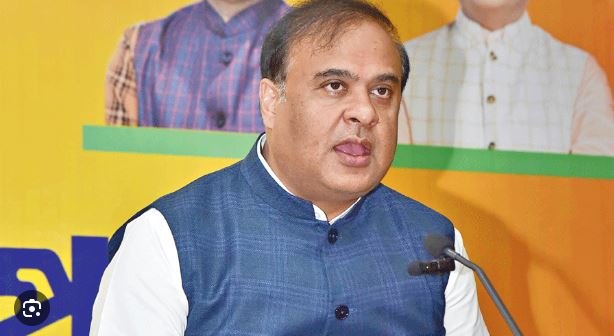
  • Colonial Legacy Debate : Assam CM’s Remarks on India’s Name

    Colonial Legacy Debate : Assam CM’s Remarks on India’s Name

    On Wednesday, the Congress and the Nationalist Congress Party (NCP) retaliated against Assam Chief Minister Himanta Biswa Sarma, who had taken a swipe at the opposition coalition by stating that the British had named the country India. It sparked a Colonial Legacy debate among the parties.


    The Twitter War

    Congress general secretary Jairam Ramesh took to Twitter on Wednesday to respond, stating that Sarma should convey this to Prime Minister Narendra Modi, who had introduced names like ‘Skill India,’ ‘Start-up India,’ and ‘Digital India’ for various programs in the country. Ramesh wrote, “Is the Assam CM having a surplus of sour grapes in his mouth? His new mentor, Mr. Modi, gave us Skill India, Start-up India, and Digital India—all new names for ongoing programs.”


    Ramesh added, “He’s (Modi) asked CMs of different states to work together as ‘Team India.’ He even made an appeal to Vote India!” He further expressed that when 26 political parties formed their coalition with the name INDIA (Indian National Developmental, Inclusive Alliance), Sarma threw a fit and claimed that the use of India reflected a “colonial mentality.” Ramesh suggested that Sarma should convey his concerns to his own leader.


    Ramesh also shared an old video of Modi urging voters to “vote for India.” Sarma had initially tweeted, “Our civilizational conflict is pivoted around India and Bharat. The British named our country as India. We must strive to free ourselves from colonial legacies.” He emphasized the importance of fighting for “Bharat” while referring to the efforts of the forefathers.


    Congress spokesperson Supriya Shrinate also criticized Sarma on Twitter, stating, “Himanta, find a better tweet writer. This one makes you appear foolish. Your fight seems to begin with your geo-location on your Twitter bio??”


    The opposition parties, comprising 26 political parties, recently formed the INDIA grouping to collectively challenge the ruling NDA in the 2024 Lok Sabha campaign. Congress leader Rahul Gandhi emphasized that the fight would be “between INDIA and Prime Minister Narendra Modi.” However, on Wednesday, they chose ‘Jeetega Bharat’ (India will win) as the alliance’s tagline to defeat the BJP in the 2024 general elections. The decision was made following late-night deliberations, and the tagline is expected to be used in various regional languages.


    Echoing the sentiments of the Congress, Clyde Crasto, NCP spokesperson, questioned when the BJP would change its Twitter handle, stating, “Himanta Biswa Sarma says ‘British named our country India; we must free ourselves from colonial legacy.’