Tag: Ban Extension

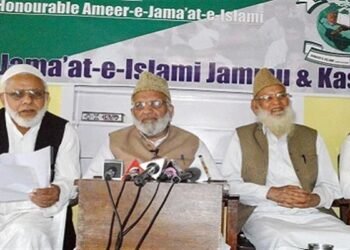
  • Indian Government Extends Ban on Jamaat-e-Islami

    Indian Government Extends Ban on Jamaat-e-Islami

    The Indian government’s decision to extend the ban on Jamaat-e-Islami, Jammu and Kashmir (J&K), for the next five years has sparked both controversy and support across the nation. Home Minister Amit Shah announced the decision, emphasizing the government’s commitment to national security and its zero-tolerance policy towards terrorism and separatism.


    In a tweet, Shah reiterated Prime Minister Narendra Modi’s stance on combating terrorism and separatism, stating that the ban extension aligns with the government’s policy of zero tolerance against threats to the nation’s security. The ban on Jamaat-e-Islami, J&K, which has been declared an ‘unlawful association,’ comes into effect immediately.


    The decision to extend the ban was made after careful consideration of the activities of Jamaat-e-Islami, J&K, which have been deemed detrimental to India’s security, integrity, and sovereignty. The government cited 47 cases registered against the organization, highlighting its alleged connections with militant outfits and its ongoing support for extremism and militancy in Jammu & Kashmir and other parts of the country.


    Moreover, the government accused Jamaat-e-Islami, J&K, of advocating for the secession of Indian territory and supporting terrorist and separatist groups engaged in activities aimed at disrupting India’s territorial integrity. The organization’s purported involvement in articulating and promoting activities conducive to secessionist agendas further solidified the government’s decision to extend the ban.


    Praveen Vashista, Additional Secretary at the Ministry of Home Affairs, emphasized the necessity of declaring Jamaat-e-Islami, J&K, as an unlawful association, citing the organization’s activities as grounds for the decision. The government’s declaration, made under the Unlawful Activities (Prevention) Act, 1967, signifies its determination to address threats posed by extremist groups.


    The ban extension marks a continuation of the government’s efforts to counter terrorism and safeguard national security interests, particularly in regions like Jammu & Kashmir, which have been marred by conflict and unrest. By taking decisive action against organizations deemed to pose a threat to peace and stability, the government aims to maintain law and order and protect the rights and safety of its citizens.


    However, the decision to extend the ban has sparked mixed reactions, with some expressing support for the government’s proactive measures to combat terrorism, while others criticize the move as a violation of civil liberties and freedom of association. Critics argue that the ban infringes upon the rights of individuals associated with Jamaat-e-Islami, J&K, without due process or sufficient evidence of wrongdoing.


    Furthermore, concerns have been raised about the potential impact of the ban on the socio-political landscape of Jammu & Kashmir, where organizations like Jamaat-e-Islami have historically played significant roles in advocating for the rights and interests of the local population. The ban could exacerbate existing tensions and further polarize communities, leading to potential unrest and instability in the region.


    In response to the ban extension, Jamaat-e-Islami, J&K, has denounced the government’s decision, labeling it as unjust and politically motivated. The organization has vowed to challenge the ban through legal means and continue its efforts to address the grievances of the people of Jammu & Kashmir.


    The ban extension on Jamaat-e-Islami, J&K, underscores the complex challenges faced by the Indian government in addressing issues related to terrorism, extremism, and separatism. While the government’s decision reflects its commitment to national security and stability, it also raises important questions about the balance between security concerns and civil liberties in a democratic society.

    Moving forward, it is essential for the government to engage in dialogue and consultation with all stakeholders, including civil society organizations and local communities, to address the root causes of conflict and promote inclusive and sustainable solutions to the challenges facing regions like Jammu & Kashmir. Only through comprehensive and inclusive approaches can lasting peace and stability be achieved in conflict-affected areas, ensuring the protection of human rights and the rule of law.

  • India Extends Ban on SIMI for Five More Years Under UAPA

    India Extends Ban on SIMI for Five More Years Under UAPA

    In a significant move to curb activities deemed detrimental to national security, India has extended the ban on the Students Islamic Movement of India (SIMI) for an additional five years under the Unlawful Activities (Prevention) Act (UAPA). Home Minister Amit Shah announced the decision, citing the organization’s involvement in “fomenting terrorism, disturbing peace, and communal harmony.” The ban extension aligns with the government’s commitment to maintaining zero tolerance against terrorism.


    SIMI, established in 1977, has faced periodic restrictions since its first ban in 2001 during the Atal Bihar Vajpayee government. The organization has been accused of operating with an agenda to transform India into an Islamic state, engaging in activities perceived as a threat to national sovereignty, security, and integrity. The ban renewal reflects the government’s vigilance against entities that pose potential risks to peace and communal harmony.


    Home Minister Amit Shah took to Twitter to announce the extension, stating, “Bolstering PM Narendra Modi ji’s vision of zero tolerance against terrorism, ‘Students Islamic Movement of India (SIMI)’ has been declared as an ‘Unlawful Association’ for a further period of five years under the UAPA.” Shah emphasized SIMI’s alleged involvement in terrorism-related activities, disturbance of peace, and threats to communal harmony as grounds for the extension.


    The decision to extend the ban comes after recommendations from 10 state governments, including Andhra Pradesh, Gujarat, Jharkhand, Kerala, Maharashtra, Madhya Pradesh, Rajasthan, Tamil Nadu, Telangana, and Uttar Pradesh. These states proposed the declaration of SIMI as an “unlawful association” under the provisions of the UAPA, collectively affirming concerns about the organization’s activities and their potential impact on national security.


    SIMI’s agenda and alleged involvement in various activities have led to its periodic bans over the years. The organization is accused of advocating for the liberation of India by establishing an Islamic state, and its members have been linked to incidents such as bank robberies, killings of policemen, and bomb blasts. The government contends that SIMI’s actions threaten the secular fabric of the country and jeopardize the peaceful coexistence of communities.


    A Home Ministry notification underscored the government’s concerns about SIMI’s continued subversive activities and its efforts to reorganize its activists who remain absconding. The notification stated, “Whereas the SIMI has been indulging in activities, which are prejudicial to the security of the country and have the potential of disturbing peace and communal harmony and disrupting the secular fabric of the country.” It further expressed the government’s firm opinion that declaring SIMI an unlawful association for an additional five years is necessary in light of its activities.


    The ban extension reflects the government’s commitment to addressing the evolving challenges posed by organizations with potential links to terrorism and activities that threaten the nation’s peace and security. The use of the UAPA provides legal backing for such measures, empowering authorities to take stringent actions against entities involved in activities deemed harmful to the nation.


    The decision is in line with India’s broader strategy to combat terrorism and maintain a secure and stable environment. By extending the ban on SIMI, the government aims to send a clear message that it will not tolerate activities that jeopardize the country’s integrity and communal harmony. The ban is a preventive measure designed to curb the organization’s influence and mitigate potential threats to national security.


    As India continues to face diverse challenges in the realm of national security, the government’s proactive stance in extending the ban on organizations like SIMI underscores its commitment to safeguarding the well-being of its citizens and maintaining the nation’s stability. The ban extension reflects the government’s unwavering determination to counter potential threats and reinforces its dedication to upholding the principles of peace, security, and communal harmony in the country.