Tag: Bali

  • Indonesia Imposes $10 Tax on Foreign Tourists Visiting Bali

    Indonesia Imposes $10 Tax on Foreign Tourists Visiting Bali

    Indonesia’s recent decision to impose a $10 tax on foreign tourists visiting Bali has sparked discussions about the preservation of the island’s cultural heritage and environmental sustainability. This new levy, introduced by the Indonesian government, aims to capitalize on the popularity of Bali as a tourist destination while also addressing the need to protect its unique charm and allure.


    Bali, often referred to as the “Island of Gods,” attracts millions of visitors from around the world each year. Its stunning beaches, vibrant culture, and lush landscapes have made it a top destination for travelers seeking an exotic getaway. However, the surge in tourism has raised concerns about the impact on the island’s cultural identity and natural environment.


    The $10 tourism tax, applicable to all international visitors entering Bali, is a proactive measure aimed at addressing these concerns. Sang Made Mahendra Jaya, the acting governor of Bali, emphasized the importance of this levy in safeguarding the island’s culture and environment. Speaking at the launch ceremony of the scheme, he highlighted the need to preserve Bali’s rich cultural heritage amid the influx of tourists.


    One of the notable aspects of the tourism tax is its inclusivity. Unlike some other tourist taxes, which may exempt certain categories of travelers, the Bali tax applies to everyone, regardless of age, gender, or nationality, including children. This per-entry tax means that tourists will be required to pay it each time they arrive in Bali, contributing to the island’s efforts to maintain its cultural integrity and environmental sustainability.


    However, it’s important to note that domestic tourists, as well as diplomatic visa holders and nationals of ASEAN member countries, are exempt from this tax. This exemption reflects the Indonesian government’s recognition of the importance of domestic tourism and regional cooperation, while also focusing on generating revenue from international visitors.


    To facilitate the payment process, the Indonesian government has introduced the “Love Bali” online portal, where tourists can pay the tax electronically. Alternatively, tourists can also pay the tax upon arrival at designated points such as airports and seaports, using various payment methods including credit cards, bank transfers, Virtual Accounts, or QRIS.


    The revenue generated from the tourism tax will be allocated to critical areas such as waste management, infrastructure development, and the preservation of Bali’s cultural heritage. This allocation underscores the government’s commitment to using tourism revenue for sustainable development and environmental conservation.


    Waste management, in particular, has become a pressing issue in Bali due to the influx of tourists and the resulting increase in waste generation. By directing funds towards waste management initiatives, the government aims to mitigate the environmental impact of tourism and promote sustainable practices on the island.


    Infrastructure development is another key area that stands to benefit from the tourism tax revenue. Improving infrastructure such as roads, transportation networks, and public facilities can enhance the overall tourist experience while also supporting local communities and businesses.


    Preserving Bali’s rich cultural heritage is a priority for the Indonesian government, and the revenue generated from the tourism tax will play a crucial role in this effort. By investing in cultural preservation initiatives, the government seeks to safeguard Bali’s unique traditions, arts, and ceremonies for future generations to enjoy.


    Indonesia’s introduction of a $10 tourism tax on foreign tourists visiting Bali reflects the government’s commitment to balancing the economic benefits of tourism with the need for cultural preservation and environmental sustainability. By leveraging tourism revenue for critical areas such as waste management, infrastructure development, and cultural preservation, Indonesia aims to ensure that Bali remains a cherished destination for travelers while also preserving its natural beauty and cultural heritage.

  • Five Reasons to Choose Komodo National Park As your Next Nature Excursion

    Five Reasons to Choose Komodo National Park As your Next Nature Excursion

    Known for its breathtaking natural beauty above and below the water, Komodo National Park in the Indonesian province of East Nusa Tenggara is a UNESCO World Heritage Site. Although the Komodo dragons are the most renowned of its natural wonders, the world’s largest lizards join a long list of reasons to explore the park’s rich biodiversity and unique landscapes. From aquamarine waters and majestic manta rays to rugged savannah and scarlet sunsets, Komodo National Park promises the trip of a lifetime.


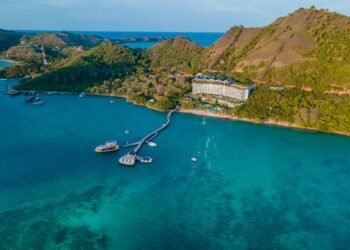
    AYANA Komodo Waecicu Beach – Aerial view

    For unparalleled luxury, comfort and style, look no further than AYANA Komodo Waecicu Beach in Labuan Bajo on the island of Flores. Featuring a white sand beach, 250-meter jetty, waterfront yoga deck and marine conservation activities, the resort’s world class luxury combined with gracious Indonesian hospitality make it the ultimate base from which to explore Komodo National Park. Here are five reasons why you should put this extraordinary part of the world on the top of your dream destination list.


    Relax on the dazzling sands of Pink Beach

    Imagine a beach straight out of a Pinterest board – pink, pretty and picturesque. One of only seven of its kind in the world, Pink Beach in Komodo National Park gets its unusual color from a microscopic creature that produces a red pigment on the fringing coral reefs, which combined with crushed red coral creates a dazzling dusky pink. While its aesthetics make it unforgettable and Instagram-worthy, taking a dip in the calm, crystal-clear waters is irresistible.


    Witness Komodo dragons in their natural habitat

    Stepping onto the rugged landscape of Komodo Island feels like stepping back to a time when prehistoric creatures ruled the earth. With its monstrous size, reptilian walk and flicking forked tongue, the Komodo dragon is truly an ancient sight to behold. Indeed, the oldest records of the Komodo dragon in Flores date to around 1.4 million years ago, during the Early Pleistocene. Expert local rangers will guide you to a vantage point where you can observe these astonishing creatures in their natural habitat and take photos worthy of National Geographic.


    Hike and experience the view from Padar Island

    Fitness enthusiast or not, the hike to the summit of Padar Island is an absolutely essential experience while exploring Komodo National Park. The view makes every step of the hour-long hike worth it: feast your eyes on four crescent-shaped, shimmering beaches below green-capped mountains surrounded by the tranquil azure water. A relatively minimal effort for such unforgettable scenery, wouldn’t you agree


    Watch bats setting off against the setting sun

    Have you ever watched thousands of bats taking flight from their nesting sites, soaring in sync against the stunning backdrop of the setting sun Kalong Island, a tiny mangrove islet in Komodo National Park, is named after its resident fruit bats, known locally as kalong. Witness nature’s awe-inspiring display while soaking in the orange and golden hues of the twilight sky.


    Interact with one of the worlds wealthiest marine environments

    Immersing yourself in the underwater paradise of Komodo National Park enables you to experience some of the world’s richest marine biodiversity. The region is home to 1,000 species of tropical fish and 260 species of coral. Pull on a snorkel and mask to observe these graceful, gentle creatures as they effortlessly glide through the water – sure to be an unforgettable moment for nature lovers.


    To contribute to the livelihood of the ecosystem, you can participate alongside AYANAs in-house Marine Biologist in planting coral fragments onto ropes or frames. As of today, the biologist has planted 3,100 coral fragments in an underwater area spanning 950 sqm, fostering the development of new coral colonies for the future.


    Where to stay : AYANA Komodo Waecicu Beach is a five-star resort with 205 elegantly appointed guest rooms and suites and seven distinct dining options that make the most of Labuan Bajo’s spectacular scenery. Catering to every age group, it offers a diverse range of activities and experiences managed end-to-end by the property. Guests can engage in marine conversation activities, indulge in a romantic dinner on a private deck, and set out on a guided hike to observe Komodo dragons in their natural habitat.


    As Komodos natural beauty is best explored by the sea, the resort offers a floating AYANA luxury experience aboard its 54-meter luxury wooden ship, the AYANA Lako D’ia. Guests can embark on multi-day cruising adventures featuring five-star accommodations and AYANA’s signature hospitality. Other option is the Ayana Lako Sae, a stylish three-deck boat with ten VIP Cabanas, is ideal for a serene sunset cruise, the Ayana Lako Taka, a custom-made glass-bottom boat, a luxurious compact guest cabin with a sunroof, the Ayana Lako Cama, and the Ayana Lako Lelo is perfect for professional fishing trips or snorkeling experiences.


    About AYANA Komodo Waecicu Beach and AYANA Cruises

    Located on a peninsular just north of the small town of Labuan Bajo on Flores Island in East Indonesia, AYANA Komodo Waecicu Beach is a five-star resort housing 205 elegant guest rooms and suites and seven distinct dining options. An ideal gateway to the UNESCO Heritage-listed Komodo National Park, the resort caters to all age groups and offers a diverse array of activities and experiences managed end-to-end by the property. Guests can engage in marine conversation activities, enjoy a romantic dinner on a private deck, practice yoga overlooking the water, indulge in locally inspired spa treatments, and embark on a guided hike to observe Komodo dragons in their natural habitat.


    The resort also invites guests to explore Komodo National Park aboard the star of its fleet, the 54-meter luxury wooden ship, the AYANA Lako D’ia. Available for privately chartered or shared multi-day cruising adventures, the magnificent vessel features five-star accommodation and AYANA’s signature five-star hospitality for up to 18 guests. Travelers can also immerse themselves in the region’s rich biodiversity aboard AYANA Komodo’s four other vessels: the AYANA Lako Sae, a stylish three-deck cruise boat; the AYANA Lako Cama, a 12-meter speed boat for intimate day trips; the AYANA Lako Lelo, a 12-meter boat for fishing trips; and the AYANA Lako Taka, a custom-made glass-bottom boat. The resort’s world class luxury and AYANA’s signature five-star hospitality make AYANA Komodo Waecicu Beach and AYANA Cruises the ideal choice for families, friends and romantic getaways, and the ultimate way to discover the natural wonders of Komodo National Park.


    About AYANA Hospitality

    Established in 2009, AYANA Hospitality comprises a portfolio of ten luxury hotels and residences : AYANA Villas Bali, AYANA Segara Bali, AYANA Resort Bali, RIMBA by AYANA Bali, and AYANA Residences within the 90-hectare resort destination AYANA Bali; AYANA Midplaza Jakarta and The Plaza Residences in Jakarta; AYANA Komodo Waecicu Beach in Labuan Bajo; and Delonix Hotel Karawang and Delonix Residences in Karawang. AYANA Hospitality is renowned for its genuinely caring and truly attentive service inspired by authentic Balinese hospitality. As AYANA means “a place of refuge” in Sanskrit, each AYANA Hospitality property embodies peace, harmony and happiness.