Tag: Article 370

  • PM Modi Shares Memorable Selfie with Beneficiary Nazim

    PM Modi Shares Memorable Selfie with Beneficiary Nazim

    On Thursday, Prime Minister Narendra Modi made a significant visit to Jammu and Kashmir, marking his first trip to the region since the abrogation of Article 370 in 2019. During his visit, PM Modi attended the ‘Viksit Bharat Viksit Jammu Kashmir’ event in Srinagar, where he inaugurated multiple projects related to agriculture and tourism. However, one particular moment from his visit stood out – a memorable selfie with a beneficiary of the Viksit Bharat program named Nazim.


    Nazim, hailing from Pulwama district in South Kashmir, is an inspiring entrepreneur who started his journey with just 25 boxes of honey in 2018. Over the years, through dedication and hard work, he has grown his business significantly, now selling 5000 kg of honey annually under the brand name Al Nahal. Notably, Nazim’s success story is not just about personal achievement; it’s also about creating employment opportunities for others. Today, his business has expanded to the extent that he has provided employment to over 100 people in his community.


    Nazim’s entrepreneurial journey received a boost when he availed a 50 percent government subsidy in 2019, along with a grant of ₹5 lakh under the Prime Minister’s Employment Generation Programme (PMEGP). These initiatives enabled him to scale up his business and make a tangible impact on the local economy. His story symbolizes the transformative power of government support combined with individual initiative and hard work.


    During PM Modi’s visit to Jammu and Kashmir, Nazim had the opportunity to interact with him. Sharing his experience, Nazim expressed his happiness at being chosen to speak with the Prime Minister. He mentioned that PM Modi inquired about his journey and offered valuable suggestions. In the end, Nazim made a request to take a selfie with PM Modi, which the Prime Minister graciously accepted. For Nazim, it was a joyful moment and a beautiful experience to cherish.


    PM Modi, in his address during the ‘Viksit Bharat Viksit Jammu Kashmir’ event, reiterated his government’s commitment to the development of the region. He highlighted the importance of initiatives like Viksit Bharat in fostering entrepreneurship and economic growth. The program aims to empower individuals like Nazim by providing them with the necessary support and resources to succeed in their ventures.


    Nazim’s selfie with PM Modi garnered attention on social media platforms, with many commending the Prime Minister’s gesture of interacting with ordinary citizens and acknowledging their achievements. The selfie moment epitomizes PM Modi’s leadership style, characterized by his accessibility and willingness to engage with people from all walks of life.


    Beyond the selfie, PM Modi’s visit to Jammu and Kashmir underscored the government’s focus on inclusive development and empowerment. The projects inaugurated by the Prime Minister, particularly those related to agriculture and tourism, are expected to boost economic growth in the region and improve the livelihoods of the local population.


    The Viksit Bharat program, of which Nazim is a beneficiary, aligns with the government’s vision of building a self-reliant and prosperous India. By nurturing entrepreneurship and fostering innovation at the grassroots level, initiatives like Viksit Bharat contribute to the nation’s overall economic growth and development.


    Nazim’s selfie with PM Modi serves as a reminder of the transformative impact of government schemes and individual initiative. His success story exemplifies the potential for economic empowerment and job creation inherent in entrepreneurship. As India continues on its path of progress and development, stories like Nazim’s will continue to inspire and motivate others to pursue their dreams and contribute to the nation’s growth story.

  • ‘Article 370’ Box Office Success Despite Gulf Ban

    ‘Article 370’ Box Office Success Despite Gulf Ban

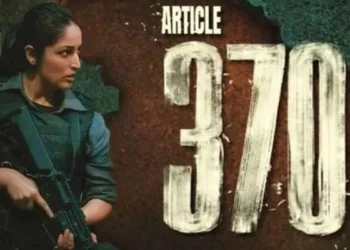
    Yami Gautam’s latest Bollywood venture, “Article 370,” has been making waves at the box office, defying obstacles and garnering significant attention from audiences and critics alike. Despite facing challenges such as being banned in Gulf countries, the film has managed to maintain a steady performance and achieve commendable success.


    According to film trade analyst Sumit Kadel, “Article 370” has exhibited consistency in its box office numbers, with the movie continuing to perform impressively even on weekdays. On its sixth day in theaters, the film amassed ₹3.17 crore net, maintaining an overall Hindi occupancy of 12.59%. While this marked a slight decline of 3.94% compared to the previous day’s earnings, it still demonstrated the film’s resilience and appeal among viewers.


    From its opening day, “Article 370” showcased promising potential, outpacing its competition and earning ₹5.9 crore net. The film’s performance remained strong throughout its first weekend, with a total collection of ₹17 crore net. Despite facing tough competition, including the release of rival film “Crakk,” “Article 370” managed to maintain its lead and surpass its competitor’s box office numbers consistently.


    One of the remarkable aspects of “Article 370” is its success in both domestic and overseas markets. Despite being banned in Gulf countries, the film managed to rake in ₹6 crore in the international market. In the domestic market, it grossed ₹34.6 crore, contributing to its impressive worldwide box office collection of ₹40.6 crore by the end of its sixth day in theaters.


    The film’s production companies, Jio Studios and B62 Studios, took to Instagram to share the exciting news of its global success, revealing that “Article 370” had amassed ₹44.60 crore net worldwide by the fifth day of its release. This achievement reflects the widespread appeal and positive reception the film has received from audiences worldwide.


    Expressing gratitude for the overwhelming response, the film’s producer, Aditya Dhar, thanked viewers for their support and encouraged those who hadn’t watched it yet to experience the film’s gripping narrative in theaters. His sentiments were echoed by film trade analysts like Sumit Kadel and Taran Adarsh, who lauded the film’s steady performance and strong weekday trends.


    In “Article 370,” Yami Gautam delivers a compelling performance as an intelligence agent embarking on a mission to combat terrorism in Jammu and Kashmir by abolishing Article 370, which granted special status to the region. The film, with a runtime of 2 hours and 40 minutes, received a U/A rating from the Central Board of Film Certification, making it accessible to a wide audience demographic.


    Apart from Yami Gautam, the film features a talented ensemble cast, including Priyamani, Kiran Karmarkar, and Arun Govil, who deliver impactful performances in their respective roles. The film’s gripping storyline, coupled with its stellar performances and relevant social themes, has resonated with audiences, contributing to its widespread popularity and box office success.


    Despite facing challenges such as the ban in Gulf countries and tough competition from other releases, “Article 370” has emerged as a testament to the power of compelling storytelling and impactful cinema. Its ability to maintain a steady performance and attract audiences amidst adversity underscores its significance in the Bollywood landscape and reaffirms the enduring appeal of quality filmmaking.

  • Success Story of Bollywood Movie “Article 370”

    Success Story of Bollywood Movie “Article 370”

    Bollywood movie “Article 370” has emerged as a significant success at the box office, showcasing robust performance in terms of both critical acclaim and commercial success. Directed by Aditya Suhas Jambhale and backed by production houses Jio Studios and B62 Studios, the film has captured the attention of audiences with its compelling narrative and powerful performances.


    The movie’s journey began on February 23 with a promising opening, collecting ₹5.9 crore net on its first day. This initial success laid the foundation for a strong box office run, with the film witnessing a steady increase in collections over the weekend. On Saturday, it garnered ₹7.4 crore net, followed by an impressive ₹9.6 crore net on Sunday. The cumulative earnings from the weekend propelled the film’s total box office collection in India to ₹26.15 crore net.


    Notably, “Article 370” has also made a mark in international markets, with overseas earnings amounting to ₹5 crore. When combined with the domestic collections, the film’s global box office tally stands at an impressive ₹31.8 crore.


    What sets “Article 370” apart is its remarkable performance considering its modest budget. Despite being made with an estimated budget of ₹20 crore, the film has exceeded expectations by delivering strong box office numbers and garnering widespread acclaim from critics and audiences alike.

    Behind the success of “Article 370” is a talented team of filmmakers, including director Aditya Suhas Jambhale and producer Aditya Dhar. Dhar, known for his directorial prowess with films like “Uri: The Surgical Strike,” brings his expertise to the project, contributing to its creative vision and execution.


    However, the film has faced challenges in certain international markets, particularly in Gulf countries, where it has been banned from screening. While the reasons behind the ban remain undisclosed, it reflects the broader geopolitical sensitivities surrounding films that touch upon India-Pakistan border issues. Similar restrictions have been imposed on other Bollywood films, including Hrithik Roshan and Deepika Padukone’s “Fighter.”


    In comparison to other recent releases, “Article 370” has emerged as a frontrunner at the box office. It has outperformed Vidyut Jamwal’s action thriller “Crakk,” which reportedly had a higher production budget of ₹45 crore. Despite its larger budget, “Crakk” has lagged behind “Article 370” in terms of box office earnings, with net collections totaling ₹9.72 crore in India and ₹3 crore overseas, resulting in a combined total of ₹12.95 crore.


    The success of “Article 370” underscores the enduring appeal of well-crafted storytelling and compelling narratives in Indian cinema. By striking a chord with audiences and delivering strong financial returns, the film has cemented its position as a noteworthy addition to Bollywood’s diverse cinematic landscape.


    As it continues to captivate audiences and generate buzz, “Article 370” exemplifies the potential of Indian cinema to entertain, inspire, and provoke thought on a global scale. With its impressive box office performance and positive reception, the film stands as a testament to the creative talent and storytelling prowess of the Indian film industry.

  • Kargil Gears Up for Hill Council Elections in Post-370 Ladakh

    Kargil Gears Up for Hill Council Elections in Post-370 Ladakh

    Drass, known as the world’s second-coldest inhabited place, is currently in the throes of election fever as it prepares for the Ladakh Autonomous Hill Development Council elections in Kargil. This election is particularly significant as it is the first one held in Kargil after the abrogation of Article 370, which led to Ladakh becoming a separate Union Territory (UT) in August 2019.


    The election in Kargil is primarily a contest between the Bharatiya Janata Party (BJP) and a united Opposition comprising the National Conference (NC) and Congress. Many view Wednesday’s vote as a referendum to gauge whether the people have accepted the Centre’s decision on August 5, 2019.


    Mohammad Iqbal, a long-time resident of Drass, emphasizes that this election carries more weight in terms of people’s identity than development. Iqbal, who worked as a porter with the Army for 40 years, including during the Kargil War in 1999, expresses a sense of political disempowerment among the residents since Ladakh transitioned into a Union Territory. Despite the diminished authority of the Hill Council, the election remains crucial for the local populace.


    A total of 85 candidates are vying for the 26 seats in the Ladakh Autonomous Hill Development Council, Kargil. The BJP is fielding candidates in 17 constituencies and supporting some Independent candidates.


    Kargil has been a historical stronghold of the National Conference, with the Congress serving as its primary rival. However, in a strategic move, both parties have come together to challenge the BJP’s dominance.


    Religious institutions, such as the Jamiat Ulema Kargil (Islamia School), traditionally aligned with the National Conference, and the Imam Khumaini Memorial Trust, supporting the Congress, play a pivotal role in shaping Kargil’s politics. Religious leaders have also urged the public to vote against the BJP.


    During the campaign, Jamyang Namgyal, the BJP MP from Ladakh, appealed to voters not to support the NC-Congress alliance and made controversial remarks about NC chief Farooq Abdullah. This rhetoric added to the intense political climate.


    The Ladakh administration’s denial of the “plough” symbol to National Conference candidates led to a legal battle, ultimately resulting in the postponement of the hill council polls. The Supreme Court intervened, setting a new election date for October 4, with results expected on October 8.


    These hill council elections assume significance due to the unusual political alliance between Buddhist and Muslim groups in Ladakh, which have united to oppose Ladakh’s UT status. They are demanding full statehood and constitutional protection under the 6th schedule, marking a significant shift in the region’s political landscape over the past three years.

  • Political Science Teacher Reinstated After Suspension: SC

    Political Science Teacher Reinstated After Suspension: SC

    Zahoor Ahmed Bhat, a political science teacher in Jammu and Kashmir, has been reinstated to his position after a period of suspension and scrutiny. His suspension came in the wake of his appearance before the Supreme Court in a case related to Article 370, a contentious issue in the region. The Jammu and Kashmir administration recently issued an order to revoke his suspension and directed him to resume his duties at his original place of posting.


    This episode unfolded when Zahoor Ahmed Bhat, a political science teacher was suspended on August 25, just a day after he appeared before the Supreme Court in connection with the Article 370 case. His suspension was based on allegations that he had violated the union territory’s code of conduct for government employees. Consequently, he was removed from his place of posting in Srinagar and attached to the office of Director School Education in Jammu, pending an inquiry into his conduct, which was to be conducted by a senior officer.


    However, the Supreme Court itself took note of Bhat’s suspension and expressed concern during the hearings related to the Article 370 case. The Chief Justice of India, D Y Chandrachud, leading a bench, remarked on the matter, stating, “This should not happen. Someone arguing before this court gets suspended…” Senior advocates Kapil Sibal and Rajeev Dhavan, who were representing Bhat, brought this issue to the attention of the Constitution Bench during the proceedings.


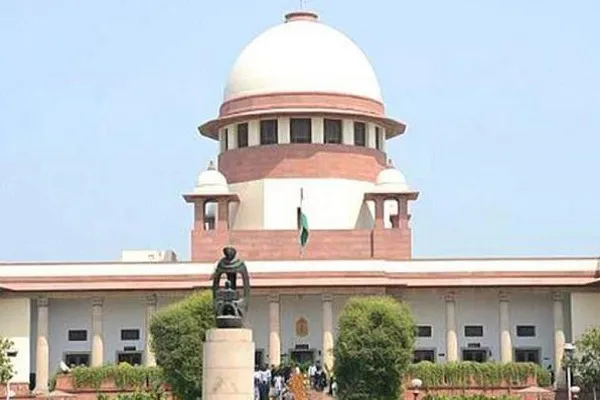
    The Supreme Court is currently in the process of hearing a series of petitions challenging the abrogation of Article 370, a historic constitutional provision that granted special status to the erstwhile state of Jammu and Kashmir. In August 2019, the central government revoked Article 370 and bifurcated Jammu and Kashmir into two Union Territories.


    The reinstatement of Zahoor Ahmed Bhat serves as a notable development within the broader context of government employee conduct in Jammu and Kashmir. It underscores the complex intersection of legal proceedings and administrative actions in a region where political and constitutional matters continue to be a subject of intense debate and scrutiny.

  • Supreme Court Hears Arguments on Article 370 Abrogation

    Supreme Court Hears Arguments on Article 370 Abrogation

    In a pivotal legal discourse, the Supreme Court of India delved into the intricate constitutional aspects surrounding the abrogation of Article 370, which conferred special status upon the region of Jammu and Kashmir. Senior advocate Gopal Subramanium, representing petitioner Muzaffar Iqbal Khan, presented his arguments to a five-judge constitution bench led by Chief Justice DY Chandrachud. The session offered insights into the nuanced interpretation of Article 370, its historical context, and its significance in the constitutional landscape.


    Subramanium meticulously elaborated that Article 370 was not a reservoir of unbridled authority but rather a conduit through which the Indian Constitution extended to the erstwhile state of Jammu and Kashmir. He emphasized that the Jammu and Kashmir constituent assembly consciously opted to retain Article 370, signifying a deliberate choice for its continuation.


    The senior advocate elucidated, “The resolution passed by the Jammu and Kashmir constituent assembly said that the Constitution of India must apply with these modifications. The constitution of Jammu and Kashmir and the Indian Constitution were speaking to each other through Article 370.” He emphasized that the term ‘temporary’ in the marginal notes did not diminish its profound constitutional implications.


    Subramanium underscored that Article 370 should not be construed as a political bargaining tool but as a principled compact between the people of India and the people of Jammu and Kashmir, enabling effective communication between their respective constitutions.


    Reflecting on the diverse methods of constitutional interpretation, Subramanium highlighted that historical, textual, doctrinal, and structural arguments all converge to affirm the same outcome. The heart of the matter lies in the interpretation of the constitutional provisions.


    He vehemently contested the constitutionality of the two orders issued on August 5 and August 6, 2019, by the Centre, which led to the abrogation of Article 370. He contended that these actions effectively annulled the Constitution of Jammu and Kashmir, a move he deemed unauthorized by law.


    Subramanium referred to the recent observation by Chief Justice Chandrachud that the will of the people is expressed through established constitutional institutions in representative democracies. He aptly linked this notion to the constituent assembly of Jammu and Kashmir, a recognized institution under the Indian Constitution. The assembly affirmed its intent to preserve Article 370, treating it as a medium of communication between India and the region.


    Challenging the unilateral abrogation, Subramanium questioned whether such a decision could be made in disregard of the proactive steps taken by the constituent assembly of Jammu and Kashmir. He emphasized that the Article 370 arrangement embodied a federal compact, defining the federal relationship between the two entities.


    The proceedings also touched upon the flexible nature of Article 370, allowing modifications over time. Justice Khanna noted that while the Jammu and Kashmir Constitution might be deemed a distinct entity, its essence was rooted in the Indian Constitution, albeit with specific adaptations.


    Gopal Subramanium concluded his argument, paving the way for senior advocate Zafar Shah to present his submission on behalf of the Jammu and Kashmir Bar Association. As the legal debate unfolds, it brings to the forefront the intricacies of constitutional interpretation, history, and the dynamics of federal relationships.