Tag: air quality index

  • Delhi’s AQI of 364, Air Quality in “Very Poor” Category

    Delhi’s AQI of 364, Air Quality in “Very Poor” Category

    Delhi, the capital city of India, is currently grappling with a combination of dense fog and high levels of air pollution, posing challenges for residents and authorities. As of 6:00 am on Wednesday, the Air Quality Index (AQI) in Delhi stood at 364, categorizing it as “Very Poor,” according to data from the Central Pollution Control Board (CPCB). This places Delhi in the second position among the top 10 most polluted cities in India.


    The persistent weather conditions, marked by dense fog, have significantly reduced visibility in the region, impacting daily activities and transportation. The Indian Meteorological Department (IMD) reported a minimum temperature of 8.7 degrees Celsius and a maximum temperature of 21.4 degrees Celsius in Delhi. The weather forecast for the day includes a cloudy sky with dense fog in the morning, and the city is expected to experience rain with thundershowers. Gusty winds of around 30-40 km per hour are also predicted during the evening hours.


    Various locations across Delhi have reported varying levels of air quality, with Nehru Nagar recording the worst air quality with an AQI of 445, classified as “Severe.” In contrast, Lodhi Road exhibited better air quality, with an AQI of 295 falling into the “Poor” category.


    The deteriorating air quality in Delhi is not only a result of atmospheric conditions but also the impact of various pollution sources. The city has been struggling with air pollution, especially during the winter months, when factors like stubble burning, vehicular emissions, and industrial activities contribute to the deterioration of air quality.


    In the broader National Capital Region (NCR), which includes satellite cities like Noida, Greater Noida, Ghaziabad, Faridabad, and Gurugram, varying AQI levels have been reported. Noida recorded an AQI of 346, Greater Noida 408, Ghaziabad 296, Faridabad 305, and Gurugram 282.


    The combination of cold weather and persistent pollution has raised health concerns, particularly for vulnerable populations such as children and individuals with respiratory conditions like asthma. Dr. Suresh Kumar, the Medical Director of Loknayak Jai Prakash Hospital, noted an increase in cases of chest infections and pneumonia, particularly among children and the elderly, during this winter season.


    In response to the challenging air quality conditions, the CPCB and other authorities have been closely monitoring the situation. On Monday, the sub-committee for the operationalization of the Graded Response Action Plan (GRAP) convened an emergency meeting. It was decided that if the AQI breaches the 400 mark, restrictions under Stage III of GRAP would be invoked to control air pollution. However, the central government opted against implementing these measures, considering the projected short duration of the dip in air quality, as indicated by the IMD and the Indian Institute of Tropical Meteorology (IITM).


    The citizens of Delhi have been advised to take precautions, such as using face masks and minimizing outdoor activities, especially during periods of dense fog and high pollution levels. The situation highlights the ongoing challenge of managing air quality in Delhi and the need for comprehensive measures to address pollution sources and improve overall environmental conditions in the region.


    As the day progresses, the anticipated rain and thundershowers may provide temporary relief, but addressing the underlying causes of air pollution remains crucial for the long-term well-being of Delhi’s residents. The government and relevant authorities continue to work on strategies and policies to tackle the complex issue of air pollution and create a healthier living environment for the people of Delhi.

  • Delhi Shivers as Temperature Hits Lowest at 3.6°C

    Delhi Shivers as Temperature Hits Lowest at 3.6°C

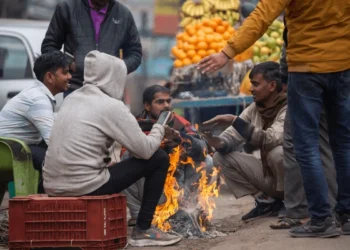
    Delhi experienced its coldest day of the season on Saturday, with the mercury dropping to 3.6 degrees Celsius, as dense fog enveloped various parts of the city. The India Meteorological Department (IMD) reported that this minimum temperature follows Friday’s record low of 3.9 degrees Celsius, marking the lowest in five years for the national capital.


    The day’s maximum temperature is anticipated to settle around 19 degrees Celsius, as per the IMD. The Safdarjung Observatory, Delhi’s primary weather station, recorded a visibility of 200 meters at 5:30 am. The foggy conditions had a significant impact on transportation, causing delays in 18 Delhi-bound trains ranging from one to six hours.


    The IMD categorizes fog based on visibility, defining very dense fog when it ranges from 0 to 50 meters, dense fog between 51 and 200 meters, moderate fog between 201 and 500 meters, and shallow fog between 501 and 1,000 meters.


    Simultaneously, Delhi’s Air Quality Index (AQI) stood at 365 at 9 am, according to data from the Central Pollution Control Board (CPCB). The AQI scale ranges from zero to 500, with higher values indicating poorer air quality. An AQI between zero and 50 is considered ‘good,’ while 51 to 100 is ‘satisfactory,’ 101 to 200 is ‘moderate,’ 201 to 300 is ‘poor,’ 301 to 400 is ‘very poor,’ and 401 to 500 is ‘severe.’


    The prevailing weather conditions, including the dense fog and low temperatures, impact various aspects of daily life in the city. Transportation, especially air and rail travel, faces disruptions due to reduced visibility. Additionally, residents are advised to take precautions against the cold weather, such as wearing appropriate clothing and staying indoors during extreme conditions.


    It is essential for individuals to stay informed about weather updates, especially during the winter season, to plan their activities accordingly and ensure their safety and well-being. Authorities may issue advisories or warnings based on the forecast to guide the public and mitigate potential risks associated with adverse weather conditions.

  • IIT Kanpur Proposes Artificial Rain to Tackle Delhi’s Air Pollution

    IIT Kanpur Proposes Artificial Rain to Tackle Delhi’s Air Pollution

    Over the past few days, the air quality in Delhi and its surrounding regions has significantly deteriorated, causing immense problems for residents and enveloping northern parts of India in a toxic haze. As of 5 pm on Wednesday, the air quality index (AQI) in Delhi stood at a ‘very poor’ level of 398. To address this alarming issue, the Indian Institute of Technology (IIT) Kanpur has put forward an innovative solution – the concept of “artificial rain” through cloud seeding. This ambitious project has been in development since 2018, with trials conducted in July of this year after securing the necessary permissions from government authorities, including the Directorate General of Civil Aviation (DGCA).


    Manindra Agrawal, a professor in the computer science and engineering department at IIT Kanpur, is the driving force behind this groundbreaking project. He explained that artificial rain could provide temporary relief for up to a week to the residents in the National Capital Region (NCR) who are grappling with poor air quality.


    What is Cloud Seeding?

    Cloud seeding is an artificial technique employed to enhance rainfall by introducing specific substances into clouds. This method serves various purposes, including mitigating the impact of droughts, preventing forest fires, increasing precipitation, and improving air quality.


    During cloud seeding, various chemicals like silver iodide, potassium iodide, and dry ice are released into the sky, typically using airplanes and helicopters. These chemicals attract water vapor, leading to the formation of rain clouds. The process generally takes about half an hour to induce rainfall.


    Cloud seeding techniques can be categorized into two main types. Hygroscopic cloud seeding aims to expedite the coalescence of droplets in liquid clouds, leading to the formation of larger droplets that result in precipitation. This method typically involves dispersing salt particles at the cloud’s base. The other technique, glaciogenic cloud seeding, focuses on inducing ice production in supercooled clouds, triggering precipitation. It requires the release of efficient ice nuclei, such as silver iodide particles or dry ice, into the cloud, thereby initiating heterogeneous ice nucleation.


    Implementation Challenges

    Implementing artificial rain through cloud seeding requires obtaining various approvals, including those from the DGCA, the Ministry of Home Affairs (MHA), and the Special Protection Group, responsible for the Prime Minister’s security, to allow aircraft to fly over the national capital. Additionally, the success of this innovative approach hinges on specific meteorological conditions, including the presence of moisture-laden clouds and suitable wind patterns.


    While cloud seeding shows promise as a temporary solution to mitigate air pollution in Delhi, it is vital to continue exploring comprehensive, long-term measures to address the root causes of the issue and ensure sustainable improvements in air quality for the region’s residents.